

28 May – World Menstrual Hygiene Day
You probably know all too well how important it is during that time of the month – both physically and emotionally – to enjoy healthy menstrual care. And that's exactly what 28 May is all about. If you use Enroush products and are part of our community, you'll surely have noticed just how much we care about your intimate health: with pure organic cotton products that won't harm it.
Sadly, that same monthly care remains a privilege for millions of women around the world who have no access to period products. This is precisely where Menstrual Hygiene Day has its roots – and that's what we're talking about today.
World Menstruation Day: is there really a day dedicated to menstrual health?
Yes, there really is, and we mark it on 28 May. And yes, here in the UK too this movement is gaining ground, inspiring more women and organisations year after year. Officially it's called Menstrual Hygiene Day, but it goes by many other names: Menstrual Health Day, Period Day, World Menstruation Day.
By placing hygiene during your period – and not only that – at the heart of the conversation, the movement aims to normalise menstruation and make it possible to experience it in a way that's healthy both physically and mentally. In other words, without shame, fear, stigma or discomfort.
Whatever we choose to call it, the essence of 28 May remains the same. It's a concept that keeps growing stronger, with an ever-increasing impact on society and on the lives of millions of women worldwide.
The story of 28 May – how did it become Menstrual Hygiene Day?
Never heard of World Menstruation Day? Didn't know that 28 May celebrates menstrual hygiene? Don't worry, you're far from alone: the concept is still relatively new.
This year marks just the tenth anniversary of the day it all began and was first celebrated.
Which is exactly why we're here! We'll tell you everything we know about what this day means, how it affects you and how you can play your own part in the movement.
Who started the 28 May movement?
Menstrual Hygiene Day was founded on the initiative of WASH United, a German non-profit organisation that champions education with human rights and menstrual hygiene at its core. WASH is not only the initiator but also the driving force behind this global movement.
The credit, however, belongs to years of dedication by entrepreneurs, agencies and organisations across the globe. Even before 2013, health organisations worldwide had begun drawing attention to the very real problems surrounding menstrual hygiene management.
In 2012, the OHCHR report noted that it was common practice for girls to miss school an average of three days a month because their families couldn't afford period products.
When was International Menstrual Hygiene Day first marked?
The long history of 28 May actually begins much earlier. As far back as the 1980s, organisations were campaigning for women's health and highlighting hygiene issues that lead to diseases of the sexual and reproductive system.
Following a meeting of members of the Global Women's Organization for Reproductive Rights, 28 May 1987 was marked for the first time and declared the International Day of Action for Women's Health.
The efforts continued and things steadily moved forward. In 2013, WASH United officially declared that same date, 28 May, to be Menstrual Hygiene Day – and on 28 May 2014 it was celebrated worldwide for the first time.
A neat piece of symbolism – why 28 May of all dates?
Have you ever wondered why it's 28 May in particular? Is there a deeper meaning behind it, or was it pure coincidence? If you're curious: yes, 28/05 was chosen quite deliberately, and the meaning is thematic.
A typical menstrual cycle lasts an average of 28 days – hence the 28th. And May is the fifth month of the year, matching the average number of days a period lasts each month.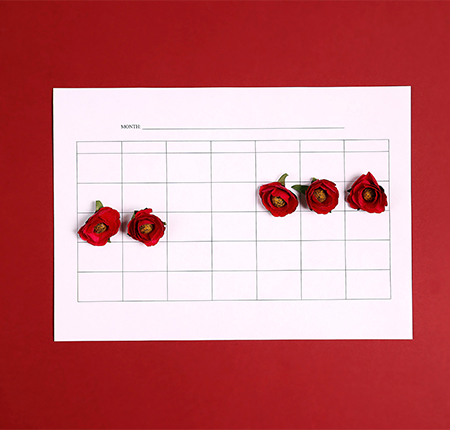
Why do we celebrate World Menstrual Health Day?
Because it matters to us. Because we want change. Because we deserve it – and because girls and women all over the world need safe, hygienic and dignified conditions for managing their periods.
World Menstruation Day is about promoting healthy menstrual hygiene, breaking the silence and raising awareness that millions of women worldwide face problems connected with their periods:
- Stigma and menstrual taboos;
- Discomfort and even disgust surrounding the subject;
- Discrimination against women during menstruation;
- A lack of menstrual education and limited access to accurate information;
- Period poverty and unaffordable period products.
In other words, 28 May makes it clear how vital it is to understand that menstruation is a normal bodily function, that it isn't a choice, and that period products are neither a luxury nor a privilege. They're a basic necessity for women's sexual and reproductive health.
The stigma around menstruation persists
The fear and awkwardness around talking about periods still exist. So does the discrimination. Millions of girls miss school or abandon their education altogether once their periods begin – and shame is one of the reasons. Millions of women face discrimination and stigma simply because they menstruate.
They encounter hostile attitudes, are considered unclean, and are even excluded from social circles or certain activities. This stigma is one of the central problems that International Menstrual Hygiene Day aims to put an end to.
Lack of access to information and menstrual education is a reality
Misinformation, along with incomplete and inaccurate education, is the main reason myths and taboos remain so deeply embedded in the way society thinks.
How many times have you heard that you can't get pregnant during your period, or that you shouldn't exercise? Or that you shouldn't take a bath?! In other parts of the world these myths are taken to extremes: menstruating women are considered unclean, forbidden from touching plants because they'll supposedly wither, or made to sleep separately in another room.
It's silence and the lack of education that keep such myths alive and spreading. The consequences show up on an emotional, psychological and physical level. That's why open conversation and well-grounded education about menstruation and menstrual hygiene matter so much – another priority that 28 May brings to the fore.
Difficulties with menstrual hygiene – does period poverty exist in the UK too?
Period poverty is one of the central issues that Menstrual Hygiene Day highlights so forcefully. The World Bank estimates that 500 million women worldwide have no access to period products or adequate sanitation facilities. And the consequences of poor menstrual hygiene are anything but trivial:
- Hepatitis B infection;
- Candida infection;
- Other fungal and bacterial infections;
- Urinary tract infections;
- Other conditions affecting the reproductive system.
Period poverty is hardly a foreign concept in the UK either: almost one in four menstruating people in this country struggles financially to buy period products, and it's estimated that hundreds of thousands of people in the UK can't afford them at all – including around 100,000 menstruating people experiencing homelessness. It's an important point that 28 May brings to light.
Lack of access to healthy period products
Combined with the lack of education and accurate information, the lack of access to healthy period products means we often don't even know what "healthy" means in this context. We don't know how such products differ from conventional ones. So what should you know?
- Conventional products contain plastic, fragrances and other chemicals.
- These chemicals and synthetic fibres can cause allergies, itching or burning.
- Pads and tampons made from 100% organic cotton are the healthy alternative.
- Period products made from pure ingredients and natural fibres help prevent irritation.
- It's important to use products free from plastic, chlorine and other irritants.
- Healthy period products can ease period pain and heavy bleeding.
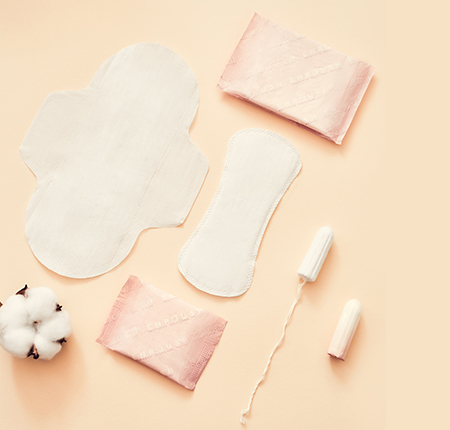
Those are some of the key basics about healthy period products and why they matter. And Menstruation Day is a brilliant opportunity to learn more on the subject.
The goals of World Menstrual Health Day
At heart, it all comes down to two main goals that shape the whole of 28 May:
- Normalising menstruation: dismantling the taboos and myths around periods, and ending the stigmatisation and discrimination of menstruating women.
- Ending period poverty by 2030: a major goal pursued worldwide – by raising awareness of the global challenges in accessing period products and sanitation facilities.
It really is a vast movement on a global scale. Yet it can be broken down into simple, clear objectives whose ultimate purpose is the wellbeing and health of menstruating women everywhere.
What's the theme for 28 May 2023?
- Normalising menstruation, in detail
Each year a central theme is chosen for Menstrual Hygiene Day on 28 May. In 2023 the theme is: normalising menstruation. Let's accept periods as a normal part of life, so they're no longer an obstacle for anyone.
Because on any given day of the year, over 300 million women around the world are on their period. And it's both necessary and only right that they should have access to period products and sanitation facilities without shame or stigma.
This year also continues the #WeAreCommitted campaign launched in 2022 – an expression of the determination to achieve the goal of normalising menstruation by 2030.
Who can contribute to the goals of Menstrual Hygiene Day, and how?
We call it a global movement because every contribution counts. Every supporter brings World Menstruation Day a step closer to its goal.
What does that mean? It means everyone has a part to play in this initiative – from organisations and government right down to each and every one of us. Anyone can help raise awareness and become part of the solution. It isn't only donations and charitable work that make a difference. Here's what you can do:
- Become an MHDay partner: any non-profit organisation, public body or educational institution can become an official partner of the Menstrual Health Day (MHDay) campaign.
- Organise an event: if you have the opportunity, use 28 May to spread knowledge through an event and make people aware of what Menstrual Hygiene Day stands for.
- Hand out the campaign wristbands: MHDay has created themed Menstrual Hygiene Day wristbands that you can distribute at events.
- Create an informative post: information spreads at lightning speed on social media – your voice could reach millions of people.
- Include the MHD logo: use the MHDay logos, stickers and hashtags in your social media posts to support the movement. The hashtags for 2023 are #MHDay2023 and #WeAreCommitted, plus:
- #EndPeriodStigma
- #EndPeriodPoverty
- #PeriodEducationForAll
- #PeriodFriendlyToiletsForAll.
Whispers become ever louder voices that eventually set big changes in motion. Even seemingly small gestures of support on social media help the initiative grow and take effect. Ready to find out how you can get involved?
Organisations such as Bloody Good Period, campaigning for free period products in the UK
More and more countries are choosing to reduce or scrap the tax on period products altogether. The UK, for instance, has cut the rate on these products to 0%.
The European Union also supports reducing this tax – a step forward in the fight against period poverty. Backing organisations that campaign for these taxes to be abolished in your own country is therefore one of the most effective ways to make a difference.
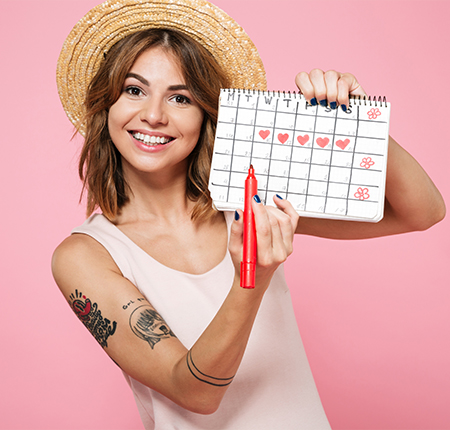
Promoting free access to period products in schools, workplaces and public toilets
Did you know that Scotland is officially the first country in the world to make period products free? Following that example, South Korea, New Zealand, France and other countries now provide free tampons and pads in schools, sixth-form colleges, universities and/or other public institutions.
If – and as soon as – you get the chance, campaign for free access to period products in schools. Or support initiatives such as Bloody Good Period that are doing exactly that. We've written in detail HERE about how to support menstrual health in the workplace – and World Menstrual Health Day is the perfect moment to make a start.
Donating to organisations that supply girls worldwide with period products
In India, across African countries and in many other nations, millions of girls drop out of school as soon as their periods begin. The shame and stigma we've already mentioned are only half the story: girls also stop going to school because they can't afford pads and tampons.
There are organisations that supply these products to pupils and students around the world. If you're able to donate to them, your contribution counts!
Sound education about menstruation and breaking down taboos
A lack of education can be remedied by… education! Thousands of girls know nothing about the menstrual cycle before their first period. And even more feel ashamed or self-conscious about it.
Parents and adults first need to educate themselves so they can then teach children accurately about the menstrual cycle. Preparing girls for what lies ahead, how a period works and how to use tampons and pads is the only way to overcome myths, taboos and shame.
Cliché or not – change begins with you!
Start by educating yourself! Do you realise how powerful leading by example can be?
Read, learn and choose well-grounded information about menstruation – the kind backed by research or medical guidance, rather than myths passed on by word of mouth that fuel shame, fear and silence around the cycle and menstrual hygiene.
It's just as important to understand how your body works, how to manage your period, what makes a period product healthy and why 100% organic cotton is better for you. Sometimes changing yourself is all it takes for the people around you to follow.
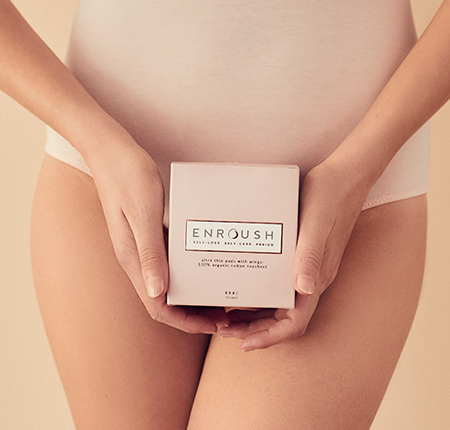
How do you maintain proper menstrual hygiene?
Do you know how to manage your menstrual hygiene properly so your body stays healthy? Here are some basic habits to put into practice during your period:
- How often do you change your tampon or pad? Doctors recommend changing your period product whenever necessary – that is, as soon as it's saturated. If your flow isn't especially heavy, change it every 4 to 8 hours. No tampon is designed to be worn for longer than 8 hours.
- How do you protect yourself from allergies? Conventional products can contain toxic ingredients and chemicals that trigger or worsen allergies during your period. Choose Enroush products made from organic cotton and natural fibres – for the sake of your intimate health.
- What do you use to wash? The intimate area has a delicate pH, and you need gentle cleansing that tackles bacteria and infections without upsetting your balance. Use Enroush Intimate Gel with 95% natural ingredients.
- Which underwear is right? As with tampons and pads, cotton underwear is the most breathable and the best choice for preventing allergies.
Celebrate Menstruation Day with the Enroush community
Every woman can celebrate Menstruation Day – and we'd love you to do it with us! Want to know how to join our community of women?
- Follow us on social media: we talk openly, bust myths and explain everything worth knowing about the menstrual cycle and your intimate health – spreading awareness on 28 May and all year round!
- Share our posts: that way your friends can access all the information and updates we share, as well as our organic cotton products.
- Post something yourself: tell your followers about your own experiences with menstruation, help strike this topic off the taboo list, or share how different and special the organic cotton in Enroush pads is.
- Drive change at work: write to us if you're in a leadership role, or email your HR department to request free Enroush period products in the workplace – Menstruation Day is the perfect moment to take the initiative!
What impact does 28 May have for women worldwide?
The impact of Menstrual Hygiene Day is encouraging. With its most recent campaign in 2022, the movement reached over 680 million people and set global records in dismantling myths about the menstrual cycle.
Ultimately, 28 May is about creating a world by 2030 in which menstruation is normal. A world in which every woman has access to period products she can change in privacy, dignity and safety, without having to give up her job or her education.
Through targeted investment in menstrual hygiene and health, together with sustained, wide-reaching communication and education, we can all help make that vision a reality!

Medium, super or extra absorption

Low, medium or super absorption

Low or medium absorption


and happily breaking taboos!


