

Menstruation with a disability
Do you have a disability, or do you know someone with a physical or intellectual disability?
What does "disability" actually mean? By definition, it refers to "a physical, mental, cognitive or developmental condition that impairs, restricts or hinders a person's ability to carry out certain tasks or actions, or to take part in typical everyday activities and interactions".
And that means this: although menstruation works more or less the same way for everyone, not everyone can follow the same intimate care advice. Because we're all different.
What types of disability are there?
Physical disabilities
The spectrum of physical disabilities is extremely broad, and it would take some time to list every possible form. A few examples include: multiple sclerosis, paraplegia, epilepsy, visual impairment, cerebral palsy, limb amputation and many more.
For some people with a disability, managing menstruation poses no problem at all; for others, a simple action (such as changing a tampon) demands far more effort than we can imagine. 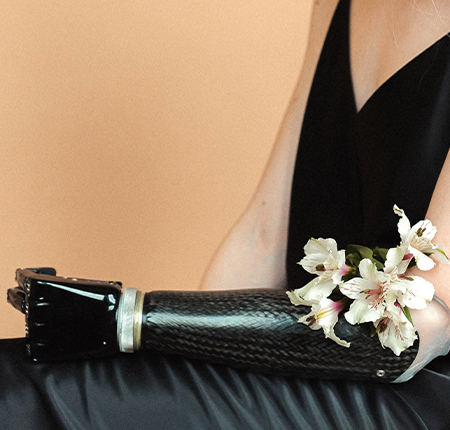
Intellectual disabilities
Down's syndrome, Prader-Willi syndrome, developmental delays and other conditions bring with them a host of difficulties that can turn menstruation into a stressful experience. On top of that, learning materials tailored to different learning needs are usually nowhere to be found.
Those without a disability quickly get used to menstruation and eventually manage it on "autopilot". But when you consider all the steps involved (tracking your cycle, having period products to hand, changing those products, knowing about risks such as toxic shock syndrome, easing cramps and much more), it becomes clear just how difficult it all can be.
What does the research say?
Many of these individuals report dysmenorrhoea (painful periods), menorrhagia (heavy menstrual bleeding), difficulties with menstrual hygiene, as well as premenstrual syndrome symptoms. But the challenges don't end there.
People with such disabilities frequently come up against a range of barriers, including:
- A lack of information on managing your cycle with a disability
- Learning materials that fail to address aspects relevant to people with disabilities
- Restricted access to social support and healthcare services
- Greater physical and emotional strain than for people without a disability
- A lack of accessible toilet facilities
- Unsustainable period products containing chemicals and toxins
- Discrimination and stigma
If you find this perspective hard to grasp, picture the following: you have a disability and no sensation below the waist. You can't tell when you're bleeding, and you feel uncomfortable asking someone else to help you insert a tampon. What do you do? Exactly… organising and managing your period becomes a real puzzle you have to solve.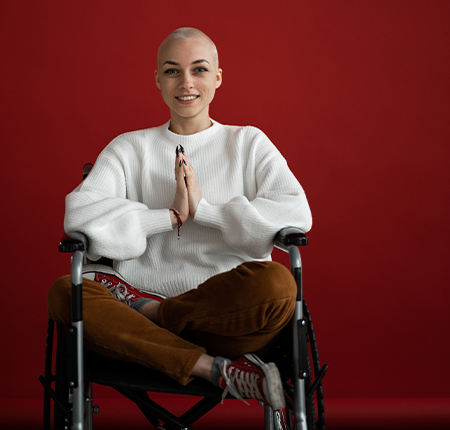
What helps people with disabilities during their period?
The first and perhaps simplest thing we can all do is talk openly about the menstrual cycle and about the issues facing people with disabilities, in order to break down stigma. Ask your friends questions, educate yourself, and raise awareness among those around you about topics that are far too rarely discussed. You can recommend resources, cycle-tracking apps and organic period products to anyone who needs them – and most importantly, you can change your own attitude towards disability and menstruation!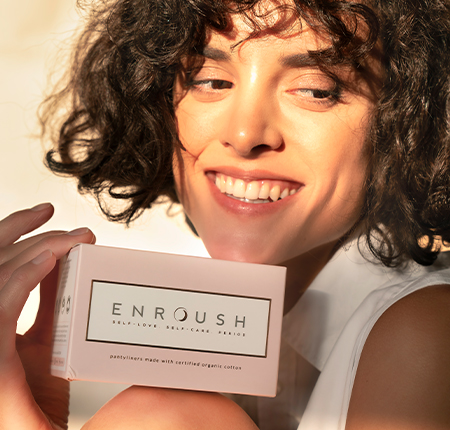
ENROUSH's mission includes caring for EVERYONE who menstruates – we make life easier for all during "that time of the month", through:
- Pads and tampons that are safe for your health – made from 100% organic cotton, with no hidden ingredients and no risks to your body
- Delivery to your door, by both post and courier
- One-off payment – online by card, or recurring payment (with a subscription, your card is charged automatically in line with your delivery frequency)
- Subscriptions to save you time and energy – which you can change or pause to suit your needs at no extra cost

Medium, super or extra absorption

Low, medium or super absorption

Low or medium absorption


and happily breaking taboos!


