

7 secrets to a greener lifestyle
What does a greener lifestyle actually mean?
If you make an effort to use fewer resources in order to protect the planet, you're living sustainably. Of course, sustainability is a learning process – and things evolve alongside society and technology: you become better informed and more responsible, leaving the smallest possible footprint on our planet. So how do you go about it?
1. Food scraps can be ingredients too
Have you ever thought about using the peel when you squeeze citrus fruits? It keeps well in the fridge and you can add it to cakes (just make sure the fruit hasn't been treated with chemicals during cultivation). Or, when cooking with vegetables, have you ever considered using absolutely every part – the leaves, the stalk? There are countless ways to repurpose food 'waste' and cook more sustainably.
2. Support local producers
The food chain matters enormously: the shorter it is, the less waste is created before the food reaches your kitchen. Experts recommend buying 50% of your food within 20 km of where you live. It's also well known that the nutritional value of fruit and vegetables only lasts a short while – so yes, how far your food travels really does make a difference.
3. Choose plastic-free personal care
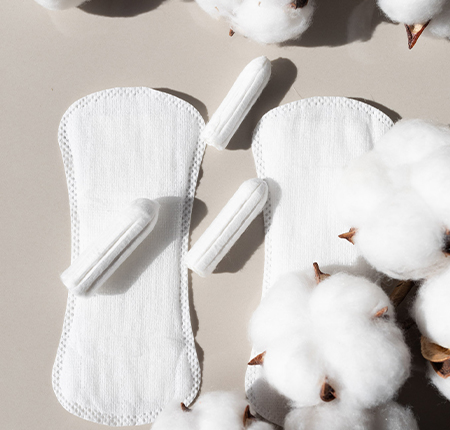
The most common period products are full of plastic: tampons have plastic applicators, a plastic withdrawal string and sometimes even a plastic top layer holding the tampon body together. And pads can be up to 90% plastic. Not to mention toothbrushes, cotton buds and all the packaging that hygiene products come in. All that plastic ends up polluting the natural world – which is why switching is the single most effective thing you can do: move to period products made from 100% organic cotton.
4. Make your home / office greener
Because let's be honest: you can never have too many plants! And we couldn't agree more. Especially as you can choose plants according to their health benefits, depending on which room you'd like to 'green up': the snake plant, for instance, is ideal for the bedroom – it releases oxygen at night and purifies the air for a restful sleep. Or Dracaena reflexa – perfect for any room, it clears the air of formaldehyde (found in paints, wallpaper, carpets and curtains) and benzene (found in dyes and synthetic fibres).

5. Swap your shower head
One of the best investments you can make is an aerated shower head – because it makes a noticeable difference! How does it work? By mixing air into the water stream, which reduces water consumption.
6. Give up single-use products
Did you know that it takes 20,000 litres of water to produce just 1 kg of conventional cotton – enough for one T-shirt and one pair of jeans? Yes, what you buy should matter. But what about single-use cotton products? Make-up remover pads, for example? Replace them with reusable versions. The good news: this works for almost every single-use plastic item – cups, plates, various containers, bags and so on.
7. Rediscover vintage furniture and clothes swaps
Rummaging through second-hand shops for pieces for your home isn't just fun – it's sustainable too! Pre-loved furniture doesn't only tell a story, it can also inspire you to come up with more creative ideas. Clothes-swapping parties – known as swishing – are one of the most eco-friendly ways to refresh your wardrobe and find quality pieces.
Every day, your choices have an impact on the environment, the climate and other species: we know change doesn't happen overnight – but from what you consume to the period products you use, a greener lifestyle is far from impossible. However small the changes may be, you can reduce your negative impact on the environment day by day.

Medium, super or extra absorption

Low, medium or super absorption

Low or medium absorption


and happily breaking taboos!


