

Environmental protection – What is environmental protection and how does it work?
When did you last take part in a conversation about the environment? The truth is that many of us never stop to think about the impact we have on the environment – and that's precisely what turns us into a threat.
When sustainable choices and environmental protection measures are missing, we contribute to the ever-faster destruction of our planet. Rather than judging and criticising different decisions, today we simply want to talk about it – you can draw your own conclusions. What is environmental protection and how does it work? Let's find out.
What is environmental protection?
The environment encompasses everything natural on our planet. Vegetation, wildlife, relief, natural resources, climate, the atmosphere, all living creatures and ecosystems together make up the environment.
Since everything that lives and develops on Earth depends directly on the environment, protecting it is fundamental to the survival and health of every inhabitant of our planet.
Environmental protection is therefore indispensable. It covers all the measures and actions by which we preserve the natural environment, conserve natural resources and reduce pollution as far as possible.
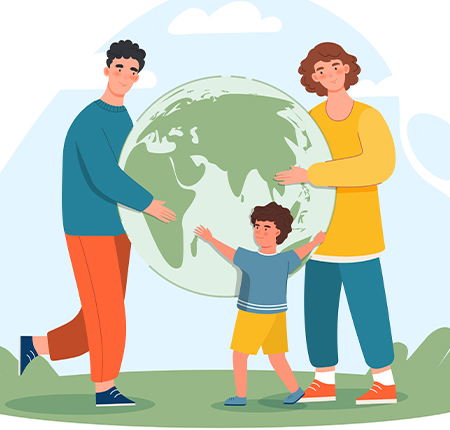
The importance of the environment
So why does the environment matter to me? Why should I care?
Until we understand just how crucial the environment is to our quality of life, all these terms – from environmental protection to measures against pollution and climate change – feel abstract. Yet you need a clean, healthy environment for everything you do.
Forests, waterways and soils – the entire natural environment influences every area of your life and ultimately underpins your very existence:
- It is where all our food sources are found;
- It supplies us with the water we need to live;
- It provides the oxygen in the air we breathe;
- It safeguards biodiversity and genetic diversity.
We therefore have a moral duty to know how to protect nature – and to act accordingly. First and foremost for our own health, but also to protect the ecosystem and ensure a healthy environment for generations to come.
The risks of environmental pollution
In nature, everything is connected. When something falls out of balance – through pollution, for instance – a chain reaction begins that spreads like dominoes across the entire planet.
Worldwide, the catastrophic consequences of environmental pollution are already plain to see, and they affect human health above all.
When the air we breathe, the water we drink and use every day, and the soil our food comes from are all polluted, the entire ecosystem suffers – from plants and animals through to humans. Below we outline some of the consequences we are facing.
Air pollution
Did you know that air pollution caused more than 1,100 cases of lung adenocarcinoma in the UK in 2022, according to the International Agency for Research on Cancer? Smoking remains the biggest cause of lung cancer.
Vehicle exhaust fumes, gases from heating systems, smoke from factories – all of these disperse particulate matter and toxic chemicals into the air, loading it with substances harmful to health. At the same time, they trap heat in the atmosphere and thus contribute to global warming.

This creates imbalances in the ecosystem and health problems for people, animals, plants and all living things. The equation is simple: without clean air, there can be no optimal health. Among the first complaints to appear are:
- Coughing and breathing difficulties
- Worsening of asthma symptoms
- Allergies and respiratory infections
- Lung cancer
- Cardiovascular disease
- Low birth weight in newborns
Soil pollution
Polluted soil is soil contaminated with harmful substances in significant concentrations. These pollutants are synthetic – that is, man-made – chemicals, originating from pesticides, asbestos, petroleum products, heavy metals and other waste.
This type of contamination impairs soil fertility, which is crucial to a large proportion of our food sources. In other words, soil pollution threatens our safety and even our survival – in two ways:
- Directly, through contact with contaminated soil, causing health problems affecting the immune, reproductive and cardiovascular systems, as well as organs such as the skin, lungs, liver and kidneys.
- Indirectly, through consuming food and drink contaminated with chemicals and grown in soil that is too acidic or too alkaline, degraded by the excessive use of pesticides and chemicals.
Water pollution
Water is with us everywhere in life. We use it to survive (cooking, drinking, washing and cleaning) and to relax (swimming and other water sports).
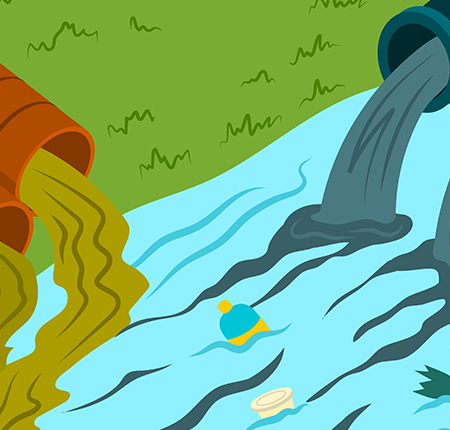
That means that if water is contaminated, every area of our lives – including our health – is affected. When plastics, chemicals and micro-organisms from waste pollute rivers, lakes and oceans, the negative effects follow in a chain reaction.
Marine life is destroyed, the food chain becomes contaminated with microplastics and the water becomes undrinkable. The risk of transmitting numerous diseases and infections such as cholera, hepatitis A, dysentery and poliomyelitis also rises.
Health problems caused by environmental pollution
The health consequences of environmental pollution are anything but negligible. Every year, more than 12 million people die because they work or live in polluted environments.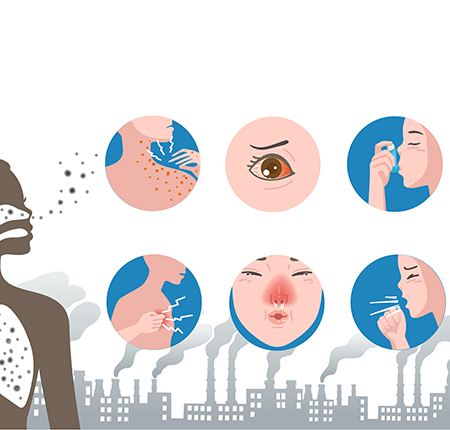
Whether in the short or the long term, spending time in an environment affected by any form of pollution inevitably leads to serious health problems:
- Cardiovascular disease;
- Respiratory conditions and infections;
- Various types of cancer;
- Hormonal disorders;
- Gastrointestinal illnesses;
- Reproductive system disorders;
- Menstrual cycle irregularities in women;
- Infertility in men;
- Weakening of the immune system;
- Nervous system development disorders in children;
- Low birth weight in newborns;
- Infant mortality or premature death.
Effective measures – how do we protect the environment?
Education. That is the first and best thing you can do for the environment. Only when you understand how you yourself contribute to pollution can you pay attention and take steps to protect the environment. After all, you can't change what you don't know about.
Action follows awareness – in the knowledge that with every decision and every action we either add to pollution or help reduce it. Here are some environmental protection measures that every one of us can put into practice.
Use biodegradable products in everyday life
Worldwide, more than 380 million tonnes of plastic and over 29 million tonnes of polystyrene are produced each year. At least 500 billion single-use plastic cups are used and thrown away, and ultimately more than 14 million tonnes of plastic end up in the sea.
These are alarming figures, and we can reduce them dramatically by switching to products made from natural, sustainable materials – recyclable or biodegradable.
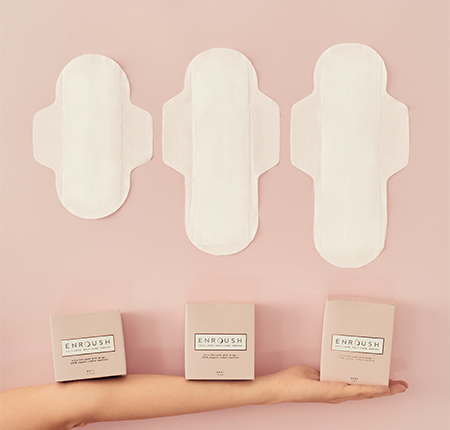
Replace plastic bags with biodegradable ones. Choose products with biodegradable packaging. Use tampons and pads made from 100% biodegradable organic cotton, which takes just two years to break down. On a large scale, sustainable choices like these have enormous potential to reduce plastic pollution.
Waste separation & recycling
Do you know why we collect waste separately? If everything ends up on the landfill site together, the methane produced as non-biodegradable materials rot away contributes to global warming. If, on the other hand, we separate our waste, it can be recycled and never needs to reach landfill in the first place.
If you rinse out packaging before putting it in the separate recycling, materials such as plastic, paper and cardboard, metals, glass and so on can be recycled and reused – and the amount of environmentally harmful waste falls.
Reduce energy consumption
Energy consumption places a constant burden on the environment through the exploitation of natural resources and the release of pollutants. From large office buildings and factories to our own homes, everyone can cut their energy use and, with it, their environmental impact.
Turning off the tap while brushing your teeth, unplugging electrical appliances when you're not at home and switching off the lights in rooms you're not using – these are a few simple ways to save energy.
Drive less
CO2 emissions from vehicles fuel and accelerate climate change. These effects are easy to reduce simply by driving less.
Switch to a bicycle instead – you'll keep active into the bargain. Or use public transport. More and more cities are opting for zero-emission transport with electric buses, reducing the impact on nature.
Consume fewer animal products
And no, that doesn't mean you have to go vegan. Consuming less doesn't mean giving up animal products altogether, but rather approaching them mindfully and responsibly.
When demand falls, so does supply. Less industrial fishing destroying the ocean's biodiversity. Less pollution from meat-processing plants. What's more, simply choosing plant-based products can cut your carbon footprint by up to 73%.
Don't worry: fewer animal-based foods doesn't automatically mean imbalances or deficiencies. Nature has made sure you can get all your macronutrients from sustainable plant sources too – including plant fats (avocado, oils, nuts and seeds) and plant proteins (soya, seitan, tofu, lentils, chickpeas, peas, beans and so on).
Volunteer litter-picking initiatives
Did you know you can volunteer to take part in litter-picking initiatives?
On UK coasts, for example, volunteer beach clean-ups such as the Marine Conservation Society's Great British Beach Clean are organised to protect the environment.Across the UK, community litter-picking groups and campaigns such as Keep Britain Tidy's Great British Spring Clean bring volunteers together to clean up their local areas. Right across the UK, voluntary initiatives like these reduce pollution of the environment by waste and thereby help deliver cleaner air, cleaner waters and healthier soils.
Shop responsibly
There are many more solutions for protecting the environment and steps you can take personally, but we'll round off our list with the subject of responsible shopping. For many of us, shopping is a passion – sometimes practically therapy. For the environment, however, impulsive, thoughtless purchases have negative consequences.
Shopping responsibly – that is, ethically and sustainably – means considering quality and environmental impact alongside price when making a purchase. Here's how you can help protect the environment by choosing:
- Products with as little plastic as possible
- Things you genuinely need – when you need them
- Products that are as natural as possible, from local producers
- Recyclable, organic or biodegradable alternatives
- Products with minimal packaging (e.g. loose-leaf tea instead of tea bags)
Environmental protection legislation
The 20th century was a turning point worldwide: the consequences of environmental problems became obvious, and tackling them was unavoidable if the destruction of nature was to be slowed. As a result, numerous environmental protection rules were introduced both internationally and in the UK through legislation and government decisions.
At European level, strict rules apply to preventing air, water and soil pollution. On top of this there are programmes setting targets for combating climate change and protecting the environment up to 2030. UK environmental law therefore governs, first and foremost, the conservation, improvement and protection of nature, followed by safeguarding citizens' health through the control of environmental problems, and the development of resource-efficient economies.
In Germany, too, environmental protection is regarded as a significant public interest. Alongside decisions taken by the UK Parliament, laws have been passed on the conservation, development and protection of water resources (the Federal Water Act), on environmental protection (the Federal Immission Control Act), on reducing and preventing the harmful effects of waste electrical and electronic equipment (the Electrical and Electronic Equipment Act) and others, all of which have been updated over the years.
The impact of feminine hygiene products on the environment
We can't avoid acknowledging that even the way we manage our periods matters for the environment. Studies show that more than 28,000 tonnes of waste come from menstrual products every year. Under these circumstances, how responsible is it to keep reaching for conventional period products?
Most conventional pads are in fact 90% plastic – with worrying levels of pesticides, chlorine, synthetic fibres and other chemicals. Tampons still contain 6% plastic. A single such product can take 500 to 800 years to break down, and every woman uses more than 11,000 tampons and pads in her lifetime.
Given that organic cotton takes just one to two years to break down, this kind of sustainable choice significantly reduces the burden of plastic and artificial substances on the environment.
That's why Enroush supports you in making healthy, sustainable choices – for your body and for Mother Nature. Did you know that Enroush pads are made from 100% organic cotton? That means it's processed according to the Global Organic Textile Standard and contains no pesticides, no chlorine, no synthetic fibres and no other toxins – just pure organic cotton.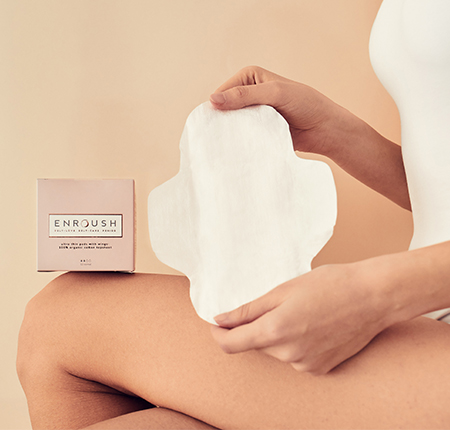
Why choose Enroush for the sake of the environment?
We want to offer you period care without compromise. Out of love for all women – and with care and respect for the environment. From the very beginning, our mission has been to offer you pads and tampons that protect your health using natural ingredients alone. That's why Enroush period products are made from 100% organic cotton. With no hidden substances.
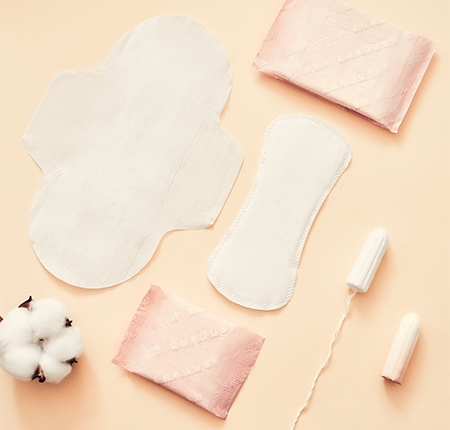
For your body, that means hypoallergenic period care without irritation or allergies, offering excellent leak protection thanks to an anatomical design and 100% natural fibres in the bottom layer. And for the environment: our products follow a transparent, ecological cycle – for the lowest possible impact and genuinely sustainable periods, in harmony with our planet's natural balance.

Medium, super or extra absorption

Low, medium or super absorption

Low or medium absorption


and happily breaking taboos!


