

Why should you use organic cotton sanitary towels?
Organic pads – EVERYTHING you need to know
Are you one of the millions of women who prefer to use pads during their period? If so, there are plenty of benefits to be gained – both for your health and for the environment – by switching from conventional pads to organic ones! Why is that? Today we're talking through all the advantages of these products, so you can decide whether you'd like to be a little more sustainable (and comfortable) at that time of the month. Read on!
What are pads?
Before disposable pads came along, there were various alternatives. The first mention of a menstrual product appears in Greece in the 10th century, described as "cloths made of cotton or wool, hare's fur, tufts of grass". By the 19th century, in both Europe and the USA, most "menstrual cloths" were made at home from all sorts of fabrics – hence the American euphemism "on the rag", which emerged in the 19th century to describe someone having their period. Incidentally, we've written an article here about what menstruating people used before tampons were invented.
Why you should go organic
If your health comes first:
Over the course of your life you'll probably use at least 10,000 tampons or pads – and in a very sensitive part of your body. So it's only natural to wonder what effect conventional pads might be having on your health and your body.
If the environmental impact concerns you:
Disposable pads will never perform as well as reusable products. But if you'd still rather stick with pads, there are several reasons why organic ones are far kinder to the planet than non-organic versions.
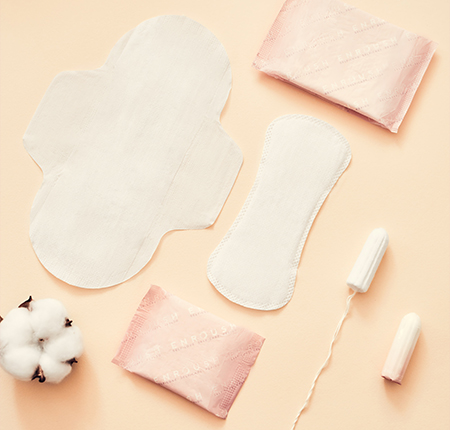
Good to know:
- A genuinely organic pad is grown and manufactured in a particular way – without pesticides and without chlorine bleaching.
- An organic pad breaks down within a few months, whereas a non-organic pad containing plastic takes several hundred years.
- If you have sensitive skin and struggle with irritation (redness, itching, allergies or rashes), these problems may disappear when you switch to organic pads.
The problem with conventional menstrual products
Numerous hidden chemicals and ingredients go into the manufacture of tampons and pads – and it's only recently that this has become a topic of public discussion. But things are changing!
Not least because waste is an enormous issue when it comes to menstrual products. Studies show that a single woman uses between 5,000 and 15,000 tampons and pads in her lifetime. That means vast quantities of plastic waste heading straight to landfill.
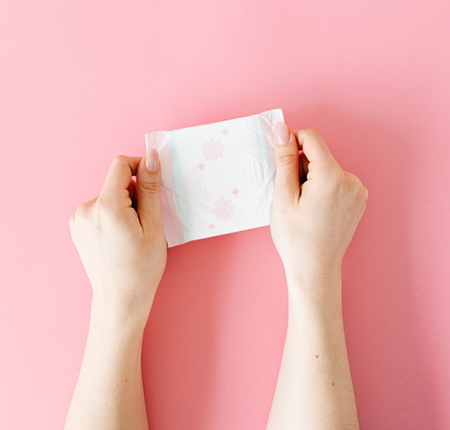
Possible health implications
It's only recently that we've begun looking into the hidden health consequences of using non-organic, conventional pads. And it's an important subject, because pads are in direct contact with your intimate area – so there's a strong chance that potentially harmful ingredients end up somewhere extremely sensitive. Here are a few of those ingredients:
Phthalates
A study examining several brands of menstrual products and nappies found high phthalate levels in the products and concluded with a worrying statement: it is likely that a considerable amount of phthalates is absorbed via the reproductive system.
Fragrances
Fragrances can contain thousands of chemicals, some of which are potentially harmful. Fragrances therefore have no place in any intimate care product – even if some very well-known and popular brands use them routinely.
Pesticides
Conventionally grown cotton is treated with very large quantities of pesticides. These chemicals can remain on the cotton long after harvesting, making their way into the pads you use month after month.
The benefits of organic cotton pads
Better for your body
Conventional pads contain chemicals called dioxins, which are created by the bleaching process used to make the material look white. Exposure to these chemicals, however, has been linked to an increased risk of cancer. According to the World Health Organization, dioxins can also cause hormone disruption, immune system problems, developmental disorders and reproductive conditions such as endometriosis, heavy bleeding and even infertility. If you use menstrual products containing dioxins, the tissues of the vagina and vulva can absorb these dangerous chemicals directly into your bloodstream. Fragrances and other chemicals in standard pads can also trigger irritation, itching and redness.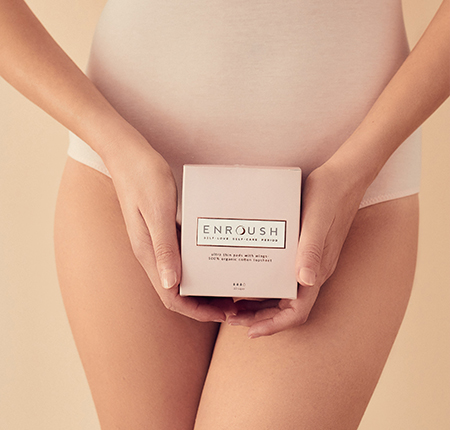
Organic pads are breathable
Unlike pads made from synthetic fibres and plastic, organic cotton pads let your skin breathe while keeping it dry thanks to an absorbent cellulose core. This softer material also reduces the risk of allergies and skin irritation caused by the plastic content of conventional pads. Equally, it can lower the risk of bacterial and fungal infections that can develop when the material doesn't allow enough air to reach your intimate area.
Comfortable all day long
You probably know that damp-nappy feeling that conventional pads can sometimes give you. That's because they're largely made of plastic and contain little or no cotton. The resulting fabric can feel scratchy against the skin and contribute to itching, burning and irritation. If a standard pad feels uncomfortable to you too, organic cotton pads could be the perfect way to banish those unpleasant sensations. The best part: you can wear them quite happily both day and night.
What's more, ENROUSH organic pads are ultra-thin, body-shaped and invisible under clothing. The wings are made from organic cotton too, preventing any unwanted leaks.
You're protecting nature and wildlife
Eco-friendly menstrual products such as organic pads made from 100% cotton (like those from ENROUSH) can have an extremely positive impact on the environment. According to studies, non-organic pads take up to 800 years to break down completely – compared with just 12 to 24 months for organic cotton products. Organic cotton farming also avoids pesticides that harm bees, birds and native insects, all of which play a vital role in our ecosystem.
Organic pads also use considerably less water and energy during manufacture than standard pads.
They're affordable
Organic cotton pads cost roughly the same as standard pads – just without the potential skin irritation and the environmental damage! Because organic cotton is so absorbent, many women find they need fewer products per period. That makes organic cotton pads a far more economical solution for your monthly routine!
And with an ENROUSH subscription you'll get an extra 15% off every order.
So whether you're concerned about the environmental impact of your period, mindful of the health effects of chemicals, or simply keen to put an end to discomfort and irritation – why not give organic pads a try?

Medium, super or extra absorption

Low, medium or super absorption

Low or medium absorption


and happily breaking taboos!


