

Sustainable periods? Yes, it's a thing!
Half the world's population needs (and uses) period products. To be more precise: a menstruating person buys around 12,000 disposable products over the course of their lifetime!
Yet few of us know that most period products contain up to 90% plastic, pesticides, chemicals and bleaching agents. On top of that, many manufacturers aren't transparent – so all these ingredients stay hidden and barely register with consumers; which, of course, only makes matters worse.
How are we supposed to become aware of these issues and learn about menstrual care when there's hardly any transparency? And how can you know what impact your period is having on the environment?
Is your period polluting the planet?
400 kilograms of menstrual waste: that's how much a single menstruating person produces in their lifetime! And conventional tampons and pads generate around 590,000 tonnes of waste every year – in the EU alone!
"Menstrual waste has an enormous impact on the environment. Many of these products contain plastics that are extremely difficult to break down," (Catherine Bozec, Zero Waste Scotland)
The hidden ingredients in tampons and pads
Most of the time, we never stop to ask what a tampon or pad might actually contain. Recent studies have shown that they harbour toxic substances that are readily absorbed into the bloodstream: endocrine disruptors, carcinogens, fragrances and pesticides. Yes, it sounds rather alarming…
And when all these harmful, hidden ingredients and plastics end up in landfill, sewage systems and waterways, the entire ecosystem suffers. Not to mention consumers' health.
What's the problem with conventional cotton?
And while we're on the subject of harmful materials: did you know that conventional cotton is the most heavily chemically treated crop in the world?
Today's cotton production methods are environmentally unsustainable. Current studies and research confirm it: conventional cotton farms use pesticides and, according to the World Wildlife Fund, consume considerably more water. So conventional cotton isn't just bad for your health – it also harms the workers who produce it and the environment.
Conventional cotton frequently contains hazardous toxins such as GMOs, pesticides, formaldehyde, aromatic solvents, heavy metals, chlorine and other chemicals. And if you use a period product made from conventional cotton, all those toxins find their way into your body.
Even though cotton is used so widely in everyday life (just think of the textile industry), that doesn't mean it's harmless. And precisely because demand is so high, conventional cotton farms use harmful pesticides to make the plants grow faster!
The good news: there's an alternative to all of this. And yes, it comes with a whole host of benefits – for your body and your health, as well as for the planet!
What is a sustainable period?
The term "sustainable period" describes eco-friendly alternatives to period products – reusable ones or those made from biodegradable materials. These include menstrual cups, tampons and pads made from certified organic cotton, reusable tampons and period underwear. All these alternatives are gentler on nature and on your body and health too. In short, it's about saying goodbye to toxic products.
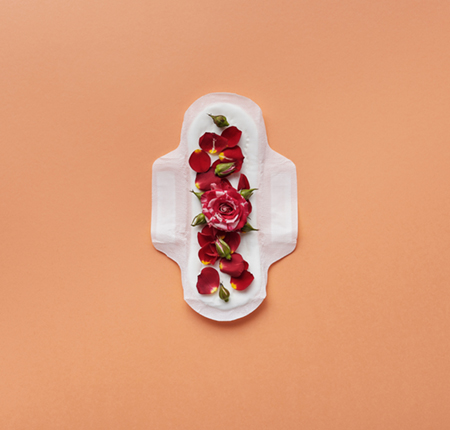
An ordinary shop-bought pad containing up to 90% plastic would take between 500 and 800 years to break down – and the toxic ingredients in the product can cause hormonal imbalances when they come into contact with your body. The solution? Avoid conventional products and look for toxin-free alternatives!
Toxin-free products
Fortunately, it's not complicated at all. Just start, one step at a time. By choosing organic cotton in your period products month after month, you'll have a positive impact on your own health and on the environment. And ENROUSH is right there with you, with the products you need – free from hidden toxins.
Made from 100% organic cotton, they guarantee that the pads and tampons you use come from safe, ethically sourced materials and meet environmental protection standards. Have you tried them yet? Tell us what you love about them!
Why you should choose organic cotton
Growing organic cotton has a positive effect on the environment: no pesticides are used, and the farming is sustainable – protecting natural resources such as water. Did you know that organic cotton farming uses less energy and supports biodiversity?
The encouraging part is that the period product industry has become more sustainable in recent years – a reflection of a wider shift in attitudes towards the environment and health. And when it comes to talking about periods, people are increasingly recognising that it's a perfectly natural process (although we've still got plenty of work to do here!). Where there was once barely any choice in period products, that's thankfully no longer the case today.

Medium, super or extra absorption

Low, medium or super absorption

Low or medium absorption


and happily breaking taboos!


