

8 May – The Day We Fight Ovarian Cancer
What do we actually know about ovarian cancer? How is it detected, which signs should we look out for – and why are we talking about it today of all days?
It's a health issue that all too easily goes unnoticed in its early stages. But did you know that ovarian cancer is the sixth most common cancer among women in the UK?
The good news: there's plenty you can do to lower your risk of ovarian cancer, or to catch and treat it early. The 8th of May, officially designated World Ovarian Cancer Day, offers the perfect occasion for an open conversation: to raise awareness of just how serious this disease is, and to talk about how sound knowledge, vigilance and care can save your life.
The 8th of May is World Ovarian Cancer Day
At the initiative of the World Ovarian Cancer Coalition, the 8th of May was officially declared a global day in the fight against ovarian cancer back in 2013. Put simply: we dedicate the 8th of May to everyone around the world battling ovarian cancer, and to their families – and we draw attention to the seriousness of this disease.

What are we highlighting on this occasion?
These are the points that this international day in the fight against ovarian cancer brings to the fore – and the goals it pursues:
- Raising awareness: It's a very real problem, causing more deaths than any other cancer of the female reproductive system.
- Informing and educating: Because ovarian cancer produces only a few symptoms and signs, these are often overlooked; once we know them, we pay closer attention and can recognise them.
- Showing solidarity: We stand alongside the women fighting ovarian cancer, and their families.
- Supporting research: Difficult, late diagnosis has a direct impact on survival rates. On the 8th of May, we encourage researchers to continue their studies in order to find more – and more effective – ways of detecting ovarian cancer early.
The vision behind this day is awareness. Awareness leads to action – and action can ultimately save lives. Solidarity and education are the key words of this movement, which grew out of precisely that desire: to support women already fighting ovarian cancer, and to promote knowledge, mindfulness and early detection.
What you should know about ovarian cancer
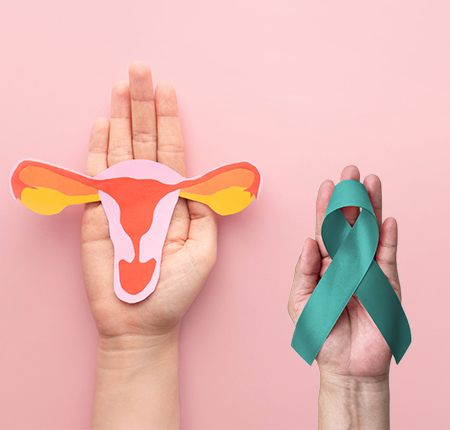
Within your pelvic area sit two ovaries, which produce eggs. Alongside them are the two fallopian tubes, through which eggs travel from the ovaries to the womb. These are precisely the organs most affected by ovarian cancer.
Many women believe it begins in the ovaries. In reality, however, ovarian cancer refers to a whole group of conditions that develop either in the ovaries or in the surrounding structures – such as the fallopian tubes or the peritoneum, the membrane lining the organs of the abdomen. Later on, it can spread to the liver, stomach or lungs.
While any woman can develop ovarian cancer, it most commonly occurs in women over 50 – and genetics often play a part. Let's look at what you should know about the causes, forms, symptoms and treatment.
Forms of ovarian cancer
Ovarian cancer can appear as a wide range of tumour types, divided into types and subtypes. There are many – here are a few key points:
- Epithelial ovarian cancer is the most common form of ovarian cancer, affecting the outer surface of the ovaries in 85–90% of cases.
- Germ cell tumours account for less than 2% of ovarian cancer cases; teenagers and young women around the age of 20 are particularly at risk.
- Stromal tumours make up around 1% of ovarian cancer cases and are often detected early, because vaginal bleeding occurs – the most common sign.
- Serous adenocarcinoma is the most common subtype of ovarian cancer, with aggressively growing tumours.
Signs and symptoms of ovarian cancer
Sadly, one of the main reasons for the high mortality rate among ovarian cancer patients is late detection. Ovarian cancer has no obvious symptoms: they are subtle and all too easily missed – which is why women often only see a doctor at an advanced stage.
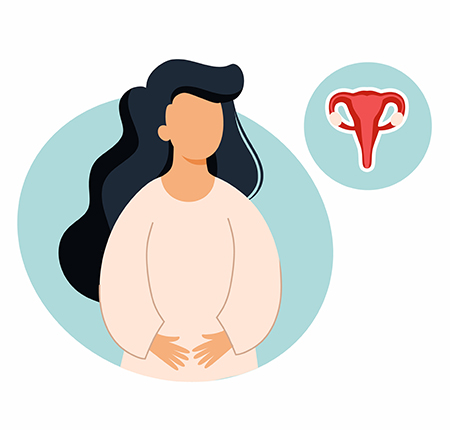
The best-known symptoms of ovarian cancer are:
- Bloating or constipation
- Loss of appetite or feeling full very quickly
- Pain or tenderness in the abdomen or pelvic area
- Frequent and sudden urge to urinate
- Vaginal bleeding after the menopause
- Fatigue or low energy
- Digestive problems
- Back pain
- Weight loss
This is why it's so important to pay attention to every signal your body sends, and to discuss even seemingly harmless changes with your gynaecologist. Because having ovarian cancer examined, diagnosed and treated early can save your life.
Ovarian cancer – causes
Doctors and researchers don't yet know the exact causes, and the subject is still being studied. In principle, anyone with ovaries can develop ovarian cancer. The risk increases with age, particularly from 50 onwards, as well as if:
- you have inherited certain mutations of the BRCA1 or BRCA2 genes;
- you have endometriosis or diabetes;
- your first period started very early;
- your menopause only began after the age of 55;
- you have previously had breast cancer, bowel cancer or another type of cancer;
- you are overweight;
- you smoke.
The most effective way to lower your risk of ovarian cancer is through a healthy lifestyle. Avoid smoking, maintain a healthy weight and remember to attend regular check-ups – especially if your mother, sister or other family members have been affected.
Treating ovarian cancer
The main treatments are chemotherapy and surgery. Your doctor will, however, decide on the therapy depending on which form of ovarian cancer is present, how large the tumour is and where it sits, your overall state of health, and whether the cancer has spread to other organs.
The treatment options currently available include:
- Surgery: If ovarian cancer is detected early, it can be treated surgically by removing both ovaries and fallopian tubes, or all affected organs.
- Chemotherapy: This involves medicines that kill cancer cells, and can be used before or after surgery, or without surgery altogether.
- Targeted therapy: This uses medicines that attack only those mechanisms allowing cancer cells to grow and survive.
- Radiotherapy: This uses X-rays to destroy cancer cells.
- Hormone therapy: Oestrogen production encourages cancer cells to grow; hormone therapy can block this production and thereby slow the cancer down.
Can ovarian cancer be prevented?
At present, there are no proven ways of preventing ovarian cancer – other than reducing your risk by living as healthily as possible. This is precisely why further research in this area is absolutely essential.
What we do know so far, though, is this: the best thing you can do is listen to your body and protect it. How?
- Regular visits to your gynaecologist: During the examination, your gynaecologist will palpate the ovaries and establish whether they are enlarged or tender – a possible indication of ovarian tumours and a sign that further investigation is needed. Not all tumours can be detected this way, particularly in the early stages, but it's an excellent first method for spotting any cancer of the reproductive system. Investigations can then continue so that diagnosis and treatment can begin straight away.
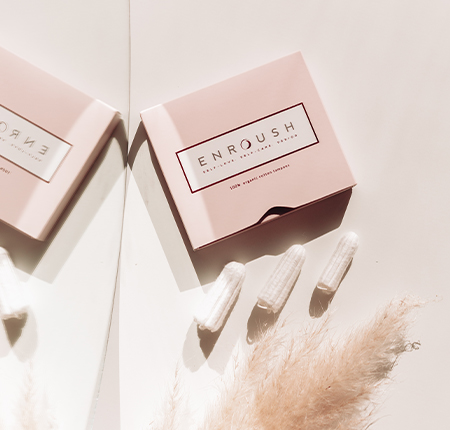
- Healthy period products: Protecting your body and caring for your intimate area is hugely important for your health. Conventional tampons and pads often contain plastics, chemicals and carcinogenic substances that do you harm. Tampons made from 100% organic cotton and Enroush's natural period products support your reproductive health – with pure ingredients only.
- Breastfeeding: Studies from 2020 show that giving birth and breastfeeding were associated with a lower risk of ovarian cancer – and the longer the breastfeeding, the greater the reduction in risk.
How does ovarian cancer affect your periods?
Ovarian cancer itself doesn't stop your periods. In theory, you can still have your period even as a tumour is forming in your body. But since it mainly affects the ovaries, which are responsible for ovulation, any form of ovarian cancer can certainly influence your cycle.
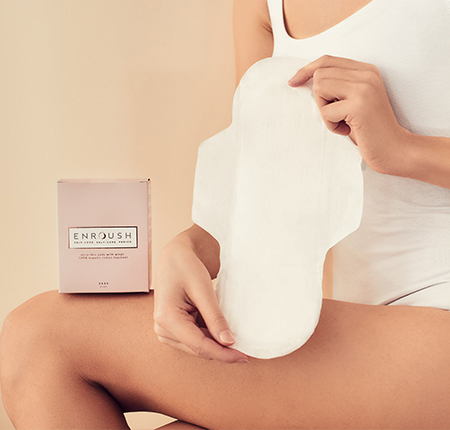
You may experience cycle disturbances with irregular bleeding or heavy flow. Because at Enroush we've made it our mission to offer you the best possible period care, we've developed organic pads with exceptionally high absorbency that can handle even heavy flow – and support you through difficult bleeding while you're fighting ovarian cancer.
Your health matters to us – on World Ovarian Cancer Day, we're raising our voice
The most powerful thing we can do is break the silence around ovarian cancer. Women's health has been close to the heart of the Enroush community from the very beginning, and we're glad to have been able to tackle this subject too on this international day in the fight against ovarian cancer.
Our readers will know, of course, that our commitment doesn't end on this page – it's part of Enroush's wider mission: to make period care and reproductive health accessible to as many women as possible.
Whether it's preventing ovarian cancer or dozens of other intimate health conditions, knowing what comes into contact with our bodies is crucial. That's exactly why we developed our products from 100% organic cotton – with clear, honest labelling. So you know precisely what you're putting inside your body when you use a tampon, and what's touching your skin when you wear a pad. We've written about the benefits of organic pads in more detail HERE.
By talking about intimate health and periods, every one of us can help create a healthier world for women. We'd love you to become part of the Enroush community, and we hope to see you on social media too – where every share counts in helping our message and the conversation about ovarian cancer reach as many people as possible!

Medium, super or extra absorption

Low, medium or super absorption

Low or medium absorption


and happily breaking taboos!


