

Myths about the morning-after pill
There are countless myths and misconceptions surrounding the morning-after pill! Since sex education is still lacking in many schools and communities, it's all too easy to miss the correct details and information about contraceptive methods.
And if you need the morning-after pill but find yourself dreading the possible side effects or recalling stories you've heard, you're bound to have a few questions. So which are the most common myths?
The morning-after pill causes an abortion!
Whether you opt for the pill containing levonorgestrel or ulipristal acetate, neither can terminate a pregnancy. If you're already pregnant, emergency contraception has no effect whatsoever on your body. The hormone contained in these pills works by delaying or preventing ovulation — exactly like the standard contraceptive pill: it's simply a higher dose! The pill can only prevent a pregnancy.
Can emergency contraception cause infertility?
The morning-after pill only works temporarily and in no way alters your ability to conceive. There are no studies showing that taking the emergency pill repeatedly can cause infertility.
At the same time, this myth about using emergency contraception more than once persists. The truth is: it doesn't cause fertility problems. It simply prevents pregnancy on a temporary basis.
You can only take the pill once in your life!
You can use emergency contraception containing levonorgestrel more than once. Given the possible side effects on the body, however, it shouldn't be taken more than twice a year — and only in emergencies.
Not least because it's no substitute for a regular contraceptive method and, crucially, it doesn't protect you from sexually transmitted infections.
Is emergency contraception effective EVERY TIME?
We wish it were! Sadly, it isn't always. First of all, it depends on how much time has passed since you had unprotected sex. Both pills are especially effective within the first 12 to 24 hours. What's more, the emergency pill works by delaying or preventing ovulation. So if you take it after ovulation, it won't work. Its window of effectiveness is limited.
There are also medicines that can reduce its effectiveness, such as certain epilepsy treatments.
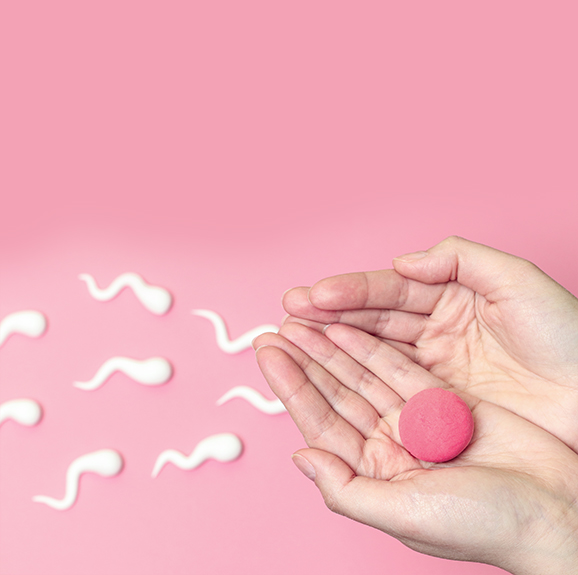
One single pill covers your whole menstrual cycle!
Wrong. Every time you have sex, you should use contraception. The morning-after pill only works for 72 to 120 hours after the most recent episode of unprotected sex.
Does the pill still work if I'm ovulating right now?
Emergency contraception delays or prevents ovulation. If you take the pill after ovulation has already taken place, it won't work. Both types of pill are only effective when taken before the egg is released.
Will I ever get my period again?
The pill containing ulipristal acetate can delay menstruation by a few days — this is perfectly normal: your cycle may shift by up to a week beyond the expected date. If the delay exceeds 3 to 4 weeks, however, you should take a pregnancy test. If the test is negative, it's worth seeing your gynaecologist for further investigation. If it's positive, do also get in touch with a gynaecologist to discuss your options and next steps.
The myths above, and plenty of others, are still widespread when it comes to emergency contraception. The important thing is to seek out the right information and keep yourself informed — and if you have any further questions, drop us a line! Until then: enjoy protected sex!

Medium, super or extra absorption

Low, medium or super absorption

Low or medium absorption


and happily breaking taboos!


