

Period Bleeding Despite Pregnancy – Why Bleeding Occurs During Pregnancy & When You Should See a Doctor
A missed period is one of the first and clearest signs of pregnancy. If you're pregnant, your body no longer sheds the womb lining it has just built up to support the development of the foetus.
Statistics show, however, that one in four women notices vaginal bleeding during pregnancy — even in pregnancies that progress without complications. How is this possible, and what does it mean to have something resembling a period while pregnant? This article tells you everything you need to know.
What does 'menstruation during pregnancy' mean?
According to statistics, around 20–30% of pregnant women experience vaginal bleeding during pregnancy. This bleeding may be light or it may be heavier — heavy enough to soak pads and tampons, requiring them to be changed. For this reason, it's easily mistaken for a period.

Is it possible to have a period during pregnancy?
Having a period during pregnancy isn't possible, even if it feels as though you're having one. Bleeding can occur, but it doesn't come from menstruation — physiologically, that's ruled out.
Menstruation occurs when the body sheds an egg along with the endometrium (the womb lining). This doesn't happen in pregnancy, because the egg implants itself in the endometrium and neither is expelled with menstrual blood.
So when bloody discharge appears, it isn't menstrual blood but bleeding with other causes. These causes may signal complications, or they may be entirely normal occurrences that have no bearing on the growth and development of the foetus.
The difference between menstruation and bleeding during pregnancy
Menstruation is a normal biological function in which the body sheds blood and endometrial tissue each month when the egg hasn't been fertilised, hasn't implanted in the womb lining, and no pregnancy exists. This type of bleeding lasts 3 to 7 days, is relatively heavy (period products are needed to avoid leaks) and may be accompanied by clots or period cramps.
In pregnancy, the egg is fertilised and implanted in the womb lining, so menstruation isn't possible. No further ovulation takes place, which is why 'menstruation during pregnancy' simply refers to bleeding that occurs while pregnant. As a rule, this discharge during pregnancy is short-lived and light (a panty liner is enough to protect your underwear). If the bleeding is heavy, it could point to complications — in which case you should see a doctor straight away.
In short: menstruation and pregnancy are mutually exclusive. If you're pregnant, there's no period — and conversely, if you're having a period, you're not pregnant. The key difference between the two types of bleeding lies in the cause.
Menstrual bleeding results from the shedding of the endometrium; bleeding during pregnancy has other causes — some harmless, some concerning — which we'll look at in more detail in the next section.
Possible causes of bleeding during pregnancy
It's true that heavy bleeding can indicate a problem, but bleeding during pregnancy doesn't always mean danger. In fact, many women who experienced bleeding during pregnancy went on to give birth to healthy babies with no complications. That's because the causes can be very varied, and many of them are perfectly normal.
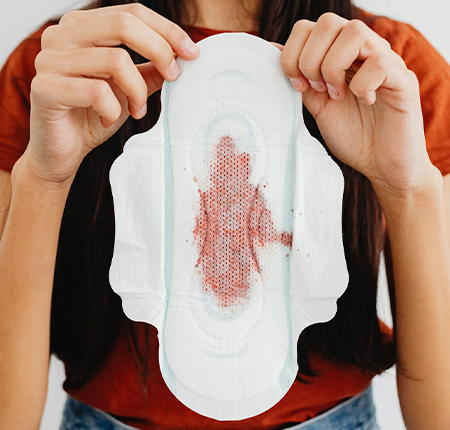
Here's what often lies behind bleeding during pregnancy:
Implantation bleeding
Around one in three women notices implantation bleeding very early in pregnancy, roughly 10 to 14 days after conception. It's light bleeding, similar to spotting, and it's entirely normal for it to occur as the fertilised egg implants in the womb.
The movement of the embryo as it embeds itself in the more sensitive womb lining can trigger bleeding. This isn't heavy, but it can last anywhere from a few hours to 3 days and may give you the impression that your period has arrived.
Hormonal changes that can cause spotting
A pregnant woman's body goes through enormous hormonal changes. Just as such changes can trigger bleeding between periods, they can also do so during pregnancy.
The continuous and marked rise in oestrogen and progesterone can cause spotting around weeks 4 to 8 of pregnancy. There may also be a sudden, temporary drop in progesterone levels, which in turn triggers light bleeding.
Bleeding after sex
Unless your doctor advises abstinence, most women can continue their sex life during pregnancy without affecting the development of the foetus. However, since the tissue of the vagina and cervix is particularly sensitive during this time, spotting or light bleeding may occur after intercourse.
Health problems
There are also less benign causes of bleeding during pregnancy — these are usually heavier and accompanied by other worrying symptoms. That's why it's wise to speak to your doctor at the very first signs, so that any complication can be identified early, before it puts your baby's health or your own at risk.
Health problems that cause bleeding during pregnancy include:
- Subchorionic haematoma: bleeding between the placenta and the womb wall
- An infection: this could be a vaginal infection, a urinary tract infection or a sexually transmitted infection
- Ectopic pregnancy: when the egg implants outside the womb; such a pregnancy cannot be carried to term and constitutes a medical emergency, as it can endanger the mother's life.
- Threatened miscarriage: vaginal bleeding is the first symptom of pregnancy loss before week 12
- Placenta praevia: an abnormal position of the placenta in the lower part of the womb, associated with a risk of vaginal bleeding, particularly in the second half of pregnancy
- Placental abruption: the separation of the placenta from the womb before the baby is born
- Labour or premature birth: the dilation of the cervix and contractions can trigger bleeding
How to tell you're pregnant even though you're bleeding
Most women don't know they're pregnant until week 13 — especially if they're not expecting a pregnancy. Even implantation bleeding can be mistaken for spotting or a period. So how do you tell you're pregnant when you're experiencing vaginal bleeding?
One of the first signs of pregnancy is a missed period, so keep an eye on that. If bleeding does occur, note how heavy it is and how long it lasts. If you don't need to change your pads all that often and the bleeding stops after 1–2 days, it may not be a period but implantation bleeding.
Look out for other early signs too, including nausea, fatigue, sensitivity to certain smells, needing to wee more often, and tender breasts.
The surest route to confirmation remains pregnancy tests and ultrasound scans. These rely on concrete measurements to establish whether or not you're pregnant.

When to see a doctor if you're bleeding during pregnancy
Since it's quite difficult to distinguish normal bleeding in pregnancy from the worrying kind, it's advisable to visit your gynaecologist at the first signs. They can confirm whether it's a normal pregnancy-related change or whether there's a serious problem.
Seek medical help immediately, however, if:
- you have heavy bleeding or bleeding with clots
- the blood is bright red and soaks through your pad
- the bleeding is accompanied by other symptoms, such as dizziness, fainting, abdominal cramps, fever, severe stomach pain, pelvic pain and so on
Frequently asked questions about menstruation during pregnancy
We've established that there is no such thing as menstruation during pregnancy. Once the egg has implanted in the womb, the body no longer sheds menstrual blood with endometrial tissue.
But we know how confusing bleeding during pregnancy can be and how many questions it raises — so in this section we've gathered as many answers as possible for you:
How common is bleeding during pregnancy?
Bleeding is commonly observed during pregnancy, particularly in the first trimester, when implantation bleeding or hormone-related bleeding occurs. It's estimated that around one in four women notices some form of bleeding or spotting at some point during pregnancy.
Can implantation bleeding be mistaken for a period?
Implantation bleeding may last only a few hours or up to 3 days. The longer it goes on, the more likely you are to assume your period has arrived. Generally, though, implantation bleeding isn't as heavy and isn't accompanied by clots or such intense abdominal cramps.
Can a pregnancy test be positive if I'm bleeding?
Yes. A home pregnancy test measures the amount of hCG hormone in your urine, which rises during pregnancy. The result isn't affected by the presence of blood.
What tests should I have if I suspect I'm pregnant but I'm bleeding?
You can take a home pregnancy test or see your doctor to have a pregnancy confirmed by blood test or ultrasound.
Which symptoms should worry me if I'm bleeding during pregnancy?
If the bleeding is heavy or contains clots, if the blood is bright red and you need to change several pads, or if other worrying symptoms appear (such as dizziness, fainting, fever, severe pain and so on), see a doctor immediately. These can be signs of an infection or pregnancy complications that should be identified early.
Image source: Pexels.com

Medium, super or extra absorption

Low, medium or super absorption

Low or medium absorption


and happily breaking taboos!


