

Amenorrhoea: Causes, Symptoms, Treatment
Does this sound familiar? Even though you've long since got used to it and have access to super-absorbent, comfortable organic period products, your first reaction is sometimes still an eye-roll when you realise your period has arrived? Bleeding again, cramps again, cravings again. And yet… somehow you're a little pleased too, aren't you? It's a sign that everything in your body is working as it should. Sadly, the same can't be said of amenorrhoea.
Going month after month without a bleed might sound tempting at first, but the absence of menstruation – which is precisely what amenorrhoea means – usually points to a hormonal disturbance or a more serious health problem. So let's look at what you should know about amenorrhoea, when it's cause for concern and when you really ought to see a specialist.
What is amenorrhoea?
Amenorrhoea is a disorder of the menstrual cycle and means the absence of your period, or its failure to appear over several months. Depending on when it occurs, there are two forms:
- Primary amenorrhoea: You have never had a period and by the age of 15 your first bleed still hasn't arrived.
- Secondary amenorrhoea: This occurs at some point in life in women who have already had a menstrual cycle. The period is delayed or fails to arrive – in other words, it suddenly stops for three or more consecutive months. The most common cause of secondary amenorrhoea is pregnancy – but it isn't the only one. We'll come to the other possible causes shortly.
Amenorrhoea: causes
The reasons why a cycle stops or is delayed can be many and varied. They also differ according to the type of amenorrhoea.
Primary amenorrhoea is usually due to hormonal disturbances or various anatomical malformations of the vagina, womb or hymen. Problems affecting the hypothalamus, genetic conditions such as Turner syndrome, or delayed puberty can also cause primary amenorrhoea.
Secondary amenorrhoea can, as mentioned above, be triggered by pregnancy, but also by certain medicines, stress, hormonal problems, sudden weight loss or other illnesses. Likewise, primary ovarian insufficiency, polycystic ovary syndrome, disorders of the brain or hypothalamus, or kidney failure can cause secondary amenorrhoea.
Below we discuss some of the most common causes of amenorrhoea, and when it's normal for a period to be late or to stop suddenly – and when it isn't.
Natural amenorrhoea
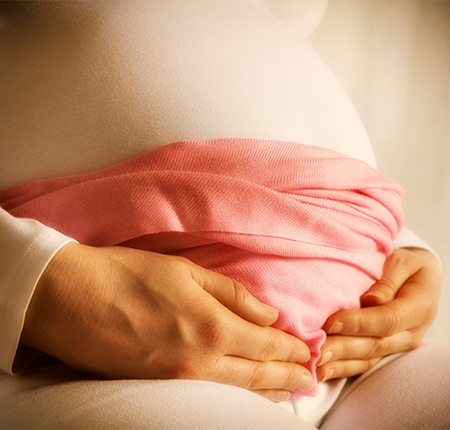
There are situations in which the absence of menstruation is perfectly normal – these cases are known as natural amenorrhoea. Pregnancy is one example. When you become pregnant, one of the first signs is a missed period, and that is entirely normal.
Amenorrhoea while breastfeeding is also normal, because prolactin (the hormone that promotes milk production) prevents ovulation and the return of the normal menstrual cycle. If you're breastfeeding, it can therefore take up to a year for the amenorrhoea to end and your period to return.
And of course we speak of amenorrhoea as a natural process at the menopause, which is essentially defined by exactly this: the end of the menstrual cycle and the absence of bleeding. After the age of 40 to 50 (sometimes earlier), 12 months of amenorrhoea is considered the menopause.
Contraceptives
You already know that the pill, and hormonal contraceptives generally, directly affect your hormone levels and your menstrual cycle. If not, let's talk about it: a while ago on the blog we told you everything about the contraceptive pill.
So another very common cause of a missed period can be starting hormonal contraception – until the body has got used to the synthetic hormones and the cycle settles down.
There are also cases in which the period simply disappears altogether in women using hormonal contraceptives. This can happen with oral preparations as well as with injections or implants. Even some coils can lead to amenorrhoea, and after stopping it can take some time before ovulation and menstruation return to normal.
Various medicines
Have you ever wondered whether paracetamol stops your period? The answer is no – but there are plenty of other medicines that do. Medications whose use can lead to amenorrhoea include:
- Antipsychotics and antidepressants
- Medicines used to treat allergies
- Blood pressure medication
- Chemotherapy for cancer treatment.
Lifestyle
- Body weight
- Excessive physical exercise
- Stress
Is there a single health topic where lifestyle isn't one of the main causes? Everyday activity, stress levels, diet, body weight and physical exertion affect your immune system and your health in all sorts of ways – and the reproductive system and menstrual cycle are no exception. So sometimes lifestyle factors also contribute to amenorrhoea, for example:
- Stress: Prolonged periods of stress can cause temporary dysfunction of the hypothalamus – and, as mentioned above, that can trigger amenorrhoea. The hypothalamus is the part of the brain that controls the hormones regulating your menstrual cycle. If this hormonal balance is disrupted, ovulation and menstruation can fail to occur. As a rule, the cycle returns to normal shortly after these stress factors disappear.
- Being underweight: Too low a body weight can interrupt or unbalance natural hormone production and therefore many hormonal functions. Being around 10% below a normal weight is considered underweight – and that can affect ovulation. The risk of amenorrhoea is therefore particularly high in women with anorexia, bulimia or other eating disorders.
- Being overweight or obese: At the other end of the spectrum is excess body weight, which is associated with a greater risk of an irregular cycle and menstrual disorders. Obesity is often linked to polycystic ovary syndrome – a problem that can lead to missed periods and amenorrhoea.
- Excessive physical activity: Intense, sustained physical exertion can lead to very high energy expenditure and a low body fat percentage – factors that can interrupt the menstrual cycle. That's why amenorrhoea can occur in people who train several times a day or do a sport involving hard, exhausting training sessions (e.g. gymnastics, ballet). Girls and women in this situation should see a sports medicine specialist to draw up an individual plan and avoid such problems.
Hormonal imbalance
Balanced hormones are the foundation of a normal menstrual cycle. Oestrogen and progesterone are two reproductive hormones produced in the ovaries that directly influence ovulation.
A hormonal imbalance is therefore one of the main causes of amenorrhoea, and there are several conditions that can bring it about:
- Polycystic ovary syndrome (PCOS): Normally, hormones fluctuate over the course of the menstrual cycle (hence the mood swings, cravings and so on). With PCOS, however, hormone levels are permanently raised and constant. Without the normal fluctuations, ovulation may not take place – and so amenorrhoea develops.
- Thyroid dysfunction: Menstrual disorders – including amenorrhoea – can result from thyroid conditions, both hypothyroidism (an underactive thyroid producing too few thyroid hormones) and hyperthyroidism (an enlarged thyroid producing too many thyroid hormones).
- Pituitary tumour: Disorders of the pituitary gland can also lead to a missed period, as they affect the hormones responsible for regulating the cycle. A benign (non-cancerous) tumour such as a prolactinoma can therefore be a cause of amenorrhoea.
- Premature menopause: As mentioned above, amenorrhoea is normal at the menopause, which occurs naturally after the age of 40 to 50. There are cases, however, in which egg maturation ends before the age of 40 – this is known as premature menopause, where periods stop and amenorrhoea begins earlier.
Problems and malformations affecting the cervix
Last but not least, anatomical changes to the reproductive organs can lead to amenorrhoea. These include:
- Scarring in the womb: After a dilatation and curettage, a caesarean section or treatment for uterine fibroids, scar tissue can build up in the lining of the womb. This prevents it from breaking down normally through menstruation and can lead to amenorrhoea. This condition is called Asherman's syndrome.
- Absence of reproductive organs: This is one of the main causes of primary amenorrhoea and arises from problems during the development of the foetus. The girl is then born without certain reproductive organs (e.g. vagina, cervix or womb), which means the reproductive system cannot develop fully and a menstrual cycle is impossible throughout life.
Structural malformations of the vagina: If an anatomical anomaly (for example a membrane) blocks the vaginal canal, the blood may not be able to flow visibly out of the womb or cervix and cannot be expelled.
Symptoms of amenorrhoea
In line with the definition, amenorrhoea shows itself through the absence of menstruation. Depending on the underlying cause, other signs and symptoms may also appear, including:
- Lower abdominal pain
- Headaches
- Acne
- Excessive hair growth on the face and body
- Hair loss
- Visual disturbances
- Milky discharge from the nipples
- Excessive sweating and hot flushes
- Vaginal dryness.
When you should see a doctor
As soon as you notice that you have amenorrhoea. In most cases amenorrhoea is not normal – unless you are pregnant or going through the menopause. So if you are 15 years old and haven't yet had your first period, or if three months suddenly pass in a row without a bleed and without a natural explanation, you should arrange a gynaecological examination as soon as possible to find the cause and get a solution.
A gynaecological examination is all the more important if the amenorrhoea is accompanied by other symptoms listed above. Make an appointment as quickly as you can if:
- you notice milky discharge from your breasts even though you haven't given birth recently;
- you notice excessive hair growth on your body or face;
- you experience problems with vision or balance.
What questions should I ask my doctor?
We're sure that when you have amenorrhoea, countless questions are whirling round your head – and it's completely normal to feel unsettled. Why have you never had a period even though you're already 15 and all your friends had their first one ages ago? Why has your period suddenly disappeared? Are there tablets that bring on menstruation? What can you do to make your period come back?
Menstruation is something natural, and if it never arrives or suddenly stops, it's normal to wonder what's wrong. Your doctor can help you find all the answers – so that's exactly where you should ask. Everything! Everything that worries you. Here are some questions to start with (and of course the list can go on as long as you like if there are other aspects of your reproductive health on your mind):
- What is causing the amenorrhoea?
- Can I still get pregnant with amenorrhoea? Is there a risk that it makes me infertile?
- What treatment options are there for amenorrhoea?
- Which solution is best for me, and what are its advantages and disadvantages?
- Do I need an appointment with an endocrinologist for hormone therapy?
- Has my period stopped because I came off the pill?
How is amenorrhoea diagnosed?
Diagnosis and identifying the cause is the job of your gynaecologist. They will ask how many months your period has been absent, whether you have other symptoms, what your medical history looks like and what your cycle is normally like (whether it's regular or irregular, whether you've had amenorrhoea or other menstrual problems in the past, and so on). A physical examination is also needed for as accurate a diagnosis as possible.
Blood tests
Alongside the gynaecological examination, further genetic and blood tests may be ordered to establish the exact cause of the amenorrhoea and choose the best treatment. Blood tests can measure hormone levels, so disorders of the adrenal glands or thyroid can be detected. The following tests may be carried out:
- Pregnancy test: to rule out pregnancy as the reason for your missed period – in which case the amenorrhoea would be normal. We've discussed pregnancy tests in detail HERE.
- Thyroid function: Blood tests can measure levels of thyroid-stimulating hormone (TSH), which shows whether the thyroid is working properly.
- Ovarian function: Similarly, follicle-stimulating hormone (FSH) is measured in the blood to establish whether everything is in order with the ovaries.
- Prolactin level: The prolactin level in the blood is measured; a very low value can indicate problems with the pituitary gland.
- Male hormones: This test measures the level of male hormones in the blood and is carried out if you notice excessive hair growth on your face or body, or your voice deepening.
Imaging tests
MRI scans and ultrasound are further supplementary methods used to diagnose amenorrhoea and its cause. They can help identify problems with the pituitary gland or the reproductive organs (ovaries, womb).
Treatment of amenorrhoea
Natural amenorrhoea – that is, the absence of menstruation during pregnancy, breastfeeding or the menopause – doesn't need treating. You can rest easy: in these stages of life it's completely normal not to have a period.
For all other forms of amenorrhoea, treatment depends on the cause and your medical history. For example, if the trigger for your missed period is:
- Stress – then plenty of rest along with relaxation, meditation and stress management techniques are recommended.
- A sedentary lifestyle or an unhealthy diet – then as balanced a diet and exercise plan as possible is advisable, in order to reach a healthy activity level and body weight.
- Excessive training – then reducing physical exertion is recommended.
- A hormonal disorder – then hormone therapies are prescribed to restore the balance, and so on.
Surgery for amenorrhoea
In very rare cases, surgery is the only way to resolve amenorrhoea and get your period back. An operation may be necessary if there is an anatomical problem, such as a cyst or tumour on the womb, ovaries or pituitary gland. Once this growth has been removed, menstruation should return to normal.
Risk factors for amenorrhoea
The risk factors for amenorrhoea are essentially linked to lifestyle and medical history. You are at greater risk if you have:
- A lifestyle involving excessive stress
- Eating disorders
- A diet low in nutrients
- A body weight that is too low or too high
- An excessive or overly intense training plan
- Family members with a history of amenorrhoea or premature menopause
- Genetic conditions affecting your reproductive organs (womb or ovaries)
- A chronic illness.
Complications of amenorrhoea
Although amenorrhoea isn't dangerous in most cases – that is, it isn't life-threatening – it does affect quality of life. Depending on the cause, untreated amenorrhoea can lead to long-term complications:
- Lower abdominal pain: if the cause is anatomical, i.e. related to the structure of the reproductive organs.
- Cardiovascular problems or osteoporosis: if the cause is a low oestrogen level.
- Infertility or difficulty conceiving: because amenorrhoea means that ovulation isn't taking place and reproductive function is impaired.
It's important to understand that the menstrual cycle is a natural and normal function showing that your body is working properly. However tempting it may sound to be rid of that monthly visit, its absence isn't normal and means there is an imbalance in the body. Amenorrhoea can point to a more serious health problem – which is why it's important to see a doctor as early as possible for diagnosis and treatment.

Frequently asked questions about amenorrhoea
We're among friends here. Just because we've covered all the important topics around amenorrhoea doesn't mean you can't ask more questions. That's exactly how it goes when you talk to a friend: she tells you as much useful information as she can, and then you ask the last few questions still on your mind.
That's precisely what we're doing here: at the end of the article we try to give you the answers you may not have found in the rest of the text, but which are sure to interest you.
How long does amenorrhoea last?
Amenorrhoea is diagnosed if you have never had a period or if it has been absent for three consecutive months. And when it comes to how long it takes for the cycle to return to normal, it all depends on the cause and how quickly you seek professional help:
- Amenorrhoea during pregnancy and breastfeeding lasts until the birth or until you stop breastfeeding; after that, your period returns a short while later.
- Amenorrhoea resulting from the menopause means the end of the menstrual cycle – so your period won't return.
- Secondary amenorrhoea can usually be treated, so it lasts until treatment begins. In other words: the sooner you have a gynaecological examination for diagnosis and treatment, the shorter the amenorrhoea will last. It may take a few months for the treatment to work, but if you follow your doctor's advice, menstruation will eventually return and the cycle will normalise.
Can I get pregnant with amenorrhoea?
With amenorrhoea it can be harder to get pregnant – but it isn't impossible. As a rule, a missed period suggests that ovulation hasn't taken place, and without ovulation there can be no pregnancy. Even so, ovulation is possible, particularly if the amenorrhoea has a hormonal cause – so pregnancy isn't completely ruled out.
The best example is the period after giving birth: while breastfeeding, even if your period hasn't yet returned, you can become pregnant again as early as four weeks after the birth.
If my period comes back – can I get amenorrhoea again?
Yes. Any hormonal disturbance or major change in life can affect your day-to-day wellbeing, and it's important to always look after your body so that your period comes regularly. Even if your period has returned after a stressful phase, it can stop again if a new phase of chronic stress follows. The same applies if your body weight is too low, if you become pregnant or if you have hormonal imbalances.
Is amenorrhoea after coming off the pill normal?
If this has happened to you, you can rest assured: you're not alone, and it's fairly common for your period to be temporarily absent after stopping the pill (sometimes for up to three months!). Your body simply needs time to start producing the hormones you need for ovulation and menstruation on its own again.
There's even a name for this phenomenon: post-pill amenorrhoea. Research suggests that around 3–6% of women may experience amenorrhoea after stopping hormonal contraception, and the risk rises further if your cycle was irregular beforehand. If, however, your period is absent for more than four to six months, you should speak to a specialist.
Is amenorrhoea a form of infertility?
No, amenorrhoea doesn't automatically mean infertility. But the absence of menstruation – and therefore of ovulation – can mean that pregnancy isn't possible. So do raise this with your gynaecologist if you'd like to have a baby but your period is absent or irregular.

Medium, super or extra absorption

Low, medium or super absorption

Low or medium absorption


and happily breaking taboos!


