

Braxton Hicks contractions (pre-labour contractions) – what they feel like & what you should do
Pregnancy brings with it new feelings and sensations that can sometimes be hard to interpret. For instance, when you suddenly feel contractions of the womb for the first time and they remind you of labour. Are they normal? Is your baby safe? Is this it?
More often than not, however, these are practice or false contractions – a perfectly natural part of your body's preparation for birth. In this article you'll learn how to recognise them, how they differ from real labour contractions, what triggers them and what you can best do in such situations.
What are false contractions?
False contractions are contractions of the muscles of the womb that can easily be mistaken for genuine labour contractions, but which don't mark the start of labour. They're also known as Braxton Hicks contractions – after the doctor who first described them in 1872 – and are essentially a kind of practice run, with which your body prepares for actual labour.
When do false contractions occur?
False contractions can come and go throughout pregnancy for no apparent reason, usually from week 16 onwards and in the final weeks of the third trimester. They are, however, temporary and last no longer than a few minutes.
False contractions – causes
To this day, the exact causes of Braxton Hicks contractions remain unknown. Various factors have been observed to contribute to triggering them, however, including:
- Dehydration: when the body is dehydrated, vasopressin levels rise and can mimic the effect of oxytocin, bringing on brief false contractions
- Taking certain medicines or undergoing surgical procedures
- Strenuous physical exertion or lifting heavy objects
- Physical and emotional stress
- A full bladder
- Sexual intercourse
- Your baby's movements
- Feeling unwell
False contractions – what do they feel like?
As a rule, false contractions aren't as regular or as intense as genuine labour contractions. They cause a rhythmic tightening and relaxing of the tummy and may be accompanied by mild pain in the lower abdomen, rather like period cramps. They're unpredictable and irregular, though they can certainly become quite intense.
All of these sensations are only temporary and disappear within a few minutes – just as suddenly as they appeared.

Braxton Hicks contractions vs. prodromal labour – what sets them apart?
False contractions are themselves divided into two categories: Braxton Hicks contractions and prodromal labour. Both count as false contractions, but they differ in the following respects:
- When they occur: Braxton Hicks contractions can appear as early as week 16 of pregnancy; prodromal labour most closely resembles genuine labour contractions and occurs chiefly at the end of the third trimester, as your due date approaches.
- Intensity: Braxton Hicks contractions involve mild discomfort, with cramps that cause only slight pain and stay at a low level of intensity; prodromal labour brings stronger pain that fluctuates and can become increasingly intense.
- Duration and frequency of contractions: Braxton Hicks contractions usually last less than 30 seconds and are irregular; the closer your due date comes, the longer prodromal contractions may last – around 60 seconds – and the more frequently they occur, at regular intervals of roughly 5 to 10 minutes.
- Response to relief measures: Braxton Hicks contractions are easier to ease, for example through relaxation techniques, changing position, going for a walk, drinking plenty of fluids and eating certain foods; prodromal contractions, by contrast, don't subside with the same measures.
Braxton Hicks contractions vs. real labour – what sets them apart?
The key difference between Braxton Hicks contractions and real labour lies in the outcome. False contractions don't cause the cervix to dilate and aren't followed by the birth of your baby, as is the case with genuine labour.
What's more, real labour manifests as genuine, intense and longer-lasting contractions that not only fail to ease off but actually grow stronger and occur at ever shorter intervals. Unlike the brief, fleeting Braxton Hicks contractions, real labour contractions each last around 30 to 90 seconds and are accompanied by painful cramping.
The location of the pain also differs. With false contractions it's felt mainly in the lower abdomen. With real labour, the pain affects the whole abdominal area, the back, the cervix and the entire body.
The interval between contractions is another distinguishing feature between false and real labour. Braxton Hicks contractions may occur once or twice over the course of a few hours. Real contractions, on the other hand, become progressively more frequent, until they're 5 minutes apart or less.
And of course the accompanying symptoms are a decisive clue. False contractions generally come with no other symptoms beyond mild pain. Real labour, however, may be accompanied by your waters breaking, the loss of the mucus plug, and pinkish discharge or bleeding.
False contractions – how common are they in pregnancy?
Braxton Hicks contractions are entirely normal and fairly common among many mums-to-be. They can begin as early as week 16, but tend to be felt more intensely and more frequently in the third trimester, as the birth draws nearer.
False contractions – when should you see a doctor?
We know exactly how doubts like these can feel. You'd love your doctor to reassure you that everything's fine, but you also don't want to be on the phone with questions at every false alarm. So when is it genuinely appropriate to contact a healthcare professional?
It's recommended that you ring your obstetrician straight away or get checked over without delay if you have bright red vaginal bleeding, a persistent leaking of fluid, unusual foetal movements, strong contractions every 5 minutes over the course of an hour (these could be real or premature labour), or contractions you simply can't cope with.
Apart from these exceptional situations, though, your doctor should always be available to answer your questions and clear up anything that's worrying you. You may also be asked further specific questions to establish whether the contractions are real or false, or you may be invited in for a more thorough examination. So don't hesitate to get in touch with your doctor and raise any uncertainty about contractions or any other pregnancy symptoms.
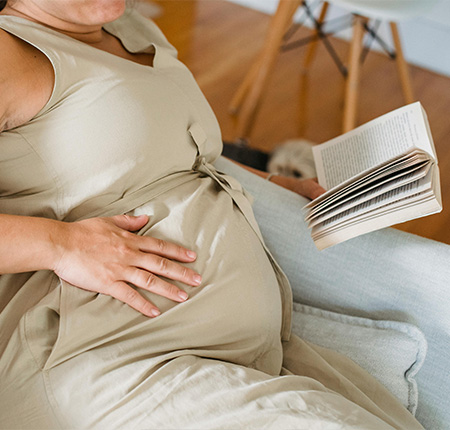
Braxton Hicks contractions – tips and advice
As a rule, false contractions stop of their own accord within a few seconds. There are, however, a few pieces of advice you can follow to ease the discomfort if they don't go away, or to avoid bringing the contractions on in the first place:
- Go for a walk or move around a little if you've been sitting for a long time.
- Lie down and rest for a while if you've been physically active.
- Drink plenty of fluids and make sure you stay well hydrated.
- Go to the loo when you feel the need, and empty your bladder completely.
- Practise meditation and breathing techniques to relax and manage stress.
- Avoid emotional stressors and strenuous physical exertion.
Frequently asked questions about Braxton Hicks contractions
When your body sends new and unexpected signals – especially at such a sensitive time as pregnancy – it's only natural to feel uneasy. Questions are part of this journey and a sign that you're being mindful of yourself and your baby. In this section, then, we've gathered the most common questions about false contractions, so you can more easily find the answers you need.
Can you have false contractions every day during pregnancy?
Braxton Hicks contractions aren't generally even or regular. Most often they occur no more than once or twice a day and stop when you change activity or have a rest. But yes: in the third trimester some pregnant women may have false contractions daily, as the birth draws nearer. As long as they're not intense, painful or long-lasting, they're harmless.
When do false contractions start in pregnancy?
False contractions can appear as early as the second trimester, between weeks 16 and 20, but they're more frequent and more intense in the third trimester and in the final weeks of pregnancy.
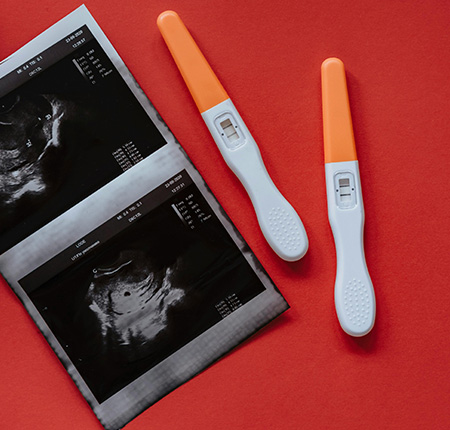
How can you tell whether you're having false contractions or you're in labour?
False contractions are mild, irregular, don't increase in intensity and quickly disappear again – particularly if you rest or change position. Genuine labour contractions, by contrast, are more painful, come at regular intervals, grow progressively stronger and don't stop when you lie down or shift position.
When do Braxton Hicks contractions become a cause for concern?
It's advisable to contact your doctor if the contractions become very painful, occur at regular intervals, or are accompanied by unusual foetal movements, bleeding or unusual discharge.
Can Braxton Hicks contractions cause the cervix to dilate?
No. Braxton Hicks contractions don't cause the cervix to dilate the way real labour contractions do – they're simply one of the ways your body prepares for birth.
Image source: Pexels.com

Medium, super or extra absorption

Low, medium or super absorption

Low or medium absorption


and happily breaking taboos!


