

Breast Cancer: Everything You Need to Know
Breast cancer (mammary carcinoma) – types, symptoms, causes & treatment
Breast cancer, also known as mammary carcinoma, is one of the most common cancers in women. In the UK it is the most common cancer, with around 56,900 new cases a year (Cancer Research UK). In the UK, around 1 in 7 women will be diagnosed with breast cancer in their lifetime (Cancer Research UK). However, the disease affects not only women but men too – albeit far less frequently. The ratio of breast cancer in women to breast cancer in men is 150:1.
What is breast cancer?
Breast cancer arises from the uncontrolled growth and alteration of breast cells. Their proliferation leads to the formation of a tumour mass. These tumour masses initially appear in the form of lumps or calcium deposits. In most cases the lumps are benign. Unfortunately, there are also cases in which they are premalignant (meaning they may develop into malignant tumours) or already malignant.
Breast cancer can be divided into two categories:
- primary
- metastatic
When the malignant tumour develops exclusively within the breast tissue, this is referred to as primary breast cancer. Like all other cancers, however, breast cancer can also affect other parts of the body. If it spreads to other tissues or organs (liver, lungs, brain, etc.), it is referred to as metastatic cancer.
If breast cancer is detected at an early stage, it is treatable and can go into remission. This is precisely why regular screening is so important.
As breast cancer is one of the leading causes of death among women, awareness must be raised about the importance of breast examination and regular medical check-ups – they make early diagnosis possible.
This article summarises the most important information on breast cancer. Find out everything you should know about this disease – from the anatomy of the breast to symptoms, types of breast cancer and the various risk factors, through to diagnosis and treatment options.
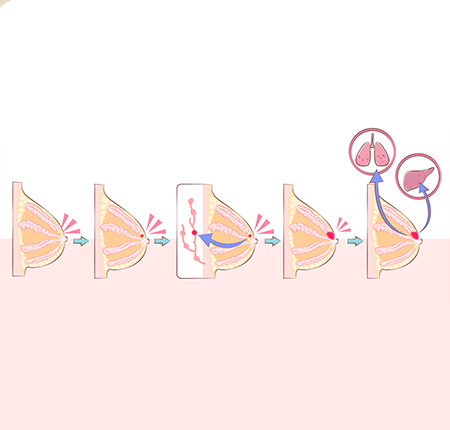
Types of breast cancer
Breast cancer can develop in different areas of the breast and affect various cell types. This gives rise to different types of breast cancer. The most common are invasive ductal carcinoma, triple-negative breast cancer and invasive lobular carcinoma.
Invasive ductal carcinoma
Invasive ductal carcinoma is the most common form of breast cancer. It occurs in 80% of all breast cancer cases. Invasive ductal carcinoma initially develops in the milk ducts of the breast and then spreads into the surrounding tissue by breaking through the duct wall.
Ductal carcinoma in situ
This form of breast cancer is also known as stage 0 breast cancer. Specialists regard it as a "pre-cancerous condition", as the cancer cells have not yet had time to spread beyond the milk ducts. In most cases this form responds well to treatment. If treated early, the cells can be prevented from spreading into the surrounding breast tissue.
Invasive lobular carcinoma
This form of cancer develops in the lobules of the breast, where breast milk is produced. Much like ductal carcinoma, this form also invades the surrounding tissue. Invasive lobular carcinoma occurs in 10–15% of all breast cancer cases.
Lobular carcinoma in situ
Lobular carcinoma in situ is a pre-cancerous condition. Although it is not cancer in the strict sense, it is a warning sign, as invasive lobular carcinoma may develop from it. In lobular carcinoma in situ, the pre-cancerous cells are found in the lobules of the breast. With the help of regular breast examinations and mammograms, lobular carcinoma in situ can be monitored to prevent it from worsening.
Triple-negative breast cancer (TNBC)
Triple-negative breast cancer accounts for 15% of all breast cancer cases and is the most difficult to treat. Its name derives from the fact that three of the tumour markers typical of breast cancer are absent in this form. This makes both diagnosis and treatment more difficult.
Inflammatory breast cancer
Inflammatory breast cancer is one of the rarest and most aggressive forms of breast cancer. It occurs when cancer cells block the lymphatic vessels of the skin. As a result, the breast shows signs of inflammation, redness and swelling. Inflammatory breast cancer progresses very rapidly, within a matter of weeks or months.
Paget's disease of the breast
Paget's disease of the breast is a rare form of cancer affecting the skin of the nipple and areola. Most of those affected simultaneously have other forms of breast cancer, such as invasive ductal or invasive lobular carcinoma.
Breast cancer – signs & symptoms
The symptoms of breast cancer differ from person to person. They may also be entirely absent in the early stages of the disease. A monthly breast self-examination can, however, help you detect changes. This means you can see a specialist for a check-up at an early stage.
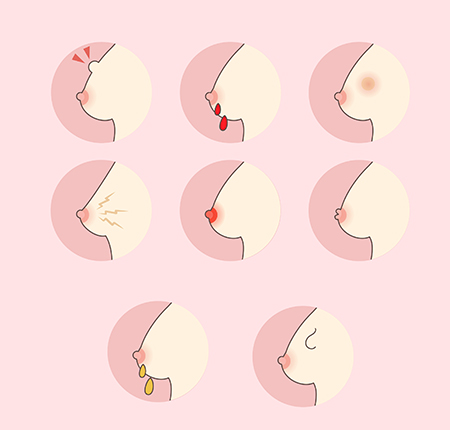
The most common sign of breast cancer is a lump in the breast. These may appear before or during menstruation and do not disappear afterwards. Although in most cases they are not painful, lumps can cause a stabbing sensation when palpated. In some cases they are also invisible to the naked eye, cannot be felt on palpation and can only be detected by mammography.
Other signs and symptoms of breast cancer include:
- a change in the shape and size of the breast
- a change in the appearance of the skin of the breast
- changes to the nipple
- skin dimpling in certain areas of the breast
- redness of the breast skin or the nipple
- unusual pain or tenderness
- swelling in the area of the armpit or collarbone
- ulceration of the nipple
- discharge from the nipple
- a breast skin texture resembling orange peel – a sign of inflammatory breast cancer
- a dent or indentation in the breast
There are other non-specific signs and symptoms that may serve as warning signals:
- weight loss
- jaundice
- neurological complaints
- joint pain
- bone pain
Stages of breast cancer
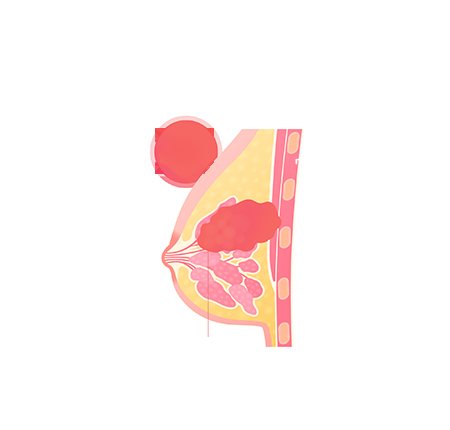
Breast cancer – like other oncological diseases – begins with stage 0, which is the easiest to treat, and can progress to stage IV, the metastatic stage. In stage 0, cancer cells are found within the milk ducts or in the lobules of the breast, but the cells have not yet invaded the surrounding tissue.
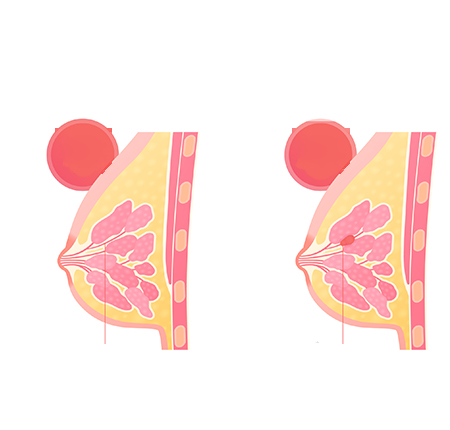
Breast cancer stage 1
Stage I is an early stage of invasive cancer. It comprises two different sub-stages:
- Stage 1A: The tumour has a diameter of no more than 2 cm. The lymph nodes are not affected.
- Stage 1B: No tumour can be detected in the breast, or it is smaller than 2 cm, but tumour cells are found in the neighbouring lymph nodes.
Breast cancer stage 2
Stage II likewise consists of two sub-stages:
- Stage 2A:
- The tumour is smaller than 2 cm and has spread to 1–3 lymph nodes OR
- the tumour measures 2–5 cm but has not affected any lymph nodes
- Stage 2B:
- the tumour measures between 2 and 5 cm
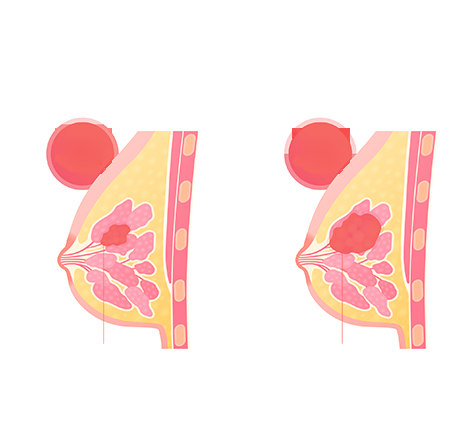
Breast cancer stage 3
Stage III is a more advanced stage and is divided into three sub-stages.
- Stage 3A: Malignant cells are already present in 4–9 axillary lymph nodes. At this stage the malignant cells also migrate into the internal mammary lymph nodes
- Stage 3B: At this stage the tumour has already infiltrated the chest wall or the skin and has affected at least 9 lymph nodes
- Stage 3C: At this stage malignant cells are already present in at least 10 axillary lymph nodes
Breast cancer stage 4
Stage IV is the final stage of breast cancer. It indicates visceral metastases and has the lowest survival rate – 22%
Breast cancer – causes
Breast cancer develops when breast cells begin to grow and multiply uncontrollably. The exact causes of breast cancer are not known with certainty. It is therefore never possible to predict precisely whether a woman will develop breast cancer or not. Researchers have, however, identified a number of risk factors that can increase the likelihood of developing breast cancer. What remains unclear is why people with no risk factors whatsoever develop breast cancer. It is possible that the disease is caused by an interplay of genetic and environmental factors.
Hereditary breast cancer
Hereditary breast cancer is one of the possible causes of breast cancer. It is estimated that 5–10% of all breast cancer cases are caused by gene mutations passed down through the generations. Experts have identified a number of mutated genes inherited from parents that can increase the risk of breast cancer. The best known of these genes are BRCA1 and BRCA2, which increase the risk of both breast cancer and ovarian cancer.
Breast cancer – risk factors
A risk factor for breast cancer is anything that increases the likelihood of developing the disease. Even if one or more of these factors apply to you, however, this does not necessarily mean you will develop breast cancer. Many women develop breast cancer even though their biological sex is their only risk factor.
Below we present the most common causes of and risk factors for breast cancer:
- Sex: women are more susceptible to breast cancer than men
- Age: older age (over 50) increases the risk of breast cancer
- Previous breast conditions (e.g. ductal carcinoma in situ) – such conditions increase the likelihood of developing breast cancer
- Previous breast cancer: if you have already had cancer in one breast, there is an increased risk that it will also develop in the other breast
- A family history of breast cancer
- Radiation exposure
- Being overweight
- A first period before the age of 12 increases the risk of developing breast cancer before the age of 50
- Late onset of the menopause (after the age of 55)
- A first pregnancy after the age of 30 can increase the risk of breast cancer
- Never having been pregnant – women who have never been pregnant have an increased risk of developing breast cancer
- Not breastfeeding during the baby's first 6 months of life – breastfeeding lowers the likelihood of developing breast cancer.
- Alcohol and drug misuse
- Hormone therapy after the menopause
Prevention & diagnosis of breast cancer
Breast cancer can certainly be prevented, whatever your risk group. Screening is the safest and most effective method of prevention and diagnosis. In addition, there are a number of further measures you can take to help prevent breast cancer.
Reducing the risk of breast cancer in women at average risk
- Screening. Ask your specialist about screening programmes, and find out about their benefits, possible risks and the recommended frequency of examinations.
- Self-examination. Get to know your breasts through self-examination. Regular palpation can reveal warning signs such as lumps, redness, unusual discharge or skin changes.
- Alcohol. Drink alcohol only in moderation, or avoid it altogether
- Be active for at least 30 minutes a day
- Limit hormone therapy after the menopause
- Keep an eye on your body weight
- Eat a healthy diet
Reducing the risk of breast cancer in women at high risk
If your doctor has assessed your family history and identified additional risk factors, such as a pre-cancerous breast condition, you can discuss measures to reduce your risk, for example:
- Preventive medication: drugs that block oestrogen, such as selective oestrogen receptor modulators and aromatase inhibitors, reduce the risk of breast cancer in women at increased risk of the disease.
- Preventive surgery: women at very high risk of breast cancer may opt to have their breasts removed (prophylactic mastectomy). They may likewise have their healthy ovaries removed (prophylactic oophorectomy) to reduce the risk of both breast and ovarian cancer.
Bilateral breast ultrasound
Bilateral breast ultrasound is a screening examination that can be used to detect breast cancer. It uses sound waves to create images of the various structures inside the body. Bilateral breast ultrasound can show whether a lump in the breast is a solid mass or merely a fluid-filled cyst. Where necessary, it should be carried out in addition to digital mammography.
Digital mammography
Diagnostic digital mammography is an X-ray examination of the breast. It is the most widely used examination for detecting breast cancer. If screening mammography reveals an abnormality, the specialist will recommend a diagnostic mammogram to assess the finding more closely. Digital mammography should be carried out once a year from the age of 40.
Biopsy
A biopsy, also known as an ultrasound-guided core biopsy, is a procedure in which a tissue sample is taken from the breast and then examined under the microscope. This examination makes it possible to distinguish between benign and malignant cells. The biopsy is the examination that establishes the diagnosis with certainty. It also allows doctors to determine the cell type involved and the degree of aggressiveness of the cancer.
Chances of recovery from breast cancer
More than 1.70 million new cases of breast cancer are diagnosed worldwide every year. This figure represents around 25% of all newly diagnosed cancer cases worldwide. It is estimated that around 500,000 people die of breast cancer each year. In Europe, the incidence of breast cancer is the highest in the world,
and in the UK around 56,900 cases are diagnosed each year (Cancer Research UK).
The chances of survival with this disease differ from person to person, depending on the stage at which it was detected. Women diagnosed at an early stage have considerably higher chances of survival than those whose disease was only detected at an advanced stage. Nevertheless, every case is unique, and the survival rate depends on the specific circumstances and characteristics of the individual disease.
Breast cancer can, however, be successfully prevented and treated through regular medical check-ups and self-examination. Self-examination is the simplest and cheapest way of detecting changes in the breast and acts as a preventive measure. Yet many women do not check their breasts regularly or are unsure how - the NHS advises being breast aware and seeing your GP about any change.
Breast cancer – treatment
If the cancer is detected at an early stage, it can be treated before it spreads to other parts of the body. In most cases, breast cancer treatment combines surgery, chemotherapy and radiotherapy. The treatment plan is determined by a multidisciplinary team of doctors, taking into account the tumour type, stage, tumour size and the sensitivity of the cells. Most women are treated both surgically and with adjuvant therapy.
Surgery
The following surgical procedures are used in breast cancer:
- Lumpectomy: Used for small tumours; the tumour and part of the surrounding healthy tissue are removed.
- Mastectomy: In a mastectomy, the entire breast tissue is removed. In some cases, depending on the tumour type, the skin and nipple are preserved to facilitate reconstruction.
- The removal of lymph nodes can be carried out in two ways
- Removal of a small number of lymph nodes – sentinel lymph node biopsy
- Removal of a large number of lymph nodes – axillary lymph node dissection
- Preventive mastectomy: If there is an increased risk of cancer in the other breast, the patient may opt to have the second breast removed as a preventive measure
Radiotherapy
Radiotherapy can be used both in the early stages of breast cancer and when it has already spread to other tissues.
Radiotherapy may be:
- Curative: to cure the cancer completely
- Neoadjuvant: used in combination with surgery or chemotherapy to increase the effectiveness of treatment
- Adjuvant: to reduce the risk of breast cancer recurrence after surgery
- Palliative: to relieve symptoms where a cure is not possible
Chemotherapy
With large tumours, chemotherapy is sometimes required even before surgery. The aim of chemotherapy is to shrink the tumour to make it easier to remove. Chemotherapy is also used when the cancer has already spread to other parts of the body.
The most common forms of chemotherapy are:
- Intravenous chemotherapy
- Oral chemotherapy
Hormone treatment
Hormone therapy is in fact hormone-blocking therapy. It uses medicines that block the action of hormones in hormone-sensitive forms of breast cancer. This therapy can be used before or after surgery.
Individual or group therapy
Complementary therapies such as group therapy, individual therapy, acupuncture, aromatherapy and massage help patients cope better psychologically and emotionally with diagnosis and treatment. These treatments can be used to reduce stress and anxiety in women with breast cancer.
How high is the risk of breast cancer recurrence?
In some women, breast cancer returns after treatment has been completed. In most cases this does not happen, but it is nonetheless important to know how high the potential risk of recurrence is.

In theory, a recurrence can occur at any time, but as a rule it happens within the first 5 years after treatment has been completed. The risk is highest during the first 2 years. The cancer returns when some cancer cells escape treatment. This may involve only a handful of cells; a few cells unaffected by medication and treatment are enough for them to multiply again and invade the surrounding tissue.
Recurrences sometimes only appear after several years, because cancer cells have the ability to remain dormant for years until a triggering factor occurs. Breast cancer can recur in three different ways:
- locally – in the same breast
- regionally – in neighbouring lymph nodes
- distantly – metastases in other tissues or organs
If the cancer appears in the other breast without cancer cells being found elsewhere in the body, this constitutes a new disease rather than a recurrence.
Frequently asked questions – breast cancer
How quickly does breast cancer develop?
Breast cancer can develop differently depending on the individual and the form of cancer. In some cases it grows slowly over several years. In others, such as inflammatory breast cancer, it can progress rapidly within a matter of weeks or months.
Which blood tests are carried out for breast cancer?
The main blood tests recommended for detecting breast cancer are: a full blood count, serum protein electrophoresis and the breast cancer-specific tumour marker CA 27-29.
How do you know whether you have breast cancer?
Regular medical examinations, screening and annual mammography are crucial to the early detection of breast cancer. Alongside these examinations, a monthly self-examination can reveal signs and symptoms typical of breast cancer and may be an indication that you should see a specialist for a further check-up.
How much does breast cancer surgery cost?
In NHS hospitals, breast cancer surgery is covered by the health service. If you prefer private treatment, the price of such an operation varies according to the number of days in hospital, the examinations carried out, the type of anaesthetic used and so on.
At what age can you develop breast cancer?
In most cases, breast cancer occurs in people over the age of 50. It can, however, occur at any age. Almost 7% of all breast cancer cases develop in people under 40.
Can you develop breast cancer while breastfeeding?
Breast cancer can occur at any stage of life, including while breastfeeding. The risk of developing breast cancer is considerably lower during breastfeeding, however. With 5 months of breastfeeding, for example, the risk of breast cancer falls by 2%.
Can men develop breast cancer?
Although cases are far rarer, men can also develop breast cancer. The ratio of breast cancer incidence between women and men is 150:1.

Medium, super or extra absorption

Low, medium or super absorption

Low or medium absorption


and happily breaking taboos!


