

Comprehensive Advice on the Coil (Intrauterine Device)
A mysterious and painful method of contraception? Yes, the coil may seem hard to get your head around at first – but the more you learn about it, the clearer it becomes that it's all far simpler than you thought. In our article you'll find everything you need to know about the coil: its advantages (and disadvantages), the different types available, and what sex feels like before and after having it removed.
What is a coil?
The coil, also known as an IUD – intrauterine device – is a small device (3–4 cm), usually shaped like a 'T', that is fitted inside the womb to prevent pregnancy. In the long run, it's one of the most effective and most affordable reversible methods of contraception.
The first coil was developed in the early 20th century by a German doctor and was very different from the models used today. These days, the coil can either be wrapped in copper or contain hormones.
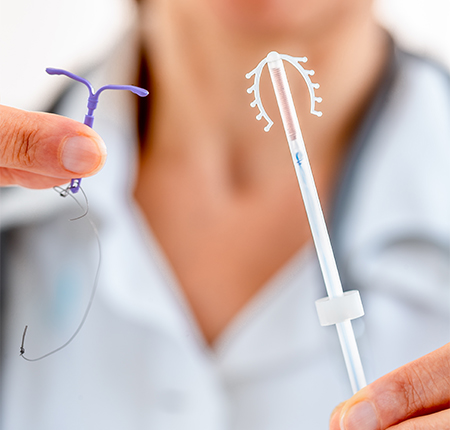
How does a coil work and how effective is it?
The coil's job is to prevent the egg from implanting by thickening the cervical mucus. It's important to know that the coil is a reversible method of contraception – once it's removed, it has no impact on your fertility!
It works as long-term contraception (for up to 5, 7 or 12 years) or as emergency contraception, and offers over 95% effectiveness. To put that in perspective: if you use an IUD correctly, the chance of becoming pregnant is less than 1%.
What does a coil look like?
The coil is a small, T-shaped plastic device roughly the size of a match, sometimes wrapped in copper. A fine plastic thread attached to the end of the intrauterine device passes through the cervix into the vagina – but it's very short, so neither you nor your partner should be able to feel it.
Types of coil
There are various types of coil. Before you choose one, you can discuss with your gynaecologist which IUD is right for you: the hormonal coil or the copper coil?
Coils are safe for most women, but if you have a copper allergy you should avoid a copper IUD. Let's take a look at both in turn!
Hormonal coil
The hormonal coil contains progestogen – a hormone also found in other contraceptives such as the pill, vaginal rings and hormone injections. Its main function is to prevent ovulation and thicken the cervical mucus, making it harder for sperm to move.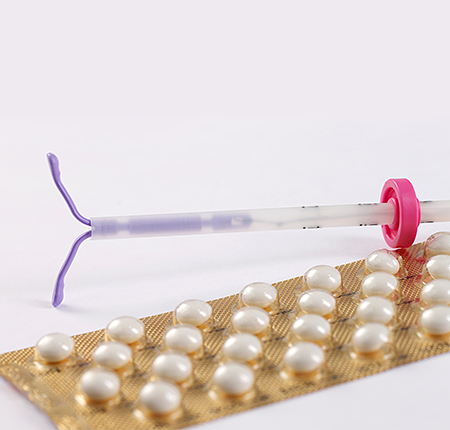
If it's fitted on the last day of your period, the hormonal coil works immediately. Otherwise, it can take up to 7 days to offer full protection.
Hormonal coils are also widely used in the UK and are available on the NHS; they are fitted by a trained doctor or nurse.
Copper coil
The copper coil has no hormonal effect; instead it acts like a 'spermicide': the copper alters the environment inside the womb, killing sperm and thickening the mucus. It can stay in the womb for up to 10 years and is an extremely effective method of contraception.
As for the shape of the coil, several variations have been added in recent years: T-shaped, U-shaped, spherical, cylindrical and ball-shaped.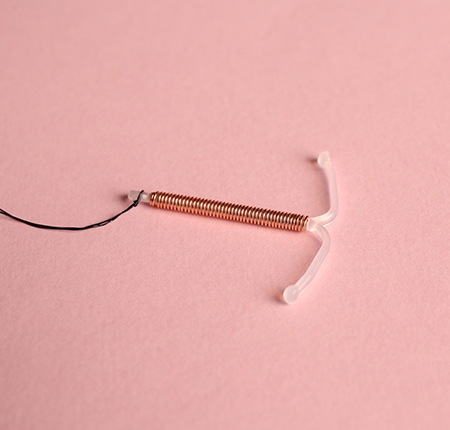
Tests needed before the coil is fitted
Most healthy women can use an IUD.
But what should you know before having a coil fitted? The first step is a conversation with your gynaecologist to decide together which type of coil is right for you. After that, a few tests are needed before it can be fitted.
There are some contraindications, namely if:
you have a sexually transmitted infection
you've recently had an infection or have pelvic inflammatory disease
you're pregnant
you have cervical or uterine cancer
you have unexplained vaginal bleeding
Before the coil is fitted, you'll need a gynaecological examination. First, your gynaecologist will carry out a transvaginal ultrasound to make sure everything is in order with your vagina, cervix and womb.
After that, you'll need a pregnancy test, a smear test (cervical screening), a test for sexually transmitted infections and a blood test to check your haemoglobin levels.
Since the progestogen in hormonal coils increases the risk of blood clots and high blood pressure, you should speak to your doctor if you have cardiovascular problems or other health concerns.
And last but not least: ask all the questions on your mind before the coil is fitted! Make sure you have all the information – and if all your test results come back clear, the coil can be fitted during an appointment.
What to know about having the coil fitted and removed
The copper coil can be fitted at any point in your menstrual cycle, though ideally during the last days of your period or immediately after the bleeding stops. The cervix is then open and fitting is less painful. For the hormonal coil, fitting is recommended within the first seven days of your cycle.
How is the coil fitted?
So you know what to expect: the gynaecologist fits your chosen coil once all the tests and the transvaginal ultrasound have been completed. The cervix is disinfected and the coil is inserted through the cervical canal. The device has two threads, which are trimmed to 2–3 cm below the cervix so that its position can be checked later on.
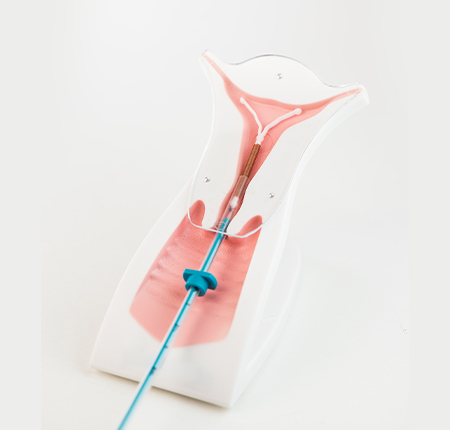
The whole procedure takes about 10 minutes and can be mildly uncomfortable. No anaesthetic is required for fitting, but you can ask for a light local anaesthetic. After fitting, you may have lower abdominal pain for a few days.
As for having the coil removed: this can be done at any time at your request, with the help of your gynaecologist. Removal is a straightforward procedure with no complications: using a speculum and forceps, the doctor grasps the coil's threads and gently pulls it out. You may feel some cramping, but this can be eased with painkillers. Of course, 'pulling on threads' sounds simple enough – but don't confuse this procedure with removing a tampon! Only your doctor should remove the coil.
What to expect
While the coil is being fitted, you may experience muscle cramps, dizziness or a feeling of faintness.
You may also notice some side effects, such as headaches, breast tenderness, irregular bleeding (which usually settles within the first 6 months), mood swings, and cramps or period pain, as the coil can cause side effects. In most cases these reactions are mild and resolve on their own.
Side effects of the hormonal coil may include:
- Irregular or absent periods, headaches, bloating, nausea, breast tenderness, reduced libido.
The copper coil may have the following side effects:
- Period cramps, back pain, longer, more irregular and heavier bleeding.
As for sex: the first time after having the coil fitted shouldn't feel any different from usual. Remember: the coil sits in the womb, not the vagina – so your partner shouldn't feel a thing.
Bleeding after having the coil fitted – what to expect
After the coil has been fitted, we can talk about two types of bleeding: period bleeding (menstruation) and breakthrough bleeding. Depending on how heavy it is, use organic period products made from 100% organic cotton, hypoallergenic, and choose the right absorbency.
Your first period after fitting may be heavier than usual. That's normal. However, if you find it's very heavy or won't stop, don't hesitate: speak to your doctor.
With breakthrough bleeding, you can expect vaginal discharge in the form of brownish spotting, or even fairly heavy bleeding. How long this is normal for depends on the type of coil:
- Hormonal coil: daily bleeding is possible for up to 3–6 months after fitting.
- Copper coil: bleeding can last for up to 2–3 months.
After this settling-in period, in most cases only light brownish discharge or slight bleeding remains – and eventually that disappears too.

The first time you have sex after the coil is fitted
Doctors generally recommend waiting at least 24 hours after fitting before having sex again, as the risk of infection is raised. For the same 24 hours you should also avoid hot baths and put absolutely nothing into the vagina – not even a tampon.
In theory, after 24 hours you can have sex with the coil in place at any time. The exception, of course, is if you've recently given birth and your doctor fitted the coil shortly afterwards. Your womb and vagina are still recovering, and in that case you'll need to wait for your doctor's go-ahead.
Neither you nor your partner should feel the coil or any discomfort directly caused by it. Because of the possible side effects after fitting, however, sex with a coil may be less enjoyable during the first few months. Unusual bleeding and abdominal cramps can reduce your libido and natural lubrication, making those first sexual experiences with a coil less comfortable.
What could it mean if I can no longer feel the coil's threads?
If you can no longer feel the threads, they may have shifted position. This doesn't mean the coil is no longer sitting correctly or has become ineffective as contraception – in all likelihood everything is still working perfectly. Even so, it's best to book an appointment at your gynaecology clinic so your doctor can examine you and confirm that all is well.
What does it mean if my period stops after the coil is fitted?
In the first 2–3 months after having any type of coil fitted, your period becomes unpredictable. Just as it may become heavier or longer, it may equally be delayed. This doesn't mean you're pregnant – only that your body is still adjusting. Speak to your doctor if your period is absent for more than 6 weeks.
This symptom is more common than you might think: statistics show that 2 in 10 women using certain hormonal coils have no periods at all after 6–12 months.
Can I get a positive pregnancy test with a coil in place?
Intrauterine devices are among the most effective methods of contraception (>99%). There are indeed very rare cases in which pregnancy occurs despite a coil. The likelihood of becoming pregnant, however, is less than 1%. If you do get a positive pregnancy test, book an appointment with your gynaecologist as soon as possible to discuss what happens next.
Reactions after the coil is removed
You may decide to have the coil removed because you want to get pregnant, or because your body is expelling it. It also needs to be removed once its lifespan has expired, if you've become pregnant, or if you've contracted a sexually transmitted infection.
Whatever the reason, abdominal cramps and spotting for a few days are among the reactions you can expect after removal. If the pain is severe and accompanied by heavy bleeding, fever, chills or foul-smelling discharge, see your doctor.
Your first period after the coil is removed
Your first period after having the coil removed may be lighter, the same, or heavier. Every body is unique and responds differently. Your period may return completely normally in the very first month. Equally, it may take a few months for your cycle to settle and return to normal.
Is bleeding after the coil is removed normal?
Yes, it's normal to bleed lightly after an intrauterine device has been removed. As long as it's only spotting or light bleeding with no other symptoms (severe pain, fever, unusual discharge), there's no cause for concern.
Very heavy bleeding and the passing of clots are not normal and require medical attention as soon as possible.
The advantages of a coil
One of the great advantages of the coil (whether hormonal or copper) is that it can also be used as emergency contraception – within the first 120 hours (up to 5 days) after unprotected sex, with over 90% effectiveness. It's the most effective way to prevent pregnancy after sex – particularly if you were planning on a long-term method of contraception anyway.
The hormonal coil also has benefits unrelated to contraception, and may be recommended for women with the following conditions:
- Heavy periods
- Painful periods
- Endometriosis
- Adenomyosis
- Anaemia
- Uterine fibroids
In addition, the advantages of the coil include:
- Free on the NHS and long-term effectiveness
- Easy to use
- Lighter period bleeding
- Fewer cramps
- Protection against endometrial cancer
- It doesn't cause weight gain
The disadvantages of a coil
At the same time, you should know that both the hormonal coil and the copper coil have their drawbacks. To give you a clear picture, let's go through them one by one.
Disadvantages of the hormonal coil:
- Your periods may become heavier and/or more painful (in the first 3–6 months after fitting)
- Breakthrough bleeding may occur
- It causes increased breast tenderness
- It may trigger headaches or nausea, mood swings, acne and weight gain
- It increases the risk of certain liver conditions and the risk of thrombophilia
- It increases the risk of developing ovarian cysts
- It can lead to hormonal imbalances
As for the copper coil:
- It isn't recommended if you have a copper allergy
- It can worsen period pain and cause heavier bleeding as well as breakthrough bleeding – in the first 2–3 months
- It may contribute to pelvic inflammatory disease (PID) or Wilson's disease
- In rare cases, the copper coil can be partially or completely expelled from the womb, or perforate the uterine wall
The disadvantage they share is that no type of coil offers protection against sexually transmitted diseases and infections.
Signs of expulsion
What happens if your body expels a coil? In the case of expulsion, the coil slips out of the womb towards the cervix or is pushed out with your period blood. In principle, expulsion can occur during the first year of use – particularly in the first month – but it's very rare.
The risk of expulsion is greatest if the coil was fitted immediately after childbirth or if you've never been pregnant. Signs of expulsion include strong uterine contractions and heavy bleeding.
Signs of infection caused by the coil
After the coil has been fitted, it's recommended that you avoid vaginal intercourse, tampons and baths for 1–2 days, as the risk of infection is raised immediately afterwards. The most common signs of infection include:
- Heavy bleeding
- Unusual or foul-smelling vaginal discharge
- Lower abdominal pain
- Pain during intercourse
- Fever
- Flu-like symptoms (chills, headaches, fatigue)
Risks and complications
Like any medical device, the coil isn't entirely free of risks and complications, even though these are rare. With the copper coil, users may experience spotting between periods. Very rarely, the coil may block or perforate the womb.
Complications are extremely rare, but you should be aware of them:
- Expulsion of the coil
- Changes in blood pressure or blood clotting
- An ectopic pregnancy (outside the womb)
- Infection
- Pelvic inflammatory disease
- Damage to the womb
If you have a history of cardiovascular disease, smoke, or are over 35, the risks and complications after having a hormonal coil fitted increase. That said, as soon as you notice anything out of the ordinary, you should contact your doctor at any time after the coil has been fitted – especially with symptoms such as:
- Chills and a temperature above 38°C
- Unbearable cramps, stabbing abdominal pain
- Heavy bleeding
- A missed period (with the copper coil)
- A positive pregnancy test
Sex after the coil is removed
After the intrauterine device has been removed, you could in theory become pregnant straight away, as fertility returns immediately. So if you don't want to get pregnant, use a condom or another method of contraception from the very first time you have sex without the coil.
The good news: unlike with fitting, there's no waiting period before you can resume your sex life after the IUD has been removed. You can have sex at any time, both before and after the coil is taken out.
How much does a coil cost? (Prices, estimate)
On the NHS the coil (copper or hormonal) and its fitting are free through your GP or a sexual health clinic. If you choose a private clinic, costs vary, so ask for an itemised price that includes the consultation and fitting.. Bear in mind, though, that it offers between 5 and 10 years of protection and means you no longer need to spend money on other contraceptives.

Medium, super or extra absorption

Low, medium or super absorption

Low or medium absorption


and happily breaking taboos!


