

Everything you need to know about candidiasis: from prevention to treatment
One of the most common fungi that normally lives in our bodies – in the mouth, in the gut, on the skin and mucous membranes, as well as in moist areas – is Candida albicans. As a rule it causes no problems, but when the environment it lives in changes, Candida can multiply and trigger an (equally common) infection: thrush, or candidiasis.
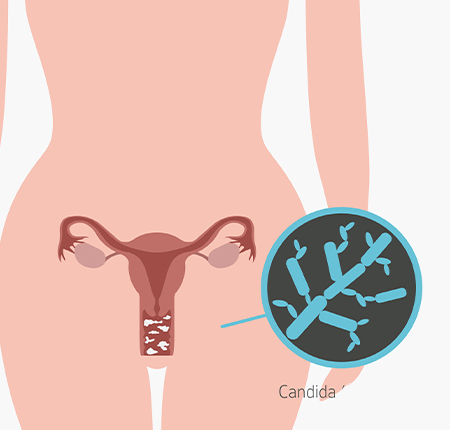
What is candidiasis?
Candidiasis is a common condition that responds well to treatment when it is correctly identified and managed. Depending on the area affected, however, there are several different forms. It can therefore occur as:
- vaginal thrush
- candidiasis of the mouth, throat or oesophagus
- candidiasis of the breast
- candidiasis of the skin
Vaginal thrush: symptoms
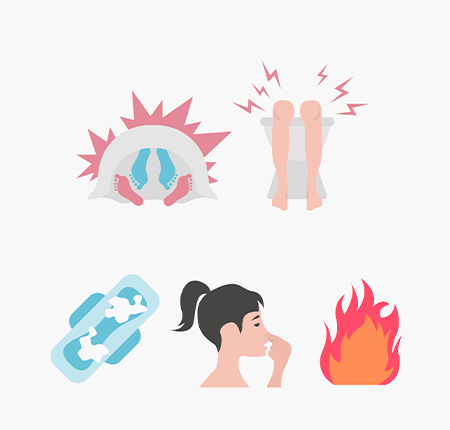
Although it often passes without complications, a vaginal infection can be uncomfortable and cause symptoms such as itching and burning. In women, symptoms can range from mild to severe and include:
- itching and irritation around the vagina and vulva
- burning when passing urine or during sex
- irritation, redness and swelling of the vulva
- swelling and pain in the vagina
- whitish, odourless discharge with a lumpy, cottage-cheese-like consistency
- watery discharge
Men can also get Candida infections. In their case, thrush shows up as irritation, white patches, itching and discomfort when passing urine. But remember: thrush is not a sexually transmitted infection! So if your partner has thrush, that doesn't mean you'll catch it.
Thrush tends to develop instead against a background of a weakened immune system or other pre-existing conditions.
Complicated vaginal thrush (severe/recurrent)
Although thrush is treatable, the symptoms sometimes return and the infection can recur over a longer period. In some cases you may have a complicated Candida infection if:
- the redness is extensive, with swelling and itching that leads to open sores
- you have more than four Candida infections a year
- the thrush is caused by a rarer species of fungus
- you are pregnant
- you have poorly controlled diabetes
- your immune system is weakened (by medication, autoimmune conditions or infections, for example HIV)
Vaginal thrush vs. urinary tract infection
Another common infection in women is the urinary tract infection (UTI). Although you can have one or the other – or even both at once – UTIs and thrush are two completely different conditions!
Urinary tract infections occur when Escherichia coli bacteria (E. coli) invade the system that carries urine out of the body – the kidneys, the bladder and the connecting ureters and urethra. Women are affected more often because the female urethra is shorter, which makes it easier for bacteria to multiply; they do, however, also occur in men.
Even though bacteria are the cause, there are several risk factors you should be aware of, which we've covered in our article. Because, as with thrush, it's important to know: a urinary tract infection is not a sexually transmitted disease.
Vaginal thrush vs. bacterial vaginosis
And while we're on the subject of differences: bacterial vaginosis (BV) is the most common form of vaginal infection in women aged between 15 and 44. The main causes are bacterial imbalances brought on by douching and sexual intercourse – but it is NOT a fungal infection like thrush.
Although BV produces symptoms similar to thrush (discharge, burning and itching) and telling the two apart can be tricky, you should know that a Candida infection doesn't lead to long-term complications. If bacterial vaginosis goes untreated, however, it can lead to complications such as fertility problems or premature birth, and increase the risk of contracting sexually transmitted infections.
What's more, treating bacterial vaginosis requires a doctor's prescription for antibiotics.
Is vaginal thrush contagious? And how?
No, vaginal thrush isn't contagious. And since it isn't a sexually transmitted infection, your partner doesn't need to be treated as well.
When should you see a doctor?
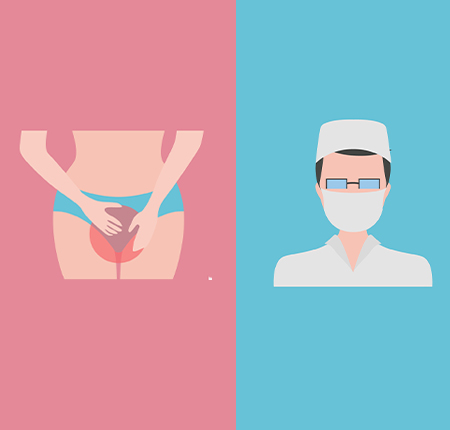
It's important to seek medical advice if:
- you're experiencing the symptoms of thrush for the first time
- you're not sure whether it is a Candida infection
- you've had treatment but the symptoms haven't improved with medication, antifungal creams or pessaries
- other symptoms appear alongside it
Diagnosing a Candida infection
Only a doctor can make a definitive diagnosis. To do so, they will take your medical history into account to establish whether you have any other conditions or whether you're pregnant. Blood tests may also be required.
Vaginal thrush: causes and risk factors
So what causes vaginal thrush? The most common include:
- long-term antibiotic treatment (it upsets the balance of the beneficial bacteria that keep fungi such as Candida in check)
- diabetes mellitus (raised blood sugar disturbs the normal pH of the mucous membranes)
- corticosteroids used to treat autoimmune conditions
- certain arthritis treatments
- vaginal infections resulting from sexually transmitted diseases (by altering the pH)
- untreated urinary tract infections
- using tampons containing plastic and wearing synthetic underwear
- hormonal contraceptives, intrauterine devices, condoms, spermicides, lubricants, douches
- hormonal changes during pregnancy and the menstrual cycle
- weakened immune defences, chronic conditions such as HIV, immunosuppressive therapies, chemotherapy, radiotherapy
- stress, an unbalanced diet and poor hygiene
Treating thrush
You may be wondering how thrush is treated? Treatment always depends on the severity and frequency of the infections, as well as on any accompanying conditions.
For mild to moderate symptoms, for example, you can use topical treatments (applied directly inside the vagina). Antifungals are available as creams, ointments, tablets or pessaries, and your doctor will recommend the right prescription treatment for you. Treatment should always be prescribed by a doctor – at the precise dosage and suited to the particular form of the infection.
Diagnosis and identifying exactly which species of fungus is involved are key – even though this may be a mild condition, an improperly treated infection can get worse.
Can vaginal thrush be treated at home?
There are alternative treatment methods if you'd rather avoid medication – however, we don't recommend treating yourself at home.
You'll come across plenty of methods and ingredients for treating thrush at home, popular remedies such as coconut oil or tea tree oil cream. The most effective and safest option for your health, though, is a visit to your gynaecologist.
How can thrush be prevented?
Whether or not there's such a thing as "the best treatment" for thrush, the good news is that you can keep these infections under control with a range of measures. And perhaps the most important step you can take today to reduce your risk of Candida infections: wear cotton underwear with no synthetic content, which lets your skin breathe and isn't too tight. And during your period, use natural products made from 100% organic cotton. They're recommended by gynaecologists, because products containing plastic and chemical bleaches can cause irritation and infection.
You can also help prevent thrush by avoiding the following:
- perfumed tampons
- foaming shower gels
- perfumed pads and products containing chemical bleaches
- douching
- very hot baths
- antibiotics when they aren't necessary
- wearing wet clothing or underwear for too long
Instead:
- If you have diabetes, make sure your blood sugar stays well controlled
- If you're taking antibiotics as part of a course of treatment, help your bacterial flora find its balance again (prebiotics)
- Always wipe from front to back after going to the toilet, so you don't transfer bacteria to the vulva and vagina
- During your period, change your tampon or pad as frequently as possible
Did you know? Between 5% and 8% of women have recurrent infections – that is, four or more infections a year.
Thrush in pregnancy
The hormonal changes of pregnancy can increase your risk of thrush – and that's nothing out of the ordinary. On average, 3 in 4 pregnant women may develop a Candida infection. This is mainly because vaginal pH changes during pregnancy, creating ideal conditions for fungal growth. If thrush occurs during pregnancy, treatment is necessary, as the infection can be passed to the baby during birth.
Genital thrush in babies and children
Yes, newborns too can show symptoms of thrush at birth or shortly afterwards. It is in fact an extremely common infection, passed on by the breastfeeding mother and encouraged by the baby's immature immune system. There's no cause for concern, though – it is treatable.
Genital thrush in men
Men with thrush are usually symptom-free, but there are also cases with a range of complaints. A Candida infection in men can cause pain and discomfort during sex, hypersensitivity, constipation or chronic prostatitis. In the genital area, itching is the most common symptom.
Untreated vaginal thrush – what complications can arise?
If you notice symptoms of thrush, it's very important to see a doctor. This infection can worsen if it isn't treated properly, and complications may even arise, such as:
- a risk of premature birth in pregnant women
- damage to vital organs if the infection reaches the bloodstream
- transmission to the baby during birth
Frequently asked questions:
Can vaginal thrush affect my period?
Thrush often appears shortly before your period because hormone levels change. Once your period is over, oestrogen levels normalise and the vaginal flora returns to balance. The important thing is to use only products that contain no chemical ingredients, plastic, fragrances, bleaches or synthetic fibres: so choose the most natural pads or tampons you can (made from 100% organic cotton) and change them as often as possible. If you're prone to thrush, it's best to avoid tampons altogether.
Why does thrush keep coming back?
Recurrent vaginal thrush is a chronic, draining infection affecting millions of women worldwide every year. Most often it returns against a background of a weakened immune system.
Are there rapid tests for vaginal thrush?
There are some rapid tests that can be used by both women and men and can detect a Candida infection via urine – but we'd recommend a visit to your gynaecologist!

Medium, super or extra absorption

Low, medium or super absorption

Low or medium absorption


and happily breaking taboos!


