

EVERYTHING you need to know about hormonal acne – what it is, why it happens and how to treat it
Hormonal acne is usually associated with puberty – that time when (you've definitely heard this phrase before) "your hormones are all over the place". But it also affects adults, and acne caused by hormonal fluctuations primarily affects women. That's because we're dealing with a whole range of factors that influence our hormonal balance – including menstruation and the menopause.
We know it's unpleasant, and we know it tends to flare up in the days before our period. But what can we do to keep it under control and enjoy the clearest skin possible? Let's look at how hormonal acne is defined, why it develops, and how to care for our skin to prevent it.
What is hormonal acne
Hormonal acne isn't a medical term – it's simply a colloquial expression we use when we really just mean acne.
There is, however, a good reason for calling it that: it tends to appear during puberty or before menstruation. That's why it's linked to the hormonal changes that take place during these periods.
In fact, acne is linked to excessive sebum production, which clogs the pores and thereby causes inflammation and spots. And that sebum production is in turn influenced by hormonal fluctuations in the body – hence the name.
Who does hormonal acne affect
Hormonal acne can affect anyone – from teenagers, who are particularly prone to this skin condition, to adults between the ages of 10 and 50.
Acne affects both women and men, but cases are more common in women, particularly those who are pregnant or going through the menopause.
How common is hormonal acne
We know acne is one of those problems that can have the biggest impact on confidence and self-image – something many teenagers struggle with, especially girls going through puberty. But it's more normal than you might think.
Acne is the most common skin condition of all. Statistics estimate that around 50% of women aged 20 to 29 and 25% of women aged 40 to 49 are affected by it.
The hormones responsible for causing acne
Several hormones are involved in the development of acne. A 2016 study identified oestrogen, progesterone, androgens, insulin, cortisol and growth hormone (GH) as hormones with a significant influence on acne. (PMID: 27621661)
A change in the level of any one of these hormones in the body can lead to spots forming:
- Androgens: the sebaceous glands enlarge in response to changes in levels of testosterone, androstenedione and dehydroepiandrosterone sulphate (DHEAS)
- Oestrogen: inhibits testosterone production and increases the secretion of sex hormone-binding globulin (SHBG); it acts on hair follicles, hair and sebaceous glands (the so-called pilosebaceous unit)
- Progesterone: progesterone receptors are located in the keratinocytes of the basal layer of the epidermis, which increases sebum production and encourages blemishes before or during menstruation.
- Insulin: linked to insulin-like growth factors (IGF-1) and can increase androgen production as well as sebaceous gland activity
- GH: growth hormones have receptors in the hair follicles and sebaceous glands that respond directly to fluctuations
- CRH: the hormones that release corticotropin and inhibit the proliferation of sebaceous gland cells; they contribute to the conversion of dehydroepiandrosterone (DHEA) into testosterone
- Cortisol: stress hormones (glucocorticoids) stimulate the proliferation of sebaceous gland cells
Normally, oestrogen, progesterone and testosterone fluctuate throughout the menstrual cycle – which is why acne worsens in women during their period, during the menopause and in pregnancy.
Similarly, starting or stopping hormonal contraception (e.g. the pill) can cause significant hormonal fluctuations that are responsible for blemishes.
But acne can also be the result of hormonal fluctuations triggered by a hormonal disorder in the body. Polycystic ovary syndrome (PCOS), tumours (of the ovaries, pituitary gland, adrenal glands or hypothalamus) or congenital adrenal hyperplasia – all of these can affect the production of the hormones mentioned above, create imbalances and influence the sebaceous glands. You can read more about hormonal disorders HERE.
How hormonal acne forms and develops
Hormonal acne develops as a result of clogged pores. Before that happens, however, the development of acne can be broken down into four stages:
- The hormones fluctuate: due to increased testosterone production or hormonal changes during menstruation, the body produces more sebum.
- The sebum clogs the pores: the excess sebum in the skin blocks the hair follicles, which leads to blackheads or whiteheads.
- Bacteria cause an infection: once the pores are blocked, bacteria from the skin's surface also become trapped there and cause an infection, leading to painful spots.
- Inflammation sets in: the immune system responds to the bacterial infection, which is why the affected area becomes red and swollen – this is how papules, pustules, nodules and cysts can form.
Depending on how the bacteria spread and how much further the skin becomes inflamed, the acne can spread too:
- Across the T-zone of the face (forehead-nose-chin)
- Along the jawline and cheeks
- On the neck, shoulders, chest and back
Causes of hormonal acne you can influence
You can't control how the hormones in your body change in response to natural processes such as development during puberty, the menstrual cycle or the menopause. There are, however, factors that worsen acne and hormonal fluctuations that you can influence:
- Stress: if you don't manage demanding periods well, stress raises cortisol and androgen levels in the body, which leads to increased sebum production. Try using relaxation and stress management techniques to avoid such situations.
- Lack of sleep: if you don't get enough rest, your body doesn't have time to recover and can no longer regulate cortisol levels as effectively. More sebum, more clogged pores, more spots. Try to get at least 7 hours of sleep a night.
- Using unsuitable skin or hair care products: particularly oil-rich products (greasy face creams, shampoos with essential oils), but also cleansing gels containing allergens, can clog the pores from the outside, trap bacteria and trigger inflammation. Opt for products that are as natural as possible, made from hypoallergenic ingredients with a neutral pH and suitable for acne-prone skin.
Causes of hormonal acne you can't do anything about
Unfortunately, there are also factors you have little influence over. Causes of hormonal fluctuations that lead to acne and that you can do little about include:
- Hormonal changes in women: oestrogen and progesterone fluctuate naturally throughout the menstrual cycle, during pregnancy and in the perimenopause
- Testosterone treatments: testosterone stimulates sebum production, which is why men receiving testosterone therapy are more prone to hormonal acne
- Genetic predisposition: if there are people in your family with acne, your risk of developing it is higher
- Side effects of certain medications: steroids, for example, or the contraceptive pill cause hormonal changes that can lead to acne
- Certain medical conditions: ovarian conditions or metabolic problems create hormonal imbalances that can trigger acne. One such cause is polycystic ovary syndrome, which we've explained in full HERE.
Risk factors for hormonal acne
We've told you about the most common causes of hormonal acne above, but there are other risk factors that can trigger it too. Your susceptibility increases with:
- Psychological and emotional stress (can release neuropeptides that trigger skin inflammation)
- Genetic factors (influence the number of sebaceous glands and the way they produce sebum)
- External factors (medications, skincare products, hormone treatments)
- Certain environmental conditions (air pollution, humidity)
- Harmful habits (nicotine and benzopyrene from smoking)
- Improper treatment (squeezing spots, which spreads acne bacteria)
- Diet (an unbalanced diet isn't a direct cause of acne, but it is a risk factor that worsens an existing condition)
Hormonal acne – symptoms
Hormonal acne usually affects the skin on the face and can spread to the neck, chest, shoulders and back. The typical symptom is the inflamed appearance of the skin in the form of spots. These may be accompanied by redness, swelling, itching, as well as a stinging, burning or painful sensation.
Hormonal acne can take the following forms:
- Whiteheads
- Blackheads
- Papules (raised bumps on the skin)
- Pustules (pus-filled bumps)
- Cysts (fluid-filled lumps beneath the skin)
Even after the inflammation has been treated, marks can remain on the skin, such as:
- Hyperpigmentation
- Scarring
How hormonal acne is diagnosed
As mentioned, hormonal acne isn't a medical term but rather a common way of referring to acne. The diagnosis is therefore simply one of acne, made during a medical examination.
Alongside a visual assessment of the inflammation, the dermatologist may also ask you:
- Whether you're taking any medication
- Whether there have been any hormonal or health changes
- How much you sleep and what your sleep habits are
- Whether you're going through a stressful period
- Which products you use for your skin and hair
Sometimes an endocrinology assessment may also be needed to determine whether hormonal problems are present.
Depending on the condition of your skin and the severity of your symptoms, the dermatologist can diagnose acne and grade its severity – from mild to very severe.
Treating hormonal acne
Acne is treated over the long term. It's not just about a course of treatment, but rather a care routine your skin needs every day. Although spots may clear up after using various products, there's a very high chance they'll return if you neglect this aspect later on.
That doesn't mean acne is the same as neglecting your skin or failing to look after it. It's a myth that hormonal acne is caused by poor hygiene. There are, however, small habits you can build into your skincare routine to keep blemishes under control and calm inflammation. And if you drop them and stop paying the same attention to the products you use, your skin will remain prone to acne and a flare-up is possible.
So you keep acne under control in two ways: with treatment and with a skincare routine.
When treating spots, the severity of the acne, how your skin has responded to previous treatments, and any pregnancy or hormonal disorders are all taken into account. The options are numerous and varied, including:
- Topical creams and gels containing tretinoin: for blackheads and whiteheads
- Topical creams and other preparations containing retinoids, antibiotics or benzoyl peroxide: for treating acne-related inflammation
- Antibiotics or isotretinoin: for treating moderate to severe acne
- Steroid injections: for treating cystic acne
- Hormone therapy or contraceptives: to restore hormonal balance where there's an endocrine condition or the acne doesn't clear up after topical treatments (only on the recommendation of a gynaecologist or endocrinologist)
- Other procedures: extractions, chemical peels, laser treatments and other skin procedures where the acne is severe, doesn't respond to topical treatment, or leaves scarring
Caring for acne-prone skin doesn't end with treatment, though. Here are some recommendations for your skincare routine – both alongside and after your treatment – to help you prevent further blemishes:
- Don't use natural remedies without a dermatologist's advice: natural remedies sound promising because they contain natural ingredients, but acne-prone skin is very sensitive and you risk exposing it to substances that can cause contact dermatitis and other side effects. Always ask your dermatologist before using any treatment.
- Choose your cosmetics carefully: use sun creams, cleansers and other products, but always check the ingredients list. Opt for products that are as natural as possible, allergen-free, suitable for sensitive skin and free from oils that can increase sebum production.
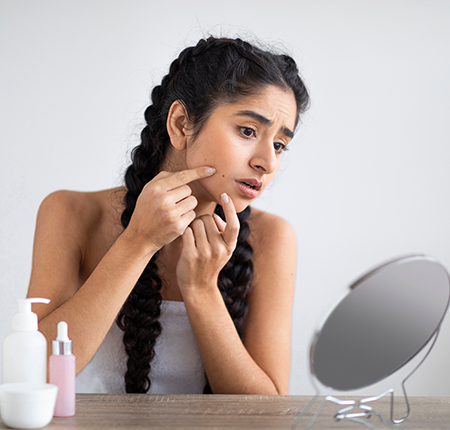
- Avoid squeezing spots: we know it's tempting at times, but all you'll achieve is spreading the acne bacteria further into your pores.
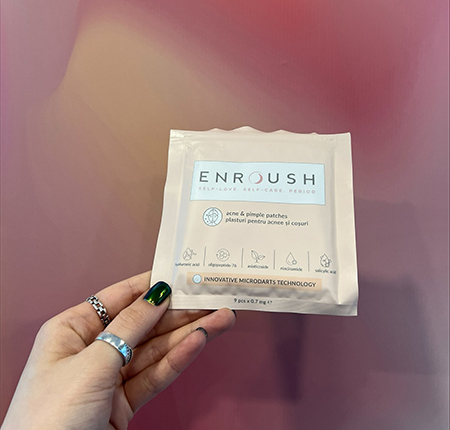
- Use Enroush patches for spots and acne: they're a far more effective solution than squeezing. You simply apply them to the skin, and the microneedles deliver a unique blend of active ingredients deep into the skin, treating spots at the root in just 6 hours. Thanks to salicylic acid, hyaluronic acid, niacinamide and oligopeptide-76, the patches cleanse, draw out impurities and hydrate – for clear, smooth skin with no scarring and no signs of ageing.
- Adjust your diet: although it isn't a direct, proven cause of acne, diet plays an important role in the body's hormonal balance and can be a risk factor. If you notice that certain foods trigger inflammation for you (excess sugar or processed foods, for example), try to cut back on them.
Complications of hormonal acne
Hormonal acne has no serious consequences for your health, but its long-term effects can be viewed from several perspectives.
In terms of appearance, the most common complications of acne are the scarring and hyperpigmentation left behind once the inflammation subsides and the spots clear. With severe acne, these marks can remain on the skin for a long time or permanently.
A potentially even more serious long-term consequence concerns emotional wellbeing, as acne usually has a strong negative impact on self-image and social life. Those affected frequently experience bullying and discrimination, as well as feelings of shame, low self-esteem, a desire to withdraw, and depression.
Furthermore, if there's a hormonal imbalance or an endocrine problem behind the acne, complications of that particular condition can arise if it isn't treated appropriately. That's why, if you suspect something, it's worth having further tests done.
How to prevent hormonal acne
Nothing can prevent hormonal acne with any certainty, because you can't precisely control the changes in your body or the way your hormones fluctuate. Least of all when it comes to natural processes such as the menstrual cycle, pregnancy or the menopause.
You can certainly take steps, however, to limit the risk factors, protect your skin and treat acne quickly at the first signs:
- Pay attention to your lifestyle: diet, rest, stress levels – all of these have a major influence on hormonal balance and sebum production. Eat as nutritiously as possible, get enough sleep and avoid stressful situations as much as you can.
- Use hypoallergenic skincare products: cleanse your skin daily, but make sure you use products that don't clog the pores or increase the risk of inflammation.
- See a dermatologist: have regular check-ups if you know you're genetically predisposed to acne, and seek medical advice at the first signs, before it becomes more severe
- Discuss the treatment options with your doctor: if your acne persists or keeps coming back, ask your dermatologist what other solutions are available
Frequently asked questions about hormonal acne
We don't want to leave you with unanswered questions – and we know acne raises plenty of them. How does it affect you? How long do the blemishes last and how long does it take for treatment to work? We've gathered the most common questions about hormonal acne and prepared the answers for you here:
How does hormonal acne affect my skin?
Blemishes are the key symptom of acne. The skin may become red, and inflamed-looking lesions or spots may develop (blackheads, whiteheads, pustules, nodules) that can cause itching, stinging, burning or pain. After treating severe acne, scarring may also remain on the skin.
How long does hormonal acne last?
The answer varies from person to person. If it's caused solely by certain hormonal disorders, it may clear up once balance is restored. Some spots disappear within a few days. More severe forms can last several weeks. Without treatment, acne can persist for months.
How quickly does hormonal acne clear up once treatment starts?
Again, everyone's experience is different. Every body is unique and responds differently to various forms of treatment. Acne means long-term treatment, so you'll need patience. Symptoms should improve within a maximum of six weeks of starting treatment – but always speak to your dermatologist so your expectations are as realistic as possible.
Do I need to see a dermatologist to treat my hormonal acne?
Yes, it's always advisable to seek a specialist's advice. Don't opt for self-medication and don't ignore the problem, as it can get worse. You don't know what side effects may occur if your skin comes into contact with various substances – it's best to follow your dermatologist's instructions. They'll prescribe a suitable treatment tailored to the severity of your acne and your state of health.

Medium, super or extra absorption

Low, medium or super absorption

Low or medium absorption


and happily breaking taboos!


