

Hormonal disorders – what are they and how do they show themselves?
Without them, the human body simply couldn't function – and yet they remain one of our body's greatest mysteries. We call them hormones, a name derived from the Greek "horman/hormanus", meaning to set in motion, to awaken. And that is precisely their job: to trigger and sustain vital processes within our bodies.
The key word, when we talk about hormones and their influence on our health, is balance. What happens when a hormone is present in excess or in short supply, and how does that affect our lives? Here's everything you need to know.
What are hormonal disorders?
Hormones are chemical substances that control various functions in your body by carrying messages through the bloodstream to organs, skin, muscles and other tissues. These signals tell the body what to do and when to do it. Your life and your health therefore depend to a large extent on hormones.
DID YOU KNOW?
Scientists have so far identified more than 50 different types of hormone in the human body.
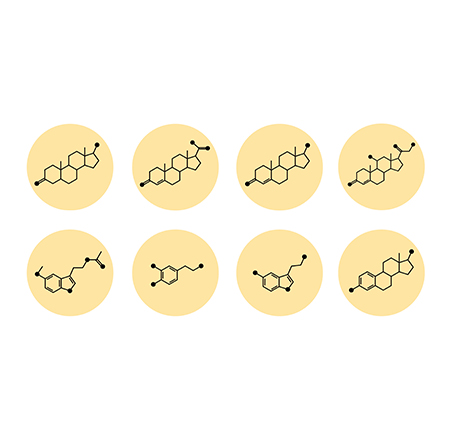
Together, hormones and most of the tissues (above all glands) that produce and release them make up what is known as the endocrine system. The processes it influences include:
- metabolism
- homeostasis (the body's constant internal balance)
- growth and development
- sexual function
- reproduction
- sleep-wake rhythm
- mood
Our body knows precisely how much of each hormone is useful for everyday life. That's why, with a balanced lifestyle, the glands produce exactly the amount of hormone we need.
At the other end of the spectrum are hormonal disorders – those exceptional cases in which hormone secretion is either too low or too high, creating an imbalance in the body. These fluctuations may be:
- short-term: caused by changes in diet or sleep patterns
- long-term: they can become chronic and require appropriate treatment
Such fluctuations also occur entirely naturally – as we grow older and our bodies change in the usual way.
Types of hormonal disorder
So we know that hormones play a particularly important role in the body's development and proper functioning, and that we want to keep their secretion within certain limits. But which hormones are we actually talking about? The most important include:
THYROID HORMONES (T3 and T4)
As the drivers of metabolism, they ensure that food is converted into energy for the body. They also play an important part in regulating emotions, in the healthy development of the nervous system and brain, and in the systems responsible for muscle contraction and relaxation.
The symptoms of a disorder are:
- weight gain
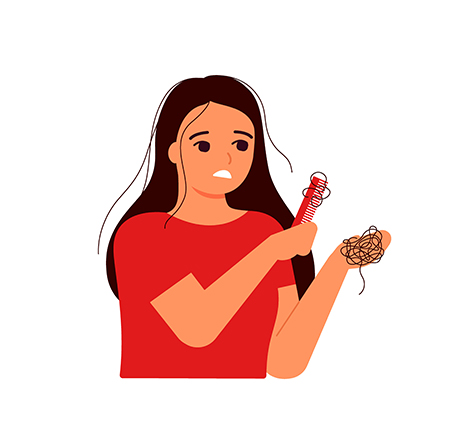
- hair loss
- persistent fatigue
- dry skin
- constipation
GROWTH HORMONE
Secreted in ever smaller amounts as we age, it is – as the name suggests – responsible for the growth and development of the body (height, for instance). Growth hormone reaches its highest levels at night, during the first few hours of sleep – hence the idea that children do most of their growing while asleep.
Signs of a hormonal disorder are:
- fatigue
- physical weakness
- dizziness
- fat accumulation around the abdomen
CORTISOL
Known as the "stress hormone", cortisol is responsible for energy levels, blood pressure and for winding the body down towards the sleep-wake state. It plays a major part in regulating macronutrients and blood sugar.
A disorder brings on:
- acute anxiety and depression
- weight gain, particularly around the abdomen
- general weakness
- dizziness
- nausea
- low blood pressure
- weight loss
OESTROGEN
In the category of "hormones that change my body", oestrogen can hardly be left out. It is associated with the major changes of puberty – such as menstruation and the development of the sexual organs – and plays an especially important role in the lives of girls and women.
An imbalance may arise particularly in women going through the menopause or after childbirth. Signs of a hormonal disorder include:
- fatigue
- hot flushes
- vaginal atrophy and dryness
- poor concentration
- reduced libido
- possibly pain during intercourse
PROLACTIN
Among this hormone's responsibilities is the production of breast milk during lactation. Prolactin levels rise gradually over the course of pregnancy and fall again in the first two weeks after birth. We therefore often associate this hormone with the typical changes of pregnancy and the processes that immediately follow it (breastfeeding and the absence of ovulation during this time).
The symptoms of a prolactin disorder are:
- headaches
- infertility
- menstrual irregularities
- leaking breast milk outside of breastfeeding or pregnancy
TESTOSTERONE
Although it is regarded as a "male" hormone because of its central role in the male reproductive system, testosterone is also produced in women. In us, too, it has a significant influence on libido and sexual sensation.
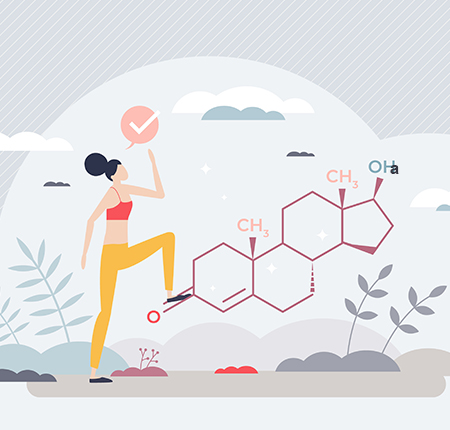
A disorder brings on:
- thinning hair
- acne
- menstrual irregularities
- reduced libido
- low mood
- vaginal atrophy (vaginal dryness, itching, burning, pain during intercourse)
MELATONIN
The reason we nod off while watching a film – and the culprit when we can't drop off at all – is the hormone melatonin. It sends sleep signals to the brain and is influenced by light: the less light, the more of the hormone is released. It is closely linked to the circadian clock, which divides the 24 hours into periods of sleep and wakefulness.
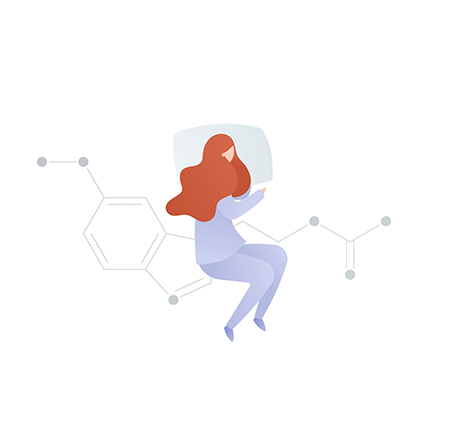
The signs of a hormonal imbalance here are fairly unmistakable:
- in excess – we're constantly tired
- in short supply – we can't sleep
INSULIN
Insulin is produced by the pancreas and regulates blood sugar, while also controlling how the body breaks food down and converts it into energy. Insulin levels that are too low or too high mean hyperglycaemia or hypoglycaemia respectively – and are a key factor in whether the person concerned has type 1 or type 2 diabetes.
With a disorder of insulin levels, we recognise the symptoms according to the type of diabetes:
- type 1 – thirst, raised glucose levels in the urine and weight loss
- type 2 – frequent urination and raised glucose levels in the urine
Hormonal disorders – symptoms
Hormonal disorders can take very different forms. The symptoms vary from case to case, but the earliest indications of an imbalance include:
- sudden weight loss or weight gain
- thinning hair on the scalp
- increased hair growth in various areas of the body
- chronic fatigue
- drowsiness
- dry skin
- hair loss
- menstrual irregularities
- anxiety
- depression
- reduced sex drive
- vaginal dryness
- a drastic increase or decrease in appetite
- night sweats
- frequent/sudden mood swings
Hormonal disorders that affect metabolism
We often hear people talking about metabolism and how good it is for it to work as quickly as possible. But what exactly is it?
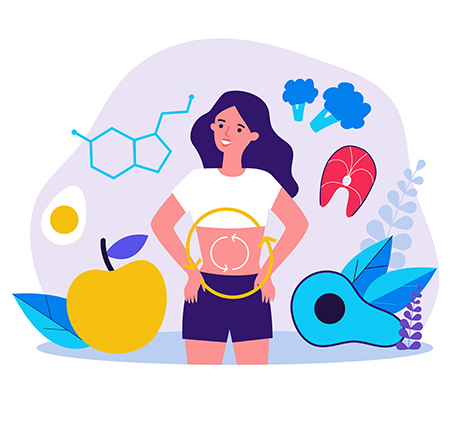
Metabolism is a chemical process by which the body turns food into "fuel". The faster it works, the more easily calories are burned and the more energy we have available. There are a whole range of symptoms that point to impaired metabolism:
- slow heartbeat or rapid heartbeat (tachycardia)
- unexplained weight gain or weight loss
- fatigue
- constipation
- diarrhoea or more frequent bowel movements
- numbness and tingling in the hands
- higher-than-normal blood cholesterol levels
- depression or anxiety
- intolerance of cold or heat
- dry, coarse skin and hair
- thin, warm and moist skin
- uneven distribution of body fat
- darker skin around the armpits or on the back and sides of the neck
- extreme thirst and frequent urination
Hormonal disorders that affect women
An imbalance of oestrogen, progesterone and testosterone too is typically female. It can occur at any age, but phases such as the menopause or childbirth increase susceptibility to hormonal imbalances. We see slight fluctuations in these hormones even over the course of a single menstrual cycle.
In women, a hormonal imbalance shows itself through:
- excessive hair growth
- hair loss
- acne on the face, chest and back
- loss of sex drive
- vaginal atrophy and dryness
- hot flushes
- infertility
- an irregular cycle
Hormonal disorders that affect men
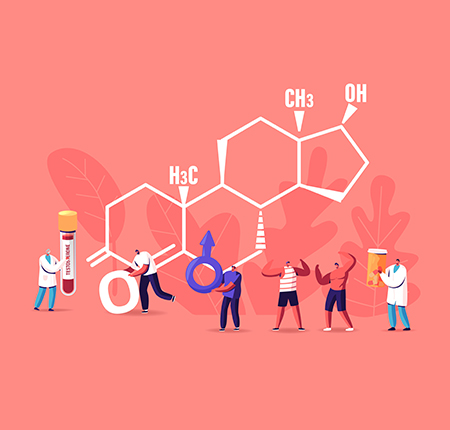
In men, the most common hormonal imbalance involves testosterone, which is produced in the testes. The symptoms may therefore include:
- erectile dysfunction
- loss of muscle mass
- reduced sex drive
- infertility
- loss of body hair
When should you see a doctor?
The symptoms of a hormonal imbalance often go unnoticed by those affected – either because they are taken to be fairly normal, passing episodes, or because they are simply ignored. Even so, it is very important to speak to your doctor as soon as you notice changes in your body.
Hormones are not visible parts of the body, which can lead us to treat them with indifference – yet their role and their balance remain essential. The sooner we see a doctor, the better our chances of halting, or even preventing, an unwanted development.
Hormonal disorders – causes
Over the course of a lifetime (and even over the course of a single day), hormone levels rise and fall naturally. Certain stages of life bring about more dramatic changes and fluctuations in hormones, including:
- puberty
- pregnancy
- the menopause
There are, however, other reasons why hormone levels can become irregular at unexpected times. The most common causes of fluctuating or unbalanced hormone levels include:
- stress
- certain medicines
- taking steroids
- an unhealthy or unbalanced diet
- irregular sleep
- radiotherapy
- chemotherapy
These hormonal imbalances tend to be temporary, or can be resolved by adjusting medication or managing stress appropriately.
Chronic hormone-related conditions, on the other hand, can have a variety of causes. Broadly speaking, the main conditions or situations that cause clinically significant hormonal imbalances are:
- tumours, adenomas or other growths – these form in glands or in hormone-producing cells and can cause hormonal imbalances;
- damage to or injury of an endocrine gland – any kind of damage to or injury of an endocrine gland can give rise to hormonal imbalances, usually a hormone deficiency;
- autoimmune conditions – Hashimoto's thyroiditis, Graves' disease, type 1 or type 2 diabetes, Addison's disease.
How can hormonal disorders affect you?
When there is too much or too little of a hormone, the risk increases that the body will deviate – for a shorter or longer period – from its typical processes. Just as hormones can fluctuate within normal limits, they can also exceed those limits and lead to complaints such as:
- ADULT ACNE – this occurs when hormonal changes affect the natural production of sebum in the facial skin. It is most common during the menopause, during pregnancy and in people receiving testosterone therapy.
- EXCESS WEIGHT – some hormones, such as cortisol, send signals to the brain that there is a need or craving for food. When these hormones are present in excess, they can therefore lead to weight gain.
- INFERTILITY – this affects both women and men when the sex hormones (oestrogen and progesterone, or testosterone respectively) are not present in the amounts the body requires.
- DIABETES – governed by insulin (produced by the pancreas), this condition develops when too much or too little of the hormone is released.
Diagnosis – hormonal disorders
Hormone analyses are usually carried out using blood tests. Since the levels of certain hormones can vary considerably over the course of the day, additional tests are required depending on the case to make sure the medication prescribed is correct. Any other health conditions and the patient's medical history are always taken into account.
Hormonal disorders – treatment
Treatment for hormonal disorders always depends on the type of imbalance and the hormone involved. If a substance is present in too small an amount, tablets or injections are usually prescribed to top up the hormone in question. If, on the other hand, too much of a hormone is being produced, surgery or radiotherapy may also be considered.
Prevention – hormonal disorders
Since many of us prefer to act preventively rather than having to tackle a problem later on, here are a few tips on how to minimise the risks:
- a healthy diet containing all the food groups in moderate amounts
- regular exercise
- maintaining a healthy body weight
- managing stress consciously
- a good sleep routine
- avoiding smoking and all other nicotine-containing products
Hormonal disorders in teenagers
Teenagers experience hormonal fluctuations entirely naturally, because their bodies are in a period of change. This chiefly involves oestrogen and progesterone in girls and testosterone in boys.
Amid these changes, as balanced a lifestyle as possible is especially important, because an unhealthy diet or lack of sleep can have visible effects on a body that is still in the middle of developing. The release or suppression of certain hormones at such a crucial stage of development can have long-term consequences – so it is particularly advisable during this time to be careful and mindful about what we consume.
Hormonal disorders in young children
Hormonal disorders in young children need to be taken all the more seriously, since – if they are not treated in good time – they can impair normal development and growth. As in other cases, these disorders may present with more or less obvious symptoms. The most common include:
- delayed and slow growth
- unexpected changes in mood and behaviour
- fluctuating blood pressure and heart rate
- an imbalance in appetite and weight, difficulty gaining weight within the normal range
In such cases, the quickest and most effective solution is to take the child to an endocrinologist for a more detailed assessment.
Frequently asked questions
Now is the right moment to answer the most common questions about hormonal disorders.
Can hormonal disorders affect menstrual bleeding?
Hormonal disorders can also be responsible for unwelcome changes to your cycle and menstrual bleeding. If too much testosterone and androstenedione is released, for example, women may experience irregular, prolonged or very painful periods. Because we want you to feel comfortable in your body even on the most delicate days – especially when your balance seems to have gone awry – we have developed Enroush products made from 100% organic materials, with no chemicals, fragrances or plastic. Our pads, tampons and liners made from 100% organic cotton are kind to you and to the planet, meeting your feminine needs without putting your health at risk. We want to contribute to a transparent, clean world in which women feel good and put their health first.

Can hormonal disorders affect weight gain?
Hormonal disorders can affect both weight gain and weight loss. When we feel stressed, for example, cortisol is released, sending signals to the brain that are closely bound up with eating and that cause us to eat far more or far less. In the long run, these responses and habits really can affect our weight.
Can hormonal disorders cause anxiety?
Hormonal disorders can affect your mood and may well trigger anxiety. That's because hormones – alongside their physical functions – also determine a large part of how we feel. Just as we can feel buoyant or full of energy after eating chocolate thanks to an immediate release of serotonin, we can experience anxiety when too much thyroid hormone is released.
Do hormonal disorders only occur during puberty?
Contrary to what you might expect, hormonal disorders are by no means limited to teenagers! This widespread idea is based on the natural hormonal changes of that stage of life, but fluctuations can occur at any time. During pregnancy, during the menopause and even during menstruation, hormones can become unbalanced – and if we don't pay enough attention to diet, sleep and exercise, we can even bring on an imbalance ourselves. That's why doctors recommend sticking to our good habits as consistently as possible.
Can a lack of a sex life lead to hormonal disorders?
Besides pleasure and reproduction, sex also serves to regulate the levels of many hormones in our bodies. After a prolonged period without sexual activity, the body may therefore suffer as a result. If oestrogen and progesterone are no longer released in a woman's body to carry out their other functions, for instance, stress levels can rise too sharply – and at that point not even an orgasm will help. One thing is certain: a healthy sex life plays an important part in hormonal balance.
Can you get pregnant with a hormonal disorder?
As far as pregnancy is concerned, conceiving a child depends directly on the menstrual cycle, since this also determines your most fertile days. With hormonal disorders, menstruation is very likely to become irregular, which in turn affects fertility. In this case pregnancy is possible, but it becomes more complicated, as it depends on several factors. It is certainly worth consulting a specialist, who will know exactly which hormonal disorders can affect a pregnancy and which cannot.

Medium, super or extra absorption

Low, medium or super absorption

Low or medium absorption


and happily breaking taboos!


