

Hot flushes: what they are, how to cope with them, and how they can be treated and prevented
Hot flushes can be triggered by a variety of factors. In women, however, the most common cause is the menopause. In most cases there's no reason to worry, and it doesn't mean that illness or some other serious health problem lies behind the hot flushes. It's simply a typical symptom of the menopause – a stage of life that is entirely normal for every woman, and one you needn't fear or try to avoid.
That said, it doesn't mean you have to suffer in silence – particularly if you notice that the hot flushes are affecting your sleep, your daily routine, your mood and, ultimately, your quality of life. There are plenty of ways to get these sudden surges of heat under control – from herbal home remedies through to medically prescribed treatments that ease the symptoms. You'll find everything you need to know in our article.
What are hot flushes
Hot flushes are a sudden sensation of intense heat. They usually affect the upper body and are felt most strongly in the face, neck and décolletage – with or without reddening of the skin and sweating. They're also commonly known as „heat surges“, and there's usually no identifiable trigger (such as after a jog or an intense workout): they simply come and go for no apparent reason.
These hot flushes can also occur at night – in which case they're referred to as „night sweats“. They can disrupt your sleep and, if they recur frequently, lead to insomnia and low mood. At that point it's worth seeing a doctor to find a solution and learn to manage them better.
Men can experience hot flushes too, but women are considerably more prone to these intense surges of heat, which occur above all during the menopausal years. During the perimenopause and menopause a great many changes take place in your body, and hot flushes are one of them. There's no need to be alarmed, as it's a common symptom: according to studies, 3 in 4 women going through the menopause experience it.
At what age do hot flushes occur
The hot flushes typical of the menopause can start at any point during the perimenopause, so in principle from the age of 40 onwards (more rarely earlier, in cases of premature menopause). In this instance, the hot flushes often appear alongside an irregular cycle and periods becoming less frequent, as hormone levels in the body begin to change.
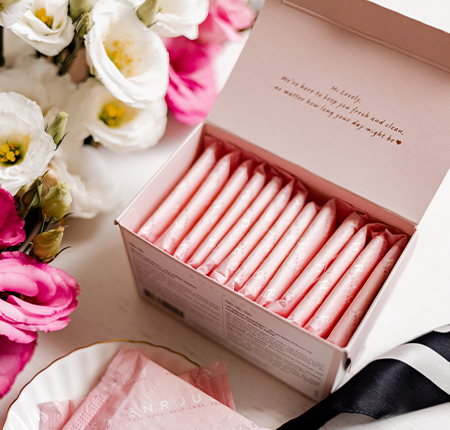
At this stage your hormonal balance is already disrupted – all the more reason to protect your intimate flora and prevent inflammation or infections that could throw your hormonal balance off even further. That's why we recommend using only products made from 100% organic cotton and pure ingredients for intimate care. Enroush products are hypoallergenic, pH-neutral and contain natural ingredients for gentle care without unwanted side effects.
If, on the other hand, the hot flushes have another cause – such as a hormonal disorder or some other health problem – they can begin at any age. In that case, a medical examination is needed as soon as possible in order to identify and treat the underlying factors.
How long do hot flushes last
An individual hot flush may last only a few seconds or continue for up to 30 minutes. As for the period during the menopause in which hot flushes can occur: they may last 6 months, but they can also persist for 5 to 10 years after the menopause begins. Every woman experiences these hot flushes differently – just as she does all the other symptoms of the menopause.
Why hot flushes occur – causes
There are two categories of causes for hot flushes: the natural hot flushes, which are normal and occur during the menopause, and those that stem from another condition and need to be treated. Let's look at the triggering factors in each case in turn.
With hot flushes that begin when periods stop, the causes aren't precisely understood. The hormonal changes that accompany the onset of the menopause clearly play a role, however. Oestrogen and progesterone levels fall markedly, which can disrupt the regulation of body temperature and thus lead to these sudden surges of heat and excessive sweating.
Another possible cause of hot flushes can be pregnancy. An expectant mother also experiences pronounced fluctuations in oestrogen and progesterone levels, so sweating and hot flushes during pregnancy are entirely normal.
Among the other conditions that can cause hot flushes are the following well-known causes of unexplained episodes of heat:
- Metabolic syndrome
- Obesity
- Overactive thyroid
- Low blood sugar (hypoglycaemia)
- Food allergies and intolerances
- Stress
- Adrenal gland tumours
- Breast cancer treatment
- Mastocytosis
- Hysterectomy
- Rosacea
Triggers of hot flushes
Although you can't control when the surges of heat occur – and they usually come on quite suddenly – there are certain factors that can trigger or intensify hot flushes during the menopause and are best avoided. These include:
- Consuming alcohol, caffeine and spicy food
- Tight, heavy clothing
- High ambient temperatures
- Stress and anxiety
- Smoking (including passive smoking, i.e. inhaling cigarette smoke when someone else is smoking).
How a hot flush manifests itself
Remember how we keep telling you that periods and the menstrual cycle are a completely individual experience for every woman? The same is true of the menopause, whose symptoms vary enormously from one woman to the next.
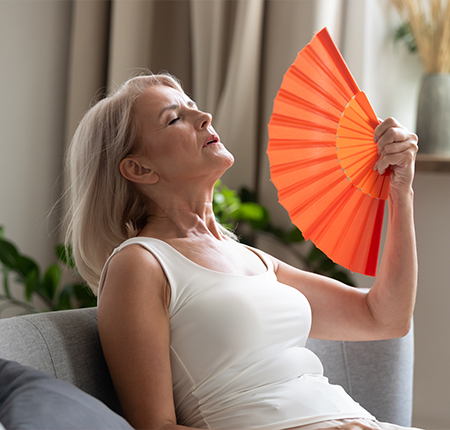
Hot flushes begin and progress differently, with varying duration and intensity. Some hot flushes go almost unnoticed, while others can seriously disrupt daily life. They may build up gradually or appear out of nowhere. They may be over in a matter of seconds or last up to 30 minutes. Hot flushes can also be recurrent and occur several times within the space of an hour.
The main symptom of a hot flush during the menopause is an intense sensation of heat in the upper body, particularly in the face, neck and décolletage. These surges of heat may be accompanied by:
- Reddening of the face, neck and décolletage
- A sensation of hot skin
- Numbness or tingling in the fingers
- A raised heart rate (tachycardia)
- Heavy sweating
- Anxiety
- Severe chills
Chills are particularly normal when the hot flushes are accompanied by heavy sweating. Once the sensation of heat subsides, it's entirely natural for a sweat-covered body to feel intensely cold.
Moreover, if the hot flushes have causes other than the menopause, they may be accompanied by symptoms such as palpitations, restlessness, high blood pressure and digestive problems.
What you can do during a hot flush
You don't need to do anything during a surge of heat, especially if it only lasts a few seconds. If, on the other hand, the sensation of heat persists and interferes with your activities or your sleep, there are a few simple ways to get through these moments more comfortably. Here are some things any woman can do:
- Drink cold drinks: water or juice with ice as soon as you feel a hot flush beginning can reduce the intensity of the symptoms.
- Dress in layers: that way you can quickly adjust your clothing depending on whether you feel hot or cold.
- Choose cotton clothing and underwear: especially with night sweats, cotton clothing and bedding will make you more comfortable, because they let your skin breathe and don't make the sweating worse.
- Avoid tight clothing made from synthetic fibres: it doesn't allow your skin to breathe and therefore encourages sweating.
- Keep a record of your symptoms: it's a good idea to have a notebook to hand – a sort of hot flush diary (it doesn't have to be on paper, an app on your phone works just as well). Make a note of when the surge of heat began and how it progressed. Over time this may help you spot recurring patterns that point to triggers you can avoid.
Treatment of hot flushes
There are many options you can turn to in order to get hot flushes better under control, so that they don't have a negative impact on your life.
If there's an underlying health disorder, that will of course be treated first and foremost – and the hot flushes will improve at the same time.
If the hot flushes are caused by the menopause and are affecting your sleep or your daily routine, you'll find the appropriate solutions in the lines below. It's important to know that all of these treatments should only be started after seeing a doctor and discussing them with them, to make sure they'll work and won't interact with any other therapies.
Supplements for treating hot flushes
Among the most commonly used preparations for easing or getting rid of hot flushes are natural, plant-based remedies and vitamins:
- Vitamin E: may ease sensations of heat
- Black cohosh: a plant frequently used to relieve menopausal symptoms
- Ginseng: may ease sleep problems and improve mood
- Foods high in phytoestrogens: such as soya, flaxseed and dried fruit
Bear in mind that any preparation – even those that seem harmless (such as vitamins and minerals or herbal remedies) – can interact with other treatments you're currently using. They're also very individual remedies, which may work well for one woman and have no effect whatsoever on another.
So always speak to your doctor before adding a supplement of this kind to your diet, so that you can be sure it really will help with your hot flushes and that you can take it safely. Ask for advice on the dosage, strength and length of time you should be taking these preparations.
Hormone replacement therapy for treating hot flushes
Hormonal treatments with oestrogen are used above all in women whose sleep or daily life is severely disrupted by hot flushes. They can effectively reduce the frequency of the surges of heat, but are given together with a progestogen to prevent cancer of the womb lining in women who still have a uterus.
Women who have already had a hysterectomy no longer need this protection – they can be given oestrogen on its own, without a progestogen.
Non-hormonal treatment of hot flushes
Selective serotonin reuptake inhibitors (SSRIs) are antidepressants that represent one form of non-hormonal treatment. Doctors may recommend them to reduce the frequency and severity of hot flushes by regulating serotonin levels. The options include:
- Paroxetine, which is approved in the US for hot flushes; in the UK it is not licensed for this use but may sometimes be prescribed off-label - ask your GP.
- Venlafaxine, whose effectiveness against hot flushes has been demonstrated in studies.
- Desvenlafaxine, a newer (and less well researched) form of venlafaxine.
- Fluoxetine, which can ease surges of heat.
- Escitalopram, for treating the sleep problems that accompany hot flushes.
- Gabapentin, likewise for treating insomnia resulting from night sweats.
Although they can have positive effects, treating hot flushes isn't the actual purpose of these antidepressants. It's therefore very important to follow your specialist's instructions on dosage and duration of use precisely.
Alternative therapies for treating hot flushes
There are also natural remedies that many women try for hot flushes and for which no prescription is needed. These include plant-based essential oils, various teas for menopausal hot flushes, meditation, hypnosis and acupuncture. These may be effective because they reduce stress and anxiety – though the placebo effect may play just as big a role.
Studies have been unable to demonstrate any significant improvement in people who used such therapies compared with those who took part in placebo treatments.
Lifestyle changes help reduce hot flushes
It's hardly news that hormonal balance is strongly influenced by lifestyle. Everyday stress, a diet that is either inadequate or excessive, and harmful habits can all intensify hot flushes. Eliminating these factors while building positive changes and healthy habits into your daily routine can help restore hormonal balance and ease hot flushes. So you can make small changes, for example:
- Give up smoking (including passive smoking) and excessive alcohol and caffeine consumption.
- Eat nutrient-rich foods as part of a balanced diet.
- Avoid spicy food and anything that experience tells you triggers your hot flushes.
- Lead an active lifestyle and exercise several times a week.
- Keep an eye on your weight and reduce your body mass if you're overweight.
- Learn and practise stress management techniques.
How we prevent hot flushes
Because the causes of hot flushes can't be pinned down precisely, there are no preventive measures with maximum effectiveness. Sometimes menopausal surges of heat simply can't be prevented.
What you can do is observe the triggers – ideally with the help of a diary – and avoid the situations that experience shows set off your hot flushes. A balanced lifestyle can also ease these episodes.
If you can make a habit of dressing in layers, it will help you cope with such episodes more easily. Cotton bedding and clothing are equally helpful for preventing night sweats, or at least for reducing the discomfort.
Frequently asked questions about hot flushes
In this section we answer some of the most common questions about hot flushes – because we know you're curious as to whether they disappear after the menopause and whether there's some miracle cure we haven't mentioned yet. You'll find the answers below.
Do hot flushes disappear after the menopause?
Hot flushes may disappear after the menopause – or they may not. Sometimes they stop 6 months after the menopause begins. In other cases they can last up to 10 years. Everything varies from woman to woman, depending on lifestyle and many other factors. The good news is that when hot flushes persist over longer periods, they usually improve of their own accord and become less intense.
Are herbal preparations safe for treating hot flushes?
Any treatment, including a herbal one, can have side effects – particularly if you're using other therapies at the same time. Although they're generally safe in small quantities, it's advisable to speak to your doctor before starting any treatment.
What's more, they may work for one person and have no effect at all on another. To date there aren't enough studies to confirm their effectiveness and benefits; there are, however, studies highlighting the possible negative consequences of taking larger quantities of black cohosh or evening primrose oil – including digestive discomfort, headaches and nausea.
Are there any foods that will help me with hot flushes?
Changes in the body's oestrogen levels can influence the severity of hot flushes. So you could try eating more foods high in phytoestrogens, as these can have effects similar to your body's own oestrogen (to a lesser degree, of course) and thus ease sensations of heat.
Some foods high in isoflavones (these plant oestrogens) are soya beans and chickpeas, lentils, flaxseed, dried fruit, beans, vegetables and grains.
Can I prevent night-time hot flushes?
It's difficult to prevent a phenomenon whose cause can't be precisely determined – and that's exactly the case with night sweats. There are, however, a few steps you can take to reduce the discomfort and ease the symptoms of a night-time hot flush.
First of all, choose cotton clothing and bedding that allow your skin to breathe. Also make sure you have a glass of cold water within reach, and avoid spicy food (or any other foods that trigger your hot flushes) before bed. A healthy lifestyle can also help ease hot flushes, both at night and during the day.

Medium, super or extra absorption

Low, medium or super absorption

Low or medium absorption


and happily breaking taboos!


