

How premenopause changes your life
The menopause isn't just about periods stopping and hot flushes catching you completely off guard. Long before a woman's body actually reaches the menopause, it goes through plenty of other changes — including the symptoms of perimenopause.
Premenopause (perimenopause) – what is it and how does it show up?
Premenopause, or perimenopause, is the transitional phase the body goes through on its way to the menopause, which marks the end of a woman's fertile years. In this article you'll find everything you need to know — because whatever your age, understanding your body can only work in your favour.
What is premenopause?
Perimenopause is the point at which your body begins its transition towards the menopause. It can start as early as your mid-30s or as late as your mid-50s, though this phase usually begins 3 to 4 years before a woman's body enters the menopause — in some cases it can start as much as 10 years beforehand.
During this transition, the ovaries produce fewer hormones, which makes the menstrual cycle irregular. Even so, an egg is still released during this time, which means a woman going through the transition to menopause can still become pregnant. At this point, the body is approaching the end of its reproductive years.
Other physical changes and symptoms may appear as the body adjusts to differing hormone levels. Officially, premenopause ends and the menopause begins once 12 consecutive months have passed without a period.
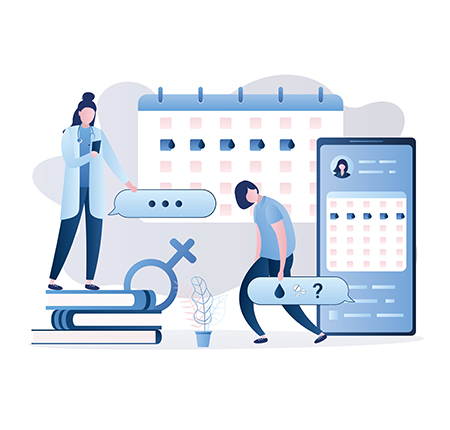
Symptoms & signs: how does premenopause show up?
Perimenopause symptoms, the age at which they begin and how long they last vary from woman to woman. No one can predict exactly what you'll experience — but here are some of the most common symptoms:
- hot flushes
- tender breasts
- dry skin that becomes thinner
- hair loss or thinning hair
- reduced bone density
- worsening premenstrual syndrome
- changes in cholesterol levels
- reduced sex drive (libido)
- fatigue
- irregular periods
- vaginal dryness and, with it, discomfort during sex
- declining fertility
- leaking urine when coughing or sneezing
- urge incontinence — an increasingly frequent, urgent need to pass urine
- mood swings or mood disorders
- sleep problems
- difficulty concentrating
How long does premenopause last?
The age at which perimenopause begins can vary considerably from one woman to another. Signs may appear around the age of 40, though some women notice these changes from 35 onwards. On average, premenopause lasts 3–4 years, but it can last just a few months or as long as 10 years.
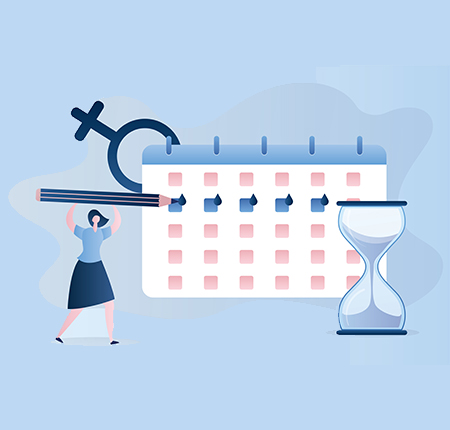
Perimenopause is a transitional phase that ends with the menopause. Menopause essentially means that menstruation has stopped. If you haven't had a period for 12 months, you have officially reached the menopause.
The menstrual cycle during premenopause
During premenopause, oestrogen levels (the main female hormone) fluctuate erratically, rising and falling continually. This causes menstrual cycles to become longer or shorter; there may also be cycles in which the ovaries don't release an egg (no ovulation takes place). On top of that, symptoms similar to those of the menopause can appear, such as hot flushes, sleep disturbances and vaginal dryness — but don't worry, there are plenty of treatment options available.
One first step you can take for your health is switching to organic intimate care that genuinely makes a difference. Mother Nature gave us everything we need to make ENROUSH pads and tampons — no chemicals, fragrances, chlorine, plastic or synthetic fibres. We use only organic cotton, creating products that look after your comfort and safety, whatever day of your cycle it is. All our products are 100% gynaecologically tested — so you're in good hands.
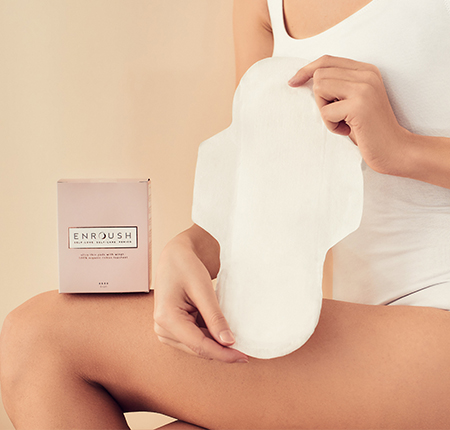
It's time to stop letting conventional products set the rules for your body. Choose products that look after you, so you can feel good every single day. The world of ENROUSH is waiting for you with open arms.
Ovulation & pregnancy during premenopause
Although fertility declines during perimenopause, it's worth knowing that the ovaries carry on working during this time and release an egg as usual. As long as you're having periods, pregnancy is possible.
If you're not yet sure how to work out when you ovulate, now is the perfect moment to read our article on fertile days. You'll find plenty of methods for calculating your fertile window — and we answer questions you didn't even know you had.
Causes & risk factors – why does perimenopause happen?
The causes of premenopause aren't especially varied. During this transition towards the menopause, the production of oestrogen and progesterone begins to fluctuate, rising and falling. Many of the changes a woman experiences during perimenopause are in fact a consequence of low oestrogen levels.
The menopause is a natural stage in a woman's life, but sometimes it arrives earlier than expected. There is some evidence that certain risk factors make an earlier onset of perimenopause more likely, namely:
- smoking
- family history
- cancer treatment (chemotherapy or radiotherapy to the pelvic area)
- hysterectomy
Premenopause, menopause & postmenopause – what's the difference?
Each of these stages represents a gradual change that usually unfolds over several years.
Premenopause, or perimenopause, occurs in a woman's forties, though sometimes it can begin after the age of 30. Symptoms may intensify as the menopause draws closer. As a rule, a woman enters premenopause 3–4 years before the menopause, and this phase ends 12 months after her final period.
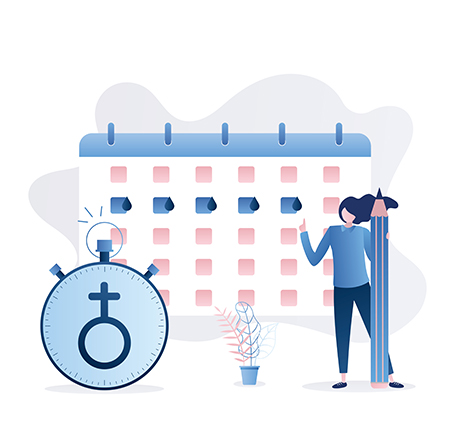
Menopause means that the ovaries no longer release eggs and oestrogen production drops significantly. The symptoms experienced during premenopause can continue after the menopause too. Most women reach the menopause between the ages of 40 and 58, with the average age being 51. Would you like to know more about this topic? Our article devoted entirely to the causes, symptoms and treatment options of this stage of life tells you everything you need to know about the menopause.
Postmenopause is the phase after the menopause. During this time, symptoms may intensify because of reduced oestrogen production. Generally speaking, however, menopausal symptoms will decrease in intensity.
Treating premenopause
There are various forms of treatment that can help relieve premenopausal symptoms. What matters, though, is that you speak to your gynaecologist or a specialist so that you get the results you want and use solutions that are right for you.
Hormone treatment during premenopause
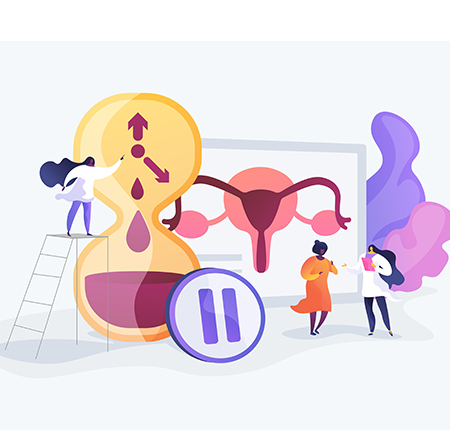
Hormone therapy is helpful for some women.
- Systemic oestrogen therapy (in the form of pills or tablets, patches, gels or creams) is considered the most effective treatment option for relieving hot flushes and night sweats — common symptoms during premenopause and the menopause.
- Depending on a woman's medical history and state of health, a doctor may recommend (very) low doses of oestrogen to ease symptoms. If necessary, progesterone may also be prescribed alongside oestrogen therapy.
- Another hormonal treatment a doctor might recommend is a progesterone cream, which helps with vaginal dryness and also offers protection against premenstrual syndrome.
- A further hormone treatment used during premenopause is the oral contraceptive pill. If your periods are irregular and you don't wish to become pregnant, low-dose contraceptive pills are a good option. Because ovulation is suppressed, bleeding and your cycle become more regular, hot flushes disappear and vaginal dryness eases.
- There are also oestrogen-containing preparations for vaginal use that can be used to relieve premenopausal symptoms. These products are inserted into the vagina to ease dryness and pain during sex.
Treatment with antidepressants during perimenopause
Some antidepressants can reduce certain menopausal symptoms, such as hot flushes. This kind of treatment is usually recommended for women who, for particular reasons, cannot take oestrogen.
Natural treatment for premenopause
If you consult your doctor, they will recommend the treatment that suits you best. Natural options include:
- for bone health — calcium and vitamin D
- for reduced libido — your doctor may prescribe a testosterone preparation
Sometimes a few lifestyle changes help too, such as:
- a healthier diet
- gentle physical exercise
- avoiding foods or activities that trigger hot flushes
Before deciding on a particular form of treatment, talk to your doctor about your options and about the risks and benefits of each one. That way you can make the right decision for you.
Tests & examinations – diagnosing premenopause
Only a specialist can diagnose premenopause, based on the patient's symptoms. In most cases, a blood test helps determine hormone levels — though it's worth bearing in mind that these levels fluctuate considerably during this phase.
We're all different, which means some women manage their symptoms without much difficulty, while others seek medical help as soon as symptoms begin. Even so, it's always advisable to see a doctor if unusual symptoms appear or if their intensity increases noticeably.
Complications during premenopause
The first sign of perimenopause is usually irregular periods. In most cases, this is entirely normal at this stage of life. However, don't put off seeing a doctor if:
- bleeding is very heavy — you have to change your tampon every 1–2 hours
- bleeding lasts longer than 7 days
- you bleed between periods
- your periods frequently occur less than 21 days apart
These situations may mean there's a more serious problem within the reproductive system. Seeing a doctor is essential for diagnosis or treatment.
DON'T FORGET! Premenopausal symptoms shouldn't interfere with your daily life or your wellbeing — so do see a doctor if these symptoms are worrying you.
Useful tips for coping with premenopause
Perimenopause brings a whole series of changes to a woman's body, driven mainly by fluctuating oestrogen levels. To improve your quality of life during premenopause, it's important to look after yourself well — you might like to follow a few of our tips:
- It helps to be physically active (low impact), for at least 30 minutes a day
- Give up smoking
- Get plenty of rest and try to develop a regular sleep routine
- Avoid alcohol and cut down on caffeine
- Try to reach a body weight you're happy with and maintain it
- Include calcium in your diet
- Ask your doctor whether you should take a multivitamin supplement
- If a reduced libido is affecting your intimate life, seek the help of a therapist (with or without your partner)
Frequently asked questions
Still have questions? Here are answers to a few more.
Can you get pregnant during premenopause?
Since your ovaries are still releasing eggs during premenopause: yes, you can get pregnant! For a contraceptive method that suits you, speak to your gynaecologist.
Why do breasts hurt during premenopause?
During perimenopause, oestrogen and progesterone levels in the body fluctuate unpredictably, and this is what's responsible for the breast pain associated with the menopause. It's not unusual to notice your breasts becoming larger, losing volume or changing shape during this time.
Is the contraceptive pill recommended during premenopause?
Contraceptives may only be prescribed by a specialist, and in some cases they are indeed used as a treatment during the premenstrual phase.
At what age does premenopause begin?
Premenopause begins at different ages, but the first signs typically appear around the age of 40. On average, the menopause arrives at around 51.
How long does premenopause last?
Premenopause can last a few months or even several years, though it usually spans around 4 years. It ends once 12 months have passed since your last period — at which point the menopause begins.
How can you cope with hot flushes during premenopause?
Many women manage hot flushes with simple techniques and methods, including: dressing in layers (so you can add or remove clothing as needed), drinking iced water at the start of a hot flush, and wearing cotton underwear and clothing (for greater comfort overnight).
Can perimenopause be prevented?
Perimenopause can't be prevented, but it can be delayed.
Always seek the advice of a specialist when making decisions about your health. Take care of yourself, and all will be well!

Medium, super or extra absorption

Low, medium or super absorption

Low or medium absorption


and happily breaking taboos!


