

How Soon Can You Tell You're Pregnant? Find Out If You're Pregnant Without a Test!
They say women know instinctively when they're pregnant. But how can you simply just know? Science shows it isn't merely intuition, but rather the ability to spot early signs of pregnancy and interpret them correctly.
Yes, your body can signal fairly early on that you're about to become a mum – some symptoms even point to a pregnancy without a test. Read on to find out what they are, how long it takes, and how you can tell after intercourse that you've become pregnant.
How long does it take to get pregnant after intercourse
A pregnancy doesn't always begin immediately after unprotected intercourse. The main reason: fertilisation of the egg usually doesn't happen straight away. This is precisely why the moment of fertilisation counts as the date of conception – not the moment of intercourse.
Sperm can survive in your reproductive tract for up to 5–7 days. It's therefore possible to become pregnant even if intercourse took place before ovulation. To properly gauge how long it takes to become pregnant, you first need to understand the individual stages your body goes through.
The first step is the fusion of sperm and egg – what we call fertilisation. The resulting embryo then travels towards the womb. The next stage takes place in the womb, where the fertilised egg moves about and embeds itself in the lining. Only with this implantation can we officially say that the pregnancy has begun.
So it can take up to:
- 5–7 days until fertilisation (the fusion of sperm and egg).
- 3–4 days for the fertilised egg (the embryo) to reach the womb.
- a further 3–4 days for the egg to implant in the lining of the womb.
All in all, then, it can take up to 2–3 weeks for implantation to occur. That is in fact the point from which the pregnancy is considered to have begun and can officially be confirmed.
When do the first signs of pregnancy appear
The answer differs for every woman, because every pregnancy is a unique experience. It varies from woman to woman and even from one pregnancy to the next.
For some women, the first signs appear as early as 1–2 weeks after conception. For others, symptoms only show up several weeks after a missed period. And there are cases where symptoms only become noticeable very late in the pregnancy.
A look at the figures shows, according to studies:
- 89% of women notice the first signs of pregnancy within the first 8 weeks;
- 71% notice symptoms within the first 6 weeks;
- 59% notice them even earlier, within the first 5–6 weeks.
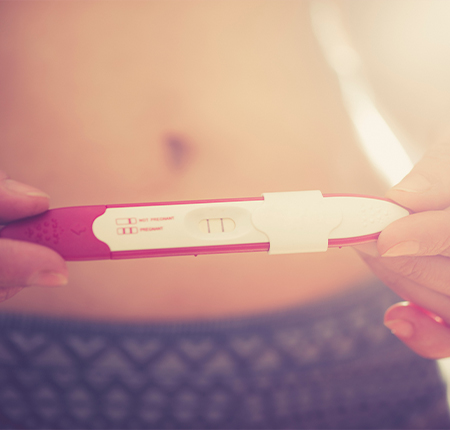
Signs and symptoms – pregnancy week by week
Every woman experiences every pregnancy differently. Symptoms may be clearly noticeable in the first few weeks or only appear very late on. One thing is certain, though: implantation bleeding and a missed period are the first things you'll notice that point to a pregnancy. They may be accompanied by other early signs.
The most common symptoms at the start of pregnancy include:
- A missed period and implantation bleeding: your monthly period doesn't arrive, although light bleeding or spotting may occur as the egg implants in the womb.
- Early vaginal discharge: you may notice discharge with a milky or egg-white-like consistency, appearing immediately after the egg is fertilised, because hormone levels change and the vaginal walls thicken. This discharge can continue throughout the pregnancy and is perfectly normal (unless it's accompanied by an unpleasant odour or itching, as this points to an infection and needs treating). Protect your underwear and clothing from this discharge and use only 100% organic intimate care products free from toxic chemicals, which won't alter your intimate pH or irritate the skin.
- Changes to the breasts: breasts may become tender or painful to the touch, swell, and the nipples may darken.
- Fatigue: this may be accompanied by dizziness and feeling faint. You feel tired because of the hormonal changes, but also because your body is producing more blood and your blood sugar and blood pressure drop.
- Nausea: morning sickness, vomiting, food cravings or aversions to certain foods or smells
- Other common symptoms: needing to wee more often, constipation, headaches and backache, a blocked nose, a metallic taste in the mouth, bloating, acne or skin irritation.
To give you the clearest possible overview, we've put together a table below showing which symptoms to expect in which week of pregnancy. It's just a brief summary, because plenty of other changes are taking place in your body too: physical, hormonal and emotional.
If you'd like to know more: in a separate article we've described everything that happens during pregnancy, week by week. There you can see how your baby develops (and how your body changes) – from week 1 right through to the birth.

| Symptoms | Timing |
| Implantation bleeding | 6–12 days after fertilisation |
| Whitish vaginal discharge | 6–12 days, immediately after fertilisation |
| Missed period | Weeks 1–2 of pregnancy |
| Changes to the breasts | Weeks 3–4 |
| Fatigue and needing to wee more often | Week 3, may continue into the 2nd trimester and return in the 3rd trimester |
| Morning sickness, food cravings or aversions to certain foods | Week 3, may continue through the pregnancy until weeks 13–14 |
| A feeling of pressure in the lower abdomen | Week 4 |
| Heartburn or nausea | Weeks 6–8 |
| Constipation and increased vaginal discharge | Weeks 8–9 |
| Visible veins, a visible baby bump and dizziness | Week 10 |
| Constant bloating | Week 11 |
| Easing of the symptoms of the first 3 weeks | Weeks 12–14 |
| Tender, red or inflamed gums | Week 15 |
| Calf cramps and painful muscle cramps | Week 19 |
| Stretch marks on the tummy, bottom, thighs, breasts and hips | Week 21 |
| Numbness in the fingers and wrists | Week 24 |
| Haemorrhoids | Week 25 |
| Insomnia | Week 26 |
| Skin sensitivity, irritation or rashes | Week 28 |
| Irregular contractions of the womb | Week 32 |
| Return of some 1st-trimester symptoms (heartburn, breast tenderness, fatigue) | Week 34 |
| Urinary incontinence or needing to wee more often | Week 35 |
| Increasingly strong contractions until the birth | From week 39 |
What symptoms do you have in the first days of pregnancy – find out without a test whether you're pregnant
Contrary to what many people believe, you can't feel that you're pregnant immediately after intercourse. A missed period and implantation bleeding are the first signs of pregnancy, and these only appear after 1–2 weeks. You can't know for certain within a matter of days – with or without a test – and symptoms that get mistaken for pregnancy can have an entirely different cause.
Nausea, dizziness, fatigue or unusual vaginal discharge immediately after intercourse should therefore NOT be interpreted as signs of pregnancy. Quite the opposite: if there is no pregnancy, they may be signs of premenstrual syndrome or an infection of the vaginal tract.
Most women sense a pregnancy at the earliest one week after fertilisation (which doesn't happen at the same time as intercourse, but 5–7 days later). The most common signs are, as mentioned above:
- A missed period
- Bloating or abdominal cramps
- Needing to wee frequently
- Nausea and fatigue
- Breast tenderness
- Mood swings
HERE you can read the article in which we've described in more detail how to tell that you're pregnant.
There are also women who go through pregnancy without symptoms and don't show the typical signs. This may indicate a condition such as polycystic ovary syndrome or an ectopic pregnancy – a medical examination is needed to avoid complications further down the line.
Even though the signs can help you suspect a possible pregnancy, the most reliable way to confirm it is a test. Tests will tell you whether you really are pregnant or whether it's simply premenstrual syndrome.
How long does it take for pregnancy tests to tell you you're pregnant
Two simple things explain when you can take a pregnancy test to find out whether you're pregnant: how these tests work and how your body works.
Pregnancy tests are based on detecting levels of hCG (human chorionic gonadotrophin). This hormone is also known as the pregnancy hormone, as it's produced by the placenta during pregnancy to support the development of the foetus.
In your body, hCG becomes detectable in urine and blood roughly 10–11 days after conception, that is, after fertilisation. Tests can only detect a pregnancy once hCG levels are high enough.
That's why it's recommended to wait about a week after a missed period before taking a test – that way the placenta has had enough time to do its job and you'll get a reliable result.
These days there are also particularly accurate tests available. These can detect even small amounts of hCG in urine, even a few days before your period is due.
Used correctly, pregnancy tests are almost 99% accurate. If you test too early, hCG levels may not yet be detectable. In that case you may get a false negative result even though you really are pregnant.
How do you take a pregnancy test and what types are there
You can take a pregnancy test yourself at home, in peace and privacy (a urine test). Or you can have one done by a specialist (a blood test or ultrasound scan). Blood tests are the most accurate and can detect the pregnancy hormone as early as 6–8 days after conception. It's generally recommended to repeat the test after 48 hours to be sure.
With a home pregnancy test, how hCG is measured depends on the type of test. The easiest home tests to use include:
- Test strips
- Midstream tests
- Test cassettes
- Digital tests
- Highly sensitive tests (which detect pregnancy as early as 5 days before your period is due)
After taking the test you'll need to wait a few minutes. The number of red or pink lines that appear on the test – depending on the concentration of hCG detected – will then tell you whether or not you're pregnant.
If you'd like to take a test: in another article we've pulled together everything about pregnancy tests. There you can find out more about all the types available, how to use them and how to read them – because some don't just tell you whether you're pregnant, they also show you how many weeks along you are.
How long does it take for an ultrasound scan to show you're pregnant
An ultrasound scan is more a way of examining and monitoring a pregnancy than of establishing one. Using ultrasound, your doctor tracks the development of the foetus and checks for any abnormalities or complications. An ultrasound scan doesn't measure hCG levels in the body.
A pregnancy is therefore only visible on an ultrasound scan from week 6 onwards, when the embryo can be seen and the pregnancy confirmed. You may already be able to hear the heartbeat at that point, or you may have to wait until the embryo becomes a foetus in week eight.
How can you tell you're pregnant if you have no symptoms
As already mentioned, it's not unusual for a pregnancy to progress without symptoms, particularly in the first trimester. Some women don't feel any different and only find out they're pregnant when their bump becomes visible (especially if implantation bleeding was mistaken for a period).
If you have no symptoms, pregnancy tests or medical examinations are the only way to confirm that you're about to become a mum.
If the test result is positive, you're most likely pregnant, even in the absence of symptoms. And if an ultrasound scan confirms it, there's no longer any doubt.
Conditions with similar symptoms that can be mistaken for pregnancy
If, on the other hand, the test result is negative and no pregnancy is confirmed, there are numerous other conditions with similar symptoms that you might mistake for pregnancy. The most common are:
- The menstrual cycle: premenstrual syndrome produces similar symptoms such as breast tenderness, fatigue, dizziness, cramps, thickened vaginal discharge, mood swings, nausea, headaches and so on.
- Spotting: before or after your period, as a result of an infection or minor injuries following intercourse, or from switching contraceptive pill; this can be mistaken for implantation bleeding.
- Urinary tract infections: these can make you need to wee frequently.
- Diabetes: this too can cause frequent urination.
- Stress or chronic exhaustion: these can cause headaches.
- Dehydration or a high caffeine intake: other common causes of headaches.
- Depression, anxiety or a nutrient-poor diet: these can trigger cravings or aversions to certain foods.
- Hormonal disorders: these may be the reason for darkening of the nipples.
- Cancer or tumours: these can cause your period to stop.
In all these cases a pregnancy test will confirm that you're not pregnant. Because although the signs may be similar, the hormone hCG is only produced by the placenta during an actual pregnancy.
Conditions that can affect your period and disrupt your cycle
If pregnancy tests have confirmed that a missed period isn't down to pregnancy, it's important to look into it further. A disrupted menstrual cycle can have negative consequences for the body – including difficulty conceiving in the future.
Unless you're in perimenopause, these are the conditions that most commonly cause cycle disturbances:
- Polycystic ovary syndrome: an endocrine disorder in which periods occur more than 35 days apart or not at all – it's the leading cause of infertility in women. Read on our blog what you need to know about polycystic ovary syndrome.
- Uterine fibroids: small growths in the womb; they may be symptomless or press on the womb, causing pain as well as long periods with heavy bleeding.
- Eating disorders: these can lead to hormonal imbalances which in turn affect the menstrual cycle.
- Ovarian cancer: this can cause bloating, pelvic and abdominal pain, frequent urination as well as heavy or irregular menstrual bleeding.
- Thyroid disorders: thyroid hormone levels that are too low or too high can be the reason for periods that are too short or too long and heavy. They're also a major cause of irregular cycles and amenorrhoea (the absence of periods for several months).
- Pseudocyesis: also known as a "phantom pregnancy" – a condition in which all the signs of pregnancy are present, but there's no foetus. The most common cause is psychological: a person wants the pregnancy so badly that they bring on all the typical states and signs themselves. Because of the high levels of stress involved, periods may even stop altogether.
When should you take a pregnancy test after the first signs
As already mentioned: if you take a pregnancy test too early, you may get a false negative result. The ideal timing depends above all on the type of test.
Blood tests can detect a pregnancy as early as 6–8 days after conception, although you can't carry them out yourself at home.
With home urine tests, it's recommended to wait a few days after a missed period – so that the pregnancy hormone is high enough at the time of testing to be detected.
There are, however, highly sensitive tests that can detect the pregnancy hormone as early as 5 days before your period is due, or even just 8 days after conception. If you want to test that early, you'll need to look specifically for these special tests, as not all are that accurate.
Also bear in mind: the concentration of hCG in urine is highest first thing in the morning. It's therefore best to take the test in the morning – especially if you're testing early.
When should you see a doctor after the first signs of pregnancy
If your period doesn't arrive and the test is positive, book an appointment with your gynaecologist as soon as the pregnancy is confirmed. It's very important to have your baby's development monitored right from the start, to avoid complications and make sure everything runs smoothly until the birth.
How do you take a pregnancy test at home
Home pregnancy tests detect the hormone hCG in urine. They all work in a similar way, but the steps differ depending on the type of test.
Don't worry: all the instructions are always on the test packaging. So all you need to do is follow the steps given there:
- With a midstream test, you hold it in the stream of urine.
- With test strips, you need to collect your urine in a container and dip the strip into the liquid.
- With test cassettes you also need to collect your urine – here, though, you use a pipette to take a sample and place it on a special test window.
Some tests confirm a pregnancy using + and – symbols, others with 1 or 2 lines, and others still even show you how many weeks pregnant you are.
Every test needs a certain amount of time before it can be read – usually 5 or 10 minutes. After that you need to interpret the result (again, according to the instructions). Any change that appears after this time is no longer valid.
How does a pregnancy test work
All pregnancy tests are based, as explained above, on detecting the hormone hCG. They contain a reagent substance that changes colour within a few minutes depending on the concentration of hCG in the urine.
Frequently asked questions about the first signs of pregnancy
We know that sometimes you just want quick answers – especially on a subject as exciting as a possible pregnancy. That's why we've put together brief answers below to the most common questions about the first signs of pregnancy.
How long does it take for a pregnancy test to come out positive?
If you're pregnant, urine tests can detect the pregnancy hormone depending on how accurate they are. There are tests that will show a positive result as early as 8 days after conception. With standard tests, however, it's recommended to wait until your period is due, or at least until 5 days beforehand, so that hCG levels are high enough to be detected.
Once you've taken the test, a positive result is visible straight after the 5 or 10 minutes have elapsed (as per the instructions on the packaging).
Can a pregnancy be detected after 5 days or 2 weeks?
There are highly sensitive tests with very high accuracy that can detect a pregnancy as early as 8 days after conception. The same applies to blood tests. It's generally recommended to repeat the test after 48 hours to confirm the result.
How accurate are home pregnancy tests?
Used correctly, home pregnancy tests are between 97% and almost 99% accurate. The higher the concentration of hCG in the urine, the more easily the tests detect the pregnancy.
Could I have early pregnancy symptoms without being pregnant?
Yes, there are numerous conditions that can cause hormonal changes and pregnancy-like symptoms without you actually being pregnant. Premenstrual syndrome also produces similar symptoms: nausea, dizziness, headaches, cramps, changes in mood and appetite, bloating and so on. Other possible causes include urinary tract infections, diabetes, chronic stress, depression, anxiety and even a phantom pregnancy.

Medium, super or extra absorption

Low, medium or super absorption

Low or medium absorption


and happily breaking taboos!


