

HPV Vaccination – Benefits, Vaccine Types, Doses Required
The HPV vaccine is the most effective way to protect yourself against cancers caused by the human papillomavirus. But when should you have it, how many doses do you need, and what does a dose cost? Here's everything you need to know about the HPV vaccine.
What is HPV?
HPV, the human papillomavirus, is the name given to a group of extremely common viruses that affect the skin and cause no symptoms in most people.
However, there are over 100 strains of HPV, and certain types can cause genital warts, cancer or other health problems. Statistics show that HPV infection is the most common sexually transmitted infection among people with an active sex life — regardless of age.
If you'd like to learn more about the symptoms of HPV infection and how it's treated, you'll find plenty of useful information in our article HERE.
How does the HPV vaccine work?
Fortunately, HPV infection can be prevented: there are vaccines that significantly reduce the risk of infection. They introduce into the body a quantity of proteins similar to those of the virus, prompting the body to produce antibodies and thereby achieve active immunisation. There is no risk of infection from the vaccine, as it does not contain the virus itself.
Although the vaccine doesn't protect against every type of HPV, it is effective against most of the strains that cause genital warts, cervical cancer and other cancers.
It's important to stress that the vaccine works purely as a preventive measure. It plays no part in treating the HP virus and therefore won't help you recover if you've already come into contact with it. Once infection has occurred, the vaccine is ineffective — appropriate treatment is then required.
Types of HPV vaccine
In total, there are three licensed vaccines: Gardasil, Gardasil 9 and Cervarix. All three protect against HPV types 16 and 18, the strains responsible for most cases of cancer. In the UK, Gardasil 9 is the vaccine predominantly used; Cervarix is also licensed.
Gardasil
Gardasil, also known as the quadrivalent HPV vaccine or Gardasil 4vHPV, protects against 4 strains of HPV. Two of these are high-risk strains (16 and 18), which can lead to the development of cancer, while the other two are low-risk strains — 6 and 11 — which cause warts and genital condylomas.
Gardasil 9
The Gardasil 9 vaccine, also known as the 9-valent vaccine or Gardasil 9vHPV, protects — as the name suggests — against 9 strains of HPV. People vaccinated with Gardasil 9vHPV are protected against the two low-risk strains 6 and 11 (protection against warts and genital condylomas) as well as against a further 7 high-risk strains that can cause various cancers: 16, 18, 31, 33, 45, 52 and 58.
Cervarix
Cervarix, or Cervarix 2vHPV, is the name of the bivalent HPV vaccine, which protects only against the two high-risk strains 16 and 18. It does not, however, prevent infection with strains 6 and 11, and so does not reduce the risk of transmitting warts and genital condylomas.
Benefits of the HPV vaccine
The main benefit of having the HPV vaccine before your first sexual contact is, of course, preventing infection with the strains the vaccine is effective against. The Gardasil 9vHPV vaccine gives you immunity against various cancers and lowers the risk of transmitting genital warts.
The HPV vaccine offers long-term protection against dangerous strains
Thanks to its effectiveness against high-risk strains, the HPV vaccine gives you long-term protection against numerous cancers caused by this virus. Some studies show that the vaccine remains effective for at least 10 years — and even longer if the vaccination schedule is followed.
The HPV vaccine can reduce the risk of cervical cancer by up to 90%
According to UNICEF, HPV vaccines are the most effective way to prevent HPV infection and protect against the strains responsible for up to 90% of all cases of cervical cancer. This is particularly significant when you consider that a woman dies of cervical cancer every 2 minutes.
That said, the HP virus isn't the only cause of cervical cancer. Long-term use of contraceptives, for instance, can also become a risk factor. So if you'd like to learn more about what cervical cancer is, how it develops and how it can be prevented, read the article HERE.
The HPV vaccine also prevents other HPV-associated cancers
The 9-valent Gardasil vaccine in particular reduces the risk of developing HPV-related vaginal, vulval, anal or penile cancer. Other areas such as the mouth, throat and head are also protected by the vaccine against cancers triggered by the human papillomavirus.
The HPV vaccine helps reduce the spread of the virus overall
The vaccine doesn't just protect you personally — it also helps reduce the spread of the virus across the population. When a large proportion of the population is vaccinated, those who can't have the vaccine are protected too.
Who is the HPV vaccine recommended for?
The HPV vaccine is recommended for young people, but also for sexually active individuals at increased risk of infection. This includes, for example, sex workers and people living with HIV.
Pre-pubescent children, adolescents and young adults aged 9 to 26
The HPV vaccine can be given from the age of 9, but it is most effective between the ages of 11 and 12, which is why it is recommended at that point. The key thing is that it should be given before first sexual contact, in order to provide protection against strains carrying a high risk of cancer.
Adults aged 27 to 45
Even if you weren't vaccinated at 11 or 12, you can catch up as an adult up to the age of 45. It is particularly recommended for people at increased risk of infection — for instance those with weakened immunity, multiple sexual partners, or an existing HIV or HPV infection.
Even so, the vaccine isn't advisable for every adult between 27 and 45 — each case should therefore be discussed with a specialist.
The HPV vaccine for women
For women, vaccination is one of two ways to prevent HPV infection, which can cause genital warts and cancer. The other is regular gynaecological screening, as there are no blood tests for detecting HPV.
During screening, the doctor takes a sample of cells from the cervix and tests them for HPV, in order to spot early signs of whether the patient might develop cervical cancer. Screening is primarily recommended for women aged 25 to 64.
The HPV vaccine for men
Men can also carry the papillomavirus. In men, the infection can cause genital warts as well as penile, anal or oropharyngeal cancers. Often there are no symptoms, yet they can still pass the virus on.
Vaccinating men is an important and effective preventive measure — both to protect against cancers resulting from infection and to reduce transmission of the virus.
When is the HPV vaccine contraindicated?
For most people, the HPV vaccine is safe and is recommended by doctors. There are, however, exceptions where having it could be harmful. Here's when the human papillomavirus vaccine is contraindicated:
Pregnant women
There is no scientific evidence that the vaccine can harm mother or baby if given during pregnancy. Generally, though, it's recommended to wait until after the birth.
The vaccine can be given while breastfeeding, and if it is genuinely necessary, vaccination during pregnancy is also possible, provided your doctor advises it.
People with severe allergic reactions
If you've experienced anaphylaxis (a severe allergic reaction) to any of the vaccine's ingredients, or have had such a reaction to a previous dose, you should avoid the vaccine. The risk of another allergic reaction — potentially an even more severe one — is increased.
People with a weakened immune system (due to an illness or treatment for another condition)
How your body responds to the vaccine also depends on your state of health. If your immunity is weakened — for instance because you're already undergoing another course of treatment or you have various health conditions — it's recommended that you postpone vaccination.
You should likewise postpone the vaccine if you have a fever or feel so unwell that you can't carry out your normal day-to-day activities.
HPV vaccine — doses required
The number of doses required depends principally on age, but also takes into account how strong your immune system is. As a rule, the vaccine is given in either 2 or 3 doses.
People under 15
People under 15 receive two doses. A gap of at least 6 months between the two is recommended.
People over 15
From the age of 15, the vaccine can be given in three doses up to the age of 45. It's recommended to wait at least 1 month after the first dose before the next, and then at least a further 3 months before the final dose.
The HPV vaccine for people already infected
Once infection has occurred, the vaccine treats neither the lesions nor the infection itself. In principle, however, vaccination is still recommended for people under 27, to prevent infection with other HPV strains.
In people aged 27 to 45, by contrast, the vaccine's effectiveness drops considerably after exposure to the virus. They should speak to their doctor and follow personalised advice on an effective vaccination schedule.
This is why an HPV test beforehand is always recommended. That way, each person can make an informed, sensible decision based on their own situation.
Where is the HPV vaccine given?
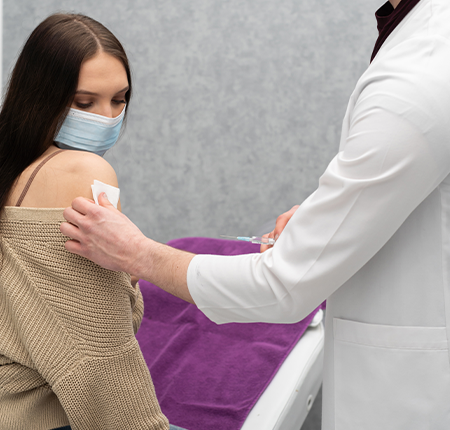
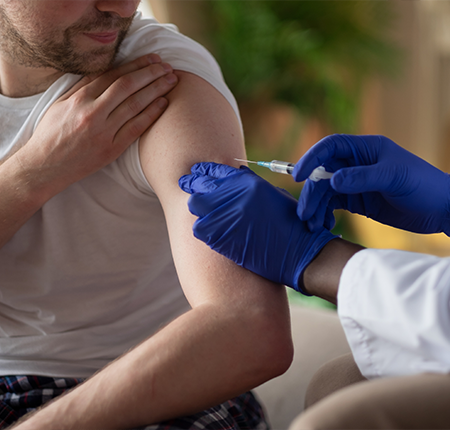
The vaccine is given as an injection, usually deep into the muscle of the upper arm — not into a vein or the tissue beneath the skin.
Possible side effects
Various side effects can occur after the HPV vaccine, though they are usually short-lived and fairly mild. The most common include:
- Pain, swelling or redness at the injection site.
- Fatigue
- Dizziness
- Headache
- Raised temperature
- Feeling generally unwell
In more severe reactions — that is, an allergy to one of the vaccine's ingredients — swelling of the tongue and lips, hives or breathing difficulties may occur. Such cases require emergency medical care; the person administering the vaccine is trained to treat these reactions immediately.
Having studied the effects over a 10-year period, researchers found no long-term reactions resulting from the HPV vaccine. Doctors have therefore concluded that it is safe.
How long does the vaccine protect you for?
All types of vaccine offer long-term protection of at least 10 years, and so far there is no clear evidence that effectiveness wanes over time. Studies suggest, however, that the type of vaccine influences how long protection lasts:
Gardasil remains effective for more than 10 years after vaccination.
Cervarix offers 9 years of protection.
Gardasil 9 remains effective 9 years after vaccination, and for at least 6 years.
How safe is the HPV vaccine?
Over the past 12 years, more than 120 million doses of the HPV vaccine have been administered. According to the studies carried out to date, there has not been a single death caused by any of the vaccine types. This has allowed researchers to confirm its safety while also monitoring its effectiveness.
A meta-analysis of HPV vaccination programmes involving over 60 million people across 14 countries produced the following results:
- Infections with HPV strains 16 and 18 fell within 8 years of vaccination:
- by 83% among adolescents aged 15 to 19
- by 66% among women aged 20 to 24
- Diagnoses of genital and anal warts fell within 9 years of vaccination:
- by 67% among adolescents aged 15 to 19
- by 54% among women aged 20 to 24
- The incidence of pre-cancerous changes that can lead to cervical cancer — those lesions on the cervix — fell within 9 years of vaccination:
- by 51% among adolescents aged 15 to 19
- by 31% among women aged 20 to 24
Severe allergic reactions occurred in fewer than one in a million doses administered, confirming the vaccine's safety.
Do you still need screening if you've been vaccinated against HPV?
Yes. No vaccine protects against every type of HPV infection, as there are over 100 strains. Screening is therefore still recommended after HPV vaccination — as a secondary preventive measure.
The smear test is the most effective way of detecting and preventing cervical cancer, as it picks up abnormal cells before they even become pre-cancerous. For this reason, vaccination against the HPV strains that can cause cervical cancer is no substitute for screening. Screening is recommended for vaccinated and unvaccinated women alike.
HPV vaccine — cost
On the NHS, the HPV vaccine (Gardasil 9) is offered free of charge to girls and boys in Year 8 (aged 12 to 13), with catch-up vaccination available up to the age of 25 for those who missed it. It is also offered free to men who have sex with men up to the age of 45, as well as to certain other at-risk groups. Outside these criteria, the vaccine can be obtained privately, typically costing in the region of £150 to £200 per dose — it's worth checking with your GP or local pharmacy about your individual eligibility.
Image source: 123RF.com

Medium, super or extra absorption

Low, medium or super absorption

Low or medium absorption


and happily breaking taboos!


