

Insomnia – How Sleep Disorders Affect Us
If you feel exhausted after a night without proper rest, you can imagine the toll that sleep deprivation might take in the long run. Insomnia is the most common sleep disorder among adults – and if ignored, it can have serious consequences, both in the short and long term.
In this article, you'll learn about the causes of insomnia, how it manifests and how it can become a risk factor for obesity and cardiovascular disease.
What is insomnia?
Insomnia is a sleep disorder characterised by difficulty falling asleep, frequent waking during the night or an inability to get restorative sleep. It is the most common sleep disorder in adults.
As a rule, adults need between 7 and 9 hours of sleep within a 24-hour period in order to maintain their physical and mental health. People with insomnia, however, fall short of this, because they often wake earlier than necessary and are unable to get back to sleep.
Disrupted sleep and sleep deprivation can lead to reduced concentration and memory, exhaustion, irritability, a lack of enthusiasm and frustration at the slightest inconvenience. In the long term, insomnia may even increase the risk of obesity and have a negative impact on the functioning of the cardiovascular system.
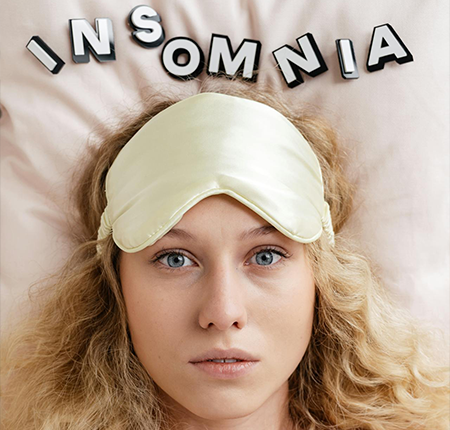
Why insomnia develops – causes
Insomnia is the result of an interplay between physical and psychological factors. Sometimes the cause lies in a short-term issue, such as a stressful situation. But there are also cases in which other factors – such as certain medicines or health problems – are responsible for your inability to sleep restfully. Here are the most common causes:
- Physical or mental health conditions: The duration and quality of your sleep can be affected by physical complaints such as allergies, asthma, gastro-oesophageal reflux, osteoarthritis pain, hyperthyroidism, Parkinson's disease and so on, or by psychological factors such as stress, emotional trauma or intense feelings (including worry or anger).
- Certain medicines: Antidepressants, corticosteroids, treatments for high blood pressure and some contraceptives can have a negative effect on sleep.
- Hormonal disorders: Certain hormonal imbalances, such as an overactive thyroid, can cause sleeplessness.
- Caffeine or alcohol before bedtime: Both can disrupt sleep, particularly when consumed in excess.
- Extreme temperatures: A lack of thermal comfort – when the room is too cold or too warm – can interrupt your sleep.
- Changes to your circadian rhythm: This is a common cause of insomnia, especially for people who work shifts or who are contending with time-zone differences.
- Pregnancy: Because of the hormonal changes taking place in the body, pregnant women are more susceptible to sleeplessness.
Symptoms of insomnia
By definition, the main symptom of insomnia is the inability to fall asleep or to sleep through for 7 to 9 hours – with tiredness and exhaustion as the immediate consequences. Below you'll find the most common symptoms of insomnia:
- Difficulty falling asleep
- Waking too early in the morning
- Daytime sleepiness
- Frequent waking during the night
- Irritability and impatience
- Problems with concentration and memory
- General fatigue
Who is particularly prone to insomnia?
Long-term physical illness, mental health problems and shift work are the main risk factors for this sleep disorder. The hormonal changes that occur during the menstrual cycle, pregnancy and the menopause can also affect sleep quality. Those most commonly affected are:
- Women
- Older people over the age of 60
- People without a regular sleep routine
- People exposed to ongoing stress
Sleeplessness during menstruation
According to recent research, even young, healthy women can experience disrupted sleep during menstruation – due to hormonal and other factors.
For one thing, in the days leading up to their period they experience greater sleepiness and fatigue, caused by the symptoms of premenstrual syndrome and the hormonal fluctuations associated with the cycle. In addition, falling oestrogen and progesterone levels are linked with irritability and stress, which can trigger sleeplessness during menstruation.
The menstrual symptoms themselves can also cause sleeplessness at this time of the month. The discomfort and pain of period cramps, as well as the worry about staining the bedding, can lead to frequent waking during the night and disrupt the natural sleep cycle. That's why we recommend organic night-time pads with maximum absorbency, which take away the worry of unwanted leaks and, thanks to their ultra-thin design, allow you to sleep comfortably.
Types of insomnia
There are various types of insomnia – depending on how long people have been affected, the underlying causes and how the disorder manifests itself.
In terms of cause, we speak of primary insomnia when the disorder isn't linked to another health problem, and of secondary insomnia when it is connected to another condition (for example, when you can't sleep well because of asthma, allergies, alcohol consumption, pain or certain medicines).
In terms of symptoms, a distinction is made between sleep-onset insomnia, which shows itself as difficulty falling asleep, sleep-maintenance insomnia, involving frequent or too-early waking, and mixed insomnia, in which both falling asleep and staying asleep are difficult. There is also paradoxical insomnia, where you have the impression of having slept far less than you actually did.
The most important classification of insomnia, however, is by duration. It can be a temporary state lasting a few days or a long-term problem – which gives us three further types:
Transient insomnia
A few sleepless nights, perhaps because of a cold, uncomfortable room temperatures or a short-term stressful situation, represent a temporary state. This is known as transient or passing insomnia, which lasts no longer than three nights.
Acute insomnia
If temporary sleeplessness persists for several weeks, it becomes acute or short-term insomnia. Acute insomnia lasts no longer than a month, but without treatment it can continue and develop into a chronic disorder.
Chronic insomnia
If the disorder lasts longer than a month, it is referred to as chronic or long-term insomnia, which can even persist for more than 6 months. Even if it doesn't occur night after night, sleeplessness is considered chronic when it affects a person on 3 nights per week over a period of at least 3 months.
Hours of sleep needed by age
Insomnia is closely linked to the number of hours slept each night in relation to how much sleep is actually needed. This need, however, varies from person to person – depending above all on age. That's why it's important to know how many hours of sleep are recommended for each age group according to professional standards:
Newborns
According to the National Sleep Foundation, newborns need 14 to 17 hours of sleep within a 24-hour period – some even sleep 18 to 19 hours.
Children under 5
As they grow older, children need progressively less sleep. Children between 4 months and 1 year need 12 to 16 hours of sleep (including naps).
Children between 1 and 2 years need 11 to 14 hours of sleep including naps, while children between 3 and 5 should sleep 10 to 13 hours a day.
Children between 6 and 13
From 6 to 13 years, 9 to 11 hours of sleep a day are recommended. Children of this age still need more sleep than adults.
Children between 14 and 17
For young people between 14 and 17, 8 to 10 hours of sleep is sufficient. Some studies even give precise figures, recommending 9.5 hours of sleep for most teenagers.
Adults
Healthy young people and adults between 18 and 60–65 need a minimum of 7 and a maximum of 9 hours of sleep within a 24-hour period. According to official data, adults who sleep less than 7 hours are more susceptible to health problems than those who get enough sleep.
People over 65
Older people need roughly the same amount of sleep as adults. From the age of 65, 7 to 8 hours of sleep a day are recommended so that the body can function at its best.
The effects of insomnia
Sleep is essential. The brain and body need rest in order to recover, and too little sleep can have serious consequences for physical health, concentration and memory, as well as emotional wellbeing. The most common effects of insomnia are:
- Declining productivity
- Increased stress levels
- Lack of concentration
- Arterial hypertension
- Development of cardiovascular disease
All of these effects can in turn have serious consequences. A lack of concentration on the road can increase the risk of accidents. Declining productivity and performance at work can lead to lower self-esteem and to greater anxiety, stress and a higher risk of depression.
Fatigue also affects hormone levels, including the production of leptin and ghrelin, which regulate appetite. This can encourage overeating and increase the risk of obesity.
Treating insomnia
Transient and acute insomnia can resolve without specific treatment. Generally speaking, these sleep disorders improve once the triggering factors are removed.
The good news is that insomnia can be treated and cured – even when those factors persist over the long term. There are several treatment options, and the recommendations depend on the cause.

Medication
If everyday life is severely affected by the tiredness, your doctor may recommend medication for short periods. In cases of chronic insomnia caused by particular health problems, those conditions must also be treated.
Sleeping tablets
Sleeping tablets are recommended for short-term use in severe cases of insomnia. They should only be taken on a doctor's instructions and not on the basis of other recommendations, as they have side effects and can become less and less effective over time.
Melatonin
Melatonin is a hormone involved in regulating the sleep-wake cycle. Taking a melatonin supplement may be recommended to help adjust to a new time zone, or for people over 60 who have trouble falling asleep.
Antidepressants
If insomnia occurs as a result of depression, your doctor may prescribe an antidepressant. As with sleeping tablets, these medicines must only be taken on the instructions of a professional, as they can have significant side effects.
Antihistamines
Because they can cause drowsiness, antihistamines are sometimes recommended to make it easier to fall asleep. Again, only on a doctor's recommendation, as they can also cause tiredness during the day.
Cognitive behavioural therapy
Alongside medication, a few sessions of cognitive behavioural therapy may be recommended. These sessions help you become aware of habits that make insomnia worse and teach you new ways to promote restful sleep.
Complementary treatment
Beyond therapy and medication, complementary measures can ease insomnia – particularly when it stems from emotional stress:
Meditation
Breathing exercises, meditation and yoga are relaxation techniques often used to improve sleep quality. Practised regularly, they help you manage and reduce stress – with a genuinely positive effect on insomnia.
Aromatherapy
Some professionals recommend aromatherapy for relaxation, for easing tension and for creating a sense of wellbeing before sleep. This can be done, for example, by inhaling steam with a few drops of essential oil added, or through massage with essential oils – although their effectiveness has not been proven by studies.
Reflexology
As with aromatherapy, practices such as reflexology and acupuncture are considered helpful for relaxation and restful sleep. Further research is needed, however, to demonstrate their effectiveness.
Frequently asked questions about insomnia
If you still have questions about insomnia, this section offers helpful answers to the most common queries about this sleep disorder.
Does physical exercise help treat insomnia?
Yes, light to moderate physical activity is recommended for restful sleep. Even walks or activities such as gardening and cycling can ease insomnia, as they reduce stress and promote relaxation. Intense physical activity shortly before bedtime should be avoided, however, as it can have the opposite effect.
What illnesses can lie behind insomnia?
Insomnia can be a sign of temporary complaints such as allergies, or of more serious health problems – physical (e.g. diabetes, cardiovascular disease, hormonal disorders) or psychological (e.g. depression, post-traumatic stress disorder and others).
How can you improve your sleep during your menstrual cycle?
For restful sleep during your period, physical and emotional wellbeing are equally important. That's why we recommend organic night-time pads, which we designed so that you can sleep peacefully all night – with no worry about stains thanks to very high absorbency, and no discomfort thanks to 100% organic cotton, which doesn't irritate and feels exceptionally soft. Studies also show that yoga exercises before bed can help with period cramps if these are keeping you awake.
What is sleep hygiene?
Sleep hygiene encompasses all the factors that influence the quality of your sleep – from the environment you sleep in to all your habits at bedtime.
Some examples of sleep hygiene rules include keeping a fixed schedule with at least 7 hours of sleep a night, avoiding your phone and other electronic devices before bed, airing the room regularly and maintaining a suitable room temperature, as well as having a relaxing bedtime routine.
Which doctor treats insomnia?
It is usually psychologists and psychiatrists who treat insomnia. If, however, the sleeplessness is the result of another health problem, the underlying cause is treated by the relevant specialist.

Medium, super or extra absorption

Low, medium or super absorption

Low or medium absorption


and happily breaking taboos!


