

Libido (Sexual Desire) – What It Is & How to Restore a Low Libido
Have you heard the old line that “men think about sex all the time”? Sayings like this have been around for as long as the world has existed, and they somehow imply that women don’t have an equally strong sexual appetite, or don’t want sex as often as men do.
More recent studies show, however, that sexual desire is about far more than simply wanting and thinking about sex. And whether you’re a woman or a man isn’t the deciding factor. What matters far more is how you feel overall, the relationship you have with your partner, the connection between you, and plenty of other aspects besides.
One thing is certain: yes, it’s perfectly normal for your interest in sex to fluctuate depending on various factors – for women just as much as for men. What isn’t normal is when sexual desire decreases or increases excessively – and that’s exactly what we’re discussing in this article.
What is libido?
Libido is an important part of sexuality and essentially refers to your appetite for sex. The sex drive, or sexual desire as it’s also known, reflects the wish to satisfy your own sexual urges – and that is entirely normal.
How intensely you experience this sexual desire varies enormously from person to person. Libido differs from one individual to the next, but it also differs within the same person at different stages of life. It can be influenced by factors such as your state of health, certain medications, your lifestyle, communication within your relationship and the bond you have with your partner, your hormone balance and many other details.
Why does libido arise?
Libido, or sexual desire, can emerge in all sorts of circumstances – depending on each person’s preferences and the context they find themselves in. You might notice your appetite for intimacy rising after a more intense encounter with someone you’re attracted to, but also as a result of some form of stimulation (visual, auditory and so on).
Underpinning these responses, however, are hormones, which influence how intensely you perceive these sensations. The main hormones involved in generating sexual desire and maintaining its intensity are oestrogen in women and testosterone in men.
What does a normal libido mean?
It’s almost impossible to define what a normal libido is – just as it’s impossible to pin down exactly what ideal sex looks like or, for women, what a normal period is. All of these things vary from person to person.
The normal level of sexual desire differs for everyone, and that’s entirely natural – it’s shaped by various biological, psychological and social factors. How strong your sexual desire is therefore also depends on any treatments you’re receiving, the lifestyle you lead and how close you feel to your partner.
Broadly speaking, your libido is normal as long as there are no drastic changes compared with your usual level of sexual desire, and as long as it doesn’t affect your quality of life. A libido so heightened that you can’t focus on anything other than the craving for intimacy is one example of sexual desire interfering with everyday life – and that isn’t normal.
Increased libido – causes
As mentioned above, it’s difficult to determine what an increased libido means as long as there’s no way of measuring what a normal libido is.
There’s little point in comparing your appetite for sex with that of your partner or your friends, because it’s different for everyone.
What can be useful, though, is comparing your own desire today with how it was in the past. If you notice that your interest in sex has risen, you can speak of an increased libido. This isn’t necessarily cause for concern, as long as it doesn’t stop you getting on with daily life (for instance, if it prevents you from concentrating on other things, or leads you to have unprotected sex with various partners).
Contrary to popular belief, you don’t have a higher libido simply because you’re a man – just as you don’t have a low libido simply because you’re a woman. Gender doesn’t explain the intensity of sexual desire. Factors that do underlie an increased libido include:
Physical exercise
During exercise, blood is pumped faster and the body naturally releases endorphins. Both effects can have an impact on libido, and there are studies suggesting that physically active people have a stronger sexual desire than those with a sedentary lifestyle (largely thanks to the hormonal balance that regular exercise helps maintain).
Drug use
Using drugs and alcohol can affect libido and sexual responses, both raising and lowering sexual desire. These are powerful stimulants that can have a short-term aphrodisiac effect and lower inhibitions.
It’s important to understand, however, that these aren’t healthy or natural effects, and that the response to substance use can change over time and lead to dependencies (including sexual ones) or other serious disorders.
Changes in neurotransmitters (dopamine & serotonin)
An imbalance in neurotransmitters (the substances that contribute to your mood), such as dopamine, serotonin and noradrenaline, can lead to increased sexual desire and compulsive sexual behaviour. Several studies have shown that high dopamine levels can heighten the tendency towards hypersexuality.
Raised testosterone levels (men)
In men, testosterone plays an important role in regulating sexual desire. This is precisely why men’s libido is often higher in the morning, when testosterone levels are at their peak.

How do you know if your libido is too high?
An increased libido is normal, particularly if you lead a balanced lifestyle and get enough sleep. An excessively heightened libido, on the other hand, can be a sign of a hormonal imbalance, a neurological disorder or a mood disorder.
Hypersexuality, which we’ve told you all about HERE, can be the result of an excessively high libido. Your relationship with your partner or with those around you can also suffer if you’re struggling with excessive sexual desire. That’s why it’s important to recognise such situations and seek professional help. Here’s how to tell that your libido is too high:
-
Your sex life is interfering with your relationships, your health and your work.
-
Sexual desire dominates your thoughts and decisions.
-
You use sex to cope with emotional challenges such as anxiety or depression.
-
You feel that sex doesn’t fulfil you or leaves you feeling “empty”.
How is an excessively high libido treated?
If you’re worried that your libido is excessively high, the first step is to speak to a specialist. Together you can choose an approach that suits you, for example:
-
Adjusting the dosage of a medication – if the treatment you’re receiving is affecting your sexual desire.
-
Treating an underlying neurological disorder – if the heightened desire is actually a symptom of another problem (such as a neurotransmitter imbalance).
-
Psychotherapy – this can help you understand what you’re feeling, where your sexual desires come from and what they are, and what you can do to manage your desire and the problems arising from it.
Low libido – causes
At the other end of the spectrum is low libido, meaning a lack of interest in sex. As frustrating as this can be, it’s important to know that a drop in sexual desire really isn’t that unusual. It’s natural not to feel any desire during certain phases of life or in certain situations:
The menopause
In women, hormone levels change radically as the menopause approaches. Production of oestrogen, the key hormone behind sexual desire, declines. It’s therefore normal for libido to drop suddenly and significantly during this time.
Emotional changes can also occur during this phase, including low mood and anxiety, which likewise contribute to a dramatic decline in interest in sex. We’ve explained more about all the symptoms you experience during the menopause, and the changes your body goes through, HERE.
Culture and religion
Moral values, culture, upbringing, religion, the taboos you know or grew up with – all the ideas you hold about sex, which shape how you perceive your own sexuality, can be the reason behind a low sex drive.
If you grew up viewing sex as something negative, forbidden or wrong, it’s normal for your libido to be low because of the guilt or shame such thoughts trigger.
Mental health
Mental health is closely linked to sexual health and libido. People who suffer from anxiety, depression, low self-esteem or severe exhaustion may have a very low sex drive. Chronic stress can also affect hormone levels and be a cause of low libido.
Age
Age is another very important factor in how strong sexual desire is. Libido declines as we get older – a normal process that tends to begin at around 40 to 50 in women and from 60 to 70 in men.
Excess weight
Numerous studies confirm that obesity is a cause of sexual dysfunction and low libido. People who are overweight may struggle with hormonal imbalances, difficulty breathing during sexual activity and a narrower range of comfortable sexual positions – all of which can lead to a loss of interest in intimacy.
Chronic conditions
There are many chronic conditions that can lead to a decline in sexual desire. These include chronic kidney disease and chronic pain, but also diabetes, cancer, cardiovascular disease, thyroid problems and others.
Pregnancy
Pregnancy brings dozens of changes, including hormonal ones. Just as it’s normal for some women to feel heightened desire and greater interest in sex – particularly in the second trimester – it’s equally normal for other women to find their sex drive diminishes, especially in the first and third trimesters and even in the period after giving birth.
If you’d like to learn more about how your baby develops in each trimester, we’ve explained every stage HERE.
Relationship conflict
Often the most effective treatment for low libido is resolving the problems within the relationship. Relationship conflict is a very common reason why partners lose interest in sex, and both psycho-emotional aspects (the connection, the trust between partners and so on) and neurological factors (the levels of serotonin and dopamine the body releases) play a part.
Certain medications
Certain treatments can lead to a decline in sexual desire. These include diuretics, blood pressure medications, antidepressants and anticonvulsants. Some studies suggest that certain contraceptives can also cause a drop in sexual desire.
Low self-esteem
Self-image, stress and low self-esteem are interconnected and affect everyone’s interest in sex. If you lack confidence and have doubts about your appearance or your sexual performance, your body enters a state of alarm and stress that stops you wanting anything to do with sex at all.
Trauma related to sex and relationships
Sexual trauma can have a major impact on libido, particularly where harassment or abuse is involved. The same applies to relationship-related trauma – if your previous experiences with a partner haven’t been positive, there’s a strong chance that this is precisely the cause of your low libido.
Sexual problems
Sexual problems can lead to dissatisfaction and discomfort during sex, and are a significant cause of low sexual desire.
In men, erectile dysfunction prevents an erection from being maintained long enough for controlled, satisfying intercourse. In women, vaginal dryness can reduce desire and even cause pain.
All of these negative sensations associated with intercourse can trigger anxiety and stress around intimate relationships, as well as leading to a decline in interest or its complete disappearance.
Low libido – symptoms
A low libido isn’t limited to diminished sexual desire; it can also show itself in the following ways:
-
Little or no interest in sex and masturbation
-
An absence of sexual fantasies
-
A lack of pleasure during sex

How is a low libido treated?
If you notice that your libido has dropped and is preventing you from having a healthy sex life, you can seek help from a specialist. Treatment is always decided only once the cause has been established (based on symptoms, medical history, sexual history and so on) and may include the following:
Lifestyle changes
If a sedentary lifestyle, lack of sleep, chronic stress or weight problems are behind your low interest in sex, this can be treated relatively easily through:
Behavioural therapy
If trauma or a lack of confidence lies behind your low libido, talking therapy or sex therapy can help you overcome these blocks. There’s also couples therapy, which can help improve the relationship and communication between partners and thereby increase sexual desire on both sides.
Medication
If your low libido is caused by certain medications, your specialist may change your treatment. If the cause lies in a hormonal imbalance, hormone therapy may be recommended.
Supplements and vitamins to boost libido
There are certain supplements and vitamins that may help boost libido. These include L-arginine, maca powder, ginseng and vitamin B3. Always follow your doctor’s advice before trying any such products.
Aphrodisiac foods
You could also try eating more aphrodisiac foods, which are said to boost libido naturally. That said, there are no studies confirming the aphrodisiac potential of foods such as dark chocolate, honey, cinnamon, oysters, vanilla, saffron, red wine, seafood or others.
Libido in women
In women, libido is closely linked to oestrogens and androgens, which fluctuate considerably over the course of the menstrual cycle and during pregnancy. It’s therefore entirely normal for sexual desire to fluctuate quite markedly throughout life too.
Fluctuations
Even more than the life stages you go through, the individual phases of the menstrual cycle influence how your libido fluctuates over the course of a month.
The female body produces the greatest amount of oestrogen around ovulation – which is why libido peaks during this phase.
Towards the end of the cycle, on the other hand, oestrogen production declines while progesterone levels rise; progesterone acts as an inhibitor of sexual desire, and so sexual appetite diminishes as well.
So if you track the phases of your menstrual cycle, remember that these determine not only your fertile days but also how your libido fluctuates.
Causes of reduced libido in women
Above we discussed the general causes of a low libido – here are the main factors that can trigger a sudden drop in libido in women:
-
Stress – periods of chronic stress can have numerous negative effects on health, and can also lower libido
-
Anxiety – it is itself a source of stress and therefore a cause of low libido. If you’d like to understand better what anxiety means, read our article HERE.
-
Depression – it can cause you to lose interest in many activities that previously brought you joy or satisfaction, including sex
-
Certain contraceptive methods – if the pill causes a drop in libido for you, you can try other effective methods of contraception
-
Hormonal changes – particularly during pregnancy and breastfeeding
-
Postnatal depression
-
Chronic conditions – such as chronic kidney or heart disease, chronic pain, diabetes or autoimmune disorders
-
Painful sex – this can have several causes, which we’ve discussed in more detail HERE
-
Vaginismus – a form of sexual dysfunction in which the vaginal muscles contract involuntarily, which can make sex uncomfortable for women
-
Intimate infections – such as thrush, sexually transmitted infections or urinary tract infections
Libido in men
Men’s libido is influenced by androgens: testosterone (the best known), dihydrotestosterone (which affects self-image and the development of secondary male sexual characteristics) and DHEA (which affects energy levels and sexual function).
Fluctuations
-
note that libido in men tends to fluctuate over shorter periods
-
note that it is highest in the morning, when testosterone levels are at their peak
While women’s libido fluctuates over the course of a month, men’s sexual desire changes over shorter periods – namely over the course of a day. This explains the higher libido in the early morning hours, when the body releases the greatest amount of testosterone.
Causes of reduced libido in men
Specific reasons why men may suddenly notice a marked decline in their interest in sex include:
-
Falling testosterone levels. With age this is normal (from around 70 to 80, the body produces only about 20% of the testosterone it made at 25).
-
Premature ejaculation. This can trigger anxiety, low self-esteem and stress around intercourse.
-
The inability to reach orgasm. This leads to sexual dissatisfaction. It’s a problem that affects not only men but women too – we’ve told you more about it HERE.
-
Impotence. Erectile dysfunction prevents you from achieving or maintaining an erection and can lead to a loss of sexual desire.
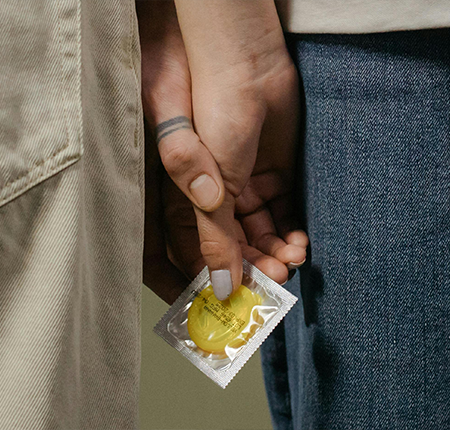
Low libido and its impact on your relationship
One partner’s low libido can have a negative effect on the relationship, particularly if the other partner has a high libido. Situations can arise in which:
-
Your partner believes they are the problem and that you’re no longer attracted to them.
-
Unhealthy patterns develop, such as pressuring your partner when it comes to sex.
-
Shame, frustration and guilt build up on both sides.
-
Negative tension in the relationship increases.
Solutions
Uncomfortable as they may be, phases in which interest in sex is absent or very low are normal in every relationship – whether they come from one partner or both. Perhaps you’ve just become parents. Perhaps you’re going through a stressful time, or routine and boredom have crept into your relationship. Whatever the cause, there are always solutions:
Communication is key
Talk openly with your partner, express how you feel and listen to them. Don’t try to hide your low interest in sex or pretend everything is fine – that would only widen the distance between you. Choose a calm moment when you’re both relaxed and can talk quietly, without judgement or blame.
Focus on the emotional connection
Sex isn’t the only way to create intimacy, and it’s important to maintain the emotional connection with your partner even when physical contact and sexual desire are lacking. Focus on spending time together, on hugs, kisses and other tender gestures that make you feel close. Discover more ways to create intimacy without sexual contact HERE.
Explore more
Part of the solution lies in understanding, communication and patience, as already mentioned. Equally important, though, are the steps you can take together to reignite interest in sex when it wanes. You can try doing this by exploring together different scenarios and sensations that increase your desire to resume your sex life and try something new:

Medium, super or extra absorption

Low, medium or super absorption

Low or medium absorption


and happily breaking taboos!


