

Urinary Tract Infections – Causes and Symptoms
You're getting ready to leave the house and you need the loo for the third time already – sound familiar?
Burning, pain and a constant urge to wee are signs that you may have a urinary tract infection. Even if it doesn't seem like a big deal at first glance, frequent urination can significantly disrupt your daily life and act as a warning signal – because urinary complaints range from infections and incontinence to pain and frequent urination.
Around half of all women will develop a urinary tract infection at some point in their lives.
Although it's such a common and seemingly harmless condition, a urinary tract infection can be unsettling and distressing. Of course, there are solutions: over-the-counter medicines and alternative treatments. Even so, an infection should be taken seriously, as the symptoms and consequences of inadequate treatment can worsen over time.
What are urinary tract infections?
Urinary tract infections (UTIs) develop when bacteria such as Escherichia coli (E. coli) infect the system that carries urine out of the body – the kidneys, bladder and the urinary tract connecting them. Women are affected more often, as the female urethra is shorter, which makes it easier for bacteria to multiply. Men can develop them too, however.
There are 3 types of urinary tract infection
Cystitis – the most common form of infection – inflammation of the bladder, which mainly occurs in women
Urethritis – inflammation of the urethra – mainly occurs in men
Pyelonephritis – inflammation of the kidneys, caused by a bladder infection that wasn't treated in time
Why a urinary tract infection develops: causes and risks
Although bacteria are the cause, there are several risk factors you should be aware of. Important to know: a urinary tract infection is not a sexually transmitted disease – though sex can help bacteria make their way into your urinary tract.
Your risk is usually higher when:
- your immune system is weakened
- you use a diaphragm, which can put pressure on the bladder
- you don't follow certain hygiene rules – for example, you should always wipe from front to back after urinating (so that bacteria don't reach the urethra)
- you wear underwear made from synthetic materials
- you use period products containing plastic, fragrances and substances that can upset the pH of the vagina and cause infections
- you use vaginal douches and thereby destroy the protective bacterial flora
- your body comes into contact with bacteria from hospitals or public toilets
- you have low oestrogen levels, especially during perimenopause or after the menopause
- you're pregnant – because hormones cause changes and the womb can press on the bladder
- you have nephrolithiasis – that is, kidney stones – or other conditions such as diabetes
- you suffer from constipation – bacteria build up and can contribute to the development of infections
- your diet is unbalanced and you're lacking vitamins (A, C) and minerals – iron, magnesium, selenium or zinc
What symptoms should you look out for?
Depending on the type of infection, symptoms can differ between lower urinary tract infections (cystitis and urethritis) and upper urinary tract infections (pyelonephritis). The most common signs of a urinary tract infection, however, are the following:
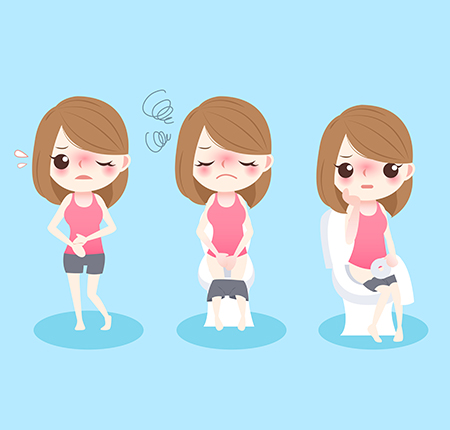
- frequent urination with only small amounts of urine, which is usually cloudy
- burning and stinging when passing urine
- a feeling of pressure in the lower abdomen
- nausea and vomiting
- fever, chills
- back pain – in the case of pyelonephritis
How to prevent a urinary tract infection
Even if the causes, risk factors and symptoms seem complicated, prevention is really quite simple: it all starts with good hygiene when using the loo and after sex. The basic rule: wipe from front to back and go to the toilet within 30 minutes of having sex at the latest.
You should also make sure no moisture is left around the vulva and vagina. Bacteria love moisture. Avoid underwear made from synthetic fibres, as well as conventional pads and tampons, which are 90% plastic and man-made fibres.
Drinking enough fluids (at least 2 litres of water a day), a balanced diet, a good-quality probiotic and, not least, period products free from toxic ingredients and made from organic cotton or natural fibres can all help you prevent a urinary tract infection.
How is a urinary tract infection treated?
As soon as symptoms appear, a medical examination and the relevant laboratory tests are essential – your doctor will make the diagnosis and decide on the treatment. Treatment usually involves taking antibiotics and probiotics; herbal teas may be recommended as natural support.
With the right treatment, a urinary tract infection can be cleared up within a few days of it appearing. You should be aware, however, that there's also a risk of recurrent infections – in short, the feeling of endless urinary tract infections. This risk can be minimised with low-dose antibiotics over a longer period or with oestrogen therapy – depending on what your doctor recommends.
And if we haven't answered all your questions about urinary tract infections, do get in touch! Tell us what you'd like to read more about on the blog – we'd love to reply!

Medium, super or extra absorption

Low, medium or super absorption

Low or medium absorption


and happily breaking taboos!


