

Polycystic Ovary Syndrome (PCOS) – What Is It and How Is It Treated?
Polycystic ovary syndrome (PCOS) is the most common cause of infertility in women during their reproductive years. It is an endocrine disorder associated with irregular periods, increased production of male hormones and further complications. If polycystic ovaries are left untreated, they can lead to serious conditions – including infertility. Today we'll cover everything: from the causes and symptoms through to treatment.
What does polycystic ovaries / PCOS mean?
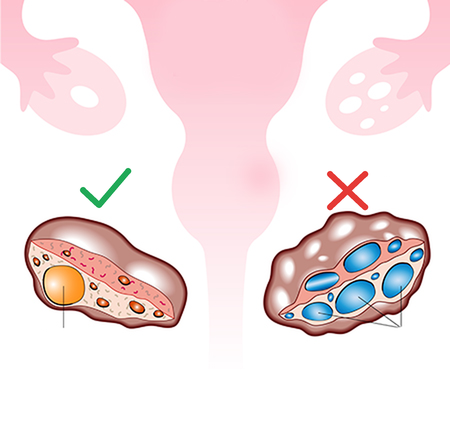
Polycystic ovary syndrome, also known by the abbreviation PCOS, is a condition in which the ovaries produce an unusually large amount of male sex hormones, which are normally present in women only in small quantities.
Ovulation occurs when a mature egg is released from an ovary – in such a way that it can be fertilised by a male sperm cell. If the egg is not fertilised, it is expelled from the body during menstruation. With polycystic ovaries, the ovaries do not produce enough hormones to release an egg, and this is precisely where the problems associated with PCOS originate.
Because ovulation fails to occur, small cysts form on the surface of the ovaries – structures that are in fact tiny, fluid-filled sacs of small size (less than 1 cm in diameter). The disruptions to the menstrual cycle, the main symptom of PCOS, are likewise due to the absence of ovulation.
Polycystic ovaries – symptoms
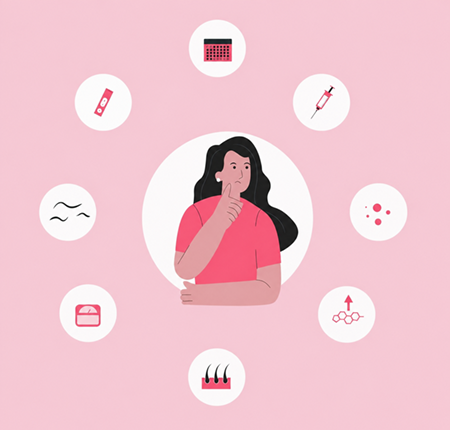
The symptoms of this condition often vary in severity or are absent altogether; their onset typically falls during puberty. The clinical manifestations include:
- Disruptions to the menstrual cycle, with bleeding occurring more than 35 days apart or periods stopping altogether
- Fertility problems
- Acne
- Hirsutism (excess hair growth in typically male areas of the body)
- Weight gain with fat deposits around the abdomen
- Acanthosis nigricans (dark patches of skin in the armpits and on the neck)
- Alopecia (hair loss in typically male patterns, baldness)
- Depression, anxiety
- Lower abdominal pain
- Headaches
- Sleep disturbances
Menstruation with polycystic ovaries
At first the symptoms of the condition are mild, but over time they intensify. It's important for a woman not to ignore the signals her body is sending, and not to look for unfounded explanations for her complaints either. An irregular cycle with heavy bleeding, or periods stopping altogether, can be a genuine problem.
Whether or not you're dealing with a problem like PCOS – health always means taking good care of yourself. When you pay attention to your body and to the products you use, even your period no longer brings your life to a standstill. Created by women for women, Enroush products put your health and the planet's first: every tampon, pad and period patch is organic and made from 100% natural ingredients. Now you really can choose products that value your health as much as you do.
Polycystic ovaries – causes
The precise causes behind the development of polycystic ovary syndrome have yet to be clearly established. There are, however, a number of factors that can be linked to a genetic predisposition, certain environmental factors and hormonal disturbances.
Insulin resistance
Insulin is a hormone produced by the pancreas to regulate the level of sugar in the blood. Insulin resistance means that the body's tissues are insensitive to the action of insulin and the body has to produce additional insulin to compensate. High insulin levels cause the ovaries to produce too much testosterone, which impairs the development of the follicles (the sacs in the ovaries in which eggs mature) and prevents normal ovulation.
Hormonal imbalance
Many women with PCOS have a hormonal imbalance, yet the exact reason for these changes is not known. Specialist studies suggest that the problem may begin in the ovary itself, in other hormone-producing glands, or even in the part of the brain that controls their production.
Genetics
One of the first causes to be explored during a medical appointment for a problem of this kind is family history. If someone in your family – your mother, sister or aunt – has polycystic ovary syndrome, your own risk of developing it is often higher.
When should you see a doctor?
If your periods are worrying you, if you're having fertility problems, or if there are signs of a hormonal disorder, it's time to see your doctor. Any of the symptoms mentioned earlier can serve as an initial warning sign.
Don't put off seeing a doctor – book an appointment whenever you feel it's warranted.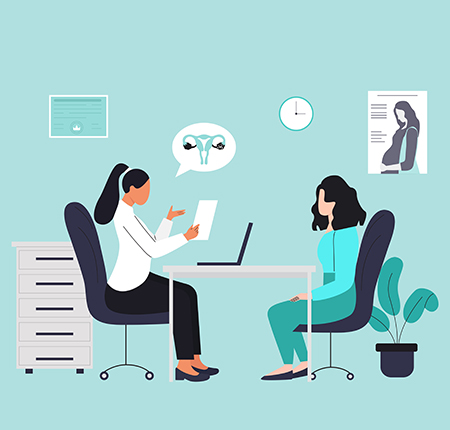
Diagnosing polycystic ovary syndrome (PCOS)
A diagnosis of PCOS is made by a gynaecologist based on the patient's medical history and clinical examination, together with imaging and laboratory tests.
First, the gynaecologist asks the patient a few questions about her menstrual cycle (how frequent it is, whether there have been phases without periods, whether the heaviness of the bleeding has changed). They then carry out a brief clinical examination to check the patient's weight and establish whether it falls within the recommended range.
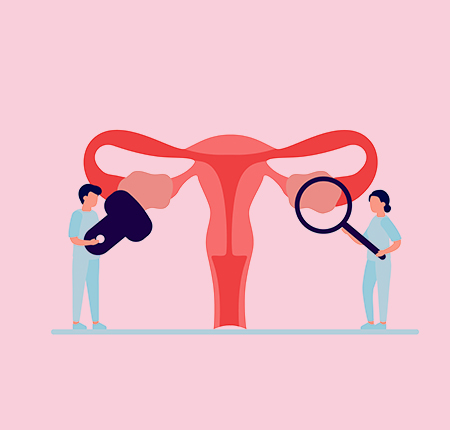
Confirmation of the diagnosis, however, comes through imaging – more specifically, a transvaginal ultrasound scan. This allows the doctor to determine whether or not there are microcysts on the ovaries. At the same time, a series of blood tests is recommended to check the patient's hormone levels.
The difference between micropolycystic & polycystic ovaries
Polycystic ovary syndrome is a disorder characterised by multiple cysts on the surface of the ovary along with an excess of male hormones. PCOS is considered a genuinely serious pathological phenomenon, whereas micropolycystic ovaries are merely benign findings, usually discovered by chance during an ultrasound scan carried out for another reason.
Polycystic ovary syndrome – treatment
Treatment for polycystic ovary syndrome isn't always necessary, and where it is recommended and undertaken, it can vary considerably depending on certain factors – such as age, other co-existing conditions, or the wish to become pregnant in the near future.
Medication for polycystic ovaries
Drug treatment includes oral antidiabetic medicines to reduce insulin resistance and make the tissues more sensitive to the action of insulin, which in turn also lowers testosterone levels and encourages ovulation.
The doctor may also prescribe the pill as an option; it is used during puberty and adolescence to control the menstrual cycle, regulate male hormones and reduce acne.
Surgery / surgical treatment
A minor surgical procedure known as laparoscopic ovarian drilling can be a treatment option for PCOS-related fertility problems, particularly when medication has had no effect. Under general anaesthetic, the surgeon applies heat to the ovaries to destroy the tissue that produces male hormones. This corrects the hormonal imbalance and allows normal ovarian function to be restored.
Laser treatment for polycystic ovaries
Carried out under the same conditions as the treatment described above, laser treatment involves cauterising certain areas of the ovary using electrocautery or a laser. During the procedure, which is usually performed laparoscopically, 4 to 20 perforations (3 mm deep and wide) are made in each ovary to encourage ovulation.
Can polycystic ovaries be treated naturally?
If, following a medical examination, you and your doctor have decided that you don't need any of the treatment options mentioned above, or you'd rather not have them, there are a few tried-and-tested measures you can adopt. A healthy diet and more physical activity can make it easier to lose weight and ease the symptoms associated with PCOS. In doing so, you also help your body use insulin more efficiently and lower blood sugar levels – which can support ovulation too.
Polycystic ovaries in pregnancy
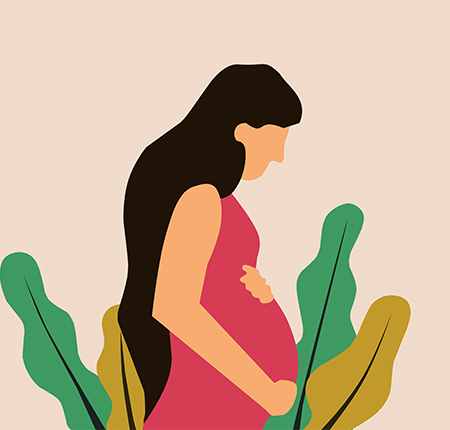
If you're pregnant and have polycystic ovary syndrome, there are a few risks you should be aware of. These include: high blood pressure, pre-eclampsia, gestational diabetes and miscarriage. These risks are particularly high in women who are overweight.
Complications of polycystic ovaries
The ovaries' inability to release eggs at regular intervals leads to difficulties in conceiving. Many women are only diagnosed with polycystic ovary syndrome after undergoing medical investigations carried out to establish why they have been unable to have children.
Left untreated, however, PCOS significantly affects women's quality of life over time, and complications can arise such as:
- Diabetes mellitus/gestational diabetes
- Heart disease
- High blood pressure
- Raised cholesterol levels
- Increased risk of stroke
- Increased risk of miscarriage
- Infertility
- Depression, anxiety and eating disorders
What can you do if you're affected by PCOS?
Some women struggle with the physical symptoms of PCOS, such as weight gain, excess hair growth and acne. For problems like these, cosmetic treatments may be the answer – laser hair removal, for instance, can help you feel more comfortable with your appearance. Talking to your doctor about the best ways to manage the symptoms that trouble you often helps more than you might think. Ask questions, look for solutions – and step by step it gets easier.
Frequently asked questions
What is the best treatment for polycystic ovaries?
Since both the need for treatment and the type of treatment vary from person to person, there is no universal therapy for polycystic ovary syndrome. In most cases, your doctor will recommend one of the treatments we've already discussed.
Which foods are off limits with polycystic ovaries?
Refined carbohydrates trigger inflammation in the body and worsen insulin resistance, so they should be avoided or eaten only rarely. This food group includes: white bread and all other products made with white flour, muffins, biscuits, various ready-made cakes, baked goods, desserts of any kind and crisps.
Instead, high-fibre foods are recommended, as they help you counteract insulin resistance by slowing digestion and reducing the effect of glucose on blood sugar.
Can you get pregnant with polycystic ovaries?
The good news is that a specialist can advise on suitable treatment so that the eggs needed for fertilisation are released, increasing a woman's chances of becoming pregnant. There's no single recipe for success, but there are numerous approaches a woman can try in order to conceive.

Medium, super or extra absorption

Low, medium or super absorption

Low or medium absorption


and happily breaking taboos!


