

Puberty – A Guide for Girls
You've noticed that your breasts are growing, or that the first pubic hairs are appearing. Perhaps you've spotted traces of discharge in your underwear, or maybe you've even had your first period. Every day, the reflection in the mirror seems to change just a little. Acne, excess oil, the overwhelming urge to cry without knowing why – WHAT IS HAPPENING TO YOUR BODY?
Everything is fine, we've all been through it: you're in puberty! Your body is preparing you to become a woman. It's developing and maturing so that one day, if you choose to, you can give life. This process of preparation is called puberty – and that's exactly what we'll be talking about over the next few minutes.
What does puberty mean and at what age does it begin in girls?
So, what is puberty and why does it feel as though everything in your body is changing once it starts?
Puberty is the name given to that stage of life when your body begins to develop and change. It's a process of sexual maturation – often overwhelming, given the sheer number of changes it brings – which transforms a girl's body into the body of a woman ready to give life.
As a rule, puberty in girls begins between the ages of 8 and 14 and can last several years. Of course, every girl's body is unique, and it's perfectly normal to develop at your own pace.
Growth and development of the body during puberty
The first thing we'd like to share with you: how important it is to keep a positive outlook. Yes, the changes can be overwhelming. But puberty is also a very special time in your life. Your body takes on more womanly contours, you mature, you discover your own charm. Not so bad, is it?
It's equally important to understand that the changes aren't only physical. When puberty begins in girls, changes take place on a physical level as well as a psychological and emotional one. You feel things more intensely, your emotions are a rollercoaster and your mind a source of new ideas and perspectives.
It isn't easy finding your way in this new world of growing up. That's why we've put together a guide for girls going through puberty – a little map of the physical changes you may notice. When you're prepared, not only will they no longer overwhelm you, but you'll understand yourself better and cope beautifully!
Breast development in girls – until what age do breasts grow?
Breast development is one of the first signs that puberty is beginning – at around 8 to 13 years of age. It's a normal, natural process, and breasts can continue to grow and develop until the age of 17 or 18.
It's also worth knowing which symptoms can accompany breast growth, as development may come with:
- Tenderness or pain: This usually goes away on its own, but a comfortable bra or soothing gels can help you protect your growing breasts and ease the discomfort.
- Mild itching of the skin: As the breasts grow, the skin tissue stretches, which can cause mild itching. This is normal and passes on its own.
- Stretch marks: Rapid growth can thin the skin and leave pink, red or purple stretch marks. They're normal during puberty and will fade and become less visible over time.
- Breasts of unequal size: The two breasts may grow at different rates. This is normal for most women, and they usually even out over time.
- Changes to the nipples: A change in colour to pink or brown, as well as the odd hair around the nipples, is also completely normal during breast development.
Body hair – the appearance of pubic & underarm hair
You'll notice that hair becomes thicker and starts appearing in new places on your body. On average, girls notice their first underarm hairs and pubic hair (intimate area) around the age of 12.
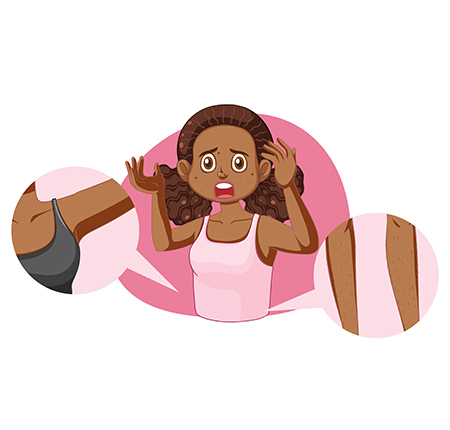
Fine at first, the hair in the underarm and pubic areas becomes thicker, longer and darker; by the end of puberty it may spread to the upper thighs.
The changes can be overwhelming – which is why it's so important for parents to talk things through and explain in advance. These conversations should also include information about the available methods of hair removal and how to use them safely, should she wish to – to avoid injuries and irritation born of curiosity and inexperience.
Growing taller – until what age do girls grow?
From the very onset of puberty between the ages of 8 and 13, girls begin to gain height and weight – a process that can continue for several years after the first period. If you're wondering until roughly what age girls grow: most continue getting taller until around the age of 14 or 15.
You'll notice that your whole body shape changes – even your hands and feet seem to grow, and you may feel a little clumsier. That's no cause for concern, just your body adjusting to its new proportions.
The first period
You'll find that your first period – whether expected or not – is a special and unforgettable moment. It shows you that your puberty is progressing: your ovaries release their first egg, and you begin to bleed via the vagina.
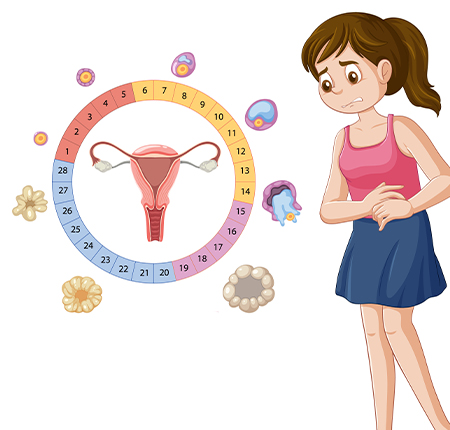
The bleeding can vary in colour and heaviness – from heavy, dark red flow to reddish-brown discharge. It may be accompanied by stomach cramps, dizziness, headaches and a whirlwind of emotions.
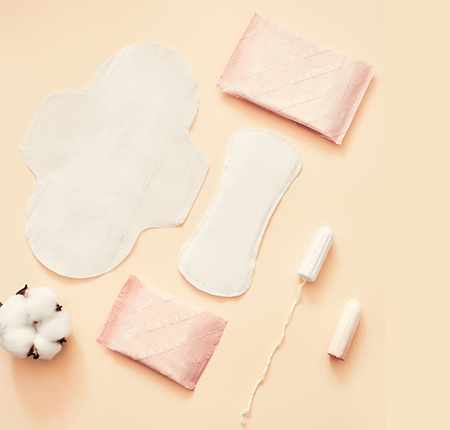
This is also when you start using period products – and it's important to choose the ones that support you the way you need. Irritation and allergies only make your first period and its symptoms harder to bear. That's why Enroush products are made from 100% hypoallergenic organic cotton – with your skin in mind.
As we've said: every body has its own pace. But most girls get their first period 2 to 3 years after their breasts begin to grow. During the first 3 years, periods may be irregular and last up to 7 days – that's perfectly normal. What isn't considered normal is bleeding that lasts longer than this, or periods stopping for 3 months; in that case, it's worth seeing a doctor.
Vaginal discharge
As early as 6 to 12 months before your first period, and afterwards too, you'll notice small or moderate amounts of a slippery fluid in your underwear. You can avoid stains in your underwear and that not-quite-fresh feeling with organic panty liners. Breathable and thin – you'll almost forget you're wearing them, yet they absorb moisture and keep your skin dry.
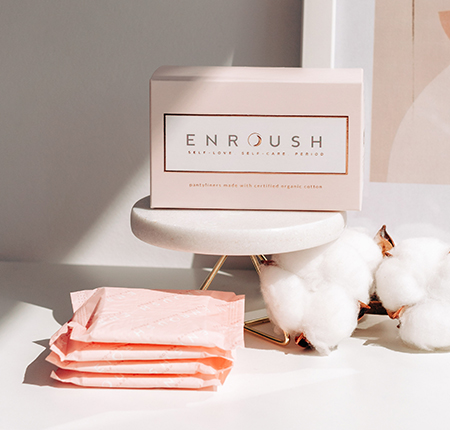
Vaginal discharge is a response to rising oestrogen levels in the body, and as long as it's clear or whitish, it's completely normal. It only becomes a concern if you notice drastic changes in its consistency or colour.
The growth of the hips & pelvis
The whole image of the girl in the mirror changes during puberty – not just her height and individual body parts. Part of female development is a curvier silhouette, rounder shapes. This change comes from the growth of the hips and pelvis.
This is also when you'll see weight gain, the breasts becoming rounder and the waist appearing narrower. It's neither necessary nor advisable to start a weight-loss diet at this stage of puberty, unless obesity is present.
Acne, sweat & excess oil
Acne appears, the skin produces more sweat and more oil – all of these are signs of puberty that cause anxiety in many young people, even though they're entirely normal. They're triggered by hormonal changes, but managing them is your responsibility.
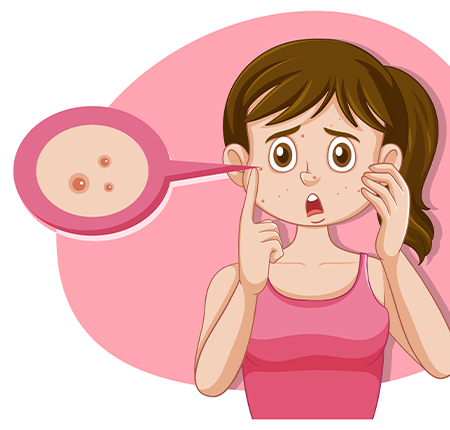
The most important – and at the same time most basic – thing you can do to get through these uncomfortable side effects more quickly and easily is good hygiene. Especially in areas where bacteria build up:
- Washing your hands: You often run your hands through your hair or across your face, which can make greasy hair and acne worse. Make a point of washing your hands frequently so they're clean before they touch your skin.
- Natural antiperspirants: Excessive sweating is unpleasant, but some chemicals and fragrances can make things worse. Showering whenever you need to and using suitable antiperspirants is the best solution.
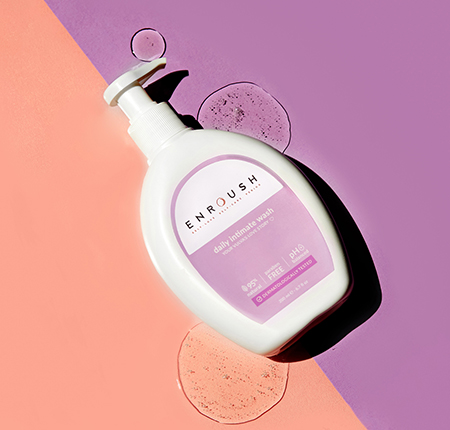
Protecting the intimate area: your vulva tends to accumulate bacteria, and using conventional intimate care products can throw your pH out of balance – an open invitation to fungal infections or candida. Use Enroush intimate gel with 95% natural ingredients, whose mission is to strengthen your protective barrier against infection.
Precocious puberty in girls
There are cases in which the signs of puberty appear early – before the age of 8. This is known as precocious puberty (pubertas praecox), which affects girls 8 to 10 times more often than boys. It presents as follows:
- The breasts develop prematurely: With no other signs of precocious puberty, this can begin at a very young age. In such cases, a paediatric endocrinologist should be consulted.
- Pubic hair in children: The adrenal glands produce hormones early, and hair appears in the underarm or pubic area. This isn't a cause for parents to worry, but a specialist examination of the adrenal glands for any dysfunction is advisable.
Acne, sweating, a sudden growth spurt and the first period appear.
Delayed puberty in girls
Because every body is unique and develops at its own pace, puberty begins differently for every girl – at the right time for her body.
However, if she reaches the age of 12 to 13 and her breasts haven't yet begun to develop, or her first period hasn't arrived by the age of 15 or 16, we can speak of delayed puberty – and then it's worth seeing a doctor. Once the underlying cause is treated, puberty usually begins and the body develops normally.
Behavioural, emotional & social changes
Puberty is a chapter that stirs things up not only on the outside, but on the inside too! Support, patience and understanding from parents and family are crucial at this stage.
Let's now talk about the new abilities girls develop, what they struggle with emotionally during puberty, and how their social behaviour changes.
The development of cognitive abilities
Alongside the rapid cognitive development of puberty, girls' brains also undergo biological changes in their connections and structure. Attention, memory, processing speed – all of these improve during puberty, as do abstract thinking and the ability to come up with new ideas.
Cognitive development can be encouraged – and indeed it's advisable to do so – by involving the girl in conversations and discussions on a range of topics, supporting her in voicing her thoughts and ideas, and encouraging independent thinking.
Emotional changes during puberty
Feelings become stronger and more intense, interests change, mood swings appear – and all of this is normal! Girls can be especially sensitive emotionally, experiencing new feelings they haven't known before, and also feeling sad, upset or irritable without knowing why.
Parents should stay attentive: if the severity, impact and duration of these states become worrying, conversation and professional help are essential to prevent depression and safeguard mental and emotional health.
Social relationships during puberty
As a parent, you may notice that your daughter develops a need for privacy and independence from the family. Irritability and frustration arise when those boundaries are crossed. She may also fall in love, want to be accepted and validated and to belong to certain social groups, want to spend more time with friends than at home – and there may be shifts in the social hierarchy.
Relationships with parents and family change, and new kinds of relationships form. It's normal for development during puberty to be not only physical and emotional, but social too. You'll need patience and to be by her side, helping her understand and live through all these changes.
When should you see a doctor?
Until adulthood, when puberty comes to an end, the whirlwind of changes can feel overwhelming and alarming. Most of the time, the changes are normal and resolve on their own. In some cases, however, certain signs go beyond the spectrum of natural change – and then it's time for a visit to the paediatrician. A few things to bear in mind:
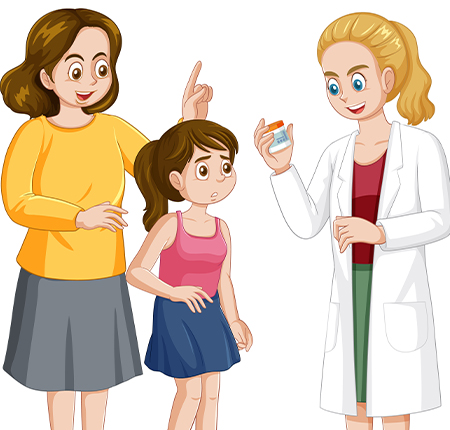
- According to standard guidance, the first visit to a gynaecologist is ideally between the ages of 13 and 15. This visit may consist of a simple conversation in which the doctor can offer answers, explanations or useful information.
- If worrying signs of puberty appear – too early or too late – a visit to the paediatrician for further investigation is necessary.
- The same applies to an irregular cycle, if 3 months pass after the first period without the next one arriving.
Useful tips for parents of girls
As difficult as the marks of puberty are for children, they can be just as challenging for parents of girls. Here are a few pointers to help – both your daughter in navigating the changes more easily, and you on this journey:
- Take the changes of puberty seriously: Even if they seem trivial to you – listen without judgement or embarrassment and take them seriously if they're worrying your child. That way you encourage her to talk about them, and you'll be able to tell when something is normal and when it isn't.
- Open communication: Puberty brings hundreds of questions. Make sure you answer them – whether they're about information, curiosity or how-tos. The better prepared she is for all the changes and her first period, the less daunting they'll be.
- Sensitivity and responsibility: Confusion and uncertainty are normal during puberty. Girls need both their parents' sensitivity to guide them through these new emotions, and their calm, responsible voice setting the much-needed boundaries that keep them safe.
- Tolerance and respect: Privacy is essential, as is tolerance for her new interests. Try to respect her wish to spend time with friends, as well as the long hours she devotes to personal grooming: for her, this is new and exciting territory to explore.
Involvement: Stay close and present in her life. Keep an eye on how the changes she's going through develop, and if worrying signs appear – physical or emotional – discuss them with a specialist.

Medium, super or extra absorption

Low, medium or super absorption

Low or medium absorption


and happily breaking taboos!


