

Self-care rituals – discover how to lovingly nurture both your body and your inner self
Self-care is a term we've been hearing more and more of late. We're surrounded by all manner of turbulent, stressful events. From wars to pandemics to natural disasters – all of it leaves us feeling as though we have no control over our own lives. We often feel disconnected, anxious and worried about the future. That's precisely why self-care rituals can help you relax not just your body, but your inner self too.
Everyone seems to be asking: why is self-care so important? And which self-care tips can we use for body, mind and soul?
Think of the safety briefing you hear every time you board a plane. In an emergency – even if those around you might need your help – the cabin crew tell you to make sure your own oxygen mask is fitted properly first. It's easy to see why that advice is given: if you help others without first securing your own safety, you could pass out yourself.
The same logic applies to everyday life. When you focus on your physical, emotional and mental development, you're far better placed to pursue your goals and enrich the lives of those around you. You can focus on the good things in life, build your resilience and see the glass as half full rather than half empty. That's how you become the best version of yourself – the version that can be more, achieve more and have a powerfully positive impact on the world.
What is self-care and why does it matter so much?
Self-care is essentially any activity we undertake to improve our mental, emotional or physical health. When we think of self-care, what usually springs to mind is massages, holidays or spa treatments. While these can certainly form an important part of a good self-care routine, they're nowhere near enough on their own.
To truly find the self-care ritual you need, you have to understand yourself and reflect on your own needs. Routines can look different for everyone, yet the building blocks remain the same. Self-care should foster emotional relaxation or improve our lives from the inside out. When we genuinely look after ourselves, we feel noticeably better at the end of the routine than we did at the start. The process itself needs to be designed and carried out with a great deal of mindfulness. A self-care routine that's perfectly matched to our needs is individual and deeply personal.
When we learn to truly care for our inner selves, our mood improves and we find the strength to chase our dreams and shape our future the way we want it. Self-care isn't an act of selfishness. It's a necessity that gives us energy rather than draining us.
How to create a self-care routine for everyday life
1. Work out what gives you inner balance.
Start by writing down as many things as you can that make you feel good. It might be a particular colour, a massage, a style of music, a season, an intimate care ritual or a special scent.
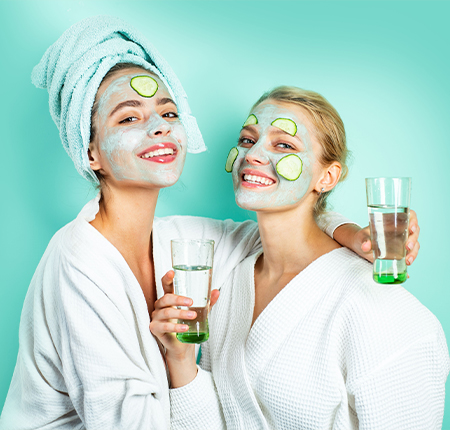
2. Think about how to weave these things into your day.
You can let them run quietly in the background (fill the space around you with the colours and scents you love) or give them a more prominent place in your daily routine – if it's an activity, it can have a fixed slot in your schedule. For example, to relax your body and care for your intimate area, you could add ENROUSH Intimate Gel with 95% natural ingredients to your daily routine.
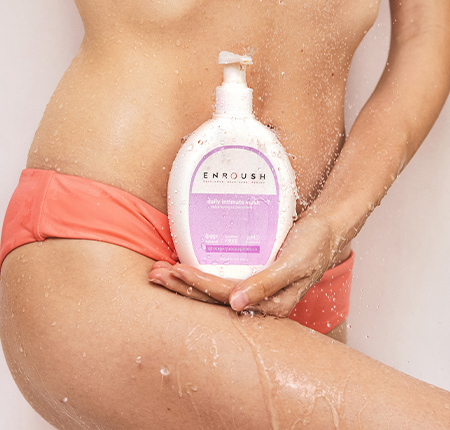
3. Set yourself goals to keep the self-care routine going daily.
Once you've decided which self-care practices you want to build into your life, it's time to set goals: how often do you want to do these routines? Make sure the goal is realistic and measurable. If, for instance, you're trying to step away from electronic devices to be more present, start with a short window – say 20 minutes over dinner. Once you've achieved that goal successfully, you can set yourself a more ambitious one. If you've opted for daily exercise, begin with gentle, relaxing forms such as yoga or Pilates (find out more about their benefits here!).
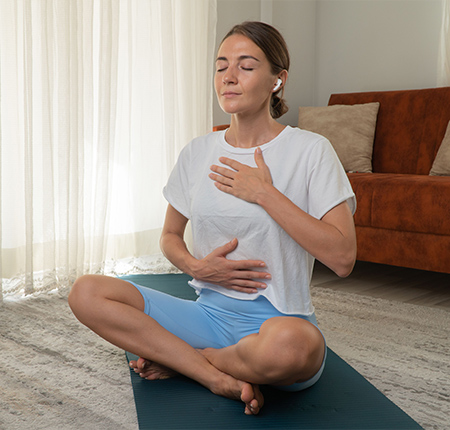
4. Surround yourself with people who support you
For a self-care ritual to last, it helps to have people around you with similar routines. That way, you can do some of the activities together.
5. Adapt your routine to your needs as you go
It's perfectly fine if things change along the way. It's all about practice, trial and error – and about the fact that our needs shift over time. What counts as self-care in one phase of life may be less helpful in another.


Medium, super or extra absorption

Low, medium or super absorption

Low or medium absorption


and happily breaking taboos!


