

Short menstrual cycle – why does your period stop after just one day?
There's a fine line between a normal and an abnormal menstrual cycle. On the one hand, every woman's body is unique, and it's perfectly normal for duration, flow and symptoms to vary from one woman to the next. On the other hand, however, there are certain extremes or symptoms that are never normal under any circumstances \u2013 such as excessively painful periods, an overly long cycle or, at the other end of the spectrum, a period that's too short.
To be able to spot such irregularities in the first place, though, you need to know what a normal duration actually looks like and when a period counts as too short. We'll be covering all this and plenty more useful information in this article.
How long does a menstrual cycle normally last?
In theory, we know that the menstrual cycle lasts an average of 28 days \u2013 but this duration can vary without any underlying disorder. Let us explain why. The menstrual cycle consists of four phases:
- The follicular phase (pre-ovulatory phase), which is the period before ovulation and lasts roughly 9\u201314 days.
- Ovulation, which lasts just 24 hours and represents the time of the month when your fertility peaks.
- The luteal phase (post-ovulatory or premenstrual phase), the time when premenstrual symptoms appear, which also lasts around 14 days \u2013 right up to the first day of your period.
- Menstruation, the bleed itself, during which the womb lining is shed; this can last between 3 and 7 days, and the first day of your period counts as day 1 of the cycle.
If you add up the duration of these four phases of a normal cycle, which differs for every woman, you arrive at a figure of between 21 and 35 days \u2013 and that's the length of a normal menstrual cycle. As for the duration of a normal period: bleeding can last between 3 and 7 days, though it's usually around 4\u20135 days.
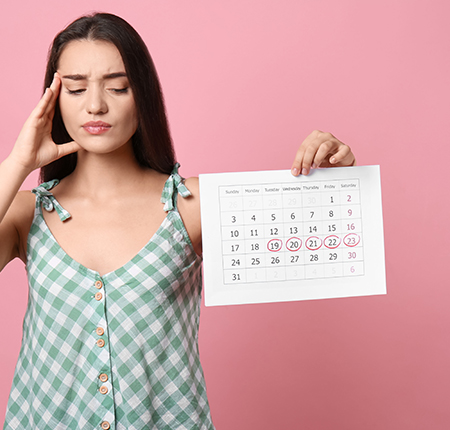
It's considered abnormal if the gap between two periods is more than 35 days, if bleeding lasts less than 2 days or longer than 7 days, or if it varies a great deal from month to month in the same person. In this case we talk about an irregular or disrupted cycle, and a visit to a specialist is advisable.
Symptoms of a short period
So let's come back to our topic: what does a short period mean and how long does it last?
If you've always had irregular or short bleeds of 2\u20133 days, there's most likely no cause for concern. But if your monthly bleeds used to last 4\u20137 days and have suddenly shortened to 2 days or less, then we're talking about a short period that's worth keeping an eye on.
Here are the symptoms that will help you recognise it and that you should monitor:
- A short bleed of 2 days or less: this is the most obvious and easily recognisable sign that your period is too short \u2013 it lasts only a day or two and then stops.
- Light bleeding: the flow during this time may be normal or heavy, but equally it may be very light and resemble spotting more than a period \u2013 particularly when the shortening is caused by hormonal fluctuations, over-exercising or sudden weight loss.
- Fewer pads and tampons than usual: because the flow is lighter.
- Two bleeds in one month: if your menstrual cycle lasts 21 days or less, you may find you get your period twice in the same month \u2013 once at the beginning and once towards the end. This phenomenon is called polymenorrhoea and is a form of irregular cycle. We've covered it in detail on our blog, HERE.
- Anaemia and fatigue: polymenorrhoea can also bring anaemia, tiredness and exhaustion, because you're bleeding more often than your body is used to.
- Period cramps: short bleeds can also be accompanied by severe lower abdominal pain.
Causes \u2013 why does a period stop after one or two days?
There are several possible causes of a short, light period. But we'd like to remind you to watch out for the signs so you don't mistake a short period for spotting.
- If the bleeding is very light and pale and only slightly stains your underwear, without you needing a pad or tampon to absorb it adequately, then it isn't a 1-day period but simply spotting.
- It counts as menstruation if a panty liner \u2013 whether the flow is light or heavy \u2013 isn't enough to prevent leaking onto your clothes.
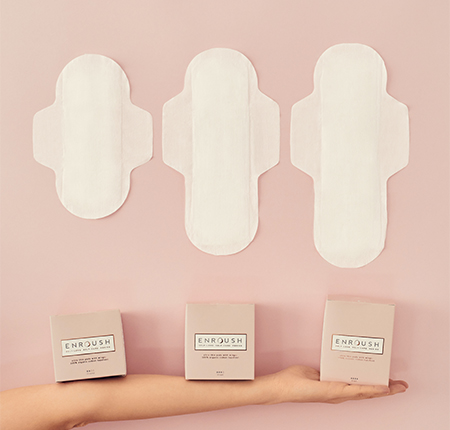
So do keep an eye out to make sure you don't confuse the two. And whether it's spotting or a period, we recommend using only menstrual products made from 100% organic cotton. You'll find them on our website, and they're a healthy choice for your body \u2013 because unlike conventional products, they contain only natural ingredients and are made without plastic, pesticides, fragrances, dioxins and other toxic chemicals.
And if you've established that it really is a short period, here are the factors that may be behind it:
Pregnancy
Have you heard of implantation bleeding? It can last a day or two, which is why you might be tempted to say, \u201cMy period only lasted 2 days.\u201d In reality, though, it isn't a period at all, but simply a sign that the fertilised egg has implanted in the womb lining.
It's light bleeding, the colour of which can range from pale pink to dark brown, and it can occur around 2 weeks after fertilisation. We say \u201ccan\u201d because, although it's normal and poses no risk to the foetus, not all pregnant women experience this bleeding. It's also normal to notice light bleeding in the first trimester, as more and more blood vessels form in the vaginal area.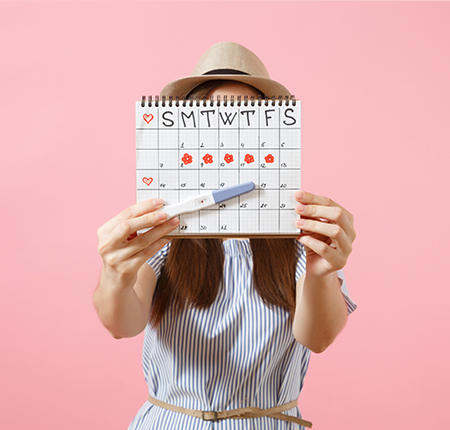
It's also worth knowing that vaginal bleeding accompanied by dizziness, fatigue, a feeling of pressure in the rectum and severe lower abdominal pain concentrated on one side can be an early sign of an ectopic pregnancy. In this case, seeing a doctor immediately is absolutely essential.
Miscarriage
If the light bleeding mentioned above in early pregnancy turns into heavy bleeding, or is even accompanied by lower abdominal pain, painful contractions, blood clots and unusual discharge, this may point to a problem \u2013 often a miscarriage.
This situation is relatively common: statistics show that such bleeding occurs in around 26% of all pregnancies.
Breastfeeding
Normally, if you're not breastfeeding, your period returns within 6 to 8 weeks of giving birth. Otherwise, it can take 6 months and even up to 18 months for your monthly bleeds to return to normal \u2013 and that's down to hormonal fluctuations.
Throughout the entire breastfeeding period, oestrogen and progesterone continue to fluctuate, while prolactin, another hormone that helps produce milk, also affects menstruation by suppressing it. Breastfeeding is therefore another factor that can cause an irregular cycle and may equally lead to a delayed, lighter or shorter period.
Anovulatory cycle
If your body doesn't release an egg, this may be the reason why your flow and the duration of your period are lighter and shorter than usual. When the ovulation phase is absent, we talk about an anovulatory cycle \u2013 one of the factors that can throw your period off balance.
There's also a condition called primary ovarian insufficiency: here, the ovaries stop functioning normally and no longer release eggs, even though you haven't yet reached the menopause.
Cycle disruption before the menopause
Oestrogen production declines in the period leading up to the menopause, and it's normal for these hormonal fluctuations to upset your menstrual cycle too. The perimenopause begins around 8\u201310 years before the menopause, so you may notice the first signs as early as your thirties or forties.
As oestrogen levels fall during the transition to the menopause, bleeds become irregular, longer or shorter, lighter or heavier. Very short bleeds lasting just a few days are also normal and are accompanied by other perimenopausal symptoms, such as night sweats, vaginal dryness and insomnia.
Polycystic ovary syndrome (PCOS)
Another cause of ovarian problems that can shorten your menstrual cycle, affecting roughly 1 in 10 women: polycystic ovary syndrome describes a hormonal imbalance that interferes with the normal functioning of the ovaries and the monthly release of eggs.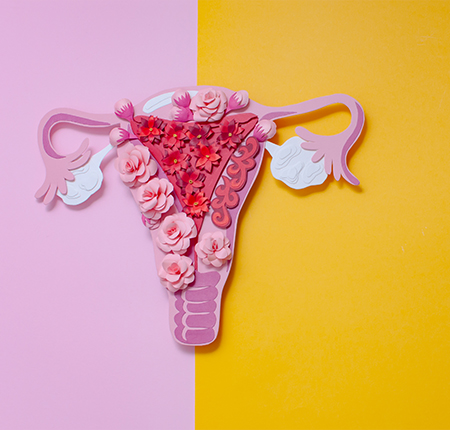
As well as cycle disruption, PCOS also shows up as acne, thinning hair or excessive hair growth. The same condition can also cause benign ovarian cysts and infertility.
Endometriosis
Besides the extremely painful lower abdominal cramps during menstruation for which endometriosis is notorious, the same condition can also be responsible for cycle disruption and a shortening of your period.
In short: when endometrium \u2013 tissue similar to the womb lining \u2013 grows outside the uterus (for example on the ovaries, around the uterus or even in the vagina), this is known as endometriosis. The problem affects many women between the ages of 15 and 44 and can manifest itself through bloating, nausea, pain during or after sexual intercourse, and chronic pelvic and back pain, among other things.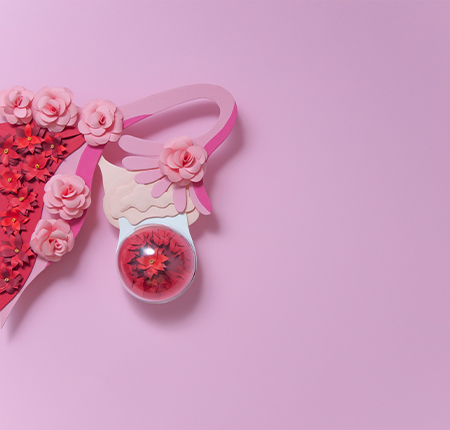
During menstruation, this endometrium thickens and bleeds just like the tissue inside the uterus, which can cause irregular, heavy and unpredictable bleeding.
Contraceptives
Just as you might experience implantation bleeding in early pregnancy, you may also experience bleeding when you first start using contraceptives \u2013 known as breakthrough bleeding \u2013 which is nothing to worry about. It's a small, unexpected loss of blood that can occur at any point in the month, not just during your period.
These symptoms can occur with any form of contraception, but particularly with the pill, the contraceptive implant or the coil. If the bleeding doesn't last long and isn't accompanied by pain or other symptoms, there's no need to worry. It's simply your body getting used to the treatment and finding a new hormonal balance.
Intermenstrual bleeding
As the name suggests, this is bleeding that occurs on days other than during your period. It can be caused either by a hormonal imbalance or by the development of abnormal growths.
Researchers have studied this phenomenon to determine whether, and to what extent, it affects fertility.
Although studies suggest a link between intermenstrual bleeding and infertility, this link relates only to a lower likelihood of conceiving in the month in question \u2013 not to long-term fertility. Experts have found no effect of such bleeding on fertility or on women's ability to conceive in the future.
Even so, it's worth speaking to your doctor if you notice such bleeding frequently, so the cause can be identified and treated before further complications arise.
Other possible causes of a short period
The causes listed above are the main factors that influence the menstrual cycle and have significant potential to shorten your period. But a bleed lasting only a few days can also result from other habits in your daily life or from certain health problems, including:
- Hormonal disorders: thyroid problems, for example;
- Everyday stress: which dramatically raises your cortisol levels;
- Anaemia: due to low iron levels in the blood;
- Extreme diets and over-exercising: which automatically create a large calorie deficit and lead to sudden weight loss, which can cause hormonal disruption.
- Ovulation: some women notice spotting or light bleeding mid-cycle, when the egg is released.
- Uterine fibroids: small, benign growths that form outside the uterus and can cause intermenstrual vaginal bleeding.
- Infections: vaginal bleeding can also be a symptom of infections of the vagina and cervix, including as a result of pelvic inflammatory disease or sexually transmitted infections.
- Rough sexual intercourse: any injury sustained during intercourse can damage the vaginal lining and cause bleeding.
When should you see a doctor?
Whenever you notice abnormal bleeding, it's wise to speak to your doctor, either to put your mind at rest or to have any potential problem treated. But how do you know when bleeding or a period is normal and when it's too short?
Since every body is different, we recommend framing the question in context. So don't ask, \u201cIs the length of my period normal?\u201d but rather, \u201cIs the length of my period normal for me, compared with how it's been up to now?\u201d You should see a doctor as soon as possible if the answer to this question is no (i.e. your period was different and untypical compared with previous months), and if:
- your bleeds have been regular until now and have suddenly become irregular;
- you get your period twice a month, i.e. you have a cycle of fewer than 24 days;
- you bleed outside your period;
- you notice large blood clots;
- the bleeding is accompanied by lower abdominal cramps;
- you have very heavy bleeding.
Does a light period need treating?
Sometimes \u2013 during stressful or demanding periods, while breastfeeding, during puberty or in the perimenopause, when an irregular cycle is only natural \u2013 it's normal for bleeds to be shorter. In these cases, treatment may not be necessary.
Even so, it's important \u2013 and we always recommend \u2013 that you see your gynaecologist and follow their advice.
If the short or light period is down to one of the causes described above \u2013 whether a hormonal imbalance, an infection, anaemia or another health problem \u2013 then it's important to treat that underlying cause. Your menstrual cycle and its duration will then regulate themselves.

Medium, super or extra absorption

Low, medium or super absorption

Low or medium absorption


and happily breaking taboos!


