

Stress: What Is It & How Do You Get Rid of It? Treatment & Frequently Asked Questions
When you lead an active social and professional life, tension and stress are inevitable. You encounter stress at work, in city traffic, and when dealing with family or financial problems. In fact, you first came across stress in childhood, even at school: do you remember the stress before tests, exams or being called up to the board?
Stress in itself doesn't harm us. On the contrary, it prompts us to adapt. In the short term, it can motivate and inspire us to use our abilities and resources with maximum efficiency in order to complete a project or task successfully.
In the long term, however, it's impossible to remain unaffected by the tension or the emotions that stress brings with it. First come dips in performance and stress-related headaches. That's why we're constantly looking for a balance between stressful periods and relaxing activities. Without good stress management, more serious health problems can develop – and that's exactly what we're going to talk about now.
What is stress and how does it manifest itself?
Let's start by looking at what stress actually is. Stress is the natural response of our body to the changes and challenges of everyday life. You can't really say stress is good or bad – it's simply an adaptive mechanism.
Our brain perceives challenges and dangers and responds by releasing more cortisol, adrenaline and noradrenaline to help us survive and get ourselves to safety. The physical reactions that accompany the release of these substances include sweating, an increased pulse, rising blood pressure and a state of heightened alertness.
All of this is completely normal. When we're faced with unforeseen or unexpected situations, our body produces a physical and psychological response in order to cope with the stress factors. And that's precisely what stress is: these normal, human reactions to what's happening around us – situations, thoughts, worries, frustrations and so on.
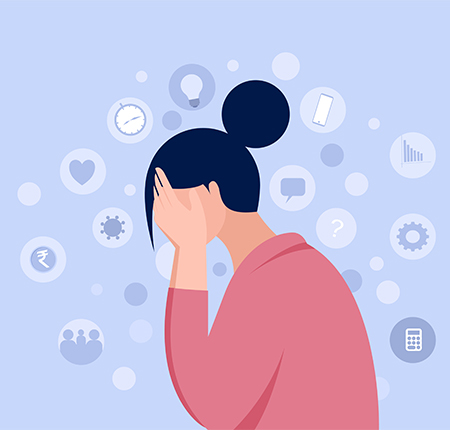
Stress therefore shows itself through a state of tension and strain. And we feel this state both emotionally and physically. In the short term, stress helps us survive. It becomes a problem when we're exposed to stress factors over long periods without any respite. When stress doesn't leave the body for extended periods, further symptoms appear.
Stress – symptoms:
When we're permanently stressed over a long period without any relaxing activities, the body uses all its resources to keep us on alert, slowing down other functions in the process.
We're tense, breathing becomes faster, the pulse higher, insomnia and muscle tension keep us under pressure, while the activity of the digestive and immune systems declines. Situations like these have a considerable impact on our overall health – which is why stress symptoms show up on every level: physical, psychological and emotional.
On a physical level, the symptoms of stress include:
- Headaches;
- Chest, muscle or back pain;
- The feeling that your heart is racing;
- Difficulty breathing;
- Hyperventilation;
- Dizziness or trembling;
- Insomnia, fatigue, exhaustion;
- Muscle tension;
- Muscle cramps and twitches;
- Clenching of the jaw;
- A feeling of dry mouth;
- Nervous tics;
- Sweating;
- High blood pressure and palpitations;
- Digestive system problems;
- Indigestion, constipation, bloating, diarrhoea;
- Sexual problems;
- Weakening of the immune system.
Stress symptoms also appear on a psychological and emotional level, with states such as:
- Low mood or sadness;
- Nervousness and anger;
- Anxiety and irritability;
- Panic attacks;
- Difficulty concentrating;
- Lack of self-confidence;
- Depression.
Last but not least, the symptoms are also felt on a social level, because stress can even affect our behaviour – for instance through a tendency to develop an aversion to other people or to one's partner, but also through dependencies on:
- Alcohol;
- Tobacco;
- Illegal substances;
- Gambling;
- Sex;
- Shopping;
- Food, and so on.
Stress, depression and anxiety – what's the difference?
Stress, depression and anxiety are connected and can occur at the same time, but they don't mean the same thing. What they all share are feelings of sadness, worry and fear, yet they're different things. First of all, stress is a natural response of the body, whereas depression and anxiety are two medical conditions that manifest through particular emotional states.
So that you can clearly see the difference between the three:
- Stress: is a state of alertness, tension and strain in the body, and occurs as a normal reaction to challenges or changes in our environment.
- Anxiety: is a cluster of emotions, worries, fears and apprehensions, and represents the way you react to stress in certain situations. We've already talked about anxiety on the Enroush blog – HERE, if you'd like to find out more about this condition.
Depression: is a serious medical condition consisting of persistent feelings of sadness, irritability, inner emptiness, hopelessness or loss of interest in any activity, and arises as the body's response to stress, but also from a wide variety of other causes.
Causes & stress factors – what triggers stress?
A first step towards learning how to get rid of stress is understanding what triggers it.
Stress factors are those situations, events or thoughts that cause us stress. And these stress factors – or stressors – can be both real and imaginary; both external and internal. They may be everyday stress factors, sudden changes, or traumatic stress.
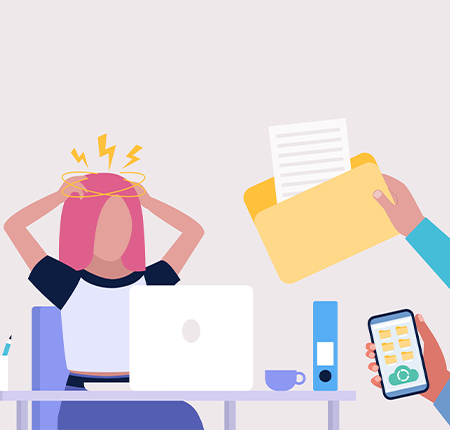
It's equally important to understand one simple fact about stress: it's subjective. Certain situations may be perceived by some as interesting or challenging, by others as neutral, and by others still as extremely burdensome and stressful. Everyone is different, which is why the same stress factors can affect each of us in different ways.
The factors with the greatest stress potential for people are usually situations we feel we can't control and that overwhelm us. These include, among others:
- Family problems: bereavement, misunderstandings, divorce, violence, arguments, and so on;
- Financial problems: debt, payment deadlines, and so on;
- Conflicts: with friends, with family, with colleagues at work, or even internal conflicts;
- Fear: of accidents, of being attacked, of problems with neighbours or other people;
- Health problems: physical or mental illnesses and complaints, your own or those of family members, friends and loved ones;
- Professional challenges: excessive responsibility and pressure at work, disappointing working conditions, difficult communication, unexpected changes or an excessive workload. The latter can lead to burnout – a topic we've already covered on the blog and which we discuss in more detail HERE.
- Entering retirement;
- Changes: changing jobs, moving house, a new city, and so on;
- Abuse: verbal, physical or emotional;
- Personal dissatisfaction: with your appearance, with your own decisions, with your own abilities;
- Major life events: a wedding, pregnancy, the transition into parenthood, a long-awaited holiday;
- Traumatic experiences: termination of pregnancy, sexual abuse;
- Larger-scale problems: wars, attacks, pandemics, natural disasters, environmental pollution;
- Problems with social integration: discrimination, bullying, hate.
How does stress affect various organs / functions?
Because of the tension it creates both physically and emotionally, the body feels stress in a great many ways. This means that prolonged exposure to stress factors can impair our normal functions and our health in numerous respects.
Let's talk about some of the organs and functions most commonly affected by stress.
A menstrual cycle disrupted by stress
As I explained above, stress – whether psychological, physical or emotional – can increase the production of cortisol and endorphins in the body. These releases can affect hormone production in the body, which inevitably leads to hormonal imbalances. This is a topic we've already covered on the blog – so do take a look at our article with everything you need to know about hormonal disorders.
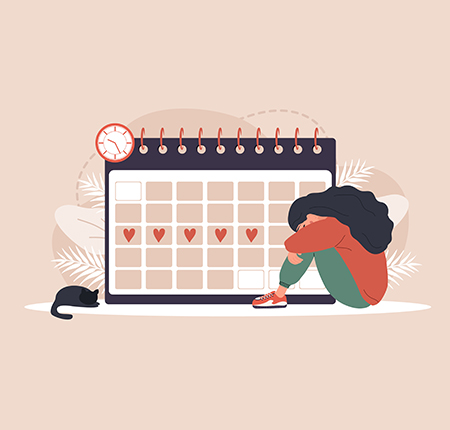
So it's no wonder that stress and a late period are connected. Since the menstrual cycle depends directly on your hormonal balance, stress becomes one of the main factors causing cycle disturbances. It's by no means unusual for the flow, duration and symptoms of your period to change during stressful phases, or for your period to arrive late or not at all.
Stress and ovarian pain
This is really a vicious circle. On the one hand, mental or physical stress can cause cramping in the lower abdomen without you noticing. This is a reflex of the pelvic muscles in response to tension in the body. This cramping can lead to a feeling of pressure and weakness in the pelvic area, and to ovarian pain as well.
On the other hand, ovarian pain itself creates additional stress in the body. So the two problems cause each other and keep you in a permanent state of tension and discomfort.
Stress and chest/heart pain
When the brain sends a surge of adrenaline and cortisol to the rest of the body, a blood pressure response is triggered almost immediately too. The heart beats faster, the pulse rises, and you may sweat and have difficulty breathing. That's why stress and anxiety can be causes of chest pain.
You might experience this pain as pressure, tightness or strain. The sensations can be milder or more intense – depending on the intensity of the experience – and may be accompanied by palpitations and the feeling that your breath catches or that you can't get enough air.
There's no reason to panic. Even though it feels like pain in the heart, stress-related chest pain is not the same as a heart attack. The key difference that will help you tell them apart is the way the pain progresses:
- Stress begins with an intense pain in the chest that gradually subsides and almost completely disappears within about 10 minutes.
- A heart attack begins with moderate pain that gradually worsens and is additionally accompanied by a sharp pain in one arm, one shoulder, or both.
Stress-related blotches or bruising on the skin
We're talking here about marks that may be skin-coloured, pink or red and swollen, often resembling mosquito bites or small bumps. Yes, stress can give you these kinds of skin eruptions – with or without itching – which usually disappear quite quickly once you calm down.
When cortisol production in the body rises due to stress, the skin produces more sebum and your body becomes prone to breakouts, even if you don't normally struggle with them.
Stress-related gallbladder problems
Another consequence of chronic stress is the disruption of the gallbladder's normal function. Because of the stress factors, it repeatedly inhibits its function of releasing bile. The result is an increase in the cholesterol concentration in the bile, which can lead to the formation of gallstones.
In holistic medicine it's held that long-term suppression of anger, frustration and low mood, as well as resentment and irritability, can cause problems with the liver and gallbladder.
Stress and breast pain
Yes, it's possible to experience pain in the breasts due to stress and anxiety without any other health problems being present. You may feel this pain in various ways:
- A feeling of heaviness in the breasts;
- A pressing pain;
- A burning sensation;
- A stabbing pain;
- Tenderness and pain only when touched;
- Severe pain;
- In both breasts;
- In one breast only.
You've probably already noticed that breast pain changes over the course of your menstrual cycle – which is why we call it cyclical. What does that mean? It means it's influenced by the hormonal changes the body goes through during a cycle.
As mentioned so often already, stress and anxiety can significantly affect your hormonal balance. The result? During stressful periods, hormonal fluctuations can cause breast pain, even when you're nowhere near your period.
Stress-related muscle cramps
Sometimes the brain can interpret stress and anxiety as dangers and sends these signals to the body. In the process, neurotransmitters are released from the nerves that control the muscles, triggering a sudden, involuntary muscle contraction. This is how stress-related muscle cramps and twitches arise, which can occur at any time and in any muscle group.
Stress-related diabetes
Stress in itself doesn't cause diabetes in a healthy person. However, specialist studies have found that stress and type 2 diabetes can be connected.
With the release of hormones in response to stress factors, blood sugar levels can rise. In the long term, this can cause insulin resistance and increase the risk of diabetes.
Stress-related dermatitis
Remember how I explained that red marks or bruising on the skin come about through the sudden, stress-related production of cortisol? Stress-related dermatitis is explained in exactly the same way. Studies show that through its effects on hormone production and the skin's immune system, stress has a strong influence on eczema and skin rashes.
Reducing and managing stress and anxiety through various relaxing activities, stress management strategies and therapies is essential for getting rid of stress-related dermatitis.
Stress-related allergy
Cortisol isn't the only thing produced in larger quantities when you're stressed. Production of histamine also rises – a substance that strongly influences the body's allergic reactions.
Although stress itself doesn't cause allergies, it can worsen the symptoms of an existing allergy through increased histamine production.
Types of stress
It's already clear that stress is a complex subject with many causes and effects. In this context, we can't speak of just one type of stress.
Depending on the duration of the periods of strain, the type of stress factors and their effects, stress is divided into several types – and we'll try to explain each one to you as clearly as possible.
Acute stress
Acute stress is the most common form of stress. It occurs in the short term and relates to an event in the recent past or near future. For example, when you've recently had a heated discussion with someone, or when you have a presentation to give shortly.
Because of its nature, acute stress usually passes quickly, and that's precisely why the consequences for the human body aren't so severe. It manifests through short-term symptoms, including headaches, digestive problems and a generally tense state.
Even so, it's important to relax and to try to manage episodes of acute stress as well as you can. Because if you experience them repeatedly over longer periods, it easily turns into chronic stress.
Episodic acute stress
As an intermediate stage between acute and chronic stress, episodic acute stress occurs when the effects of several acute stress situations accumulate. The main characteristic of episodic stress is that you no longer manage to relax and settle down.
Instead of occasionally having the headaches and sensations of acute stress, with episodic acute stress you experience these states constantly. That's why you're permanently on edge and get worked up easily and often.
Chronic stress
Unlike acute and episodic stress, chronic stress develops gradually over a long period and is more dangerous. It usually arises when you're confronted with stress factors daily and continuously and don't manage to handle your psychological and emotional responses.
With chronic stress, it's difficult for the production of stress hormones in the body to return to a normal level – which can cause problems in many functions, organs and systems: sleep, digestion, and also the immune, respiratory, cardiovascular and reproductive systems.
Oxidative stress
There's another type of stress we call oxidative, which often arises as a result of exposure to radiation, pollution, chemicals and various medications, but also occurs in people with harmful habits (alcohol or tobacco use) or who are overweight.
The phenomenon of oxidative stress is caused by an imbalance between the production of reactive oxygen species in the body and its ability to neutralise them. Studies have found links between oxidative stress and a wide range of neurological conditions, including Alzheimer's, Parkinson's, memory loss, multiple sclerosis and depression.
Post-traumatic stress
There's one more type of stress worth covering, namely post-traumatic stress disorder. It's a mental health problem triggered by reliving a traumatic experience you went through or witnessed, even a long time after that trauma. It may involve physical or sexual abuse, an accident, war or any other formative event.
It can manifest through nightmares or flashbacks and makes you relive the distressing thoughts and the feelings of fear, low mood, despair, sadness or anger you had during the traumatic event. This type of stress can also make you feel detached or estranged from the people around you.
When should you see a doctor?
Stress is normal and present everywhere in our lives. It's fine to have phases of more intense stress in which a certain tension persists. But long-term stress can have serious effects on your health, and it's important to seek professional help. You should talk to a doctor about stress if:
- You feel overwhelmed;
- You've been struggling with stress over an extended period;
- You have severe pain, skin rashes or other stress-related health problems;
- You use alcohol, tobacco, drugs, sex or food as a coping mechanism;
- You have destructive thoughts.
How is stress diagnosed?
As already mentioned, stress is subjective, and only you can confirm its presence and assess its intensity. At present, further research is still needed to develop an effective methodology for diagnosing stress. In order to understand and diagnose the influence of stress in your life as well as possible, the doctor may therefore use various questionnaires and biochemical measurements.
They may ask you questions about the symptoms stress causes you, whether you've had traumatic experiences in the past, whether you have other health problems or are receiving treatment. They may also ask about your family history and your mental health.
Stress treatment – when do you need it and how can you get rid of stress?
The next question right after diagnosis is … how do you get rid of stress? Even though it's hardly possible to get rid of it completely – as it remains an important phenomenon for the body's survival and adaptation – we can manage our stress factors and our reactions to them.
The treatment of stress can be approached in various ways, depending on the individual situation:
- Removing the stress factors: if the cause of the stress disappears, so does the stress. Eliminate as many stress factors as you can. You may not be able to change the people who stress you out, but you can end toxic relationships. It may be impossible to postpone a current deadline, but you can negotiate more realistic timeframes in future to reduce time pressure. Even if you can't eliminate every stress factor, you can change your approach to protect yourself from the risk of chronic stress.
- Self-help strategy: through relaxing activities – walks, sport, meditation or yoga, talking to people close to you, listening to music, passive and active rest, and so on;
- Medication: if the stress is caused by a health problem, medication is used to treat it.
- Therapy: breathing exercises, mindfulness of the present moment, aromatherapy or reflexology sessions are just a few forms of therapy you can use to reduce stress, anxiety and depression.
In theory, treating nervousness and stress is simple. In practice it's harder, because letting go of the desire to control everything, switching off from stress factors and practising relaxation don't always come easily to us. With practice and patience, though, you'll manage to ease the symptoms and handle stress better and better.
Anti-stress remedies: tablets, teas, healthy habits
Alongside medication, therapy and relaxing activities, you can also turn to other remedies and anti-stress preparations. They can help you relax, recover better and reduce the symptoms of everyday stress:
- Vitamins for fatigue and stress: you can eat foods rich in vitamins B, C and D or take corresponding supplements to manage stress and fatigue.
- Supplements: melatonin, ashwagandha and magnesium are also well-known preparations that support better recovery.
- Relaxing teas: chamomile, peppermint and lavender tea are the best known for calming you down, reducing anxiety and managing stress.
- Changing harmful habits: give up smoking, excessive alcohol consumption and screen time (phone/tablet/laptop/TV) in the 3 hours before bed, and so on.
- Maintaining a healthy lifestyle: a balanced diet, moderate physical activity and at least 8 hours' sleep a night are essential for coping with stress factors.
- Taking breaks: don't skip your breaks, even when you have a lot on. The more stressed and tired you are, the more your productivity drops. Take screen breaks or switch off from the stress factors so you can return to your work with more energy.
Useful tips for managing stress
What better treatment for severe stress is there than managing it? The way you handle your stress factors can prevent many of the stressful situations you face daily.
So here are a few things you can do to avoid unnecessary stress and to cope as well as possible with the situations that cause you worry and anxiety – specifically during:
- adolescence: spend time with friends to maintain your connections, but also with yourself, to understand your emotions better. Rest as much as you can and try breathing exercises to calm yourself before stressful events such as an exam or a date.
- the working day: laying out your clothes the night before, setting a plan and establishing a morning routine can help you escape the chaos of a hectic working day and lower your stress levels. Movement, meal and drink breaks, as well as open communication with your colleagues, can also help you reduce stress on a busy day at work.
- pregnancy: a healthy diet, balanced physical activity and rest are essential for an easy pregnancy. You can reduce stress by giving up activities that aren't strictly necessary. Your partner can take over the housework, the shopping or other stressful tasks if they make you anxious.
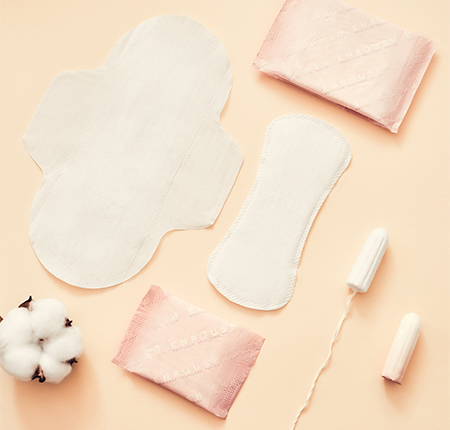
- menstruation: use products that are as natural as possible to avoid allergies, irritation and pain, which mean extra stress during your period. If your period doesn't arrive, don't panic. The causes can be many, and you can take a pregnancy test to avoid unnecessary stress while waiting for your bleed. Buying pads or tampons can also trigger stress and anxiety – but that's a situation you can sort out effortlessly with an Enroush subscription. We make sure you always have your organic period products to hand, with no worries and no hassle.
- the menopause: alongside the healthiest lifestyle possible, positive affirmations can be a great help in managing stress during the menopause and maintaining as optimistic an outlook as you can.
Complications – what can untreated stress do?
Acute and episodic stress have short-term effects and aren't very dangerous. Repeated episodes of acute stress, however, lead to chronic stress. And with chronic stress, the risk of developing cardiovascular disease, type 2 diabetes, autoimmune conditions, depression and other psychological or emotional disorders increases.
That's why it's very important not to ignore persistent stress, as it can have tragic consequences. People with chronic stress frequently experience a final breaking point that ends in a heart attack, stroke, suicide or other violent acts.
Stress in pregnancy – how is the baby affected?
For the harmonious development of your baby during pregnancy, it's recommended to lead as healthy a lifestyle as possible and keep stress levels as low as you can. If you're planning to become a mum, are about to become one, or are simply curious, you can also read what we've written about your baby's development trimester by trimester.
Stress during pregnancy increases the risk of premature birth, that is, giving birth before week 37. At the same time, the risk of low birth weight (under 2.5 kg) also rises. Both situations carry many risks and health problems for the little one's start in life, including hypoglycaemia and respiratory distress syndrome.
That's why stress management is extremely important both for how the pregnancy progresses and for the child's health after birth.
Stress in children & adolescents – what should you do?
Throughout this article we've mainly covered the problems and factors that cause stress in adults. But young people aren't immune to the effects of stress either, because the events in their lives can also trigger intense emotions, low mood, fears, shock and trauma.
It's not just about tests and exams at school. In children, the desire to live up to their parents' expectations and the fear of disappointing them can lead to low self-esteem and mean constant pressure and stress.
In adolescents, friendships and romantic relationships, the nerves before getting into secondary school or university, the desire for validation, the contradictory feelings during puberty and a girl's first period can all become sources of anxiety and even depression.
Signs by which parents can recognise stress in children and adolescents include recurring nightmares or difficulty falling asleep, fear of being left alone or, conversely, a lack of desire to spend time with friends and family, changes in appetite and in school performance, and so on. Every child is different, and parents know their behaviour best. Radical changes in behaviour can be good indicators that a child is struggling with stressful situations or feeling overwhelmed by them.
As with adults, treating stress at a young age involves rest, relaxing activities, removing stress factors, communication and – if necessary – a visit to a specialist, therapy or medication.
Frequently asked questions
Can stress cause physical pain: in the chest, in the breasts, in the bones?
Yes. When the brain perceives stress as a danger, it sends various signals into the body and even alters the production of certain hormones – which is why stress can make you feel pressure in your chest, breast pain, muscle cramps and twitches or bone pain.
Are there tests for determining stress levels?
There are no universal stress tests, because stress is a subjective experience that differs from patient to patient. A doctor can use various questionnaires, biochemical measurements and further questions to understand your symptoms as well as possible, but only you can assess the level of stress you feel.
Can stress cause thyroid disorders?
Yes, the excessive amount of cortisol the body releases due to excessive stress can interact with the thyroid gland by increasing its activity and the production of several thyroid hormones. Stress can also increase the risk of autoimmune thyroiditis.
How much can stress affect the menstrual cycle?
With short-term stress, your period may arrive late or early. Long-term stress, however, can produce considerable hormonal imbalances that strongly affect the menstrual cycle. It can change the duration, the flow and your period symptoms, or even cause a long delay or the complete absence of your period.
How can you manage stress at work?
Usually you can't change your colleagues or the standards at your workplace, and you don't want to give up your job either. Even so, managing stress at work is essential to avoid burnout. A routine, a well-planned day prepared the evening before, taking your breaks, organising your tasks and, of course, communicating as efficiently and transparently as possible with the rest of the team can all help.

Medium, super or extra absorption

Low, medium or super absorption

Low or medium absorption


and happily breaking taboos!


