

Testosterone in Women
Testosterone in women: high and low testosterone levels in women
Testosterone is most often associated with men and masculinity, yet it's an essential hormone for women too. It influences bone health, sexual function and overall energy levels, and observational studies suggest it may have a beneficial effect on the cardiovascular system.
A study of 161 healthy women with regular cycles found that testosterone levels tend to decline with age, but fluctuate only slightly across the menstrual cycle. At an average age of 30, normal total testosterone values in women range between 15 and 46 ng/dl – roughly 10 to 20 times lower than in men.
Read on to find out how testosterone levels are measured, what happens when they fall outside the normal range, and how a hormone deficiency or excess is treated.
What is testosterone?
Testosterone is an androgenic hormone present in both men and women. It forms part of the endocrine system – the hormone network that regulates processes such as energy, libido, muscle mass and bone health.
In men, it's responsible for the development of male sexual characteristics, whereas in women the development of sexual characteristics is primarily driven by oestrogen. This is why most people associate testosterone with masculinity.
In reality, though, according to the medical literature, the female body produces roughly three to four times more testosterone than oestrogen each day. The hormone is particularly important for women's health and performs clearly defined roles in the body.
The ovaries and the adrenal glands are the organs that produce testosterone in the female body. Compared with the male body, yours normally produces 10 to 20 times smaller amounts of testosterone, and it works in close partnership with oestrogen. Some of it is even converted into oestrogen, thereby influencing your menstrual cycle, bone health, sexual function, general wellbeing and hormonal balance.
The role of testosterone in the female body
Even though it's present in smaller amounts than in men, testosterone plays an important role in how your body functions. It influences numerous processes in the female body – from energy and metabolism through to libido and mood:
- It helps maintain sexual desire; some studies suggest it may affect libido particularly after the menopause, although its effectiveness isn't guaranteed and continues to be researched.
- It supports the building of muscle mass and helps preserve bone density.
- It influences energy levels, motivation and vitality.
- It supports concentration, cognitive function and mental clarity.
- It affects mood and contributes to emotional balance.
- It's involved in metabolism and influences how the body regulates body composition, i.e. the proportions of fat, bone and muscle.
Where is testosterone produced in women?
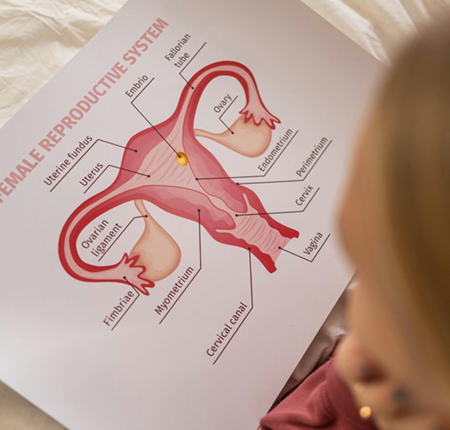
The female body produces testosterone naturally via a complex mechanism involving several endocrine glands. The ovaries and the adrenal glands are the main source, producing around 40–50% of total testosterone. Some is also generated in fat cells, in skin cells and through the conversion of other hormones.
Production in the ovaries
The ovaries produce testosterone via the theca cells of the ovarian follicles, which are stimulated by luteinising hormone (LH). These convert cholesterol into androgenic hormones, including testosterone, which is then either used directly by the body or converted into oestrogen.
Testosterone levels can fluctuate slightly across the menstrual cycle depending on ovarian activity, although more recent research shows these fluctuations are very small.
Production in the adrenal glands
The second main source of testosterone in the female body is the adrenal glands, which sit above the kidneys. They produce hormones such as dehydroepiandrosterone (DHEA) and other hormone precursors that can later be converted into testosterone.
Adrenal activity is influenced by factors including stress, which can indirectly affect hormone levels. According to an experimental study published in PubMed Central, prolonged periods of stress and chronic stress are linked to changes in the adrenal hormonal response, including a reduction in testosterone receptors.
Conversion of other hormones into testosterone
Some testosterone isn't produced directly but arises from the conversion of other androgenic hormones. Precursors such as androstenedione and DHEA are converted into testosterone in various body tissues, for example in fat and muscle tissue.
This process helps maintain the balance between androgens and oestrogens, and plays a role in regulating metabolism, mental health and the normal functioning of the female body.
Normal testosterone levels in women
Normal testosterone values are considerably lower in women than in men. As a rule, levels range between 15 and 46 ng/dl during the reproductive years.
Laboratory tests can measure two main forms of testosterone: total testosterone, which covers all the hormone present in the blood, and free testosterone, the active form that acts directly on your body. Both values can provide valuable insights, particularly when investigating a possible hormonal imbalance.
Age, cycle phase, stress levels as well as certain conditions or hormone therapies can all affect levels of this hormone. That's why laboratory results should always be interpreted in a clinical context.
Testosterone levels in women by age
During the reproductive years, in women around the age of 30, testosterone levels are relatively stable and show only very minor fluctuations across the menstrual cycle.
Total testosterone values range between 15 and 46 ng/dl, with the active form between 1.2 and 6.4 pg/ml – according to the study published in The Journal of Sexual Medicine (Braunstein et al., 2011, PMID: 21771278).
While there may be a slight rise around ovulation, these fluctuations are generally not significant. As you get older, testosterone levels gradually decline naturally.
Testosterone levels before and after the menopause
During perimenopause and after the menopause, androgen levels in your body, including testosterone, decline steadily. These endocrine changes can affect energy, libido and body composition.
Even after the menopause, however, testosterone continues to play an important role in bone health and general wellbeing.
High testosterone levels in women
High testosterone – also referred to as hyperandrogenism – occurs when levels of androgenic hormones exceed the range considered normal.
This is a hormonal imbalance that can affect several important functions: the appearance of your skin and hair, the way your body handles fat and muscle mass, fertility and the menstrual cycle – changes that can in turn affect your reproductive health.
Some women, for example, have irregular ovulation or difficulty conceiving.
Common causes of high testosterone in women
Polycystic ovary syndrome (PCOS) is by far the most common cause of high testosterone in women – a link confirmed by several studies and meta-analyses. The elevated insulin levels associated with this condition cause the ovaries to produce too much testosterone.
Other common causes of high testosterone in the female body can include:
- Adrenal gland disorders
- Insulin resistance and metabolic syndrome
- Ovarian or adrenal tumours that overproduce hormones
- Taking hormone preparations or steroids
Symptoms of high testosterone levels in women
Although asymptomatic cases do occur, high testosterone levels in women usually manifest through numerous visible symptoms. The most common signs include:
- Hirsutism and excessive facial hair growth
- Persistent acne and oily skin
- Male-pattern hair loss
- Irregular or absent periods
- Difficulty conceiving and infertility
- Deepening of the voice in severe cases
- Changes in body composition
According to one case study, for instance, a 34-year-old patient with markedly elevated testosterone levels presented to her doctor with amenorrhoea, having previously experienced irregular bleeding.
A further case study describes a 42-year-old patient with a testosterone level roughly 15 times higher than the normal value for women. As well as amenorrhoea, she also displayed other visible signs such as alopecia (hair loss), a deepening of the voice and increased facial hair growth.
Low testosterone levels in women
Although testosterone is naturally present in only small amounts in the female body, it plays an important role in energy, sexual function, muscle mass and overall hormonal balance. When levels fall below the range considered normal, this is referred to as low testosterone.
A testosterone deficiency can affect your energy levels, muscle strength and bone density – which is why you may feel more tired, more irritable and less motivated. Low testosterone levels in women have also been linked to depressive symptoms, anxiety, reduced emotional resilience and a feeling of being overwhelmed.
While a slight, natural and gradual decline in testosterone with age is entirely normal, a significant hormone deficiency may have other causes and be accompanied by more pronounced symptoms that require medical investigation.
Causes of low testosterone
A gradual decline in testosterone occurs naturally with age, particularly during the menopause and perimenopause, as part of hormonal ageing.
There are, however, other causes that can lead to a significant drop in testosterone levels during the reproductive years, including:
- Ovarian insufficiency
- Surgical procedures on the ovaries
- Hormone or contraceptive therapies that can affect androgen production
Symptoms of low testosterone levels in women
According to an article in the World Journal of Urology, 2002, the symptoms of low testosterone in women are subtle and often non-specific. Sexual desire, satisfaction and mood may all be affected; the signs are often mistaken for those of depression, leading to referral for counselling or psychotherapy when a hormonal assessment would be more appropriate.
Other common symptoms of testosterone deficiency in women include:
- Reduced libido
- Persistent fatigue
- Loss of muscle mass
- Difficulty concentrating
- Reduced bone density
- Mood swings
Testosterone levels in women: which tests?
Doctors primarily recommend blood tests to determine the concentration of testosterone in the female body and establish whether a hormonal imbalance is present – for instance when a patient has symptoms such as acne, irregular periods or changes in energy levels.
The timing of the blood sample can slightly influence the results, so you'll usually be advised to have the test done in the morning and during a particular phase of your cycle, when hormone levels are more stable.
In practice, both total testosterone, which indicates the total amount of the hormone in the blood, and free testosterone, the active form available to the body, are measured. Less commonly, your doctor may also recommend measuring bioavailable testosterone, to assess the free and albumin-bound testosterone in the blood.
All of these values are always assessed against the laboratory's reference ranges and in a clinical context – not on the basis of a single result – in order to obtain the clearest possible picture of your hormonal status.
There are also situations in which further tests are needed to identify the cause of the imbalance. Hormones frequently measured alongside testosterone include DHEA-S, SHBG, oestrogens, luteinising hormone (LH) and follicle-stimulating hormone (FSH).

Treating testosterone imbalances in women
If you have a testosterone imbalance, your doctor will recommend the appropriate treatment depending on the cause of the hormonal changes. If polycystic ovary syndrome is responsible for the rise in testosterone, for example, hormone therapy may be prescribed. If the imbalance has other causes, different treatment approaches may be considered.
This is why it's so important to obtain an accurate diagnosis before starting any therapy, so that the most effective treatment can be determined.
In most cases, treatment aims not only to regulate testosterone levels but also to balance the hormonal system as a whole, with levels monitored regularly.
Treatment for high testosterone in women
Patients with polycystic ovary syndrome are usually prescribed hormone preparations, such as combined contraceptive pills, to regulate testosterone levels and the menstrual cycle.
On the natural side, inositol is a commonly used supplement that may help lower testosterone levels and improve insulin sensitivity in patients with PCOS. Lifestyle adjustments, including diet and physical activity, are also frequently recommended in cases of insulin resistance.
In some cases – for example when patients have acne or hirsutism – medicines with an anti-androgenic action may also be recommended to block the effects of male hormones or reduce their production.
Treatment for low testosterone in women
Where testosterone is low, treatment may involve hormone therapies or medically prescribed supplements such as DHEA, magnesium and vitamin D – depending on symptoms and laboratory results.
Women going through the menopause who experience a loss of sexual desire due to the natural decline in this hormone may be prescribed various creams, gels or patches containing low-dose testosterone. Lifestyle changes may also be recommended, including strength training and more sleep, to improve energy levels, mood and sexual function.
During any form of drug therapy it's essential that the patient is monitored, so that the dose can be adjusted according to how the body responds to treatment and new imbalances avoided.
How to support your hormonal balance
Numerous lifestyle factors influence your hormonal balance, since hormones are primarily regulated by the endocrine system – and your daily habits can either disrupt or support it.
Want your daily routine to have the most positive possible effect on your hormone levels? Then focus on a balanced diet with an adequate intake of nutrients. Choose good sources of protein, healthy fats, complex carbohydrates and micronutrients that support your energy levels and the smooth functioning of your hormonal system.
Also, exercise regularly to support your metabolism and hormone levels and to maintain a healthy body weight.
Stress has a direct effect on the endocrine system, so it's important to manage it as well as you can, ensure restful sleep and maintain a stable circadian rhythm to support your hormonal health.
Finally, keep an eye on your metabolic health through regular check-ups, so that any imbalances can be detected and corrected early, before they cause complications.

When to see a doctor about your testosterone levels
Wondering when you should have your testosterone levels checked by a doctor? As soon as you notice persistent symptoms that could point to a hormonal imbalance.
In other words: if you notice unusual changes in your menstrual cycle – such as missed periods or very heavy bleeding that means you have to change your period products extremely frequently – if your mood changes markedly, you're having difficulty conceiving, or you notice signs of androgenisation such as hair loss, a deeper voice or pronounced facial hair growth, it's time for a hormonal assessment.
Depending on your symptoms and individual situation, your doctor may recommend various additional tests, then interpret and cross-reference the findings in order to reach the right diagnosis.
Again depending on your symptoms, an endocrinological assessment as well as a gynaecological examination may be needed to pinpoint the cause and draw up a suitable treatment plan.
Frequently asked questions about testosterone in women
Still not sure how testosterone affects you, or which signs indicate an imbalance? Below we answer the most common questions about testosterone in women – how it's measured and which symptoms to look out for – based on the available medical information.
What testosterone levels are normal in women?
Normal testosterone values are considerably lower in women than in men, generally around 15–46 ng/dl for women of reproductive age. Assessment is always carried out in a clinical context and against the laboratory's reference values.
What are the symptoms of high testosterone in women?
High testosterone levels can manifest as persistent acne, excessive body or facial hair growth, irregular periods and, in some cases, difficulty conceiving.
What does hyperandrogenism mean in women?
Hyperandrogenism refers to elevated levels of androgenic hormones in the female body, including testosterone. This imbalance can affect the menstrual cycle, skin, hair and fertility.
How are testosterone levels measured?
Testosterone levels are determined through blood tests which, depending on your doctor's recommendation, may check total testosterone, free testosterone and bioavailable testosterone.
Which tests are recommended for hormonal imbalances?
Alongside testosterone, your doctor may recommend tests such as DHEA-S, SHBG, oestrogens, LH and FSH for a complete hormonal assessment.
Can high testosterone affect fertility?
Yes, elevated testosterone levels can affect ovulation and lead to irregular cycles, which may reduce your chances of becoming pregnant.
What are the symptoms of low testosterone?
If testosterone levels in your body are low, you may feel more tired, find it harder to concentrate, lose sexual desire, and notice a loss of muscle mass and mood swings.
How is high testosterone in women treated?
Your doctor will recommend the appropriate treatment depending on the cause. This may include lifestyle changes, hormone therapies, supplements and other medicines, for example to treat insulin resistance or polycystic ovary syndrome.
Are there natural ways to regulate testosterone?
A nutrient-rich diet, regular exercise, good sleep and stress management techniques can support hormonal balance, but they're no substitute for medical treatment if an imbalance already exists.
When is an endocrinological examination necessary?
A medical assessment is advisable if you have persistent symptoms of a hormonal imbalance, such as changes to your menstrual cycle, signs of androgenisation or abnormal hormone results.
Image sources: Pexels.com

Medium, super or extra absorption

Low, medium or super absorption

Low or medium absorption


and happily breaking taboos!


