

The Pap test and why it matters to you
They say prevention is the first step towards good health. That's precisely why the importance of the smear test is emphasised again and again, along with the need to have it done regularly. It can detect straightforward infections, but also more serious conditions such as cervical cancer at a very early stage. When this cancer is diagnosed early, the chances of recovery are exceptionally high.
Put simply: a smear test could save your life.
The smear test (cervical screening) – what is it and how does it work?
The smear test is a quick, painless examination and the best way of detecting cervical cancer early. When you attend regularly - every 3 to 5 years, as invited - abnormalcells can be spotted at an early stage, before they develop into cancerous lesions. This hugely increases the chances of successful treatment and a full recovery.
A gynaecological check-up and this test are among the most important and effective examinations every woman should have once a year, just to be sure that all is well.
A brief history – how did this test come about?
DID YOU KNOW THAT ...
cervical cancer is the fourth most common cancer in women worldwide? According to the World Health Organization, around 99% of cases are caused by infection with the human papillomavirus (HPV).
The smear test is the result of independent research by Aurel Babeș (a Romanian doctor) and Georgios Papanikolaou (a Greek pathologist). In 1926, Babeș was the first to speak about the importance of examining cervical cells under the microscope, and he carried out the first tests. A year later, Papanicolaou refined the method and developed a scale for grading the results (from 1 – normal, to 5 – suspected cancer or cancer). In 1943, the test was introduced in the form we know today.
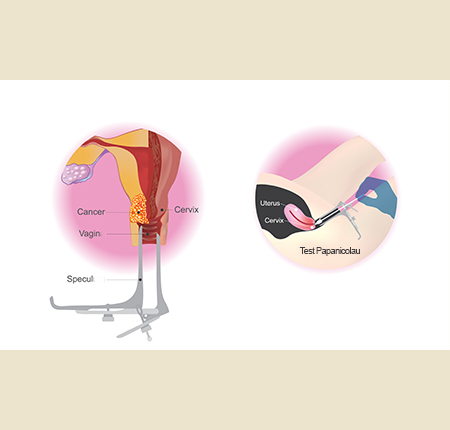
Who is the smear test recommended for?
The NHS invites everyone with a cervix for screening from the age of 25. An active sex life significantly increases the risk of HPV infection (human papillomavirus, an infection that can occur in the vaginal area). For this reason, if results are normal, the test should generally be repeated every three years.
There are, however, certain risk factors that make more frequent testing advisable:
- an HIV infection
- a weakened immune system following chemotherapy or an organ transplant
- smoking
- if the test detects precancerous or cancerous cells
- general information on the age from which the test can be done and whether there are groups of people who need it more often (e.g. people who are sexually active, people with various symptoms, etc.)
When is the smear test carried out?
For this test, it's best to book your appointment with the gynaecologist between days 10 and 20 of your cycle (day 1 being the first day of your period). You should avoid intercourse for 24 to 48 hours beforehand, as it can irritate the cervix and cause other small changes that may affect the result.
If there are no worrying signs, the general recommendations are as follows:
- aged 25 to 49: every 3 years (every 5 years if your HPV test is negative)
- aged 50 to 64: every 5 years
- from 65: invitations stop if your recent results have been normal; speak to your GP if you have never been screened or have had abnormal results
Price – how much does a smear test cost?
Cervical screening is free on the NHS for everyone invited. Private tests are priced by each provider. The price varies depending on the extent of the examination you want, whether an HPV test is carried out as well, and which clinic you choose.
Preparing for a smear test
Now is the right moment to look at how to prepare for a smear test.
First of all, it's important to book your gynaecology appointment at the right point in the month. So aim to find a suitable slot between days 10 and 20 of your cycle (day 1 being the first day of your period).
Secondly, as already mentioned, you should avoid intercourse for 24 to 48 hours before the examination, as it can distort the result. Also avoid using tampons or vaginal pessaries and don't douche – anything inserted into the vagina can alter the quality of the sample taken.
How does a smear test work?
The examination is considered straightforward and painless, and takes around 10 to 20 minutes. Here's what to expect.
In the consulting room, you lie on your back with your knees bent and your legs resting on the supports provided. Your doctor uses a speculum (a plastic or metal instrument) to gently open the vaginal walls, then inserts a fine brush, which is rotated to collect cells from the cervix. The sample is placed on a slide, stored in a tube and sent to the laboratory for analysis.
There are two types of smear test: the conventional test and liquid-based cytology.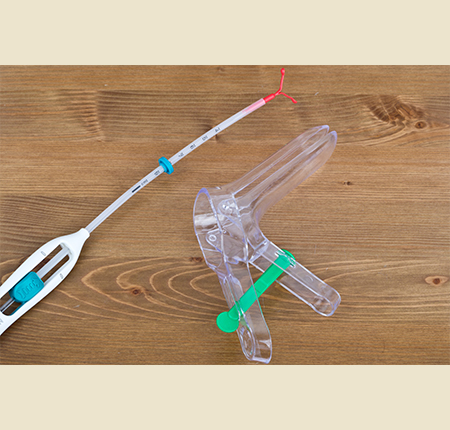
The conventional smear test
With the conventional smear test, the sample taken is fixed directly onto a slide and examined in that form.
The liquid-based smear test (liquid-based cytology)
With liquid-based cytology, the sample is transferred into a tube containing a special solution. This doesn't affect the quality of the sample in any way, but it does allow testing for high-risk HPV types at the same time.

Conventional smear test vs liquid-based cytology – which is more effective?
So what's the difference? Liquid-based cytology offers a few advantages over the conventional test:
- It reduces the likelihood of the sample being classed as inadequate and needing to be retaken;
- It allows testing for high-risk HPV genotypes from the same sample at the same time.
From a medical point of view, both tests are considered reliable.
What to expect after your smear test
As with the HPV test, smear test results are usually available after about one to two weeks.
Good to know: after a smear test you can carry on with your day as normal straight away. Although the examination isn't painful, you may feel slightly uncomfortable afterwards (a sensation of pressure in the pelvic area) and may even experience light bleeding. This isn't caused by the test itself, but by irritation of the cervix or cervical area.
Your day needn't grind to a halt because of minor inconveniences such as spotting or discharge – now you can rely on ENROUSH organic period products. Designed to follow the shape of your body and created out of a commitment to your comfort and freedom, our panty liners made from 100% certified organic cotton exceed your expectations when it comes to protection, freshness and care. Give your intimate area the care it deserves – no fragrance, no chemicals and no plastic, just a natural, highly absorbent core, pH-neutral and guaranteed hypoallergenic.
Our products are recommended by gynaecologists – and one of our wonderful customers will tell you herself what a difference they make day to day:
I've always looked for healthier alternatives when it comes to cosmetics, or anything that touches our skin and especially the more sensitive areas. Many products contain ingredients such as fragrance, and that's not good for us. Since I started using ENROUSH tampons, I honestly haven't had any more problems with heavy bleeding, and I've started recommending them to my family – they use ENROUSH products now too. I've been using them for a year or two and I'd never go back to conventional products. Thank you for taking the initiative to create this product! Nicole

HPV test & smear test results
The smear test and HPV test are usually carried out together. The smear test is used to detect cancerous or precancerous cells on the cervix, while the HPV test identifies the human papillomavirus. The HPV test also shows whether a potentially abnormal smear result is due to a high-risk HPV type.
Your NHS result will say one of four things: HPV not found (very low risk - invited again in 3 or 5 years); HPV found but no cell changes (repeat test in 12 months); HPV found with cell changes (referred for colposcopy); or inadequate sample (repeated).
PAP I – normal result
A PAP I result means everything is within the normal range – the cervix shows no signs of inflammation and no further investigations are needed.
PAP II – slightly altered
Slightly altered cells may have been found, though in most cases these are caused by an infection other than HPV, or even by inflammation. The cervix can become inflamed if intercourse took place less than 48 hours before the smear test. Your doctor may recommend repeating the test after a few months.
PAP III – inflammation
With PAP III, the cervix may be inflamed and show minor abnormalities. This is easily treatable and may again be due to intercourse, if it took place less than 48 hours beforehand. Your doctor will most likely recommend repeating the smear test in a few months.
PAP IV – precancerous changes / abnormalities
PAP IV means that abnormal cells or precancerous changes are present, such as:
- ASCUS – a fairly common finding, usually caused by an HPV infection. A repeat test in 4 to 6 months and an HPV test may be recommended.
- L-SIL (low-grade squamous intraepithelial lesion) – indicates a certain number of altered cells. In this case, the smear test is repeated in 6 to 9 months; if the finding persists, a colposcopy follows.
- H-SIL (high-grade squamous intraepithelial lesion) – indicates a greater number of altered cells than with L-SIL, which is why a colposcopy and biopsy will most likely be recommended.
PAP V – suspected cancer or cancer
With PAP V there is a suspicion of cancer, and the cancer cells have most likely already spread within the cervix.
What happens if I have HPV?
HPV (human papillomavirus) is a very common sexually transmitted infection. It can go completely unnoticed, because in a mild form the body clears it naturally. We discuss HPV infection and vaccination in detail here.
Just as with an abnormal smear result, a positive HPV test doesn't necessarily mean you have cervical cancer – it simply indicates HPV genotypes that can cause precancerous changes in cervical cells. Only if these changes aren't treated promptly and properly can they lead to cancer. So an HPV infection doesn't automatically lead to cervical cancer. Such infections are extremely common: it's known that 8 in 10 people will contract one at some point in their lives.
Don't forget: vaccination against the HPV types that can cause cervical cancer offers effective protection against HPV infection – in people who aren't already infected.
Preventing cervical cancer
It's reassuring to know that, should the worst happen, there are many diagnostic and treatment options available – but it's even better to prevent it. There are various ways we can protect ourselves against cervical cancer:
- using condoms
- HPV vaccination
- regular gynaecology check-ups
- giving up smoking
As this subject can be difficult for many of us, it's important to seek information only from reliable sources. For more clarity, we've written the article What is cervical cancer and how can you prevent it? and we'd encourage you to read it. Knowing more means you can prevent more.
Frequently asked questions
If we haven't answered all your questions about the smear test yet, let's put that right now!
How long does a smear test take?
Taking the sample takes between 10 and 20 minutes, and results are available after one to two weeks on average.
At what age do you have your first smear test?
Doctors recommend the smear test from the age of 21. If you became sexually active earlier, you should have it done three years after first having intercourse.
How reliable is the smear test?
Like any laboratory investigation, the smear test can produce incorrect results, but such cases are very rare. In the vast majority of cases the results are meaningful and the diagnosis reliable.
If I've been vaccinated against HPV, do I still need a smear test?
Even if you've been vaccinated against HPV, you should still have regular smear tests. The vaccine protects against certain HPV types, but other cell changes can occur that only the smear test can detect.
Looking after ourselves well means preventing, not just treating. Pay attention to your body, see your gynaecologist regularly and don't put off the examinations that could save your life.

Medium, super or extra absorption

Low, medium or super absorption

Low or medium absorption


and happily breaking taboos!


