

The Vagina – EVERYTHING You Need to Know: Types, Myths & Curious Facts
Is the female reproductive system a mystery to you? These days, women can get to know and understand their bodies far better – from every single part to what intercourse actually means for your vagina, how it changes, which complaints and conditions we should protect ourselves against, and the answers to plenty of questions you've surely asked yourself. Discover everything you need to know in this article.
You almost certainly already know a thing or two about your vagina – but how about knowing it all? The lack of sex education in schools, the avoidance of intimate topics at home and the taboo surrounding the subject have brought us to a point where we barely dare talk about our genitals. That ends here – let's talk about it openly!
What is a vagina & what does it look like?
Let's clear up one big social myth right from the start: women have three openings, namely:
- the urethra, through which women urinate
- the vagina
- the anus
Of these three, today we're talking about the vagina – the only one that counts as a female reproductive organ. A hollow passage with an opening at the bottom, connecting the vulva to the uterus: ladies and gentlemen, the curtain rises on the vagina!
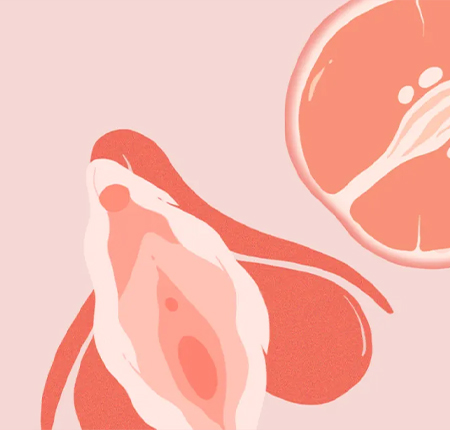
Anatomy of the vagina & other internal reproductive organs
The female reproductive organs include both structures we can see (external) and ones we can't (internal). Together they work as a whole, keeping your body functioning normally. How about we take a closer look at each one?
Let's start with what's visible – the external organs:
- Pubic hair ➡ forms a barrier that prevents bacteria and viruses that cause infections or disease from entering the vagina
- labia minora and labia majora ➡ protect the inside of the vagina from outside contaminants while their glands keep moisture levels just right
- hymen ➡ surrounds the vaginal opening and usually doesn't cover it completely; it's a flexible membrane that doesn't necessarily tear during first intercourse
- clitoris ➡ packed with nerve endings and changes in volume in response to sexual stimulation
- perineum ➡ the area between the vagina and the anus; it's important always to clean this area from front to back after using the toilet (this stops bacteria from faeces getting into the vagina)
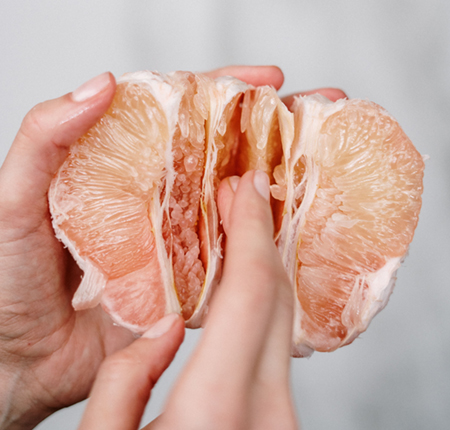
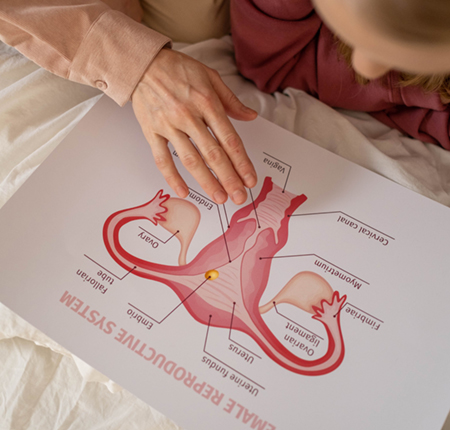
Internally, we have:
- the ovaries ➡ where the eggs mature until ovulation, when they are released
- the fallopian tubes ➡ there are two; they form the route the egg travels from the ovary to the uterus
- the uterus ➡ where the embryo develops after fertilisation, growing along with the baby throughout pregnancy
- the cervix ➡ connected to the vagina and the opening through which menstrual blood is released
- the vagina ➡ a hollow passage with an opening at the bottom, connecting the vulva to the uterus; it can change shape and size, forms the birth canal for the baby and is where a tampon is inserted
Vulva & vagina – what's the difference?
The word vulva comes from the Latin "volva", meaning covering or protection – so it makes perfect sense to say that the vulva is the external part of the genital system. It includes all the external organs and structures: the mons pubis (that mound in the pubic area), the labia majora (at the broad outer opening), the labia minora (which surround the vaginal opening), the erectile tissue (clitoris), the vaginal vestibule and the vestibular glands.
The vagina, on the other hand, is – as we've already seen – one of the internal reproductive organs, connecting the vulva to the uterus. Another mystery solved!
Vagina types by vulva shape – what do they look like?
Now that we know what the vulva is, we can talk about just how much it varies from person to person – and how fascinating it is to discover that variety! If you've ever taken a look at your vulva and wondered: is it normal for it to look like this? Yes, queen, welcome to the team!
Whatever you might find on the internet: there are no "types" of vulva, no "normal" colour or shape – and sadly we can't predict how much hair will grow in your intimate area either.
There's only one rule: no two vulvas are the same.
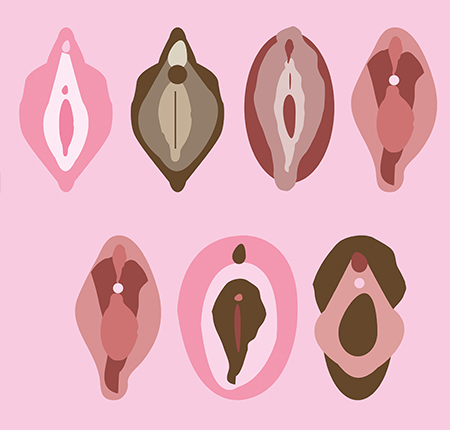
Even so, we'll tell you about a few common variations in shape, size and colour – and get used to the idea that every woman is unique, especially in this respect.
Vulva with asymmetrical labia
Your vulva may look asymmetrical, meaning one of your labia is larger or smaller than the other. Just as with the human face, symmetry isn't the rule but rather the exception – so this is nothing to worry about.
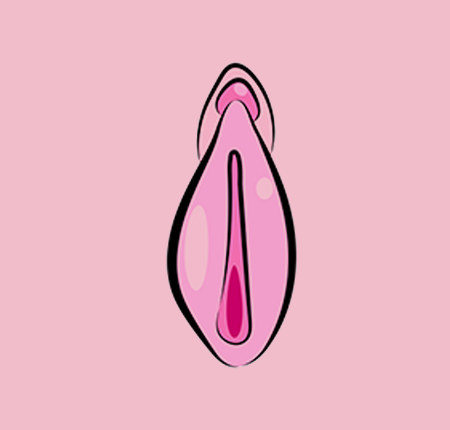
Vulva with small labia
You may notice that the labia are tucked away within the vulva, or that the outer labia are larger and cover the inner labia – this is completely normal.

Vulva with large outer & inner labia
You may have larger or fuller labia. If your labia extend beyond the vulva, that's absolutely normal.
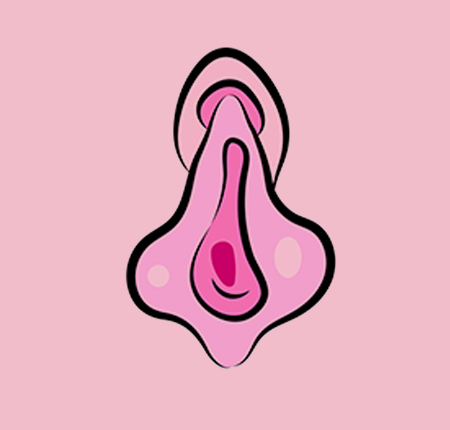
Vulva with more visible outer labia
There are also vulvas with small or shorter outer labia, where the inner labia are more exposed.
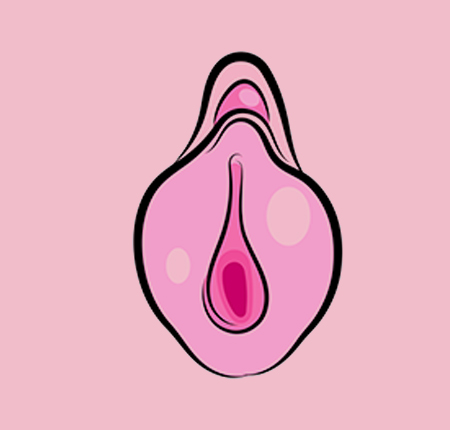
Vulva with more visible inner labia
On the other hand, your inner labia may be more prominent or longer.
Vulva with a small or large clitoris
Your clitoris may be larger or more sensitive. Estimates suggest the size of the clitoris can vary from that of a small pea to the size of a thumb.
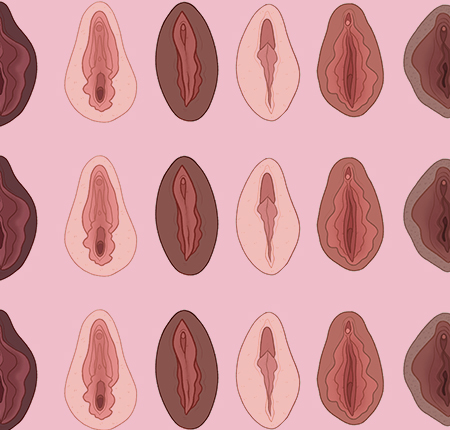
Vulvas in different colours
Depending on various factors, colour differs from vulva to vulva. No, they're not all pink. Some are brown or even reddish. However, a striking discolouration of the skin around the vagina, bright red skin or a rash can be signs that something isn't right.
Size – how deep is a vagina?
You've wondered about this plenty of times, admit it! And the truth is … it depends. Even the experts took a long time to agree.
After much debate and many studies, the verdict is: the average length of a vagina is 9.6 centimetres, and the average vaginal opening is 2.9 centimetres wide. Except … your vagina has a superpower. It can stretch to let something in or out.
For example, when you're not aroused, the vagina has a length (also thought of as depth) of roughly 2 to 4 centimetres, whereas when aroused it can stretch from 2 up to 8 centimetres. This creates more surface contact, which boosts arousal and the release of hormones and endorphins.
During childbirth, by contrast, the vagina stretches enough for the baby to pass through the birth canal – one study suggests it can expand to more than three times its normal size. It seems we're capable of letting a baby weighing up to 5 kilograms pass through.
The vagina after childbirth – can its appearance change?
If you don't have children: giving birth is a beautiful and seemingly impossible task all at once. Luckily for us, our vagina and our body know exactly what to do.
After childbirth, the tissue usually returns to its pre-pregnancy state. Sometimes the vagina may remain slightly wider afterwards – a result of the stretching of the pelvic floor muscles around the vagina. This change shows up differently from woman to woman and can be influenced by the size of the baby, by complications during the birth and by genetic factors.
Foul-smelling discharge – when should we be concerned?
Normal vaginal discharge is a healthy way for the body to clean itself and a natural protective mechanism of the vagina. It becomes more abundant during sexual arousal and ovulation; taking the contraceptive pill or emotional stress can also cause an imbalance.
In most cases, bacterial infections are the cause of abnormal discharge. The colour of vaginal discharge ranges from white to dark brown; a warning sign, however, is yellowish or greenish secretions with an unusual consistency and an unpleasant smell.
Pro tip! The vagina cleans itself, so douching isn't recommended as it can destroy the vaginal microflora.
And the vulva … how do we protect it?
So that irritation, infections and discomfort have no place in your intimate life, the team of experts at Enroush has developed a gentle intimate gel for your vulva. The gel offers the antibacterial protection you need day after day, while soothing and caring at the same time – without disturbing the pH balance. It cleanses, cares for and protects the intimate area and is made from 95% natural ingredients and 0% parabens. You and your vulva will be unstoppable!
Vaginal complaints & conditions
Vaginal infections can have a variety of causes:
– multiple sexual partners;
– antibiotics;
– taking contraceptives;
– diabetes mellitus;
– excessive or incorrect use of feminine hygiene products;
– perfumed soaps.
Any woman can face vaginal complaints or conditions at any age. That's why it's good to know how to recognise and treat each problem. Here are the most common issues affecting the vagina.
Vaginal dryness
Important to know: vaginal dryness can have both physical and psychological causes, and medication can also lead to a lack of moisture. Vaginal dryness can occur at any age – once you know the cause, it can be treated.
What's more, the chemicals in most menstrual products can trigger vaginal dryness and irritation. The solution is simple: choose only menstrual products made from pure organic cotton. If you'd like to find out more about Enroush's 100% natural products or read more about vaginal dryness, visit us at enroush.co.uk – where caring for your body comes first.

Vaginitis – inflammation of the vagina
Another fairly well-known problem is inflammation of the vagina, which can show itself through discharge, itching and pain. Most often, the cause of vaginitis is a change in the balance of vaginal bacteria or an infection. Low oestrogen levels after the menopause and certain skin conditions can also trigger vaginitis.
Vaginismus – involuntary contraction of the vaginal muscles
Vaginismus refers to the persistent or recurrent difficulty in allowing vaginal penetration of any kind: a finger, a medical instrument or a penis – and this within wanted, consensual intercourse, not under coercion. There is an involuntary contraction of the pelvic floor muscles, accompanied by marked emotional symptoms: avoidance behaviour, phobia, anxiety, panic.
Vaginal candidiasis (thrush)
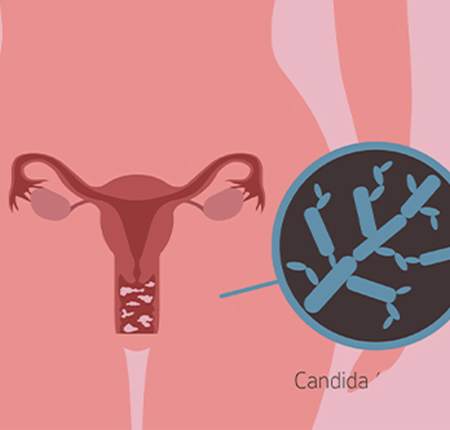
Candidiasis is an infection caused by a fungus called Candida. It normally lives in the human body – in the mouth, throat, gut, vagina and on the skin – without causing any problems. Sometimes, though, Candida can multiply excessively and trigger an infection when the environment in the vagina changes.
As this is a frequently recurring problem, we've dedicated a whole article to candidiasis – read it here
Genital warts
Genital warts appear as small, skin-coloured bumps. They can be so small they're barely noticeable, or have a cauliflower-like appearance. Sometimes genital warts occur with no symptoms at all.
Genital herpes
Genital herpes is a sexually transmitted infection that can be passed on through intercourse. Even without blisters or typical symptoms, a person can be infected with the herpes virus. The infection is treatable, but bear in mind that this type of virus is highly contagious.
Gonorrhoea
Gonorrhoea is a sexually transmitted infection and a serious public health problem worldwide. It usually affects warm, moist areas of the body such as the intimate area, the eyes, the throat and the anus, and can affect both men and women. Gonorrhoea is transmitted through unprotected intercourse or during childbirth, where it can affect the newborn.
Chlamydia
A chlamydia infection is a bacterial infection that can affect both women and men. Most cases have no symptoms, which makes it harder to detect and easier to spread. It isn't difficult to treat, but left untreated it can cause serious health problems – particularly in women.
Vaginal cancer
Vaginal cancer is a rare form of cancer that occurs in the vagina. This type of cancer most commonly develops in the cells lining the surface of the vagina – the passage also known as the birth canal. Women with early-stage vaginal cancer have the best chance of a cure, while cancer that has spread beyond the vagina is considerably harder to treat.
Don't forget: look after your health, and whenever you feel something isn't right, see a doctor who can help with your specific problem.
Myths about the vagina
The shape of the vagina changes if you have more sex. False!
The vagina is elastic: it stretches during sex and returns to its original shape afterwards. Only after giving birth does it change shape slightly.
Tampons can get lost in the vagina. False!
This isn't the Bermuda Triangle. The vaginal walls lie against one another and can hold the tampon in place because they're flexible and muscular.
You can tell from the hymen whether someone has had penetrative sex. False!
The hymen, or "vaginal corona", is a thin layer of tissue at the vaginal opening. It's flexible and in some people never "tears", while in others it may simply "tear" during sport.
Sexually transmitted infections always show symptoms. False!
A good number of sexually transmitted infections do make themselves physically and visibly known, but many have no symptoms at all – regular testing is therefore the best form of prevention.
Frequently asked questions about the vagina
To finish, we've gathered a few questions you've surely asked yourself at least once in your life – and we'll answer them one by one.
How elastic is a vagina?
Very elastic – during childbirth its muscles can stretch to more than three times their normal size.
What does an untouched (virgin) vagina look like?
The "first time" is a deeply personal experience that can be painful or pleasurable – or both. Physically, there are no visible changes after intercourse (with or without penetration), so the concept of "losing your virginity" depends entirely on your perspective.
How long does sperm survive in the vagina?
Ejaculated sperm can survive in the mucus of the vagina for roughly 3 to 5 days.
What does a vagina look like on the inside?
So far we've talked about anatomy – how our vagina looks in biology textbooks. And in practice? You can carry out a self-examination yourself when you're not menstruating: take a mirror and a light source to look for any changes to your vulva or vagina.

Medium, super or extra absorption

Low, medium or super absorption

Low or medium absorption


and happily breaking taboos!


