

Turner syndrome
Turner syndrome: causes, symptoms, appearance & treatment
Turner syndrome, also known as congenital ovarian hypoplasia, is a rare genetic condition that affects women.
Girls born with Turner syndrome may experience disruptions to their physical and hormonal development from early childhood – yet in many cases the diagnosis isn't made straight away. A case study from 2023 describes a patient whose Turner syndrome was only diagnosed at the age of 61.
Read on to find out which signs point to the condition, which medical problems accompany it and what treatment options are available.
What is Turner syndrome
Turner syndrome is a rare genetic condition that affects only females – and does so from birth. It is the most common sex chromosome abnormality and is characterised by one of these chromosomes being partially or completely absent.
Every child is born with a pair of chromosomes. Boys are normally born with one X and one Y chromosome, girls with two X chromosomes. In roughly 1 in every 2,000 to 2,500 newborn girls, however, one of the X chromosomes is partially or entirely missing – which is where the term monosomy X for Turner syndrome comes from.
The diagnosis is usually made late, in childhood or adolescence, and only rarely immediately after birth. Suspicions typically arise when the chromosomal abnormality starts to affect the girl's physical and reproductive development.
If every cell in the body carries this genetic error, the complete form of Turner syndrome is present. Many of those affected develop more pronounced symptoms during childhood, which allows for a quicker diagnosis.
There are also cases, however, in which only some of the cells are affected. In the partial form of the syndrome, some cells have normal chromosomes while others show abnormalities such as the partial or complete loss of the X chromosome. This mixture of cells is known as mosaicism and may present as milder or less noticeable symptoms, which vary considerably from person to person and are usually recognised later on.
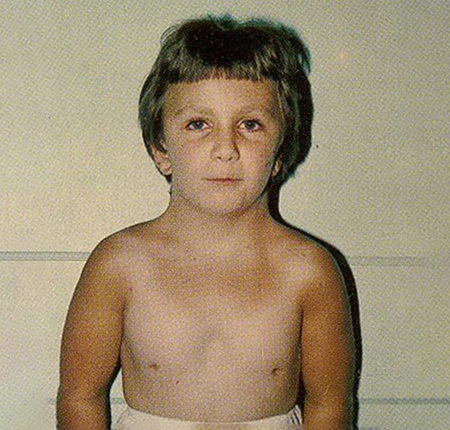
Patients' intelligence is generally normal, but physical symptoms do occur: they are shorter in stature, may have a shorter, broader neck, widely spaced nipples, hands and feet swollen by fluid retention, an outward angling of the forearm, or difficulty judging spatial relationships between objects – when driving, for example.
What causes Turner syndrome
Researchers still don't know why one of the X chromosomes is missing or incomplete in a newborn girl. One thing is certain, though: this change isn't the result of anything the parents did wrong or could have prevented – it has nothing to do with their lifestyle or family history. Although it is a genetic condition, it is only very rarely inherited.
In fact, the abnormality arises spontaneously – either through a change to the X chromosome during the development of the foetus, or during cell division in the formation of the egg or sperm, when the genetic material isn't divided correctly. One of the X chromosomes isn't passed on properly by one parent, and what results is known as monosomy X – a state in which cells have only one X chromosome instead of two.
There are also cases in which not all cells are affected. In mosaic Turner syndrome, some cells have a normal structure and only some show this change, which can mean the symptoms are less obvious.
What's more, chromosomal changes aren't always limited to the complete absence of an X chromosome. Sometimes it is present but has an abnormal structure. These changes include:
- Deletions, where certain sections of the chromosome are missing.
- Isochromosomes, where individual sections are duplicated or rearranged.
- Ring chromosome, when the chromosome has an atypical, circular shape
All of these abnormalities reduce or alter the genetic information required for the body to function normally. Growth and reproductive development processes are particularly affected – and this is how Turner syndrome comes about.
What forms of Turner syndrome are there
To continue the thought begun above: there are several forms of Turner syndrome. Two women with the same condition may show completely different symptoms. The signs, the severity of the symptoms and the point at which the diagnosis is made depend largely on the genetic form of the condition.
In patients with the classic form – Turner syndrome with karyotype 45,X, or complete monosomy X – every cell in the body has only one X chromosome instead of two. The symptoms usually appear in childhood and are more pronounced, which means doctors can make the diagnosis earlier.
In mosaic Turner syndrome, the symptoms may be subtler, since only some cells are affected and the rest have normal X chromosomes. In practice, the diagnosis is therefore often only made in adolescence or adulthood.
There is also the form of Turner syndrome caused by structural abnormalities of the X chromosome. In patients with this variant, both X chromosomes are present, but one has an altered structure. Fragments may be missing, for instance, certain sections may be duplicated, or the chromosome may take a ring shape.
Each form determines how the condition may progress – and therefore also how quickly a diagnosis is reached. The complete form is usually easier to spot, while mosaic or structural forms can be subtler, yet they still affect height, ovarian function and general health.
What are the symptoms of Turner syndrome
Turner syndrome can present differently depending on age and stage of development. In the sections that follow, you'll see that some signs are already detectable before birth, while others only become apparent in childhood, at puberty or in adulthood.
Turner syndrome: prenatal symptoms
The literature shows that Turner syndrome with karyotype 45,X – that is, when a person has only one X chromosome instead of two – occurs in roughly 1–2% of all pregnancies.
With detailed ultrasound scans, doctors can identify certain characteristic signs before birth:
- Fluid accumulation in the neck area (cystic hygroma)
- Foetal oedema detected on ultrasound (i.e. visible swelling of the tissues)
- Heart defects identified during pregnancy monitoring
- Intrauterine growth restriction, where the foetus is smaller than would be normal for that stage of pregnancy
Most of these pregnancies do not continue to term. Around 10% are lost in the first trimester, 1% end in stillbirth, and over 99% of foetuses with this karyotype do not survive the pregnancy beyond week 28.
This explains why girls and women living with Turner syndrome usually have some form of mosaicism – that is, only some of their cells carry the chromosomal abnormality.
Turner syndrome: symptoms at birth
Turner syndrome is only rarely diagnosed at birth. The physical features that may point to this condition include:
- Swelling of the hands and feet due to fluid retention
- Short neck or webbed neck
- Short body length compared with the average newborn
- Broad chest with widely spaced nipples
A case report published in 2021, for example, cites swelling of both legs after birth, a webbed neck and a small lower jaw as the signs that led to a diagnosis of Turner syndrome in a newborn just 8 days old.
Turner syndrome: symptoms in childhood
As a child grows, increasingly clear signs of Turner syndrome may appear, such as:
- Slow growth and short stature
- Delayed pubertal development, which may start later or remain incomplete
- Frequent ear infections due to anatomical features of the airways and middle ear
- Learning difficulties, particularly in maths or spatial reasoning, although general intelligence is usually normal
Slow growth and short stature compared with children of the same age are often the first sign that prompts further investigation. In a 2012 publication, Dr Louise Newson describes the case of a mother who was worried about her 5-year-old daughter's small size compared with other children. Two years later, following tests carried out precisely because of this ongoing concern, the patient was diagnosed with Turner syndrome.
Turner syndrome: symptoms at puberty and in adulthood
At puberty, the typical symptoms of Turner syndrome mainly concern ovarian function and sexual development. Those affected may experience:
- Failure to develop secondary sexual characteristics such as breasts and pubic hair
- Infertility or ovarian insufficiency
- Primary amenorrhoea, meaning that menstruation does not begin
- Persistent short stature, with a height below average (most patients reach an average adult height of around 1.30 m)
A classic case of Turner syndrome detected at puberty is that of a 16-year-old patient who consulted her doctor about primary amenorrhoea. Clinical examination revealed short stature, skin folds at the inner corner of the eye (epicanthus) and short fingers, particularly the fourth finger. The patient was referred for chromosome analysis, which revealed a 45,X karyotype and confirmed the diagnosis.
Which physical features are common in Turner syndrome
Wondering how to recognise the outward signs of Turner syndrome? The truth is that every patient experiences the condition differently, and not everyone affected shows the same symptoms. The most common physical features, however, include:
- Short stature, typical of Turner syndrome and at the same time one of the most common and most noticeable features
- Webbed neck (pterygium colli)
- Broad chest with widely spaced nipples
- Low hairline at the back of the neck, where the lower hairline sits lower down
- Swelling of the hands and feet at birth
- Low-set ears, meaning the ears sit lower on the head
- Narrow or deformed nails
- Small lower jaw, which can affect the shape of the face.
Which medical problems are associated with Turner syndrome
In practice, alongside the physical features, Turner syndrome is often accompanied by other medical problems that affect patients' general health:
- Congenital heart defects such as narrowing of a section of the aorta (coarctation of the aorta) or other abnormalities of the heart valves. Around half of patients with Turner syndrome have such abnormalities.
- Kidney problems and structural abnormalities of the kidneys
- Endocrine disorders, including hypothyroidism
- Infertility and primary ovarian insufficiency
- Hearing problems, often caused by recurrent middle ear infections
- Vision problems, such as reduced visual acuity or other eye conditions
Learning and cognitive development difficulties, particularly in maths and spatial reasoning

What complications can occur in Turner syndrome
People with Turner syndrome have an increased risk of cardiovascular disease and may develop arterial hypertension (high blood pressure) at a young age.
Hormonal imbalances can also affect blood sugar and metabolism, leading to diabetes and metabolic disorders, while a hormone deficiency can impair bone density and increase the risk of osteoporosis. Hormonal changes and metabolism can also contribute to weight gain and raise the risk of obesity.
Autoimmune thyroid conditions such as Hashimoto's thyroiditis are likewise among the complications that can occur in patients with Turner syndrome.
How is Turner syndrome diagnosed
As you've probably gathered from the section on symptoms, Turner syndrome can be diagnosed either before birth or afterwards – depending on the tests carried out and the signs that are visible.
The earlier it is detected, the sooner the necessary treatment can begin in order to reduce the severity of the symptoms.
Turner syndrome: prenatal diagnosis
During pregnancy, doctors can detect certain signs of the condition through a combination of genetic tests and ultrasound scans.
Prenatal genetic screening (non-invasive genetic testing) allows the foetal DNA in the mother's blood to be analysed and can establish whether chromosomal abnormalities are present. Abnormalities may also be picked up on a foetal ultrasound, for instance when looking for oedema or heart defects.
A prenatal diagnosis is confirmed by amniocentesis. Here the doctor takes a sample of amniotic fluid, which contains cells from the foetus; these are then analysed to check the chromosomes. Another method is chorionic villus sampling, in which a small piece of the placenta is taken so that the chromosomes can be examined and any abnormalities identified.
Turner syndrome: postnatal diagnosis
After birth, the diagnosis is based on clinical observations and genetic tests.
Short stature, a broad neck, a chest with widely spaced nipples and other suspicious physical features are assessed during the clinical examination. This is followed by karyotype analysis to confirm monosomy X, along with genetic testing to detect mosaic forms.
Depending on the individual situation, the doctor may recommend additional cardiology and nephrology assessments in order to identify and monitor any associated conditions.
What treatment is available for Turner syndrome
Treatment for Turner syndrome is tailored to each patient's individual needs and to the genetic form of the condition. Its aim is to support growth and reproductive development and to help manage the accompanying complications.
Turner syndrome: treatment with growth hormone
If the syndrome is diagnosed early, giving growth hormone can help the patient improve her height and even reach a near-normal final height. The therapy is all the more effective the earlier it begins in childhood. Height and development are monitored continuously throughout treatment so that the dose can be adjusted and the best possible results achieved.
Turner syndrome: hormone therapy with oestrogen
Hormone therapy with oestrogen can be started at the appropriate point during puberty to trigger pubertal development and support reproductive development.
Treatment with oestrogen promotes the development of secondary sexual characteristics such as breast growth, pubic hair and other physiological changes that are normal in adolescents. It can also help prevent osteoporosis and maintain bone health in adult patients.
Turner syndrome: treating associated conditions
If the doctor identifies conditions associated with Turner syndrome, they may recommend specific treatments to keep these under control.
Regular check-ups or, depending on the case, surgery allow heart defects to be treated. Therapies may be recommended to control endocrine disorders such as hypothyroidism, as well as specific treatments for hearing or kidney problems and to prevent complications.
Turner syndrome: regular medical monitoring
To prevent complications and protect health in the long term, patients with Turner syndrome are advised to have ongoing monitoring.
Regular cardiology check-ups to assess blood pressure and heart function are important, as are checks of endocrine function through regular testing of thyroid and sex hormones, along with bone density measurements to prevent osteoporosis.
Gynaecological monitoring is also important in order to keep an eye on reproductive health and the ovaries.

How does Turner syndrome affect fertility
Many women with Turner syndrome either have no periods or have small ovaries that don't produce enough sex hormones and function for only a few years, if at all.
The syndrome therefore directly affects ovarian function and the ability to reproduce, although the impact can vary depending on the genetic form of the condition.
In most cases fertility is reduced, but there are medical options that can support conception.
Turner syndrome and infertility
Infertility in Turner syndrome is often a consequence of primary ovarian insufficiency. The ovaries don't produce enough hormones or eggs to allow normal reproduction.
In addition, most people with Turner syndrome don't ovulate, which considerably reduces the chances of pregnancy.
Turner syndrome and menstruation
Generally speaking, patients diagnosed with Turner syndrome either have no menstrual cycle or experience irregular bleeding.
Many of them consult a doctor with primary amenorrhoea, that is, the absence of a menstrual cycle from the start of puberty. They often have small ovaries that don't produce enough of the hormones needed for menstruation and that partially or completely lose their function, resulting in ovarian insufficiency.
In the rare cases where patients with Turner syndrome do menstruate, it's because they have the mosaic form – in other words, some of their cells are normal, allowing the ovaries to function.
In both cases, hormone therapy can trigger and regulate the menstrual cycle, supporting reproductive development and menstrual health. Intimate care products made from pure ingredients without irritating chemicals can also help make the experience of menstruation as relaxed and comfortable as possible.
Turner syndrome and assisted reproduction
For women who want a child but are unable to conceive, assisted reproduction techniques such as intrauterine insemination can help overcome the biological limits of ovarian insufficiency. In vitro fertilisation (IVF), for instance, can make pregnancy possible using a woman's own eggs (where available) or donor eggs.
Turner syndrome and egg donation
Another option frequently used by patients who wish to become pregnant is egg donation, which allows conception even in the absence of ovarian function. Given the increased cardiovascular risk associated with Turner syndrome, however, a cardiology assessment is required before the procedure to evaluate safety during pregnancy.
What is life like with Turner syndrome
Even with a diagnosis of Turner syndrome, you can lead an active and healthy life – provided you keep a consistent eye on your symptoms and receive the medical support you need.
Most people with Turner syndrome have a long and fulfilling life. If associated conditions and complications are monitored and treated, the condition does not shorten life expectancy. This is why regular cardiology, endocrinology and gynaecology check-ups are recommended, in order to avoid long-term complications.
Access to education and to social activities tailored to individual needs is equally important in supporting personal development. Psychological support can help both children and adults to cope with the emotional and social challenges involved.
Frequently asked questions about Turner syndrome
Turner syndrome is a rare condition. So if you feel you have a great many questions about what causes X chromosome abnormalities, how they present and what impact they can have on life, that's entirely normal. In the lines that follow, we answer some of the most common questions about this condition.
Is Turner syndrome hereditary?
Turner syndrome generally arises spontaneously and is not inherited. Most cases are due to chromosomal errors in the egg or sperm and bear no relation to family history.
Can Turner syndrome be prevented?
There are currently no ways of preventing it, as the exact cause is unknown. The syndrome arises by chance during the formation of the reproductive cells. Early detection through prenatal genetic testing can, however, help with planning medical care.
Can women with Turner syndrome have children?
Patients with this condition have reduced fertility due to ovarian insufficiency, but assisted reproductive medicine and egg donation offer ways of achieving a pregnancy following appropriate medical assessment.
What is life expectancy with Turner syndrome?
People with Turner syndrome can have a near-normal life expectancy provided the associated cardiac, hormonal and metabolic problems are properly monitored and treated.
How does Turner syndrome present in children?
In children, Turner syndrome may present with short stature, a broad neck, a broad chest with widely spaced nipples, hearing problems and frequent ear infections. Those affected may grow more slowly than other girls of their age, and the onset of puberty may be delayed.
Which genetic tests confirm Turner syndrome?
The diagnosis is made through clinical examination combined with karyotype analysis to check for monosomy X, along with genetic testing for mosaic forms. Where the diagnosis is made prenatally, confirmation comes via chorionic villus sampling or amniocentesis.
At what age is Turner syndrome diagnosed?
The diagnosis can be made prenatally through genetic screening and foetal ultrasound, at birth if clear physical signs are present, or in childhood or adolescence if growth or pubertal development is delayed. There are also cases where the diagnosis is only made in adulthood, because the symptoms are noticed later.
Does Turner syndrome affect intelligence?
Most people with Turner syndrome have normal intelligence, but may have difficulties in maths or spatial reasoning – when driving, for example.
What cardiac complications can occur in Turner syndrome?
Possible cardiac complications include coarctation of the aorta, i.e. narrowing of a section of the aorta, and a bicuspid aortic valve, which has two leaflets instead of three.
What role does growth hormone play in the treatment of Turner syndrome?
Growth hormone promotes height gain and the maintenance of normal body proportions. It is all the more effective the earlier treatment begins in childhood; regular monitoring allows the dose to be adjusted for optimal results.
Image sources: Wikipedia ; Pexels.com

Medium, super or extra absorption

Low, medium or super absorption

Low or medium absorption


and happily breaking taboos!


