

Vitamin D (for women) – function, sources and symptoms of vitamin D deficiency
Every body needs vitamin D to stay healthy. It's an essential vitamin for calcium absorption and therefore plays an important role in bone health – and not only that. In women, vitamin D has numerous positive effects on life. And when we talk about mothers-to-be, avoiding a vitamin D deficiency becomes absolutely essential.
A baby's development demands considerable resources and brings constant physiological changes in the mother's body. In this context, recent findings in the specialist literature show that all pregnant women need vitamin D supplementation to support the growth of the foetus and reduce the risk of complications. It's a broad topic, so we'll cover it in detail in this article. Find out what vitamin D is good for, what role it plays in the body and why it matters so much during pregnancy.
What is vitamin D?
Vitamin D, known scientifically as calciferol, is a micronutrient your body needs in order to absorb calcium and thereby build strong, healthy bones. It is a fat-soluble vitamin, meaning it dissolves only in fats (not in water), and it has anti-inflammatory, antioxidant and neuroprotective properties.
The body can produce vitamin D naturally on its own. However, it doesn't always do so, because this internal production is influenced by many factors, including skin pigmentation and the amount of time spent in sunlight. That's why it can also be obtained from external sources – through food and supplements.
Vitamin D – forms
The most important forms of calciferol for health are vitamin D2 and D3. In addition, there are many other forms of vitamin D, including D1, D4, D5, D7 and D12.
Vitamin D2
Ergocalciferol, or vitamin D2, is the form of vitamin D that occurs naturally in plants. It is derived from a substance called ergosterol, which resembles the cholesterol found in animal cells and is present in the cell membranes of protozoa and fungi.
Vitamin D3
Calciferol, or vitamin D3, is precisely the substance the body produces naturally when exposed to sunlight (UV rays). It is also found in this form in foods of animal origin, where it is known as cholecalciferol.
Vitamin D – its role in the body
As mentioned at the outset, one of vitamin D's main jobs is bone health. Calcium is only absorbed in the presence of vitamin D, so it plays a very important role in building and maintaining strong bones and teeth.
Vitamin D also carries out other important tasks in the body's cellular functions. Thanks to its properties, an optimal vitamin D level supports the immune system, muscle function, cognitive health and the activity of brain cells.
Vitamin D – benefits
Following sun exposure, or after supplementing with calciferol up to an optimal level in the body, the benefits of vitamin D show in both physical and mental health. Here are the main benefits for women:
Vitamin D for women trying to conceive
Numerous studies have shown that vitamin D can boost fertility and the chances of a complication-free pregnancy. Some suggest that a blood vitamin D level of 30 ng/ml or higher is associated with better chances of conceiving – including with assisted reproduction (in vitro fertilisation).
If you're hoping to conceive and want to track your body's changes in order to work out your fertile days, we've explained everything about the calendar method in another blog article.
Vitamin D and the skeletal system
Because it helps incorporate calcium into the bones, vitamin D lowers the risk of fractures and helps prevent osteoporosis, osteomalacia (softening of the bones), bone pain and the loss of bone minerals. It is also used to treat genetic bone disorders such as familial hypophosphataemia.
The benefits extend to the nervous and muscular systems too, as vitamin D may help prevent conditions such as multiple sclerosis and muscle weakness.
Vitamin D and the immune system
Alongside other essential nutrients, calciferol supports the action of vitamins A and C in the body and helps strengthen the immune defences. It thus promotes optimal functioning of the glands (e.g. thyroid, pituitary); some studies even suggest it may help with cancer prevention.
Vitamin D and diabetes
Several studies have linked vitamin D deficiency with an increased risk of developing type 2 diabetes. Another study involving 100 participants, all with type 2 diabetes, showed that vitamin D supplementation can reduce insulin resistance.
Vitamin D and depression
There is research showing that patients with depression also had a vitamin D deficiency – a condition that often worsens during the colder months, when sun exposure drops dramatically. Vitamin D therefore has positive effects on low mood.
Vitamin D and the cardiovascular system
Vitamin D supports the production of angiotensinase (or renin), an enzyme that regulates blood flow within the blood vessels. A vitamin D deficiency automatically means insufficient renin production, which causes high blood pressure and the cardiovascular problems associated with it. Vitamin D therefore also plays a part in cardiovascular health and helps prevent heart disease and heart attack.
Vitamin D and autoimmune conditions
An adequate level of vitamin D in the body may help prevent the onset of certain autoimmune conditions. These chiefly include Hashimoto's thyroiditis and rheumatoid arthritis.
Vitamin D and sport
One of the most obvious links is between an optimal vitamin D intake and athletic performance. Because it supports bone and muscle health, vitamin D aids sporting activity, lowers the risk of injury or fractures and supports muscle recovery after training.
Vitamin D for children
In children, a vitamin D deficiency can weaken the immune system and reduce resistance to infection. It can impair psychomotor development and cause rickets or bone deformities. The spine, skull, limbs, collarbone and ribcage may all be affected. Delayed tooth eruption or tooth decay can be further consequences of vitamin D deficiency in children. It is therefore very important to avoid a deficiency.
In newborns, breast milk contains exactly as much vitamin D as is present in the mother's body. If the mother is deficient, the breastfed baby won't get enough vitamin D either. Formula-fed babies don't face this risk, as the formula is correctly dosed.
Vitamin D during pregnancy
The risk of rickets in a child begins during pregnancy if there is a vitamin D deficiency. Recent studies also confirm that vitamin D supplementation reduces many risks and is beneficial both for the mother and for the growth of the foetus. We've written in more detail about the baby's development during pregnancy, trimester by trimester, HERE.
Studies have also found that levels of 25-hydroxyvitamin D in the mother's body fall steadily during pregnancy, as the body adapts to the changes and demands of foetal development. Taking vitamin D is therefore important to avoid a deficiency and the associated risks, and so support the baby's growth.
Why is taking vitamin D before and during pregnancy so important?
Vitamin D supplementation is recommended even before pregnancy. Research shows improved fertility in both women and men with a deficiency who undertake a course of calciferol. We've discussed fertility and what fertile days mean HERE.
In women who don't have enough vitamin D in their bodies, taking it as a supplement during pregnancy supports the growth and development of the foetus and lowers the risk of problems such as:
-
Pre-eclampsia
-
Premature birth
-
Low birth weight
-
Gestational diabetes
-
Low mineral content in the foetus's bones
-
Tooth enamel problems in children
-
Allergies in the first 2 years of life
-
ADHD

Ensures normal neurological development of the foetus
Like folic acid, vitamin D plays an important role in processes within the brain and can support the neurological health of the foetus. Some experts link vitamin D deficiency in pregnancy with an increased risk of autism, Asperger's syndrome or Rett syndrome in children.
Supports the development of the immune system
According to certain studies, vitamin D supplementation during pregnancy can strengthen the foetus's immune system. This lowers the risk of infections and health problems for the baby in the period after birth.
Supports bone development and mineralisation
Developing strong, resilient bones is one of vitamin D's main jobs – and it begins during pregnancy. An optimal vitamin D level in pregnancy significantly lowers the risk of bone abnormalities and rickets in the first years of life.
Talk to your doctor about your vitamin D level as soon as the first signs of pregnancy appear. Find out whether you need a supplement and at what dose, so that after the birth you'll be holding a healthy baby who has developed well.
Symptoms of vitamin D deficiency
A vitamin D deficiency can lead to health problems and serious accidents, so it's worth recognising the signs early. Such a deficiency usually shows itself through:
Causes of vitamin D deficiency
A vitamin D deficiency can develop very easily in winter, or when someone spends a great deal of time indoors, away from sunlight. Without supplementation, the body doesn't produce vitamin D naturally, and a deficiency follows.
This isn't the only cause, however, as there are also certain conditions that lower the body's vitamin D levels. Here are the most common causes:
- Limited sun exposure
- Cystic fibrosis
- Coeliac disease
- Crohn's disease
- Obesity
Risk factors for vitamin D deficiency
Blood vitamin D levels depend on a wide range of internal and external factors. Those most affected by deficiency are groups with the following risk factors:
Sources of vitamin D
The body produces vitamin D naturally through sunlight.
This production is influenced, however, by factors such as skin pigmentation, where you are and the time of day you're in the sun. If you don't spend enough time outdoors, if you use sun protection (which is essential for shielding the skin from UV rays), or if it's winter and the sun isn't strong, natural vitamin D production can cease altogether.
That's why there are other sources: foods containing vitamin D (either naturally or because they've been fortified with it), and vitamin D supplements.
Foods containing vitamin D
Calciferol occurs naturally in many products of animal origin, but also in plant-based ones. The foods richest in vitamin D include:
-
Oily fish: salmon, halibut, mackerel
-
Red meat
-
Liver (though during pregnancy it's recommended to avoid liver)
-
Small fish: herring and sardines
-
Fish oil: cod liver oil
-
Tinned tuna
-
Eggs: the yolk is rich in vitamin D
-
Mushrooms: according to studies, they're the only plant source containing a sufficient amount of vitamin D
-
Foods fortified with vitamin D: soya milk, orange juice, breakfast cereals and oats
Vitamin D supplements
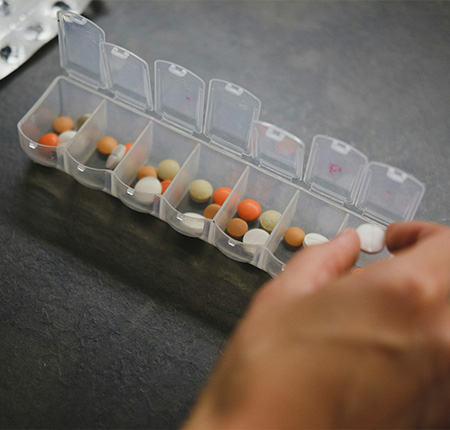
Another important source of vitamin D is supplements. These are available both as multivitamin products – combined with calcium or with a whole complex of vitamins and minerals – and simply as pure vitamin D.

The vitamin D dose you need
Since the ability to absorb calciferol varies according to a range of factors, so do the recommended doses for supplementation. The vitamin D dose needed is therefore different for everyone – depending on the person's age, state of health and lifestyle.
For healthy individuals, the general recommendations in the table below apply. Your doctor may, however, recommend a different vitamin D dose according to your individual needs.
|
Age |
Recommended dose |
|
Children aged 0 to 12 months: |
10 mcg (400 IU) |
|
Children over 12 months and adolescents: |
15 mcg (600 IU) |
|
Adults aged 18 to 70: |
15 mcg (600 IU) |
|
Adults over 70: |
20 mcg (800 IU) |
|
Pregnant or breastfeeding women: |
15 mcg (600 IU) |
Frequently asked questions about vitamin D
One of the most common questions about calciferol is: “When should you take vitamin D?” As a rule, it's recommended to take it with a meal rather than on an empty stomach. As a fat-soluble vitamin, it doesn't dissolve in water and is only absorbed with the help of lipids (fats). Another recommendation is to take it during the first half of the day so as not to disturb your sleep – the first meal of the day is therefore an ideal time.
If you're looking for further answers about vitamin D, here are some more frequently asked questions:
How long does a course of vitamin D last?
Generally, a few weeks (up to 2–3 weeks) of daily calciferol are needed before vitamin D levels in the body rise. With severe deficiency, it can take several months for readings to show an optimal level.
According to studies, vitamin D reached normal levels in the bodies of patients with insufficient levels after 12 weeks of supplementation with high doses.
How is a vitamin D deficiency diagnosed?
The best indicator of the body's vitamin D status is 25-hydroxyvitamin D. This can be measured with blood tests.
What happens if you take too much vitamin D?
Vitamin D aids calcium absorption. This means that if it's taken in excessive amounts, the surplus calciferol raises the level of calcium in the blood. This can lead to loss of appetite, nausea, vomiting, frequent urination, dehydration, excessive thirst, muscle weakness, pain or kidney stones. In rare cases, it can even cause heart rhythm disturbances, kidney failure or calcification of the soft tissues.

Medium, super or extra absorption

Low, medium or super absorption

Low or medium absorption


and happily breaking taboos!


