

What does a retroverted uterus mean – and how does it affect you?
A retroverted uterus is one of the possible positions the womb can occupy within female anatomy. Although 80% of women have a forward-tilting uterus (anteversion), a retroverted uterus is not a disorder, not a disease and – provided there are no other gynaecological conditions present – no cause for concern either. What exactly does it mean? Read our article!
Retroverted uterus – what it means and how it can affect you
Around 20% of women have a retroverted uterus. Studies show, however, that a retroverted uterus has no bearing whatsoever on fertility – so there's no need to worry. What's more, it isn't an illness. But why does it happen?
Around 20% of women have a retroverted uterus. Studies show, however, that a retroverted uterus has no bearing whatsoever on fertility – so there's no need to worry. What's more, it isn't an illness. But why does it happen?
The possible causes of a retroverted uterus include:
- Natural variation – as a rule, the uterus tilts forward as a woman matures. Sometimes, however, this doesn't happen and the uterus remains tilted backwards.
- Adhesions – an adhesion is a band of tissue that joins together two (normally) separate anatomical structures. Surgery in the pelvic area can pull the uterus into a retroverted position.
- Endometriosis – that is, the growth of endometrial cells outside the uterus. Excess cells can cause retroversion by "sticking" the uterus to other pelvic structures.
- Fibroids – these small, benign growths can cause the uterus to tilt backwards.
- Pregnancy – this can overstretch the ligaments, allowing the uterus to tip backwards. In most cases the uterus returns to its usual position after birth, although this isn't always the case.
Types of uterine position
Image illustrating all the variants
The uterus is a hollow organ shaped like an upside-down pear, sitting above the vagina and tilting slightly forward over the bladder. Just as every woman is unique, so too can the position of her uterus vary.
Anteverted uterus (the usual position)
When the uterus tilts slightly forward, this position is considered normal – or rather, the most common and widespread – and is known as anteversion.
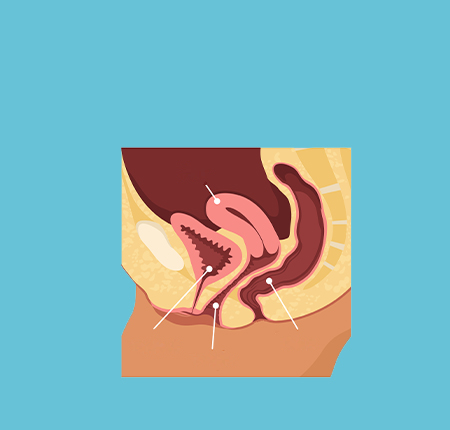
Retroverted uterus
Sometimes, however, the uterus may tilt slightly backwards (dorsally) – in which case we speak of retroversion, or a retroverted uterus. Roughly a quarter of all women have this uterine position.
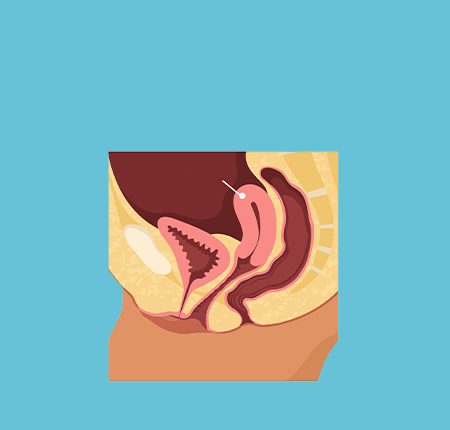
Retroflexed uterus
With a retroflexed uterus, by contrast, the womb points backwards and is also bent, creating a sharp-angled flexion.
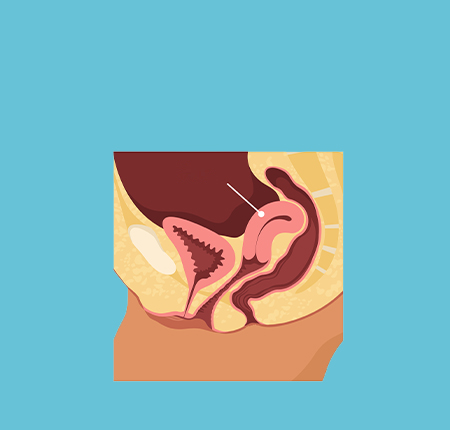
The retroverted uterus in pregnancy
A retroverted uterus doesn't mean your pregnancy will be affected!

Are there particular positions for conceiving with a retroverted uterus?
A retroverted uterus doesn't affect your chances of becoming pregnant. If, however, a condition such as endometriosis, pelvic inflammatory disease or a uterine fibroid is present, these can lead to infertility or reduced fertility. It's therefore advisable to see a doctor if you have worrying symptoms and suspect an underlying condition.
During pregnancy, a retroverted uterus can press more firmly on the bladder, which may cause incontinence in the first few months and sometimes back pain too. On a pregnancy ultrasound, however, retroversion is often only visible once the uterus increases in volume as the baby grows.
And if you're trying to conceive, you can use any position you like during sex, as it has no bearing on the outcome with a retroverted uterus.
Menstruation with a retroverted uterus
You may have wondered: "Does a retroverted uterus affect my period?" The vast majority of women with a retroverted uterus have no problems whatsoever with their menstrual cycle. Even so, some women experience severe cramps or lower back pain before and during their period because of the position of the uterus.
If you struggle with abdominal pain and cramps during your period and would rather avoid painkillers, we recommend a natural method of pain relief: ENROUSH's natural heat patches.

Retroverted uterus – sex life & fertility
In women with a retroverted uterus, the cervix points forward. Some experts recommend that, if you're trying for a baby, you stay lying down after sex with your legs raised higher than the rest of your body, to help the sperm make their way into the uterine cavity. This isn't a rule, though, merely a suggestion – because with a retroverted uterus it's by no means impossible to conceive from any position. It can, however, sometimes be a little trickier.
Retroverted uterus – symptoms
As a rule, a retroverted uterus causes no symptoms. You won't feel any different from a woman with an anteverted uterus. Some women only discover their uterus is retroverted during an abdominal ultrasound scan! That's because it usually goes unnoticed. It isn't impossible, though, for some symptoms to appear – particularly if other gynaecological conditions are present. Common signs may include:
- Pain during intercourse
- Severe cramps during menstruation
- Difficulty inserting a tampon
- More frequent urge to urinate
- A feeling of pressure on the bladder
- Urinary tract infections
- Mild incontinence
Retroverted uterus – causes
A retroverted uterus is not a disorder. It is in fact an anatomical variation that many women are born with or that develops during physical maturation. The causes can also be genetic!
In some women, however, a retroverted uterus can result from medical conditions and illnesses, such as:
- Endometriosis. Endometrial scar tissue or adhesions can cause the uterus to remain in a backward-tilting position.
- Fibroids. Uterine fibroids can cause the uterus to become fixed or distorted, or to tilt backwards.
- Pelvic inflammatory disease. Left untreated, it can cause scarring with an effect similar to that of endometriosis.
- Previous pelvic surgery. Pelvic operations can also cause scarring.
- Chronic infections
- The menopause, through the slackening of the ligaments that support the uterus
Previous pregnancies. In some cases, the ligaments holding the uterus in place become overstretched during pregnancy and remain that way. This can allow the uterus to
Diagnosing a retroverted uterus
Your doctor may identify a retroverted uterus during a routine examination. This can also happen during pregnancy: at an ultrasound scan, your gynaecologist will determine the exact position of your uterus.

And if you have symptoms that worry you, don't hesitate to discuss them with your doctor!
Retroverted uterus – treatment
As for treatment: a backward-tilting uterus is not a disorder and therefore needs no treatment. If other conditions are present, however – such as endometriosis – then treatment and medical advice will be aimed at easing the symptoms of that condition.
Don't forget: you can help prevent hormonal imbalances, allergies and intimate infections by rethinking your care routine during your period – always choose menstrual products you know are free from toxins and chemicals!


Medium, super or extra absorption

Low, medium or super absorption

Low or medium absorption


and happily breaking taboos!


