

What happens in each week of pregnancy?
When you're pregnant, your baby changes every single day – and your body has to keep up. How does pregnancy progress, week by week, month by month? Read our guide to better understand the journey you and your baby are on together.
Pregnancy by week and month – how pregnancy unfolds
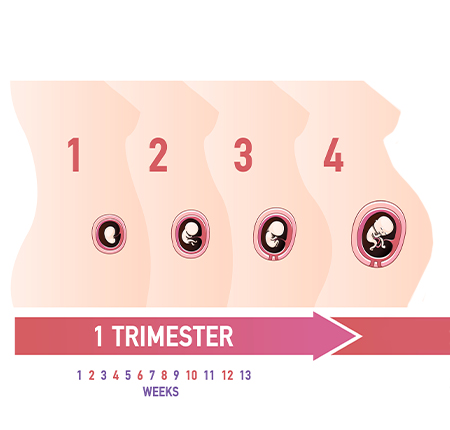
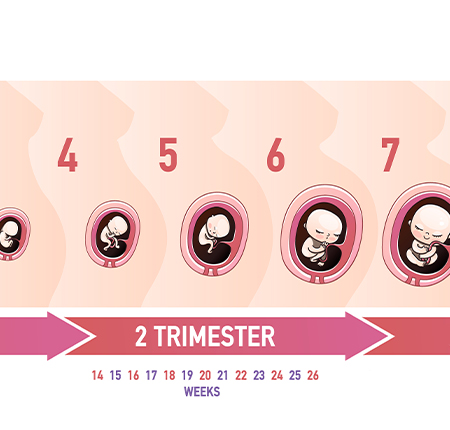
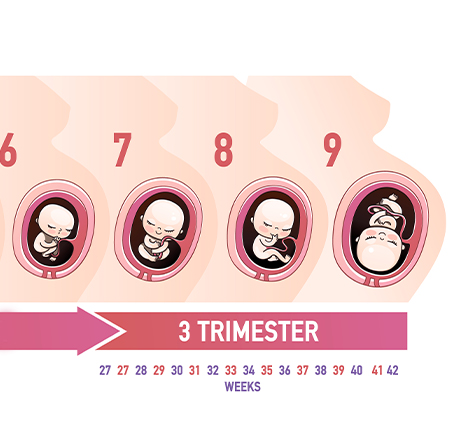
First things first: pregnancy lasts nine months and is divided into three trimesters:
-
1st trimester – weeks 1 to 13
-
2nd trimester – weeks 14 to 27
-
3rd trimester – weeks 28 to 40
Pregnancy weeks are counted from the first day of your last period. During the first trimester you'll also experience rapid hormonal changes that are barely visible from the outside.
The first trimester of pregnancy
The first trimester starts with the first two weeks, during which you aren't actually pregnant yet: this is the time of ovulation! The first sign of pregnancy during these weeks is a missed period – although you may not even know you're pregnant yet. Read more HERE about how to tell whether you're pregnant and what the earliest pregnancy symptoms are. Discover HERE everything you need to know about sex during pregnancy, along with the recommended positions for your comfort and your baby's safety.
Week 1 of pregnancy
This is the week when – if you're hoping for a baby – you watch out for every tiny sign and buy one pregnancy test after another. Most women, however, have no symptoms whatsoever at this stage, because the pregnancy essentially doesn't exist yet.
Implantation only happens a week later, roughly 10 to 14 days after fertilisation, i.e. after unprotected intercourse. Pregnancy tests likewise only detect the hormone hCG around 10 days after fertilisation, once the fertilised egg has implanted and the pregnancy has become established. So in the first week you have practically no way of knowing you're pregnant – and little chance of confirming it.
That said, some women report noticing mild abdominal cramps, tender breasts and persistent tiredness in the first 5–6 days after fertilisation.
Week 2 of pregnancy
In the second week the first symptoms may appear. You notice your period hasn't arrived, you feel more tired, and you may even have spotted a few drops of blood or a pinkish discharge in your underwear (or on your panty liner, if you wear one).
This is implantation bleeding, which occurs around 10 to 14 days after fertilisation. It happens because the fertilised egg is now embedding itself in the lining of the womb – a process that can damage tiny blood vessels in the uterine wall, causing light, short-lived bleeding. If you notice heavier bleeding, or bleeding at another stage of pregnancy, you'll find out HERE what other causes may be involved and when to speak to your doctor.
Also now, from day 10 onwards, you can take your first pregnancy tests to confirm whether you're expecting. As soon as the test is positive, you can go ahead and book your first appointment with your gynaecologist.
Week 3 of pregnancy
Three weeks after the first day of your last period, the fertilised egg travels towards the womb. During this time the following symptoms may appear:
-
Morning sickness
-
Tender or enlarging breasts
-
Needing to wee more often
-
Food cravings
-
Tiredness
-
Dizziness
Week 4 of pregnancy
In week 4 of pregnancy your body begins to form the placenta and the amniotic sac.
You may therefore experience symptoms such as pressure in the abdomen and tender breasts. And as the cluster of cells that will soon be your baby settles into the lining of your womb, you may notice implantation bleeding – although this doesn't always occur.
Despite its tiny size – no longer than 1 millimetre and no bigger than a poppy seed – your little embryo is developing day by day. A visit to your gynaecologist is crucial now!
Week 5 of pregnancy
In week 5 you've reached the second month of pregnancy. This week you can officially take a pregnancy test – because hCG levels are now high enough to give a positive result. A pregnancy test is the most reliable way to find out whether you're pregnant – you can read more about taking your first pregnancy test in our article.
Week 6 of pregnancy
This week the embryo is the size of a pea – your little one's head is taking shape, and the cheeks, chin and jaw are beginning to form.
Symptoms in week 6 may include heartburn, nausea and frequent urination. What's more, the pregnancy hormone hCG increases blood circulation in the pelvic area, which can heighten your sex drive.
Week 7 of pregnancy
In week 7 of pregnancy the arms and legs begin to develop, as does your baby's head, since the mouth and tongue are forming. Even though the pregnancy isn't visible from the outside yet – at 7 weeks nobody can tell you're pregnant – symptoms such as nausea, breast pain, frequent urination, increased saliva, digestive discomfort and tiredness may continue.
Week 8 of pregnancy
This week your baby grows around a millimetre a day – and not just in length: arms, legs, back and other body parts can go through genuine growth spurts.
You may experience headaches, increased vaginal discharge and constipation – on top of the symptoms you've already got used to!
Week 9 of pregnancy
Your baby is the size of an olive! And you may feel utterly exhausted. It's still too early to feel movement, but those muscles are getting stronger by the day. What's more, the embryonic stage is coming to an end and your embryo is now officially a foetus! You've reached month 3 of pregnancy. The tiredness continues, as do digestive problems, cravings and frequent trips to the loo; bloating or constipation may be added to the mix.
Week 10 of pregnancy
You're in the third month of pregnancy, and your baby has officially gone from embryo to foetus. In week 10 of pregnancy a baby bump may slowly start to show (though it's perfectly normal if it doesn't), and you may notice prominent veins and increased vaginal discharge.
This week you may be extremely sensitive to smells, and dizziness can occur. Talk to your doctor about ways to ease the nausea.
Week 11 of pregnancy
By week 11 of pregnancy your baby has developed distinctly human features, including fingers and toes! It's still no bigger than a strawberry, though. The sex can't yet be determined, but if you're expecting a girl, her ovaries are forming this week!
Inside your body, progesterone is playing the starring role: it's doing a wonderful job of supporting a healthy pregnancy, but it can leave you feeling permanently bloated – not especially pleasant. The scientific explanation for the bloating: progesterone slows your digestion down so that the nutrients from your food have more time to reach your baby!
Week 12 of pregnancy
Hard as it is to believe: the foetus has doubled in size over the past three weeks! And in week 12 it takes a giant leap: its digestive system starts working – and you can hear its heartbeat for the very first time!
As you approach the end of the first trimester, your womb – now the size of a large grapefruit – begins to move up out of the lower pelvis, forward and into the middle of your abdomen. The constant need to wee may ease off, and other symptoms may improve too: nausea, tender breasts, food aversions and tiredness.
Look after your health: now is a good time to top up on vitamin C to support collagen production – and don't forget hand hygiene, as your immune system is weaker than usual right now, making you more susceptible to infections.
Week 13 of pregnancy
Keep your fluids up! Drinking enough water is very important. You can also do pelvic floor exercises (we've written more about these here). After all, giving birth is demanding not only for you but also for your pelvic floor muscles, which have to stretch to previously unimaginable proportions! Pelvic floor exercises will therefore help you recover more quickly after the birth.
The second trimester of pregnancy
Welcome to the second trimester of pregnancy! Almost every expectant mum's favourite – and with good reason! As many of the first-trimester symptoms ease off or disappear, you can start to feel more relaxed. Your energy levels return and your breasts are no longer so tender. More good news: less morning sickness and fewer trips to the loo.
Week 14 of pregnancy
In week 14, then, a mum-to-be may feel more energetic – but also considerably hungrier! This week your baby's eyelids cover its fully formed eyes. Your baby can now cry, because it has vocal cords. It may even start sucking its thumb. Nails are forming on fingers and toes.
Week 15 of pregnancy
The foetus looks more and more like a baby. Now that the nausea has passed, you could book a dental appointment, as pregnancy-related problems are possible: redness and inflamed gums are far from unusual! If your gums are more sensitive these days, you can blame the hormones.
Week 16 of pregnancy
This week your baby grows faster, and you may already need maternity clothes! Your womb grows along with your baby – and at quite a pace – so the pregnancy is now clearly visible.
Week 17 of pregnancy
In week 17 your baby is practising. It's now learning to suck and swallow! In fact, it's developing vital survival reflexes.
Week 18 of pregnancy
Your baby's nervous system continues to develop in week 18. A network of nerves is being coated in a substance – myelin – that makes it easier for signals to travel from one nerve cell to another. Your baby is now developing its senses: touch, smell, taste, sight and hearing!
Week 19 of pregnancy
In week 19 you may get calf cramps that cause discomfort. These are painful muscle spasms that can occur during the second and third trimesters.
Week 20 of pregnancy
The foetus is now around 21 cm long. Its ears are fully functional and can pick up muffled sounds from the outside world. The fingertips have fingerprints. The genitals can now be seen on an ultrasound scan! So if you'd like to find out your baby's sex, week 20 is when it's possible!
Week 21 of pregnancy
Your body continues to change in week 21, and stretch marks may appear as the skin stretches – on your tummy, bottom, thighs, hips and breasts. Your appetite will increase and your nails will grow faster. It's a good idea to rest more, but don't skip your daily walks.
Week 22 of pregnancy
If you're 22 weeks pregnant, you're in month 5 of pregnancy! Only 4 months to go! Your womb now sits around 2.5 cm above your navel – it's growing by leaps and bounds. Symptoms this week may include heartburn, cramps, stretch marks and dizziness. Magnesium supplements can help, but speak to your doctor first!
Week 23 of pregnancy
Although at 23 weeks of pregnancy your baby's organs and bones are still visible through its skin, it will become less translucent once the fat stores now developing have been laid down!
Week 24 of pregnancy
In week 24 of pregnancy your wrists and fingers might feel numb. This could be carpal tunnel syndrome.
Week 25 of pregnancy
Blood vessels are developing in your baby's lungs too – one step closer to that first breath of fresh air. But at 25 weeks of pregnancy those lungs are still a work in progress.
This week more than half of all pregnant women struggle with haemorrhoids – caused by pressure from the growing womb and increased blood circulation in the area. And although they aren't dangerous to your health, haemorrhoids can be extremely painful and even cause bleeding.
Week 26 of pregnancy
Your baby's eyes may open this week. For you, pregnancy insomnia and a certain lack of mobility may become more pronounced as your bump continues to grow.
Week 27 of pregnancy
Your baby can hear you, though not yet clearly, because its ears are covered by a protective waxy layer. Your baby may also get hiccups – so if you feel unusual movements in your tummy, it might just be hiccups!
The third trimester of pregnancy
You're in month 7 of pregnancy, and during this trimester your baby starts to experience REM (rapid eye movement) sleep – which means your little one is most likely dreaming!
Week 28 of pregnancy
This week your skin may be more sensitive. Some areas may be dry and flaky, while others develop heat rash or irritation caused by external triggers such as body lotion or face cream.
Week 29 of pregnancy
At 29 weeks of pregnancy your baby weighs around 1 kg and measures between 15 and 16 centimetres. Although that puts it fairly close to its birth length, it still has a lot of weight to gain. In fact, it will double – or almost triple – its weight over the next 11 weeks.
Week 30 of pregnancy
Your ever-growing bump is a clear sign that your baby is getting bigger by the day. Over the coming seven weeks it will put on around half a kilo a week.
Many of the early pregnancy symptoms you thought you'd left behind may return: the constant need to wee, tender breasts preparing for milk production, tiredness and heartburn.
Week 31 of pregnancy
Your baby's brain is becoming more complex and is more active than ever – kicking, thumb-sucking and practising other skills that matter in the real world.
Week 32 of pregnancy
This week your body might start preparing for the big day – and literally flexing its muscles. If you notice your womb tightening or hardening from time to time, these are Braxton Hicks contractions: irregular practice contractions that are first felt around the middle of pregnancy and become more frequent.
They stop when you change position – so try standing up if you're lying down, or walking around if you've been sitting.
Week 33 of pregnancy
Given the hormonal changes, the night-time trips to the loo, the calf cramps, the heartburn and a bump the size of a basketball, it's no wonder sleep is in short supply. Third-trimester insomnia affects around 3 in 4 pregnant women – who are also contending with anxiety about the approaching birth and lie awake running through the to-do list before baby arrives. Be especially kind to yourself this week!
Week 34 of pregnancy
If your baby is a boy, this week his testicles descend from the abdomen into the scrotum.
Your symptoms are the familiar ones: backache, cramps, haemorrhoids, swollen legs, stretch marks and insomnia.
Week 35 of pregnancy
Now that your baby is lying head down in preparation for birth, its head is pressing directly on your bladder. The result? Frequent trips to the loo and urinary incontinence!
Week 36 of pregnancy
Welcome to week 36 of pregnancy – officially the start of month 9. Walking may feel like hard work these days. To ease the discomfort, rest, do some pelvic floor exercises, take warm baths, use warm compresses, book a pregnancy massage with a qualified therapist, or try some complementary and alternative therapies.
Week 37 of pregnancy
At 37 weeks of pregnancy your baby is still growing. At this stage the foetus weighs around 2.5 kilograms. It stretches and shifts about, as things have become rather cramped in your womb – which is why you may feel fewer kicks.
Week 38 of pregnancy
During these final weeks your baby swallows amniotic fluid, some of which passes into the bowel where – along with other cells – it becomes your baby's first bowel movement. The lungs continue to mature.
Most of this week's other changes are small but important: your baby keeps laying down fat and fine-tuning its brain and nervous system – so that it will be able to process all the external stimuli to come.
Week 39 of pregnancy
Week 39 can be uncomfortable. Your pelvis aches more and more, and the Braxton Hicks contractions grow stronger and more frequent – which is a good thing, as it means your body is getting ready for the big event.
Watch out for the signs that labour is starting. These include:
-
Your waters breaking, i.e. the rupture of the membranes holding the amniotic fluid
-
Diarrhoea or nausea, which many women experience just before labour begins
-
Bursts of energy, also known as the nesting instinct
-
The loss of the mucus plug that seals the cervix
-
Blood – this appears when the dilating and thinning cervix causes tiny capillaries to break, giving the discharge a pink or reddish tinge.
Week 40 of pregnancy
At 40 weeks you've reached the official end of your pregnancy. The placenta continues to supply your baby with the antibodies it will need to fight off infections during its first six months of life.
How does your body know it's time to give birth? Just because your doctor has calculated a due date doesn't mean Mother Nature will stick to it. Around 30% of all pregnancies last longer than 40 weeks.
One thing you can be fairly confident about if your waters break before contractions start: labour will begin within 24 hours. How can you tell whether your waters have broken? Amniotic fluid is usually colourless and odourless. Another test: try to stop the flow by tightening your pelvic floor muscles (a Kegel squeeze). If the flow stops, it's urine. If it doesn't, it's amniotic fluid.
Post-term pregnancy
Fewer than 5% of babies are born exactly on their due date, and around 10% decide to stay in the womb for longer. More often than not, a "late" baby isn't late at all – the due date was only ever an estimate and was simply miscalculated, which happens very frequently.
Week 41 of pregnancy
Your body is ready for the birth by now. At 41 weeks of pregnancy your doctor has probably already discussed induction with you – but that doesn't mean labour won't start on its own; some babies simply need a little more time.
Week 42 of pregnancy
You've reached the official end of your pregnancy. Your baby will now most likely be monitored more closely, and in the meantime your doctor may recommend inducing labour.
One sign of approaching labour worth knowing about is mild diarrhoea. This is your body's natural way of making room: the bowel empties so that your baby can pass more easily through the birth canal.
It won't be long now until you're holding your baby in your arms. The postnatal period begins, during which your body recovers – and before long your doctor will also give you the all-clear to resume your sex life.
Your bump week by week
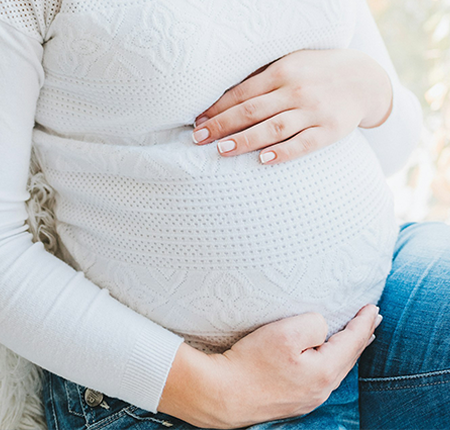
As pregnancy progresses, the shape, size and appearance of your bump change. There's a persistent myth that these changes reveal your baby's sex – in reality, though, the look of your bump depends far more on the mother's body than on the baby growing inside it.
Factors that influence how your bump looks include the mother's body shape and build, muscle tone, height, diet and the number of previous pregnancies. On the other hand, there are some general changes most pregnant women can expect. So here's how your bump is likely to look at each stage:
Your bump in the first trimester
It's very important to include images of how the bump develops over time and to make comparisons (e.g. in the first 3 weeks of pregnancy the foetus is the size of an egg, in weeks 6–7 the size of an avocado)
In the first 3 weeks of pregnancy the embryo is only just implanting in the uterine wall. The pregnancy isn't visible yet and your tummy doesn't change. For some women the pregnancy still doesn't show throughout the entire first trimester, apart from a slight rounding of the tummy due to bloating. While your womb is roughly the size of an orange before pregnancy, by the end of the 1st trimester it has usually grown to the size of a grapefruit.
From week 4 onwards and right through to week 40, however, the changes become more visible week by week. Here's how:
-
In weeks 4–6 your tummy may swell slightly and feel bloated. Your baby grows from the size of a seed to that of a peppercorn.
-
In weeks 7–9 your tummy looks unchanged. The foetus reaches the size of a cherry.
-
In week 10 you may notice your tummy rounding out – particularly if this isn't your first pregnancy or you're expecting twins or triplets. The pregnancy isn't really visible yet, though.
-
In weeks 11–13 the womb begins to expand beyond the pubic bone and the body prepares for the next trimester. Over these three weeks the foetus grows from the size of a fig to that of a lemon.
Your bump in the second trimester
From week 14 to week 27 you'll feel increasingly comfortable and the pregnancy will become more and more visible. By the end of the 2nd trimester the womb is already the size of a basketball – and the bump looks just as round.
-
In week 14 your bump is visible and your baby is the size of a peach.
-
In weeks 15–17 it's a good idea to start shopping for maternity clothes, as your baby grows from the size of an apple to that of an avocado.
-
From weeks 18–19 you'll gain weight steadily and your bump becomes ever more noticeable. If sudden weight gain worries you, mention it to your doctor to rule out any underlying problem.
-
In weeks 20–21 your womb is roughly level with your navel, which may flatten out or pop outwards. The foetus is the size of a banana.
-
In week 22 your womb sits a few centimetres above your navel, and your baby is almost as big as a papaya!
-
In weeks 23–27 the circumference of your bump may double. As the skin on your tummy stretches, stretch marks may appear, and your baby reaches the size of a cauliflower.
This is precisely when you'll hear the myths that a round bump means a boy, while a pointed, melon-shaped bump means a girl. Remember, though: your build and your genetics influence the appearance and shape of your bump far more than your baby's sex or development.
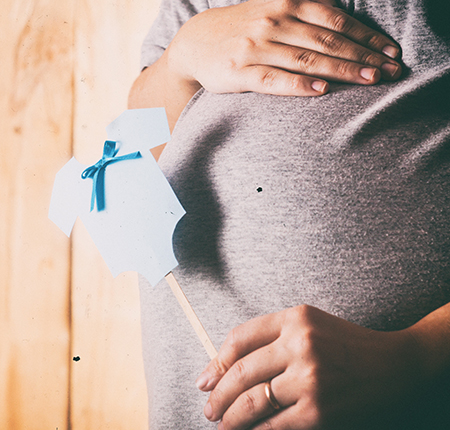
Your bump in the final trimester
From week 28 you enter the final stage of pregnancy, and your womb sits just below your ribs. Weight gain slows down and your baby has less and less room in your tummy – which is why it presses on your bladder and lungs. Hence the more frequent trips to the loo and the tiredness. Here are the other changes awaiting you before the birth, and how your baby grows in these final weeks:
-
In week 28 your baby is the size of a squash, and your bump may protrude slightly to the front.
-
In weeks 29–31 your baby reaches the size of a pineapple, and you'll notice the linea nigra – that dark line on your tummy, which fades after the birth.
-
In weeks 32–36 the pregnancy continues to progress and the foetus reaches the size of a romaine lettuce.
-
In weeks 37–42 your bump will feel heavier and heavier, with increasing pressure. Your baby keeps growing until it reaches the size of a watermelon and may arrive at any point from week 37 onwards.
After the birth the postnatal period begins and you'll experience lochia, but you'll be able to hold and breastfeed your little one. As your body recovers, your tummy returns to its pre-pregnancy shape and your hormone levels gradually find their normal balance again.

Medium, super or extra absorption

Low, medium or super absorption

Low or medium absorption


and happily breaking taboos!


