

What is cervical cancer and how can you prevent it?
Cervical cancer – progression, risk factors, diagnosis & treatment
Cervical cancer is also one of the more common cancers affecting women in the UK. Unfortunately, the healthcare, education and political systems — as well as the media — do little to help raise awareness of the importance of screening, which is absolutely crucial in cancer prevention. The HPV test and the smear test (Pap test) are vital to a woman's health, yet far too few women have them done in good time or on a regular basis — and that comes down to a system that doesn't encourage us to do so.
That's why we've decided to write about cervical cancer, so that you have more information and can find out everything you've ever wanted to know — from the anatomy of the womb to the symptoms, risk factors, diagnosis and treatment options. Read on!
Cervical cancer – what is it?
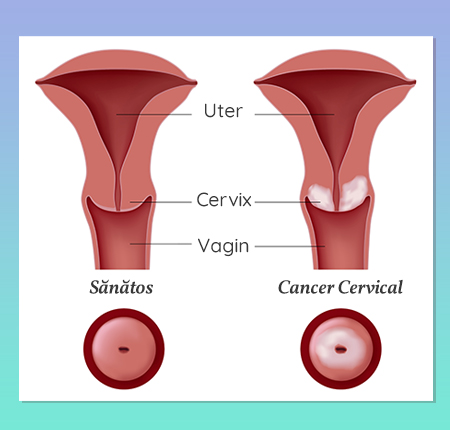
Cervical cancer develops in the cervix, the lower part of the womb that connects to the vagina. The cervix consists of two distinct sections and is covered by two types of cell:
- Endocervix: the part of the cervix closest to the body of the womb, covered by glandular cells.
- Exocervix, or ectocervix: the part bordering the vagina, covered by squamous cells.
Cervical cancer – symptoms
When atypical cells on the cervix begin to multiply uncontrollably, cervical cancer develops. In the early stages, changes to the cervix often cause no symptoms at all. Cervical cancer can therefore only be detected and diagnosed through regular screening!
At a more advanced stage, symptoms such as these may appear:
- heavy bleeding, along with pain in the pelvis or lower back
- foul-smelling discharge
- pain during intercourse and/or bleeding after sex
- bleeding between periods
- anaemia
- sudden, significant weight loss over a very short period
Periods and cervical cancer
Heavy bleeding is usually a sign of conditions such as endometriosis, but — particularly if it persists over a long period — it can also be linked to the symptoms of cervical cancer. A heavy period lasts longer than 7 days, with the need to change your pad or tampon every 2–3 hours. This can be caused by irritation of the cervix — which is why it's important to see a gynaecologist.
Hormonal imbalances and harmful substances in intimate hygiene products can cause heavy or irregular bleeding. So always make sure you use pads made from 100% organic cotton, with no hidden ingredients.
Causes of cervical cancer
Cervical cancer develops from pre-cancerous changes that remain in the body over a number of years. The most common cause is infection with HPV (human papillomavirus) — present in more than 90% of cervical cancer cases. You should know, however, that even if you have an HPV infection, in most cases it will not lead to cervical cancer. Prevention is key, and attending cervical screening whenever you are invited is essential to prevent cervical cancer.
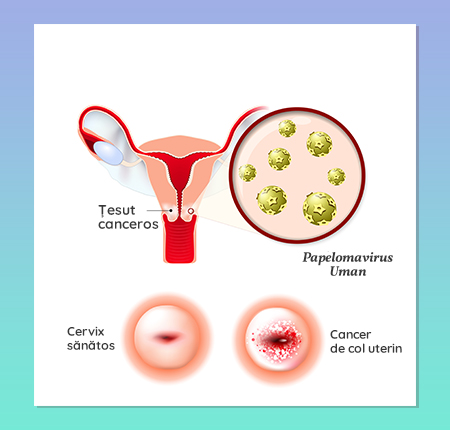
HPV affects the mouth, throat or genital area. Sexual intercourse is therefore not the only way HPV is transmitted. In fact, the virus can be passed on through a cut, a graze or simply through skin-to-skin contact. What's more, someone with HPV can pass on the infection even if they have no symptoms. You can contract HPV through:
- any skin-to-skin contact in the genital area
- vaginal, anal or oral sex
- sharing sex toys
Symptoms may only appear years after exposure to the virus, which complicates matters if you're trying to work out exactly how and when you were infected.
Read more about HPV in an article dedicated to the subject.
Risk factors – HPV & cervical cancer
The risk factors are wide-ranging. The most common include:
- HPV infection
- genital herpes infection (HSV 2)
- HIV/AIDS infection
- chlamydia infection
- poor hygiene on the part of sexual partners
- a history of sexually transmitted infections and diseases
- long-term use of oral contraceptives
PS: The risk of cervical cancer increases if you take the pill for longer than 5 years! Here you'll find everything you need to know about contraception.
- smoking
- immunosuppression
- a lack of vitamins and minerals in your daily diet
- being overweight
- multiple pregnancies
Types of cervical cancer
There are several types of cervical cancer, including:
- squamous cell carcinoma (epidermoid carcinoma), diagnosed in 75% of women with malignant lesions
- cervical adenocarcinoma
- mixed cervical carcinomas
- other malignant tumours involving the cervix
Squamous cell carcinoma
Squamous cell carcinoma accounts for around 85% of all cases of cervical cancer. It develops from the squamous cells of the exocervix, in the outer part of the cervix facing the vagina.
Adenocarcinoma
Adenocarcinoma accounts for roughly 10–15% of all cases of cervical cancer and develops from the mucus-producing glandular cells of the endocervix.
Mixed carcinomas
Rarest of all are mixed carcinomas, which display features of both squamous cell carcinoma and adenocarcinoma.
How cervical cancer progresses
The point in the cervix where these two cell types meet is known as the transformation zone. The precise location of the transformation zone changes with age, as well as through events such as pregnancy and childbirth.
The cells in the transformation zone don't suddenly turn into cancer cells. Instead, the normal cells of the cervix first gradually develop abnormal changes, known as pre-cancerous changes.
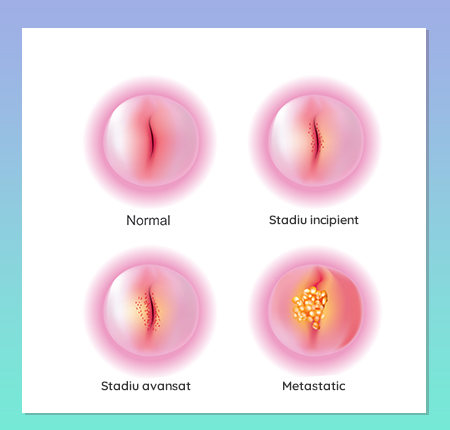
And although cervical cancer begins in cells with such pre-cancerous changes, only some of the women affected actually go on to develop cancer. That's why it's important to go for regular check-ups and not to skip your annual smear test. In most women, the cell changes disappear without any treatment at all. Your gynaecologist can recommend treatment if needed. Left untreated, they can turn into invasive cancer, which progresses through several stages.
Stage 0 – carcinoma in situ
Stage 0 cervical cancer means that only the uppermost layer of cells of the cervix is affected, with no penetration into the deeper layers.
Stage 1 – tumour confined to the cervix
Stage 1 has two phases:
- 1a is when the cancer has penetrated less than 5 mm into the tissue of the cervix and is no more than 7 mm in size.
- 1b is when the cancer has penetrated more than 5 mm into the tissue of the cervix and is larger than 7 mm.
Stage 2 – the cancer spreads to the vagina
In the second stage of cervical cancer, the disease spreads and affects the upper two thirds of the vagina, but not the pelvic wall. Here, too, there are two stages:
Stage 2a means the vagina is affected, and
Stage 2b means the cancer has spread beyond the upper two thirds of the vagina.
Stage 3 – the cancer involves the whole vagina
In the third stage, the cancer affects the lower third of the vagina, in two phases:
Stage 3a, in which the disease does not involve the pelvic wall
Stage 3b, in which the cancer involves the pelvic wall and/or is large enough to block the ureters.
Stage 4 – the cancer also affects other parts of the body
Even before it affects other parts of the body, the cancer can spread within the pelvic area. This marks the beginning of stage 4.
In stage 4a, the bladder and the wall of the rectum, or the lymph nodes in the pelvis, may be affected.
In stage 4b, it can spread to distant organs outside the pelvic area, such as the lungs or bones.
Diagnosing cervical cancer
When it comes to detecting cervical cancer early, screening is the single most important thing. It allows your doctor to identify pre-cancerous changes in good time so that they can be treated. On the NHS, you are invited for cervical screening from the age of 25.
The gynaecological examination
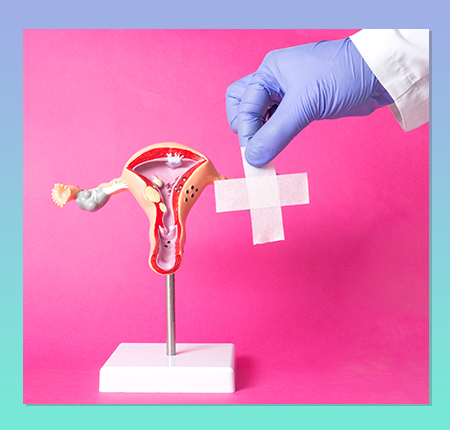
The annual gynaecological examination is important and indispensable for picking up possible problems and potential complications. During the consultation, your doctor will recommend certain tests and further investigations to identify any conditions.
The smear test
The smear test (Papanicolaou test) is one of these tests — and the most important one. Cells are taken from the surface of the cervix and examined under a microscope to detect any abnormal, pre-cancerous or suspicious cells. It isn't, however, the only investigation required to reach a diagnosis.
Colposcopy
Your gynaecologist may recommend a colposcopy — an examination in which the vagina and cervix are assessed. It can be carried out with or without a biopsy, and during pregnancy too. It isn't painful; essentially, it's much like any other examination, such as a smear test. It's best carried out before or after your period, rather than while you're bleeding.
Cervical biopsy
There is also the cervical biopsy. If the biopsy results confirm cervical cancer, your doctor may order further investigations to determine how advanced it is: ultrasound, CT scan, MRI, PET. The next step is to stage the disease.
Cervical cancer – life expectancy
Around 570,000 women worldwide are diagnosed with cervical cancer every year. In terms of cancer deaths, it ranks fourth — after breast, lung and bowel cancer.
Around 3,300 women in the UK are diagnosed with cervical cancer each year and around 880 die from it (Cancer Research UK).
Yet cervical cancer can be successfully prevented and treated using the most effective method of all: regular check-ups with your gynaecologist, plus an HPV test and smear test once a year.You will receive your first invitation around your 25th birthday, whenever you first had sex.
Cervical cancer – treatment
Treatment for cervical cancer is determined by your doctor, depending on the stage of the cancer and other factors that may influence therapy, including general health, age and the patient's personal wishes — because this condition affects fertility and sex life.
Treatment may therefore take the form of:
- surgery
- radiotherapy (X-rays to destroy the cancer cells)
- chemotherapy (substances that destroy tumour cells)
- targeted therapy
Surgery for cervical cancer
Surgical procedures can be carried out in various ways and help both with diagnosing cervical cancer and assessing its stage, and with treating it — particularly at an early stage. Depending on the patient, your doctor may recommend a particular type of surgery, such as cryosurgery, laser surgery, cone biopsy (conisation), total hysterectomy, radical hysterectomy or trachelectomy.
Chemotherapy
Chemotherapy is the method in which substances are given to destroy cancer cells. It can be administered orally or intravenously. Your doctor will determine the dosage and treatment plan so that it is as effective as possible for your particular symptoms.
Radiotherapy
Radiotherapy uses high-energy beams and may be used in advanced stages in combination with chemotherapy. It may also be recommended after surgery if your doctor considers it necessary. Radiotherapy can be given:
- externally, by directing the beams at the affected area
- internally, by inserting a carrier containing radioactive material (into the vagina, for example)
- in combination, both internally and externally
Drug treatment
For advanced cervical cancer, or if the cancer has returned, your specialist may recommend targeted drug therapy. The aim of this medication is to shrink the tumour or prevent it from spreading. Targeted therapy therefore blocks the mutations that encourage cancer cells to multiply.
Recovery after cervical cancer
After cervical cancer, palliative care plays an important role, as it provides support, keeps symptoms under control and helps you improve your quality of life following a cancer diagnosis.
In addition, once treatment has finished and the healing process begins, it's advisable to go for check-ups every 3 months for the first 2 years. After that, these examinations can take place every 6 months.
How you can prevent cervical cancer
First and foremost, use a condom every single time you have sex! That way you'll avoid contracting HPV. The HPV vaccine is important too. Prevention also includes routine gynaecological examinations and regular smear tests, giving up smoking and looking after your general health: vitamins A, C and E and beta-carotene have been linked to a lower risk of cervical cancer.
How important is screening and how often should it be done?
The smear test (Pap test) and the HPV test are the two recommended screening investigations, which pick up possible pre-cancerous changes before they turn into cancer — and could therefore save your life. These tests are simple, painless procedures carried out at your gynaecologist's. Only one sample of cells is needed, because those cells can also be tested for HPV — so you don't need 2 appointments.
On the NHS, screening is offered every 3 years from age 25 to 49 (or every 5 years if your HPV test is negative) and every 5 years from 50 to 64.. The HPV test shows whether you have been infected with the virus. Since December 2019, every NHS cervical screening sample is tested for HPV first, so you do not need to ask for a separate HPV test.
What should you know about the HPV vaccine?
Get vaccinated against HPV! The NHS offers Gardasil 9, which protects against nine types of HPV and reduces the risk of pre-cancerous changes in the cervix. It is free in school year 8 and until your 25th birthday if you missed it. In the UK the vaccine is given in school year 8 (aged 12 to 13) and, if missed, is free until your 25th birthday.
Frequently asked questions
At what age can cervical cancer occur?
The risk of cervical cancer begins with your first sexual intercourse and remains throughout your sexual life. An HPV infection has to persist over a long period and coincide with a number of risk factors — though that's by no means a hard-and-fast rule.
Can you still get pregnant after cervical cancer?
If your womb hasn't been removed and your health is good once you've recovered from cervical cancer, you can become a mother — or a mother again — even after cervical cancer.

Medium, super or extra absorption

Low, medium or super absorption

Low or medium absorption


and happily breaking taboos!


