

5 quick tips for your sexual health
It's hardly news that sex education falls far short both at school and at home – and that's precisely why all of us suffer the effects of missing information on our sexual health throughout our lives. So we'd like to share a few quick tips you can keep in mind like little notes, all about sexual health: from what your genitals need, to lube and testing, to trusting your partner – in other words, all the essentials!
What is sexual health?
Sexual health is an umbrella term covering many factors and meanings. When you read the phrase "sexual health", the first thing you probably think of is the word "sex". But did you know that sexual health is about far more than the act of sex itself?
Sexual health encompasses:
- Sexuality
This includes how you perceive yourself as a sexual being and how you express your actions, fantasies and sensuality.
- Sexual orientation
In other words, who you feel sexually, emotionally and romantically attracted to – including how you identify and how you express that attraction through thoughts and/or behaviour. This also includes asexuality, or the absence of sexual desire and/or sexual attraction. Sexual orientation is fluid and can change over time.

- Gender identity
This is how you feel and identify: as a woman, a man, both, somewhere in between, neither, non-binary, transgender or anywhere on the gender spectrum.
- Gender expression
This refers to how you express your gender identity or identities. It may stay constant or vary from person to person.
- The body and body image
How you feel in your body and how you see yourself.
- Sexual self-esteem
How you see yourself and how you feel as a sexual being
- Sexual and reproductive healthcare
This includes care, access and medical experiences relating to sexual and reproductive health, such as: sexually transmitted infections and HIV, HPV and the smear test, everything about pregnancy tests and much more.
- Reproduction
This covers the reproductive organs, puberty, everything about the menstrual cycle, the menopause, pregnancy, birth, adoption and parenthood. It also includes methods of contraception.
- Violence and coercion
This includes sexual abuse, sexual violence, consent, abusive power dynamics, freedom of expression and the right to live your sexuality or gender identity without intimidation and without fear of violence.
- Consent and boundaries
This covers topics such as the age of consent, understanding consent – verbal or non-verbal – as well as personal boundaries.

- Relationships and intimacy
This is the part of sexual health that relates to different forms of relationships, relationship dynamics and recognising harmful relationships.
- Sexual and reproductive anatomy
How your body's sexual and reproductive organs work – including gender-affirming surgery.
- Pleasure
The ability to receive and experience sexual pleasure – both physically and mentally.
- Sexual activities
The sexual activities you take part in and the sexual communities you belong to. There's a huge range of sexual activities, and what feels pleasurable and satisfying differs from person to person.
- Work
In the context of sexual health, this is about sex work and working conditions in the industry.
5 quick tips for your sexual health
So let's get straight to those tips we mentioned! Here are five of them – we hope they help!
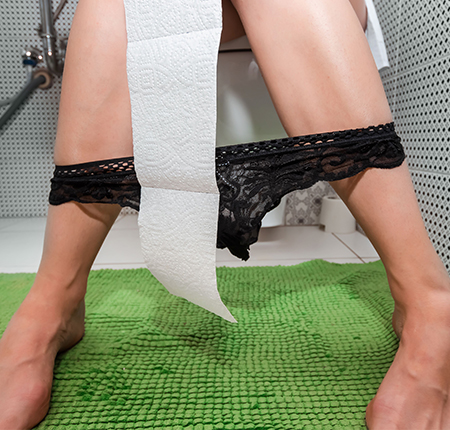
1. Always go to the loo after sex
You've probably heard this one plenty of times! And for good reason! Because peeing after sex is absolutely essential. It's so important to remember, and you really shouldn't skip it! Peeing after sex helps flush out bacteria that have made their way into the urethra – and that's crucial for preventing urinary tract infections (which, from our experience, are truly awful)! Although women are more prone to UTIs, it's not a rule: men can get these infections too. So make sure you always pee after sex!
PS: Peeing after vaginal sex doesn't prevent pregnancy or sexually transmitted infections. For that, you need protection!
2. Use lube
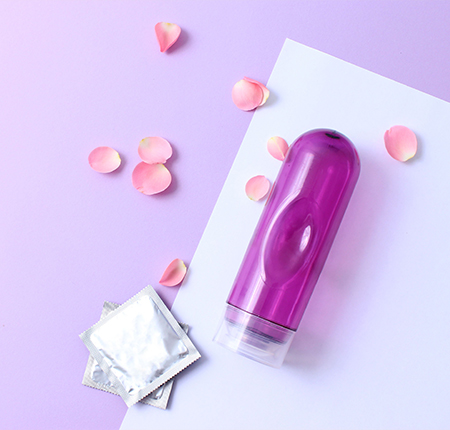
I know what you're thinking: "I don't need that!" Yes, you do. Everyone, everywhere needs lube – and we're sticking to that! It really doesn't matter how much natural moisture your body produces: lube prevents tearing, provides glide and can make everything more enjoyable. Whether you use it with a partner or during a solo session, lube comes in all sizes, scents and flavours. That said, we'd recommend choosing a lube with the most natural ingredients possible – just as we advocate using 100% natural period products. We believe that any product you put on or in your body should be as natural as possible, lube included. It's also important to know which lube is compatible with the condoms and/or toys you use. And if you're not sure where to start: look out for water-based products that are fragrance-free and pH-balanced for the vaginal flora.
3. Get tested
Especially if you have multiple partners or change partners frequently. Although testing for sexually transmitted infections often carries a stigma, it really shouldn't. What's more: every one of us should take responsibility for our own health – and that also means being responsible about protection, communication and consent.
As genital herpes is one of the most common sexually transmitted infections, it's often the case that infected people have no idea they have it. That's exactly why testing matters so much. Because as a rule, symptoms either don't appear at all or go unnoticed. You can read more about sexually transmitted infections (STIs) in our article.
STIs seem more threatening than they are – medicine is making progress, and today we have treatments, tests and answers! Getting tested regularly isn't just respectful, it also takes the stress away and helps you feel more confident.
4. Buy good-quality toys
As mentioned above: we want to know what's in the products we use close to our bodies – and by that we mean condoms, sex toys, lubes, skincare, period products, absolutely everything!
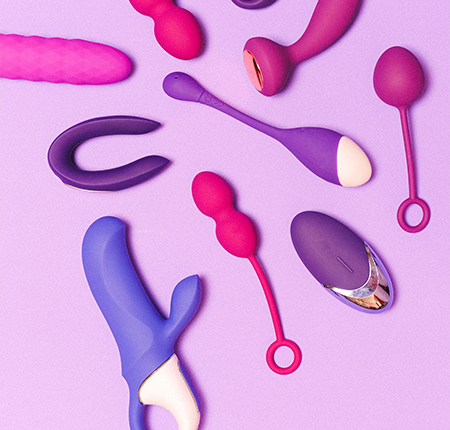
With sex toys, you want to be sure these gadgets are made from body-safe materials. As with any product that comes into direct contact with your intimate area, it's no surprise that it should be as natural as possible. And these days there are countless options: toys made from body-safe silicone, body-safe plastic – whatever you fancy! Another big advantage of good-quality products: they last much, much longer. You can read all about sex toys – how to choose the right one, where to buy it and which are the best – in our article.
5. Work out what you like
Because spoiler alert: knowing what you want boosts your sexual confidence! As you probably know, most of us were never taught to be sexually confident, to know and accept our bodies, to be curious and to talk about sex. But once you start exploring, your confidence in your own sexuality grows – and that can lift your self-esteem too: you feel more comfortable in your body, with your choices and with your sexuality.
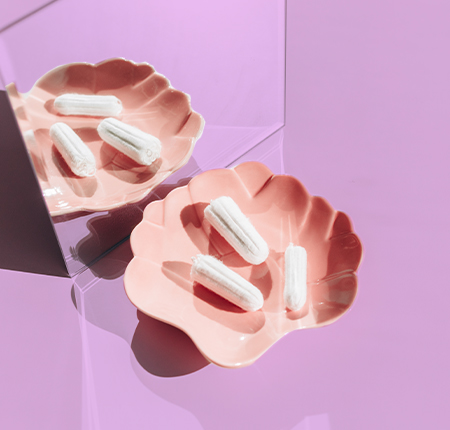
We're convinced it's worth getting to know yourself (better), and it's worth looking after your sexual health. Self-care isn't selfish – quite the opposite! It means love, compassion and being gentler with yourself! Not sure where to start? Discover our period products made from 100% organic cotton and look after your vulva – every day of the month!

Medium, super or extra absorption

Low, medium or super absorption

Low or medium absorption


and happily breaking taboos!


