

The clitoris: from how it works to your orgasms
A mystery to many of us and (still) a contentious subject – much like sex education itself. How about we put one of the most recently fully researched parts of the female body in the spotlight? Throughout history, the clitoris has been stigmatised, but it's never too late to give it a voice. So what is it, what role does it play, and why should you know more about the clitoris? You'll find out in this article.
What is the clitoris?
The main source of most female orgasms – the clitoris – is part of the vulva and sits at its upper portion. It's the most sensitive pleasure zone of our body, yet only a small part of it is visible: the majority lies internally.
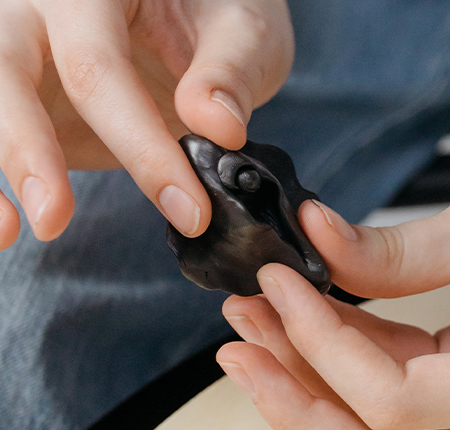
For a long time the clitoris was regarded as the most important female sexual organ – until the 19th century, when this view shifted and the vagina took centre stage (hence the link between female sexuality and childbearing). At the beginning of the 20th century, however, Freud brought the clitoris back into the limelight – and with it the female orgasm. It was the first time there was talk of two types of orgasm: clitoral and vaginal – but more on that later in this article.
Where is the clitoris and what is it made of?
What we see of the clitoris sits at the upper part of the vulva, where the inner labia meet. Beneath the clitoral hood lies the glans – the tip of the clitoris. It contains up to 8,000 nerve endings, more than any other part of the human body (female or male). And if you'd like a comparison: the penis has only around 4,000 nerve endings, and the fingertips about 2,500.
By the way: did you know the first complete 3D representation of the clitoris was only created in 2009?
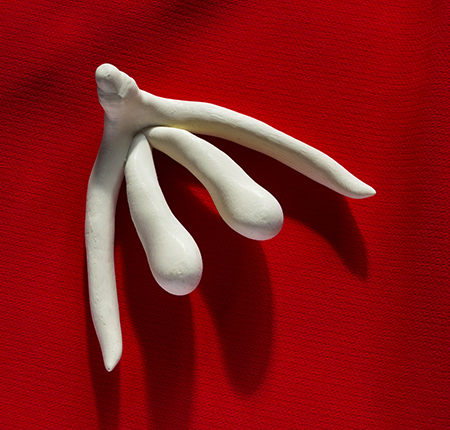
From an embryonic point of view, the clitoris shares the same origin as the penis: both develop from the same anatomical structure.
In adulthood, its internal body divides into two crura, which surround the urethra and vagina. Alongside each "leg" lie the clitoral bulbs, which flank the vaginal walls on both sides.
Think of the clitoris as a starting point: from here, nerve fibres up to 15 cm long run outwards, reaching as far as the inner thighs or various areas of the lower abdomen.
How (and why) the clitoris changes
Here's something you may not have known:
The clitoris is the only part of the human body that never ages.
Studies show that an 80-year-old clitoris works just as well as a 20-year-old one!
Its size, on the other hand, changes over the course of a lifetime. It grows during puberty along with the rest of the genitals, and the size varies considerably from person to person. Hormones partly determine its size – though size doesn't matter anyway, as it has no bearing on the clitoris's sensitivity or on how much pleasure you feel. Length differs, and some people are born with a longer glans. The body of the clitoris typically measures 2–5 cm, the crura around 9 cm and the bulbs 3–7 cm.
What is clitoral stimulation?
For most women, stimulating the clitoris is the surest route to orgasm. It's also the most common form of female masturbation – during menstruation or not, with or without a partner.
Just as pleasure is subjective, there are countless methods and techniques of clitoral stimulation. Some prefer gentle, delicate stimulation and particular sex positions that encourage it; others like it firmer, more targeted or more rhythmic. There's no instruction manual, but there are sexual fantasies and imagination: how hard, how often, how rhythmically, how gently, how firmly or how intensely you stimulate the clitoris to orgasm is entirely down to your preferences. Worth knowing: there are several stages of arousal, and the glans can be so sensitive that direct touch is painful – especially without lubricant.
There are plenty of variations when it comes to cunnilingus too: you might enjoy kisses, gentle nibbling, licking across the whole vulva or between the labia, or a firm massage with the tip of the tongue around the clitoris or directly on it.
Clitoral and vaginal orgasm
When you're aroused, the erectile tissue – that is, the clitoris in its entirety – fills with blood and the nerve endings are stimulated. All parts of the clitoris swell, become firmer, and the clitoris becomes erect. The inner labia can become up to three times their usual size, and the outer labia swell too. The vagina expands, becomes deeper and lubricates naturally, while the glands at the vaginal entrance also release a secretion.
All of this prepares you for orgasm. But what distinguishes a vaginal orgasm from a clitoral one?
Although it's perfectly possible to reach orgasm through penetration alone, the vaginal orgasm (particularly without foreplay or preparation) is rather the exception. Studies show that around 80% of women need more than penetration to reach orgasm – namely clitoral stimulation. Sadly, taboos surrounding pleasure have long held back research in this area, and we still don't know a great deal.
What we do know is that studies already exist on the famous G-spot, and some researchers suspect that the G-spot isn't a distinct anatomical structure at all, but rather the point where the lateral parts of the clitoral bulbs come into contact with the front wall of the vagina. That would mean: a "vaginal orgasm" may in fact be a clitoral orgasm.
Irritation and dryness
But not everything is perfect when we talk about the "centre of pleasure".
Dryness and irritation around the labia and clitoris (not just vaginal dryness) can be common problems. What causes them?
Dryness usually comes from washing the vulva too often and using harsh soaps. On top of that, there's another issue: conventional menstrual products containing plastic and harmful ingredients can trigger irritation and allergies.
A tip: steer clear of overly harsh soaps and opt for cotton underwear and menstrual products made from organic cotton.
In short…
The clitoris:
- is the only organ in the body whose sole purpose is to provide pleasure
- never ages
- has around 8,000 nerve endings – twice as many as the penis
- was only represented in 3D for the first time in 2009
- can be up to 12 cm long
- changes size and colour when stimulated
Read more in the Intimate Diary!

Medium, super or extra absorption

Low, medium or super absorption

Low or medium absorption


and happily breaking taboos!


