

9 well-known myths about menstruation
It might surprise you (or perhaps it's old news by now) that period poverty affects girls, women, and non-binary and trans people all over the world. The lack of safe products, of adequate spaces, and of the right to experience our periods with dignity — all of this shapes our daily lives, and the many myths out there certainly don't help change things.
Even though some superstitions — whatever their origin — may sound rather amusing, they do more harm than good: they perpetuate the very stigma we're working so hard to banish once and for all. Some of these myths are extremely widespread — sometimes they're even taken more seriously than the truth. That's why we're taking a closer look at them in this article.
1. You shouldn't exercise during your period
The truth:
Exercise is actually positively encouraged during menstruation — provided, of course, that you feel comfortable doing it — because it brings plenty of benefits. If you suffer from mood swings, exercise is particularly recommended!
The endorphins released during exercise can ease mood swings. What's more, improved blood circulation helps relieve cramps. Just make sure you always use organic products, and don't be afraid to carry on with your usual activities — but always listen to your body.

Image source: ENROUSH
2. Premenstrual syndrome doesn't exist
The truth:
Premenstrual syndrome does exist and is caused by the hormonal fluctuations that occur throughout the cycle. It manifests as a range of physical and psychological symptoms that vary from person to person: from bloating and breast tenderness to fatigue or mood swings. In addition, dysmenorrhoea — that is, period pain — can range from mild to severe and may be accompanied by other symptoms.
3. You can't get pregnant during your period
The truth:
Such a widespread misconception! Of course the likelihood is lower, but it's entirely possible for an egg to be fertilised during menstruation — especially if you have a shorter cycle. Why? Quite simply: sperm remain capable of fertilisation for two to five days after intercourse. So if you ovulate early and had sex during the last days of your period, fertilisation is possible — particularly as the egg itself can be fertilised for up to 24 hours after ovulation.
That's why it's important to always have protected sex, whether you're on your period or not — unless you're trying to conceive.
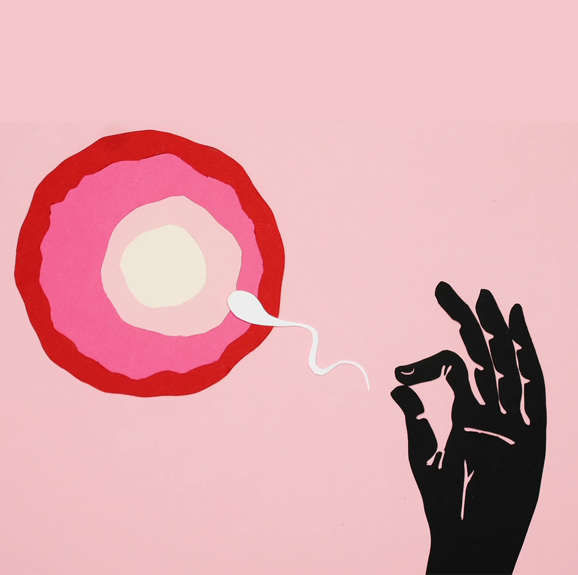
Image source: Pexels.com/Nadezhda Moryak
4. Your cycle syncs up with your friend's
The truth:
There's a very popular belief about women who live together whose periods supposedly synchronise. You've probably heard it too: if you have a flatmate or a close friend you spend a lot of time with, your cycles are meant to fall into line. But it's just a myth — there's no scientific evidence to support it.
5. Menstrual blood is 'impure' blood
The truth:
Menstrual blood consists of blood and the lining of the womb. Sometimes it may appear clotted or darker — and that's perfectly normal.
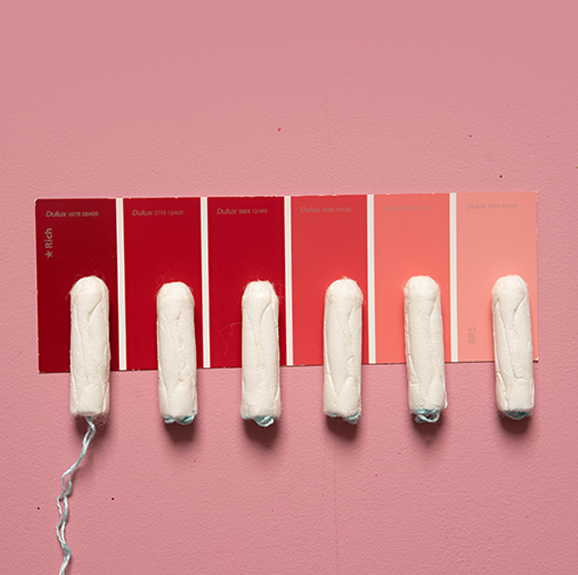
Image source: 123rf.com
And the truth is: menstrual blood is no less hygienic than any other kind of blood or human tissue! It can't survive outside the body without breaking down — and there's nothing about it that makes it 'unhygienic'.
6. You shouldn't swim during your period
The truth:
Swimming during your period is completely safe! The idea that you have to avoid water while menstruating is pure myth. And you may also have heard that swimming in the sea attracts sharks! Thankfully, that's just an urban legend — there's absolutely no evidence that anything of the sort happens in reality.
7. If you use tampons, you lose your virginity
The truth:
Using a tampon during menstruation doesn't change your body in any way. Having sex for the first time is something entirely different from using a tampon. And if you're worried about your hymen, there are a few things you should know about it. The most important: your hymen doesn't 'tear', it stretches. What's more, it doesn't completely cover the vaginal opening — it has a small opening through which menstrual blood can flow out and a tampon can be inserted.
In addition, the hymen can also stretch or tear through an accident, a knock, or intense physical activity. Some people are even born without a hymen! Virginity is a social construct, not a body tissue!
8. An irregular cycle causes infertility
The truth:
It can take six months to a year for periods to settle into a regular pattern. For some people, they never become fully regular. Bear in mind, too, that other factors have an influence: stress, illness, diet or intense exercise. If you have any concerns about your cycle, it's always best to seek medical advice!
9. A cycle must last exactly 28 days
The truth:
That's just an average! The length of the menstrual cycle varies, and your body works differently from everyone else's. In short: it's perfectly normal to have shorter cycles (21 days) or longer ones (up to 35 days). However, if the length of your cycle is worrying you, pay your gynaecologist a visit!

Medium, super or extra absorption

Low, medium or super absorption

Low or medium absorption


and happily breaking taboos!


