

The menstrual cup – what it is, how to use it and how to find the right one for you
The menstrual cup is a reusable product made from medical-grade silicone, shaped like a funnel or ring, which you insert into the vagina to collect menstrual flow (note: it collects rather than absorbs).
Wondering whether it might be a more hygienic, more affordable alternative to pads and tampons? In this article, we answer all these questions. We'll look together at women's real experiences with menstrual cups, their pros and cons, how to use one, how to sterilise it, how to choose the right size and which contraindications you should be aware of.
What is a menstrual cup?
The menstrual cup is a small, reusable product you can use during menstruation to collect menstrual blood. Importantly, it doesn't absorb the blood the way pads or tampons do. It simply collects it, and you empty it before reinserting.
But your questions probably don't stop at what a menstrual cup actually is. You'll also want to know how it works, what it's made of and how long you can use it.
In most cases, the menstrual cup is made from medical-grade silicone. Less commonly, it's made from latex or thermoplastic elastomer. It's bell-shaped and highly flexible, so you can insert it into the vagina to catch menstrual blood.
Once it's full, you need to remove the cup, empty it and wash it before using it again. Between periods, it's also advisable to sterilise the cup so you can continue using it safely. This way, you can use it over a long period, which varies by manufacturer – typically up to around 10 years.
One important note: the menstrual cup is in no way a contraceptive and does not protect you against sexually transmitted infections. Don't confuse it with the contraceptive diaphragm, which serves an entirely different purpose – that is inserted before intercourse to cover the cervix and block sperm.
A brief history of the menstrual cup
Did you know that the first menstrual cup looked nothing like the ones available to us today?
The earliest ideas emerged back in 1867, when Hockert Catamenial Sack patented a "menstrual receiver". The purpose was the same, but the design was completely different. It was essentially a rubber pouch with a ring held in place by a wire, which could be inserted into the vagina to collect menstrual blood. It was more of a conceptual prototype than a genuine cup, and is regarded as a failure because it was too rigid and difficult to manage.
In 1937, Leona Chalmers patented the first commercially viable menstrual cup. It was made of rubber and had the bell shape we still recognise today. After several attempted relaunches, the reusable latex cup returned to the market in 1987 with The Keeper. The 2000s then brought the shift to medical-grade silicone. Mooncup, launched in 2002 by two women from Brighton, was the first menstrual cup made from this material and was still considered something of a taboo at the time.
2018 also saw the arrival of the Ziggy Cup, a reusable silicone menstrual disc with a flat shape, positioned differently from the classic cup – we'll explain exactly how shortly.
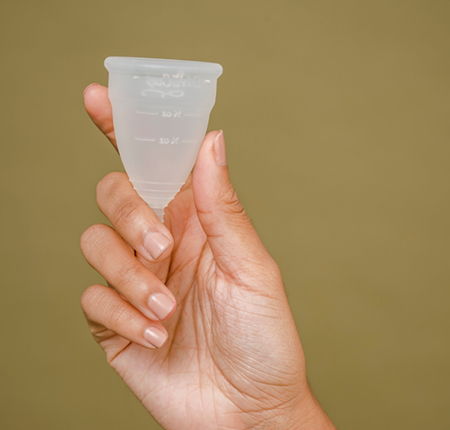
Types of menstrual cup: bell shape vs menstrual disc
There are currently two main types of menstrual cup available to us. There's the classic bell-shaped menstrual cup and the menstrual disc. Some versions also come with an applicator to make insertion easier.
Both collect menstrual blood and both are reusable – the difference lies in their shape, positioning and the way they sit. So how does each one work?
Let's start with the menstrual cup:
- Shape: bell-shaped with a rounded rim and narrow base.
- Position: you insert it into the vagina, with the rim sitting around the cervix.
- Hold: it opens up after insertion and creates a seal against the vaginal walls.
- Compatibility with intercourse: intercourse isn't possible with the cup in place; you need to remove it before penetrative vaginal sex.
- Capacity: depending on the model and size, it can hold roughly 20–40 ml of menstrual blood.
- Emptying: you take it out, empty it and clean it before reinserting.
And the menstrual disc:
- Shape: flat and flexible, rather like a disc.
- Position: you place it higher in the vagina, in the fornix (the recess at the top of the vagina around the cervix), tucking it behind the pubic bone.
- Hold: it doesn't create a seal; it stays in place thanks to its shape and your vaginal anatomy.
- Compatibility with intercourse: you can wear it during vaginal intercourse if you feel comfortable doing so.
- Capacity: it can hold roughly 30–50 ml.
- Emptying: you hook the rim to remove it, then empty and clean it before using it again.
How does the menstrual cup work?
The way the menstrual cup works is fairly intuitive. You fold it before inserting it into the vagina, then let it open up – at that moment it returns to its bell shape. The rim sits against the vaginal walls and creates a seal that prevents menstrual blood from leaking.
You may often have heard that the cup absolutely has to sit very low in the vagina. That's a myth. After you've inserted it, it's normal for it to move higher up, and the exact position varies from person to person. Imaging generally shows that cups can sit quite high in the vagina but don't pass through the cervix. There's no need to worry about it travelling into the uterus – it cannot pass through the cervical opening.
How to use a menstrual cup – step by step
Using a menstrual cup for the first time? Bring a little patience with you. Inserting and removing it may feel more complicated the first few times – and that's entirely normal. Many women need several cycles to find the technique and position that works best for them. So don't panic. With a bit of practice, the whole process becomes easier and easier.
Before insertion (preparation and folding)
First step: wash your hands thoroughly. Moisten the rim of the cup with a little water or apply a small amount of water-based lubricant to make insertion much easier.
Fold the cup using whichever technique feels simplest and most natural to you. The C-fold (folded in half), the 7-fold (folded in half with one corner turned down) and the punch-down fold (where you push part of the rim inwards) are the most common methods.
How to insert the menstrual cup
Choose a position in which you can relax your pelvic muscles. You might sit on the toilet, squat or raise one leg, for example.
Insert the folded cup into the vagina much as you would a non-applicator tampon. Angle it slightly towards the back rather than straight up, let it open out and rotate it gently if needed so that it sits properly.
Run a finger around the rim to check that it has fully opened and the seal has formed. The key thing is to pay attention to how comfortable you feel. When the cup is correctly inserted and positioned, you shouldn't be able to feel it at all.
How long to wear it and how to remove it
Depending on your flow and the manufacturer's instructions, you can wear the cup for 4 to 12 hours – just make sure you don't exceed the maximum recommended wear time.
You could empty it in the morning and evening, for instance, adjusting the frequency to suit your flow.
And how do you remove it? First of all: don't simply pull on the stem the way you would with a tampon string. With a menstrual cup, you insert your fingers and gently squeeze the base to release the seal before pulling it out. Then you can remove it slowly – keeping it as upright as possible so nothing spills.
After emptying it, wash the cup following the recommended intimate hygiene guidance for using the product, before reinserting it.
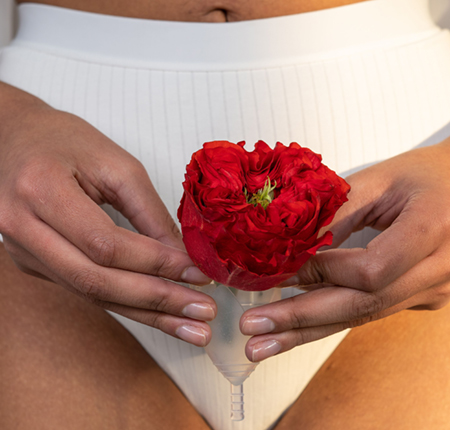
Which menstrual cup size should you choose?
There are several factors to consider when deciding which size is right for you. Cervix height, your flow, the strength of your pelvic floor and your vaginal anatomy all matter.
Manufacturers often use age and vaginal births to recommend particular sizes – but these criteria aren't backed by solid medical evidence. It's far more helpful to measure your cervix height during menstruation in order to choose a suitable cup.
When it comes to sizing, most manufacturers use the S/M/L system. Even so, dimensions and capacity aren't standardised and can vary from brand to brand:
- Size S can hold roughly 15–25 ml and suits a lighter flow and a shorter vagina or lower-sitting cervix.
- Size M can hold roughly 20–30 ml and is an in-between option, suited to a moderate flow.
- Size L can hold roughly 30–40+ ml and is the ideal choice for a heavy flow.
Size isn't the only criterion, either. Also check the material, firmness, flexibility and type of grip (stem, ring or another system) to make sure the cup is right for you. Colour makes little difference – that's purely a matter of taste.
How to clean and sterilise a menstrual cup
It's very important to clean your menstrual cup properly – before the first use, during menstruation and after each cycle. So what exactly needs doing?
Before first use and between periods, the most common sterilisation method is to boil it in water for around 5 minutes, in line with the manufacturer's instructions. Just make sure to avoid prolonged direct contact with the bottom of the pan.
During menstruation, cleaning is simpler. You empty the cup, rinse it with water and – if the manufacturer permits it – use a mild, fragrance-free intimate wash to clean it thoroughly. Rinse away every trace of product very carefully before reinserting, and be sure to avoid perfumed soaps, alcohol and harsh substances that can irritate your mucosa or damage the material. If you prefer, there are also dedicated sterilisers for menstrual cups.
After cleaning it at the end of your cycle, let the cup dry completely and store it in a breathable pouch rather than an airtight container.
And before we leave the topic of sterilisation, one small caveat: the methods described are currently widely used. However, there aren't yet enough independent studies to confirm one universal cleaning method as the most effective for all types of cup.
Benefits of the menstrual cup
The menstrual cup can be a practical, sustainable alternative to disposable period products. From this perspective, menstrual cups support the idea of an eco-friendly period and bring a range of benefits:
- Lower cost in the long run: you can reuse it for several years, doing away with the constant need to buy tampons and organic pads.
- Less waste: you're not throwing away period products after every use.
- High capacity: it can hold more blood than a tampon and you can wear it for up to 12 hours, including overnight.
- A single product for the whole cycle: you don't need several products depending on the day of your cycle or how heavy your flow is. How often you need to empty and clean it does depend on your flow, though.
- It doesn't absorb menstrual blood: the cup collects blood without absorbing vaginal secretions, which means a lower risk of TSS (toxic shock syndrome).
Drawbacks and risks
Just because it offers all the benefits above doesn't automatically mean the menstrual cup suits every woman. Why not?
For one thing, inserting, positioning and removing it can be trickier in the first few months. You may need some trial and error before you find the right technique.
Likewise, it can take several cycles to find the size and firmness that suit you. For some women, a tampon is considerably quicker, more convenient and less "messy" to handle than a menstrual cup.
What's more, the cup requires you to wash your hands beforehand and assumes access to water for cleaning, which can be difficult in certain situations.
Another potential drawback: inserting or removing it incorrectly can cause irritation or small injuries to the mucosa. Allergic reactions to the material are possible, though rare, particularly with products containing latex.
Toxic shock syndrome (TSS) linked to cup use is extremely rare, but the risk isn't zero. That's why it's so important to stick to the maximum wear time and the manufacturer's hygiene instructions.
Contraindications: who it isn't recommended for, and a word of caution with the coil
Do you have a coil (IUD)? If so, you may need to take extra precautions if you'd like to use a menstrual cup.
Some studies have suggested a possible link between cup use and a higher risk of the coil being expelled. Although the evidence isn't sufficient to establish a direct causal link, it's advisable to speak to your gynaecologist before using a cup.
If you do use one, it's important always to release the seal before pulling the cup out, and not to tug on the coil's threads. Check regularly that the threads are still in place, and see your doctor if you notice they've shifted position or you can no longer feel them.
Also consult a doctor if you know you have an anatomical variation of the vagina or uterus, if you experience unexplained pain, recurrent vaginal infections or very heavy periods. In all these cases, it's wise to work out together which period products are better suited to you.
Menstrual cup vs tampon vs pad
You know the benefits, you know the drawbacks – so what do you choose? Menstrual cup, tampon or pad?
The choice depends above all on your personal preferences, your flow and your lifestyle. All of them help you manage your period; the main difference lies in "how". The menstrual cup collects blood, while pads and tampons absorb it. To help you compare them more easily, here are the key characteristics of each type of product.
The menstrual cup:
- Collects menstrual blood in a reusable container.
- You can wear it for up to 12 hours, depending on your flow.
- It can usually hold more than a tampon.
- The cost is generally higher initially but lower in the long run.
- It has a low environmental impact, as it creates far less waste than disposable products.
- The TSS risk is very low, but not zero.
- It requires more practice at first, as well as cleaning and sterilising.
Tampons:
- Are single-use products that absorb menstrual blood.
- You can usually wear them for up to 8 hours.
- Absorbency varies according to size.
- You have to keep buying them throughout your period.
- They create waste after every use.
- There's a very small risk of toxic shock syndrome, which is why it's important never to exceed a wear time of 6–8 hours.
- They're usually easier to use from the very first attempt.
Pads:
- Absorb menstrual blood outside the body, without being inserted into the vagina.
- Need changing according to your flow and their absorbency.
- Need buying regularly.
- Are single-use and therefore create waste.
- Aren't associated with TSS, as they're used externally.
- Are considered the easiest to use.
So if you want a reusable product and a long-term solution, the menstrual cup could suit you well. Tampons and pads may be more practical if you prefer disposable products that are simpler and more comfortable to use.
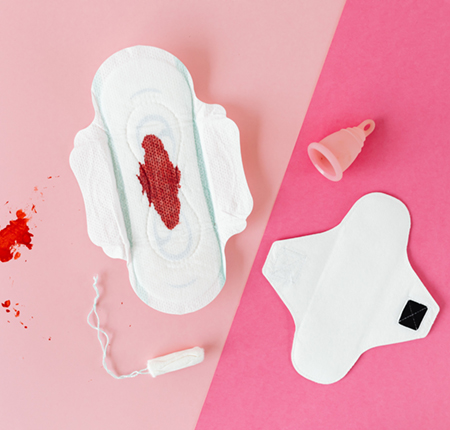
How much does a menstrual cup cost and where can you buy one?
The price of a menstrual cup isn't uniform. Factors such as material, brand and design can push the price up considerably. As a rule, though, a menstrual cup costs between roughly £12 and £35. Models with an applicator and certain menstrual discs can be a little more expensive.
Where can you find them? You can buy them in pharmacies, in online shops, in specialist intimate health retailers or from personal care suppliers.
Overall, although the initial outlay is higher than a pack of pads or tampons, reusing it over several years can bring the cost down considerably in the long term.
Experiences with the menstrual cup
Every woman's experience with menstrual cups is unique. Many users report, however, that the beginning is the hardest part. It can take several cycles to learn the right fold for insertion, find the position that works for you and get used to removing the cup easily. Once that settling-in period is over, though, many women appreciate the comfort, the greater capacity and the fact that they don't have to change the product as often as a pad or tampon.
Two further benefits mentioned by many users are the sense of freedom when sleeping, exercising or travelling, and the long-term savings. On the other hand, there are also women who find emptying and cleaning the cup less pleasant, particularly when there's no washbasin nearby.
Ultimately, then, the right choice depends not only on anatomy, flow and cost, but also on each woman's personal comfort and preferences.
Frequently asked questions
Still have questions about using a menstrual cup or choosing the best option for you? That's perfectly normal – all these questions are entirely understandable before trying a new product. That's why we've put together specific answers to the most common questions about menstrual cups below.
What is a menstrual cup and how does it work?
The menstrual cup is a reusable, flexible, bell-shaped product, usually made from medical-grade silicone, which is inserted into the vagina and – unlike a tampon – doesn't absorb menstrual blood but simply collects it.
Can you urinate with a menstrual cup in?
Yes. The cup sits in the vagina, while urine passes through the urethra – two separate channels. If you feel pressure or difficulty when urinating, the cup may not be positioned correctly.
Is the menstrual cup suitable for virgins?
Yes, people who haven't had sexual intercourse can also use a menstrual cup. Insertion may stretch the hymen and cause discomfort – but this simply means you should choose a suitable cup and insert it gently.
Can you use a menstrual cup with a coil?
Using both together is possible, but caution is needed: always release the seal before removing the cup. It's advisable to speak to your gynaecologist, as some studies point to a possibly increased risk of the coil being expelled.
How long can you wear a menstrual cup?
Depending on the model and your flow, you can wear the cup for up to 12 hours. Make sure not to exceed the maximum time specified by the manufacturer, so as not to increase the risk of toxic shock syndrome. With a heavy flow, you should empty it often enough.
How do you sterilise a menstrual cup?
Once your period has ended, you can boil the cup for around 5 minutes, provided the manufacturer permits this method. Check and follow the product instructions. Don't forget to let the cup dry completely before storing it.
Does the menstrual cup hurt?
The cup shouldn't cause pain if you insert and position it correctly. Slight discomfort can occur at first, but if the pain persists, remove the cup and check its size and positioning.
Can the cup get lost inside the body?
No. The cup can't pass through the cervix or travel into the uterus. It may move higher up the vagina, but you can remove it without difficulty if you relax and gently grip the base of the cup.
Can you sleep and exercise with a menstrual cup in?
Yes. You can wear the cup while sleeping and during physical activity, including swimming. Just make sure it's positioned correctly and stick to the maximum wear time.
Image sources: Pexels.com

Medium, super or extra absorption

Low, medium or super absorption

Low or medium absorption


and happily breaking taboos!


