

Menstruation – Blessing or Curse?
Who invented menstruation? No, seriously.
We want to know who's responsible for our monthly bleeding. But before we can work that out, let's start right at the beginning…
What is menstruation?
Menstruation is monthly vaginal bleeding, during which blood and tissue from inside the womb are shed through the cervix and vagina.
Typically, menstruation:
- occurs every 21 to 35 days, on average every 28 days
- lasts between 2 and 7 days
- involves shedding roughly 40 to 80 ml of blood and tissue
The cycle isn't the period, and the period isn't the cycle…
Each month, menstruation sheds the womb lining that your body has built up to support a possible pregnancy. If an egg isn't fertilised and no pregnancy occurs, the womb sheds the tissue it has built up.
That might sound complicated, but it isn't. Throughout the entire menstrual cycle, your body works on the basis of hormonal signals – and this cycle can be divided into three phases: the follicular phase, the ovulatory phase and the luteal phase.
During the follicular phase, under the influence of follicle-stimulating hormone (FSH), a follicle (a small sac within the ovary) is selected in one of the ovaries for ovulation. Oestrogen levels in the bloodstream rise and the womb lining begins to thicken.
The ovulatory phase begins with a massive surge of luteinising hormone (LH), and the egg is now ready to be released. If fertilisation doesn't take place within 24 hours, the unfertilised egg breaks down.
After ovulation comes the luteal phase. This lasts 14 days on average (provided you're not pregnant) and ends with day 1 of your next period: progesterone levels fall and the cycle begins again.
Can your cycle change?
Yes. After your first period, changes in the length or intensity of your cycle and your bleeding are completely normal – even several years on. These changes also depend on other factors, for example:
- Stress
- Diet
- Emergency contraception
- Certain medications
- Excessive physical exertion
- Polycystic ovary syndrome
- Thyroid disorders
- Other conditions (endometrial polyps, uterine fibroids)
There are also irregular cycles, in which ovulation doesn't happen every month. If the changes are very pronounced or very frequent, however, it's best to see a doctor.
Now that we've covered the basics, let's talk briefly about what it means for menstruation to be a blessing or a curse. So read on and find out more!
The curse: why is menstruation painful?
Cramps are real. In fact, period pain, medically known as dysmenorrhoea, is a typical part of menstruation. It occurs before or during bleeding and can vary in severity. It's thought that 50% to 80% of women experience dysmenorrhoea at some point in their lives. It's also the most common reason for gynaecological consultations and one of the leading causes of absence (from school or work).
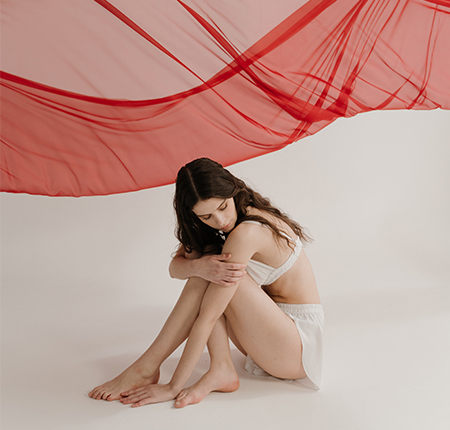
Image source: Pexels.com/cottonbro
The direct cause of dysmenorrhoea is an excess of "super hormones" that trigger contractions of the womb (prostaglandins), along with raised levels of certain chemical substances involved in inflammatory responses. Worth knowing: there are two forms of dysmenorrhoea – primary and secondary.
Primary dysmenorrhoea is the most common form of period pain.
These cramps last between 8 and 72 hours.
The pain may be premenstrual (around two days before bleeding starts) or menstrual (beginning as the bleeding starts). The cramps can vary in intensity and may be accompanied by general malaise, nausea, diarrhoea and fatigue, headaches or back pain.
Secondary dysmenorrhoea, a less common condition, arises on the basis of conditions such as:
- Endometriosis
- Adenomyosis of the womb
- Fibroids and polyps
- Pelvic inflammatory disease
- Hormonal disorders
This secondary pain may begin earlier in the menstrual cycle and last longer. It can also become more intense over time and be accompanied by considerably heavier bleeding or pain during sexual intercourse. If you experience pain like this, you should see your gynaecologist.
That said, there are also a few tricks that can help you feel better throughout your entire menstrual cycle.
Can we get rid of period pain?
The best-known ways to ease period cramps are heat and medication. There are, however, plenty of alternatives we'd love to share with you.
Ultimately, you know best what your body needs at any given moment of the day. And before we go into detail, we have to say quite plainly: you should avoid conventional, non-organic tampons and pads. They're full of chemicals and toxins that can make cramps worse. So make sure you always choose period products made from 100% organic cotton – without chemical dyes, chlorine, dioxin or synthetic fibres. Once you switch to the purest materials, cramps become less frequent and less intense.
Of course, pain can be treated as and when it arises with anti-inflammatory painkillers or antispasmodics – your doctor can recommend the right treatment for you.
If you need extra support (or medication isn't working well enough), a hot water bottle or heat pad on your tummy, or a relaxing bath, will help you unwind and loosen your muscles.
Because ultimately, you shouldn't have to suffer during your period. On the contrary: it can be a blessing too!
The blessing: your menstrual cycle teaches you more about yourself
So what does this blessing actually mean? Everyone who menstruates is unique. We don't necessarily have the same experiences, but we're all connected and aware of this incredible process – a process without which human life couldn't exist.
It's hugely important to share these experiences with other people, whether they menstruate or not, so we can grow, learn and understand more about our bodies. And for that, menstruation itself is extremely important!
Some studies suggest that monthly bleeding may slow the ageing process – whether that's true or not, one thing is certain: menstruation can show us whether our hormones are in balance or not. It can help us understand what's going on with:
- Hormones
- The skeletal system
- The thyroid
- Metabolism
- Energy levels
- Emotional wellbeing
Your cycle is unique. And it's very important to know more about what it means and how it can affect you day to day. Of course, it's possible to live without menstruating: for some women it's actually better for it to be suppressed – with endometriosis, for example.
Either way, menstruation can be a blessing from another perspective too – it's a good excuse to take more care of your wellbeing and show yourself some kindness!
How to turn your period into a self-care ritual
There are plenty of things that can help you feel better during your period and, of course, get rid of those painful cramps. You can practise them on any day of your cycle, as part of your lifestyle. For instance, it helps to:
- Eat a balanced, healthy diet. The right supplements can also help reduce the risk of inflammation in the body.
- Drink enough fluids. Good hydration is important and can reduce bloating during your cycle as well as muscle aches.
- Enjoy a herbal tea. Herbs and plants are well known for their therapeutic properties – so how about a peppermint, chamomile, ginger or fennel tea?
- Use only organic pads & organic tampons. Period products should be 100% organic. Non-organic products contain plastics and chemicals that seriously disrupt hormonal balance. Did you know that all those toxins in conventional products can make cramps worse?
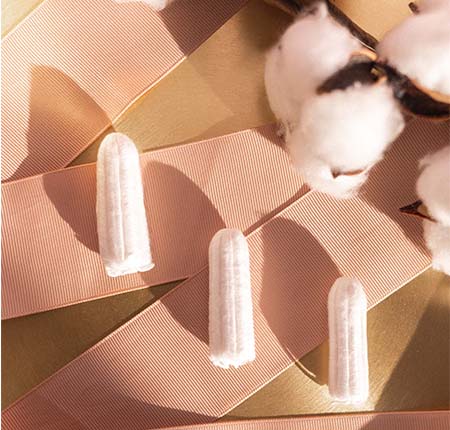
Image source: enroush.ro
- Try aromatherapy or massage with essential oils – they can help you relax with ease. Choose lavender, clove, rose or sage oil, or simply blend your own combination!
- Give CBD oil a go. Several studies have shown anti-inflammatory, pain-relieving and mood-lifting effects of CBD oil, particularly for menstrual discomfort.
- Stay active. The endorphins released during physical exercise can improve how you feel overall and ease pain and cramps. Regular walks, yoga or stretching all help.
- Invest in a vibrator or a sex toy. It's hardly a surprise any more that vibrators stimulate blood circulation and oxygenate the muscles. Sex toys also trigger waves of pleasure and can therefore free you from cramps. So you really can't lose :P
- Sleep more. Sleep is essential, especially during your period. A lack of sleep can raise your stress levels generally – whereas enough sleep helps you relax your muscles and recover from stronger cramps.
Image source: Pexels.com/cottonbro
Rituals, routines and natural home remedies practised throughout your whole cycle can help you come to terms with your own menstruation and create pleasant experiences. You could even start by setting up a period-friendly space. If your pain has other medical causes, however, do see a doctor. They can recommend suitable treatment and give you the best advice.
Create a period-friendly space
Whether at home, at school or at work – a period-friendly space can fundamentally change the way you experience your period. It can enrich a self-care ritual and help you learn more about your body, accept it and push back against the stigma surrounding menstruation.
It's up to each and every one of us to (re)define that space. And it's not an impossible task – quite the opposite! A small basket of tampons and pads at home or at work is enough. A simple practice that also helps you become more conscious of the choices you make about period products.
Add all the little things that make you feel good: scented candles, something sweet (ideally sugar-free, since sugar isn't exactly kind to the body), essential oils, a few bags of soothing tea, a hot water bottle or heat pad, and so on. You know yourself best.
And what about you? How do you pamper yourself during your period? And above all: what do you use to ease cramps? Share it with us!

Medium, super or extra absorption

Low, medium or super absorption

Low or medium absorption


and happily breaking taboos!


