

Artificial insemination: what it is, how it's carried out and what the chances of success are
Artificial insemination is an assisted reproduction procedure in which sperm is placed into the womb during the ovulation phase in order to improve your chances of becoming pregnant. Your doctor may recommend this approach for certain forms of infertility or if you are having difficulty conceiving – it is one of the least invasive treatment methods available.
Longing for a baby but it simply isn't happening? The road to pregnancy can be accompanied by a great many questions and emotions. And when pregnancy is slow to arrive, you may well wonder whether artificial insemination could be an option for you. The fact is that for many couples, IUI represents the first step in assisted reproduction. It is simpler and less invasive than in vitro fertilisation. In our article you'll discover how it works, when it is recommended and whether it offers you realistic prospects of success.
What is artificial insemination?
Before we walk through the procedure step by step, let's first answer the most fundamental question: what exactly is artificial insemination? How does it work and what does it involve?
Artificial insemination, also known as intrauterine insemination (IUI), is a form of medically assisted reproduction. Sperm is introduced directly into the uterine cavity during the ovulation phase, making it easier for it to meet the egg. The aim of the procedure is to increase your chances of fertilisation when pregnancy does not occur naturally. This is precisely why doctors only recommend the method for certain forms of infertility and after a medical assessment of both partners.
Compared with other assisted reproduction techniques, such as in vitro fertilisation (IVF), artificial insemination is less invasive, as fertilisation takes place inside the woman's body – in the fallopian tube – rather than in the laboratory.
- Artificial insemination (IUI) is one of the simplest assisted reproduction procedures.
- Sperm is placed directly into the womb during the ovulation phase to increase the chances of fertilisation.
- Fertilisation occurs naturally inside the woman's body rather than in the laboratory, as is the case with IVF.
Types of artificial insemination
The medical literature classifies the procedure according to where the sperm is placed (the womb or the cervix) and where it comes from (partner or donor). In clinical practice, intrauterine insemination (IUI) is the most commonly used method, but there are other forms of artificial insemination that are recommended in particular situations.
Intrauterine insemination (IUI)
Intrauterine insemination (IUI) is the most widely used form of artificial insemination.
The sperm is prepared in the laboratory in order to select the cells with the best motility, and is then placed directly into the womb using a fine catheter. This shortens the distance the sperm has to travel to reach the egg, which can improve the chances of fertilisation.
Intracervical insemination (ICI)
With intracervical insemination (ICI), the sperm is placed at the cervix rather than being introduced into the uterine cavity. The procedure is simpler than IUI.
However, precisely because the sperm has to travel through the cervix and the womb itself to reach the egg, ICI has lower success rates and is used less frequently in fertility clinics.
Insemination with partner sperm vs donor sperm
Artificial insemination can be carried out using either the partner's sperm or donor sperm. In most cases, couples prefer to use the partner's sperm.
There are, however, situations in which this approach does not lead to success. If, for example, the partner has severe male infertility, there is a high risk of passing on a genetic condition, or a woman wishes to become pregnant without a male partner, the doctor may recommend the use of donor sperm – within the framework of the relevant legislation and the guidelines of the particular fertility centre.
When artificial insemination is recommended
For certain forms of infertility – where the doctor sees a realistic chance that fertilisation will occur naturally once the sperm has been placed in the womb – they may recommend artificial insemination.
What does the specialist check before deciding whether artificial insemination is appropriate? First of all, whether you are ovulating or whether ovulation can be induced with medication. They will also check that your fallopian tubes are patent.
Broadly speaking, the procedure is recommended in situations such as these:
- Unexplained infertility, where investigations reveal no clear cause for the difficulties in conceiving
- Mild male infertility, such as a low sperm count or reduced sperm motility
- Ovulation disorders, including polycystic ovary syndrome (PCOS)
- Mild endometriosis, provided the fallopian tubes are patent and the ovarian reserve is adequate
- Cervical factor (hostile cervical mucus), where the cervical mucus prevents the sperm from passing through
- Use of donor sperm, for example where there is a risk of passing on a genetic condition, or for women pursuing assisted reproduction with donor sperm.
When it is NOT appropriate (contraindications)
Artificial insemination is not suitable for every form of infertility. Where the chances of pregnancy are low even when the procedure is carried out correctly – for instance with bilaterally blocked fallopian tubes or severe male infertility – the doctor may recommend going straight to in vitro fertilisation (IVF), as this offers better prospects of success.
In general, artificial insemination is not appropriate if:
- both fallopian tubes are blocked, since the egg and sperm cannot meet for fertilisation to occur
- there is severe male infertility, such as a very low sperm count or very significantly reduced motility
- your ovarian reserve is markedly reduced or you are of an advanced age, which means the likelihood of IUI succeeding is low.
How to prepare for insemination
As part of the preparation for artificial insemination, both you and your partner will undergo tests to confirm that the procedure is suitable and to identify any possible causes of infertility.
You will have your ovulation and the patency of your fallopian tubes checked, your partner will provide a semen analysis, and you will both be tested for certain infections.
Also in advance of the procedure, you will be advised to take folic acid – for at least a month beforehand – and to make certain lifestyle adjustments. You will be advised to stop smoking if you smoke, to cut down on alcohol, to eat as balanced a diet as possible and to maintain a normal body weight, all of which will improve your chances of becoming pregnant.
Artificial insemination – the procedure step by step
Wondering with some trepidation how artificial insemination is carried out? You can rest assured: the whole process is minimally invasive and does not require an anaesthetic. What's more, your doctor will guide you through every step and give you all the information you need.
Below we explain the stages involved in insemination and how each one works – so that you know exactly what to expect.
Ovulation monitoring and ovarian stimulation (natural vs stimulated cycle)
If you ovulate regularly, the procedure can be carried out in a natural cycle. If not, it may take place in a stimulated cycle. The specialist will then prescribe certain medications to encourage the development of a follicle.
The doctor monitors your ovulation using ultrasound and, where necessary, hormone tests, and schedules the insemination for the optimal moment – roughly 24 to 36 hours after the trigger injection for ovulation.
Preparation of the semen sample (sperm washing)
On the day of the procedure, the semen sample is provided and prepared in the laboratory. Specialists use a technique known as sperm washing to remove the seminal fluid, non-viable cells and other components that could trigger contractions of the womb.
Only the sperm with the best motility and fertilising capacity are selected.
The insemination itself
The prepared sperm is placed directly into your womb using a fine, flexible catheter passed through the cervix.
The procedure is quick, usually taking no longer than 5 to 10 minutes, and requires no anaesthetic. At most you will feel mild discomfort, similar to having a smear test.
After the procedure (immediate recovery)
Following the insemination you will stay at the clinic for around 10 to 15 minutes, after which you can resume your normal daily routine.
You may experience mild cramping or notice a few spots of blood – this is usually normal and passes quickly.

What happens after insemination: the waiting period
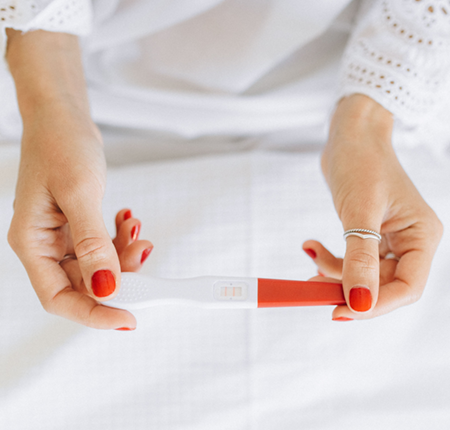
We know how desperately you want to find out whether the procedure has worked, and that you are probably asking yourself every day when you can test after insemination. But as your specialist will also tell you, immediately after the insemination the so-called two-week wait begins.
In other words, you will be advised to wait 14 days before taking your first pregnancy test, so that the result is as reliable as possible. Testing too early can give a false negative result or, conversely, a false positive if you were given hCG to trigger ovulation.
During this time it is normal to notice mild cramping, slight discomfort or even a few spots of blood.
Bleeding may even indicate implantation bleeding, which typically occurs 6 to 12 days after ovulation. You can easily distinguish it from a period by the much smaller amount, which isn't enough to fill a pad or a tampon.
It is important, however, not to be discouraged if implantation bleeding doesn't occur. Not all women experience this, and its presence or absence neither confirms nor rules out pregnancy – so there's no need to worry.
Warning signs that should alert you and prompt you to speak to your doctor straight away include severe lower abdominal pain, fever and heavy bleeding. These are not normal and may indicate an infection or various complications, so they need to be investigated urgently.
Success rate of artificial insemination
The likelihood of artificial insemination succeeding differs from couple to couple. Most studies put it at between 7 and 20%, but the decisive factors are the mother-to-be's age, the causes of infertility, sperm quality, ovarian reserve and the setting in which the procedure is carried out – a natural or a stimulated cycle. As a guide, the chances of success per cycle are:
- Under 35: around 10–20%
- 35–39: around 10–15%
- Over 40: under 10%
Please bear in mind that these figures are indicative and may vary depending on the diagnosis and treatment protocol.
It has been observed that the success rate for insemination is generally around 10 to 15% per cycle, particularly in younger women. The chances increase with repeated attempts, reaching around 50% after 3 to 4 cycles, but do not rise further beyond that. If pregnancy has not occurred after 3 to 6 insemination cycles, your doctor will reassess the situation and consider other approaches, including in vitro fertilisation.
Risks and possible complications
There aren't many risks associated with artificial insemination. It is considered a safe procedure and complications are rare. The most common are mild cramping, slight discomfort or spotting after the catheter has been inserted.
There is indeed a small risk of ovarian hyperstimulation syndrome (OHSS) if the procedure is preceded by ovarian stimulation, i.e. in a stimulated cycle, as well as an increased risk of a multiple pregnancy if several follicles develop.
If you develop a fever, severe abdominal pain or foul-smelling discharge, prompt medical assessment is needed, because – although it is rare – there is a certain risk of infection following insemination.
Artificial insemination or in vitro fertilisation (IVF)?
Both artificial insemination (IUI) and in vitro fertilisation (IVF) are assisted reproduction methods. They differ, however, in how fertilisation takes place and in the medical indications associated with each.
With artificial insemination, fertilisation happens inside your body, in the fallopian tube. The procedure is straightforward, minimally invasive and requires no anaesthetic; it is recommended for mild or unexplained infertility. The success rate, however, is lower.
With in vitro fertilisation, fertilisation takes place in the laboratory. The procedure is more invasive, as it requires eggs to be collected, but it generally has a higher success rate. It is usually recommended for moderate or severe infertility, or where IUI has been unsuccessful.
In short, artificial insemination is often the first step on the assisted reproduction journey. And if pregnancy has not occurred after a few cycles, or if there are factors that significantly reduce the chances of success, your doctor may recommend moving on to in vitro fertilisation.
How much does artificial insemination cost?
The cost of artificial insemination varies first and foremost from clinic to clinic, but also depends on what the procedure includes. The type of cycle (natural or stimulated), the medications used to stimulate ovulation, the number of ultrasound scans and tests needed for monitoring, the laboratory preparation of the semen sample and, where applicable, the use of donor sperm – all of these affect the final price. In the UK, private IUI costs about £700 to £1,600 per cycle (NHS), and IUI is available on the NHS in some areas depending on local funding rules - ask your GP.
The emotional side: how to get through this journey
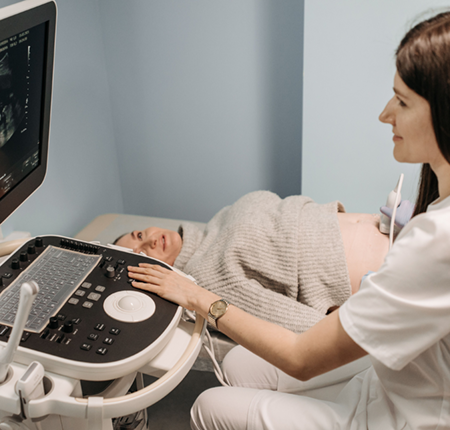
The road to pregnancy and motherhood can be just as demanding emotionally as it is medically. Hope, impatience, turbulent feelings and the fear that the procedure might not work are entirely natural – and it's normal for them to intensify during the wait between the insemination and the pregnancy test.
What matters for your emotional wellbeing is recognising that just because one insemination cycle doesn't produce the result you hoped for, it doesn't mean all your chances are gone or that you will never become a mother.
Many couples need several attempts or a different assisted reproduction method in order to conceive. Supporting one another as a couple, the support of your family and, where appropriate, talking to a psychologist who specialises in this area can help enormously in coping with the stress and expectations this journey brings.
Frequently asked questions about artificial insemination
Are you considering artificial insemination, about to undergo the procedure, or simply struggling to conceive and wondering whether IUI is the answer for you? Then we already know you'll have a great many questions on your mind. Below you'll find short, medically sound answers to the most common questions about the procedure and its chances of success.
What is artificial insemination?
Artificial insemination (IUI) is an assisted reproduction method in which laboratory-prepared sperm is placed directly into the womb during the ovulation phase in order to improve your chances of becoming pregnant.
How long does artificial insemination take?
The procedure itself takes 5 to 10 minutes. Afterwards you'll stay at the clinic for around 10 to 15 minutes, and can then resume your normal daily routine. It's advisable to wait at least 2 weeks before taking your first pregnancy test, so that the result is as reliable as possible.
Is artificial insemination painful?
In most cases the procedure isn't painful. Some women feel mild discomfort or period-like cramping as the catheter is inserted, but no anaesthetic is required.
How long after insemination can pregnancy occur?
If fertilisation takes place, the embryo implants in the womb roughly 6 to 12 days after ovulation. Pregnancy is confirmed by a pregnancy test or by measuring beta-hCG levels at the time your doctor recommends.
When can I take a pregnancy test after insemination?
It's recommended that you take a pregnancy test around 14 days after insemination and no earlier, to avoid false negative or false positive results.
What is the success rate of artificial insemination?
The chances of artificial insemination succeeding are usually between 7 and 20% per cycle, but depend on age, the cause of infertility, sperm quality and the treatment protocol. In general, the success rate is higher in women under 35 and declines with increasing age.
How many inseminations are carried out before moving on to IVF?
Doctors recommend 3 to 6 cycles of artificial insemination; if pregnancy has not occurred after that, in vitro fertilisation may be indicated.
What's the difference between artificial insemination and IVF?
With artificial insemination, fertilisation takes place inside the woman's body after the sperm has been placed in the womb. With in vitro fertilisation, fertilisation happens in the laboratory and the embryo is then transferred into the womb.
Is insemination with donor sperm possible?
Yes. In certain medical or personal circumstances, insemination can be carried out with donor sperm – in line with legislation and the fertility centre's protocols.
What should I do after insemination to improve my chances?
Follow your doctor's advice, keep your lifestyle as healthy as possible and avoid testing for pregnancy too early. Normally – unless your doctor advises otherwise – you should be able to carry on with your usual daily routine without any concerns.
Image sources: Pexels.com

Medium, super or extra absorption

Low, medium or super absorption

Low or medium absorption


and happily breaking taboos!


