

Brown discharge (vaginal secretion) – what does it mean and why does it happen?
Your period hasn't arrived, yet your underwear is slightly discoloured. Is it blood, or is it vaginal discharge? Wondering whether something's wrong, or whether it's all perfectly normal? Time for some clarity.
Vaginal discharge is a completely normal, healthy process that helps carry away cellular debris and bacteria. It also usually has an acidic pH, which inhibits bacterial growth – loosely translated, that means the risk of developing a vaginal infection is considerably lower! Hooray!
You can recognise normal vaginal discharge because it:
- is clear or whitish
- has no strong odour
- isn't accompanied by irritation or itching (pruritus)
Over the course of the menstrual cycle, discharge can change – in colour, smell and consistency. Sometimes such changes point to conditions our body is struggling with; sometimes they're entirely run-of-the-mill. So what does the colour brown tell us?
What does brown vaginal discharge mean?
Brown discharge is similar to normal discharge, with one single difference: there's blood mixed into the vaginal secretion. There are many causes that can affect the colour of discharge – before you panic, read here about each colour individually and what it means for you.
Brown discharge throughout the menstrual cycle – what's normal?
Brown discharge is normal during menstruation, or when blood comes into contact with air and oxidises – turning from red to brown in the process.
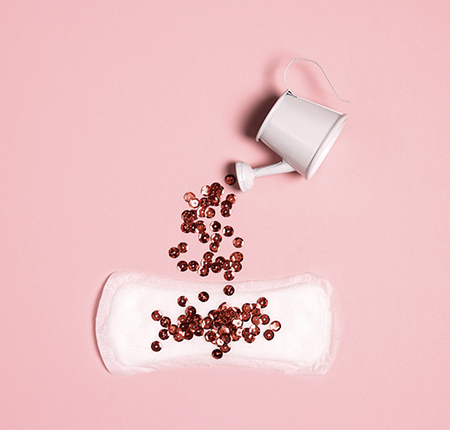
Brown discharge before your period
Before your period, brown discharge can occur simply because the bleeding is very light – that's no cause for concern. If you want absolute protection, comfort and security on those slightly redder days, organic pads are your number one ally. Inspired by your body, made with care from 100% natural ingredients, Enroush pads are hypoallergenic and gynaecologically tested. You deserve intimate care products with nothing to hide!
Brown discharge after your period
At the end of menstruation, the brown colour of the discharge is simply down to blood being expelled with a delay. In most cases this lasts around 2 days and can vary in both consistency and colour intensity. For those moments when you're caught off guard, choose 100% natural protection – like Enroush panty liners made from 100% organic cotton. You'll feel good day after day, and your intimate area will no longer come into contact with chemicals, plastics or fragrances that trigger allergies and irritation. You can order them right here.
Brown discharge without a period
The perimenopause is a natural transitional process towards the menopause. Symptoms appear months or even years before menstruation stops altogether. During this time, the consistency, colour and texture of discharge change, periods become increasingly irregular and eventually stop.
Brown discharge during ovulation
At the time of ovulation, oestrogen levels are high and then fall, which can lead to so-called spotting (bleeding between periods). The colour ranges from red through pink to brown and may mix with normal, whitish discharge. The following signs may also occur during ovulation:
- discharge with the consistency of egg white
- pain in the lower abdomen
- a change in basal body temperature
Brown discharge during the menopause
Brown discharge can be a sign of the menopause beginning – later on, however, close attention is warranted. During the menopause, any brown discharge or bleeding should be investigated urgently in order to rule out a possible malignant cause.
Brown discharge – causes
Entirely normal causes of brown discharge include:
- fluctuations in the menstrual cycle (ovulation)
- pregnancy, breastfeeding
- sexual arousal
- changes to your intimate care routine or the products you use
- taking contraceptives or certain medications (antibiotics, steroids)
So brown discharge shouldn't alarm us. Even so, there are situations in which it can be a symptom of a health problem – and that's exactly what we're going to talk about now.
Brown discharge caused by hormonal disorders
Brown discharge can indicate a hormonal imbalance. Oestrogen helps to stabilise the lining of the womb; if oestrogen levels are too low, the lining may shed at various points throughout the cycle. For this reason, unusual bleeding or brown discharge can occur. Low oestrogen levels also lead to:
- hot flushes
- insomnia
- mood swings or depression
- difficulty concentrating
- urinary tract infections
- weight gain
Besides changes to your monthly bleed, your body goes through many other changes during the menopause that are normal and shouldn't worry you. If you'd like to know more, read our article on the premenopause and how it changes your life.
We recommend also seeking medical advice about such changes in your life and your cycle.
Polycystic ovary syndrome (PCOS)
This condition affects ovarian function and represents a significant hormonal disorder. Brown vaginal discharge is among its typical symptoms. Other characteristic symptoms include:
- irregular periods – Did you know that a hormonal imbalance can even affect how regular your periods are and how heavy the bleeding is? Read everything you need to know about hormonal disorders on the Enroush blog.
- acne
- hirsutism (excessive body hair)
- alopecia (hair loss)
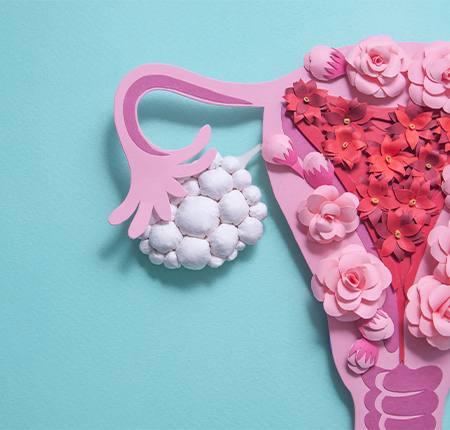
Brown discharge and contraceptive methods
Hormonal contraception can cause spotting during the first few months of use, while your body adapts to the hormonal changes. If there's too little oestrogen in the body, the womb lining can shed partially between periods. This is how brown discharge arises.
If you notice this discharge lasting longer than 3 months, speak to a gynaecologist who can help you switch contraceptive method. Likewise, temporary brown spotting can occur if you miss your pill for a few days.
Brown discharge during pregnancy
Not infrequently, brown vaginal discharge can indicate that you've become pregnant. Cases differ from woman to woman, and this symptom doesn't occur in every pregnancy. Bleeding during pregnancy can also have many different causes, which we've discussed in more detail HERE.
Implantation bleeding
Brown vaginal discharge typically occurs when the zygote implants in the womb, because small blood vessels in the womb lining are damaged in the process. As a rule, the brown discharge appears around 7 days after fertilisation.
Ectopic pregnancy
An ectopic pregnancy means that the zygote implants in the fallopian tubes or in another area outside the womb lining. Brown vaginal discharge is one of the most common symptoms, but there are others, for example:
- abdominal or pelvic pain
- exhaustion
- dizziness
- syncope (fainting)
Miscarriage
Miscarriage occurs in around 10% of pregnancies and can present with brown vaginal discharge, but also with:
- bleeding
- pelvic pain
- dizziness
Brown discharge after giving birth
Known as lochia – a vaginal discharge that occurs in the first month after childbirth. In the first few days lochia contains blood; from day 5 it begins to turn brown. It then becomes whitish or yellowish and disappears completely around two weeks later.
Brown discharge after a curettage
Discharge following a curettage is normal and usually lasts less than two weeks. If it doesn't go away, consult a gynaecologist to make sure there's no infection or other complication.
Certain sexually transmitted infections
With an infection, brown vaginal discharge occurs independently of menstruation. It's also usually accompanied by signs and symptoms such as:
- local irritation
- itching
- pain during intercourse
- discomfort when urinating
Sexually transmitted infections, as well as those with other causes, require specific drug treatment. If therapy isn't started in time, pelvic inflammatory disease can develop. This leads to a range of complications and can even cause infertility.
Gynaecological examination
After a smear test (Pap test) or a vaginal examination, some women notice brown discharge. This is normal and disappears within a few days – so there's no cause for concern.
Brown discharge and cancer
Brown vaginal discharge can be a manifestation of cancer of the womb lining (endometrial carcinoma) or cervical cancer. In this case, the discharge occurs after intercourse or after the menopause. Other symptoms to look out for include:
- pain during intercourse
- bleeding after sex
- heavier or longer periods
- bleeding between periods
Brown discharge and endometriosis
Endometriosis is a condition in which womb tissue is also found outside the womb. This often causes brown vaginal discharge. Other characteristic symptoms include:
- pain
- discomfort when urinating
- pain during intercourse
- nausea
- vomiting
- exhaustion
- bloating (meteorism)
- constipation
- diarrhoea
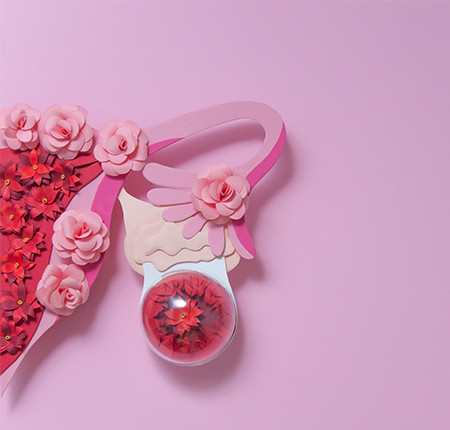
Benign conditions of the womb
In certain cases, benign conditions of the womb can have a hormonal effect or cause bleeding from the womb, which turns into brown discharge as the blood oxidises in the vagina.
Even if the brown discharge isn't accompanied by pelvic or abdominal pain, discomfort when urinating or unusual bleeding, a thorough gynaecological examination is advisable to rule out ovarian cysts, fibroids or uterine polyps, which may require further investigation and treatment.
Brown discharge between periods
Brown discharge between periods can have several causes. Some are normal and shouldn't worry you. Others may point to a more serious problem. Let's look at the possible causes one by one:
- Residual menstrual blood: you may notice brown discharge after your period when your body expels the remaining blood mixed with vaginal secretions
- Spotting: bleeding between periods can occur during ovulation or because of hormonal fluctuations
- Implantation bleeding: in the first 1–2 weeks of pregnancy
- Miscarriage: can be heralded by brown discharge in the first 20 weeks of pregnancy
- Lochia: as bleeding after childbirth tails off
- Contraceptives: especially in the first weeks of use
- Ectopic pregnancy
- benign (non-cancerous) growths on the womb or cervix
- sexually transmitted infections, for example gonorrhoea
- cervical cancer
Diagnosing brown vaginal discharge
The most suitable way to determine the causes of altered discharge is a vaginal swab, combined with a gynaecological examination and a transvaginal ultrasound.
A vaginal swab is painless and quick. It can be carried out if you notice symptoms, but also during pregnancy on medical advice, or where there's a suspicion that requires further investigation.
Treating brown discharge
There's no miracle cure that gets rid of brown vaginal discharge. The solution is a gynaecological examination, where tests are used to establish the cause of the unusual discharge.
Once there's a diagnosis, your doctor can also recommend a suitable treatment.
Can brown vaginal discharge be prevented?
Normal vaginal discharge can't be prevented – such as the kind that appears after your period or when the zygote implants in the womb. If, however, the discharge is caused by a particular condition, you can help prevent that condition developing.
Your risk of infection is reduced if you make a point of:
- maintaining appropriate hygiene daily, as well as before and after intercourse
- urinating after intercourse
- using washes that don't disrupt vaginal pH
- not douching inside the vagina
- always wearing fresh underwear, preferably cotton
- not staying in damp clothing for too long
In most cases, brown vaginal discharge is medically no cause for concern. If other symptoms appear alongside it, however, a visit to your gynaecologist is needed.
Frequently asked questions about brown discharge:
Brown discharge has so many causes that you probably have just as many questions. If you haven't found the answers in the article so far, in this section we answer the most common questions about brown discharge in pregnancy and beyond.
Is brown discharge a sign of pregnancy?
It can be a sign, but it's not definitive confirmation. Yes, it's possible that brown discharge or light bleeding in the first 1–2 weeks of pregnancy is a sign of the embryo implanting in the wall of the womb. But the appearance of discharge alone doesn't automatically mean pregnancy, as there can be many other causes.
Why does brown discharge occur after a period?
It's simply the result of oxidation, a natural process that happens when blood comes into contact with air. Since bleeding becomes lighter towards the end of your period, the blood is expelled from the body more slowly. So for 1–2 days after your period, brown discharge is merely residual blood being released from the vagina.
What does brown discharge before a period mean?
Brown discharge is normal and can appear 1–2 days before your period starts, sometimes up to 7 days beforehand. Essentially, it's very light bleeding. It turns brown because it lingers in your body for longer – just like the discharge after your period.
Brown discharge with the first period is also normal during puberty. A first period can start gradually, with light bleeding and a brown colour, before the menstrual blood turns red. Read more HERE about the normal changes in a girl's body during puberty.
Can brown discharge indicate the menopause?
Yes, it can be a sign that you're in the perimenopause. In women over 40, brown discharge before a period can suggest that the menopause is approaching. After the menopause, brown discharge may be due to thinning of the vaginal walls, polyps or hormone replacement therapy, and should be discussed with a specialist.

Medium, super or extra absorption

Low, medium or super absorption

Low or medium absorption


and happily breaking taboos!


