

Do you accept your body as it is?
When we think about our bodies, we often feel as though we're exploring a map full of hidden treasures and dangers. In an era dominated by social media, this journey isn't exactly straightforward – after all, there are countless rules, norms and myths you're supposed to "follow" while searching for direction to become "the best version of yourself". And what if there's no such thing? How do you accept your body just as it is?
What is body neutrality?
Body neutrality is built on the idea of accepting your body as it is. The way of thinking differs somewhat from body positivity, and if you've ever wondered how it works, the principle is to acknowledge both the capabilities and the imperfections of your unique body. Here are a few differences between the two approaches:
Positivity:
Focuses on outward appearance (all bodies are beautiful)
Encourages you to love your body for the way it looks
Often excludes those who don't fit typical beauty standards
Neutrality:
Means valuing your body as it is, and for what it can do
Invites you to accept your body simply for existing
May be the more suitable option for people with marginalised bodies
Body neutrality means adopting a neutral stance towards your own body – and it's considerably more nuanced than body positivity. At the same time, it puts forward the idea that women's bodies shouldn't be commented on at all.
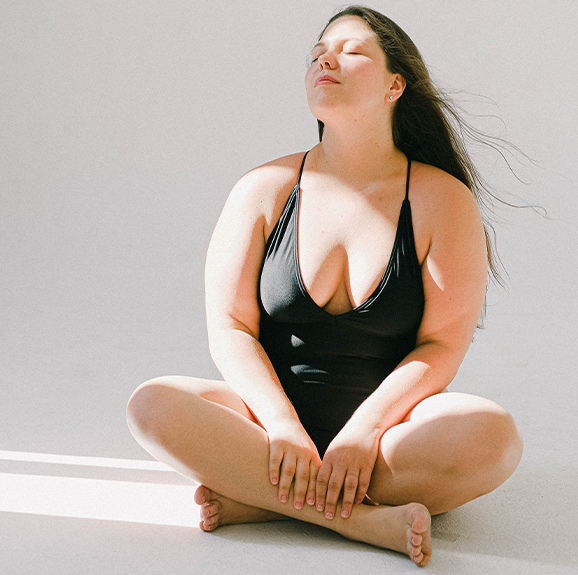
Image source: Pexels.com, Anna Shvets
How to practise self-acceptance and neutrality
If you're thinking about practising body neutrality but don't know where to start, there are several ways to bring certain aspects of neutrality into everyday life.
The way you talk to yourself
The easiest way to build new body-neutral habits is to become aware of how you talk to yourself about your body. You might begin with phrases such as: "My arms are strong" or "My legs can walk long distances".
Just as important, however, is acknowledging where your body doesn't work perfectly – without judgement and without shame.
Conversations with other people
Although conversations about our bodies have long been commonplace, we still have plenty of work to do to truly understand that unrealistic beauty standards are fundamentally harmful – because body "ideals" are unattainable for most people. For some, hearing comments about their body can even be traumatising, even when those comments seem harmless at first; there are words that can cut very deep.
Intuitive eating
What does it mean to eat in a "neutral" way towards your own body? The focus shifts to the foods that best suit both your needs and your tastes: in short, eat what you enjoy, what agrees with you and what gives you the energy you need. It's a simple way to live out body neutrality – intuitive eating.
This way of eating fosters a healthy attitude towards food and your own body image. It is, however, a process that invites you to trust your body and get to know its needs – because neutrality doesn't assume a one-size-fits-all diet.
Feeling comfortable in your own clothes
Body neutrality is also about shifting attention away from how your body looks and towards other, more important things. It's more about finding a middle ground between aesthetics and comfort – and above all about feeling emotionally at ease in your clothes. So when choosing what to wear, make sure it's comfortable and suits your style.
Image source: Pexels.com, Anna Shvets
Exercise
While it's true that physical activity benefits everyone, following a weight-loss programme to reshape your body or burn fat runs counter to both body neutrality and body positivity. Because the media portrays exercise primarily as a means of losing weight, this can be harmful for some people. It can amplify negative feelings and become a burden – particularly when we're trying to measure up to certain social standards: staying positive in real life is often far harder than it is on Instagram.
Self-acceptance is an authentic practice
Body positivity was once a socio-political movement intended to support people who face discrimination because of their appearance. Recently, however, body positivity has become little more than a fashionable slogan in many cultures. So to find your own formula for self-acceptance, you don't have to follow any particular movement. In fact, you can take exactly what serves you from different philosophies and practices, combining positivity and neutrality into your own authentic way of living.
A few ideas you might take from the body positivity movement are a strong sense of self-worth, along with love and care for your body. Start with simple steps and turn the most natural processes into rituals of acceptance and love – menstruation, for example.
Using period products made from 100 % organic cotton is an act of self-care and love that gives your body the strength to be healthy and feel good.
From the body neutrality movement, you can take up the practice of being grateful for what your body can do, as well as bringing mindfulness into your life. Think of your body as a temple and honour its uniqueness and what lies within it, rather than how it looks. This can be a challenge, but you're not alone: there are so many of us who have learned acceptance and found trust in our bodies!

Medium, super or extra absorption

Low, medium or super absorption

Low or medium absorption


and happily breaking taboos!


