

Pubic Hair: Beauty Ideals and a Slice of History
Whether it's nostalgia for the seventies or a protest against the patriarchy, the 'bush' is back in fashion. But that's not the only look for pubic hair – there's the partial shave and plenty of other 'hairstyles' besides. And that's perfectly normal. Ultimately, it's a personal choice, and nobody (apart from you) should have a say in how you wear your pubic hair. It's 2022, after all.
A brief history of female body hair removal & beauty ideals
Recent studies estimate that almost 60% of young women go without their pubic hair. Perhaps you've wondered where and when this attitude towards removing – or not removing – pubic hair actually came from. Who invented these standards and trends? Have women always removed their pubic hair, or is this a new fashion?
After plenty of digging around the vast internet, and realising that art, the media and the culture we consume constantly shift and shape our perception of physical beauty, we've identified a few key moments in the history of pubic hair.
Ancient Egypt
You're probably already familiar with sugar paste hair removal, so it won't be hard to sympathise with the women of Ancient Egypt. They practised what we now call 'sugaring' like this: they melted sugar into a paste and used it with strips of cloth to remove the hair. Bronze blades were also used – and they were the first to shape their pubic hair into a triangle above the vulva.
Ancient Greece
There's a reason you won't see women with pubic hair on ancient Greek sculptures (have you noticed they're all hairless?). Apparently, having no hair at all down there was absolutely the thing in ancient Greece – and women simply plucked out their pubic hairs one by one. Ouch!
Renaissance Italy
“If the skin feels hot, wash yourself quickly with warm water, so that the flesh does not come away.”
Being a woman in 16th-century Italy was no easy matter… Many researchers call the Renaissance the 'golden age of hair removal' – and rightly so. This period saw a veritable explosion of recipes for removing body hair – intended exclusively for women – and for other beauty rituals, some of which were downright dangerous. A 'book of secrets' from 1532 contains the following recipe:
“How to remove or lose the hair on any part of the body:
Boil a solution of half a litre of arsenic and one eighth as much quicklime. Go into a bath or a hot room and apply the solution to the area to be depilated. If the skin feels hot, wash yourself quickly with warm water, so that the flesh does not come away.” (Source)
The modern era
In 1880, King Camp Gillette launched the forerunner of today's conventional razor. A few years later, in 1915, came the first razor for women: the 'Milady Décolleté', in pink velvet packaging.
FUN FACT
During the Second World War, nylon stocks – and with them nylon stockings – disappeared from the market. This led women to shave their legs daily, creating a habit that persists to this day.
The hippie era, 1970
In the seventies and eighties, 'abundant hair stood for virility and lustfulness (...) and many male performers sported moustaches, underarm and chest hair, while the women also had underarm and pubic hair' (source). It was the era of natural pubic hair. The same period saw protests for human rights and bodily autonomy – so the fashion for the 'bush' and body hair was part of the political and cultural upheavals of the time.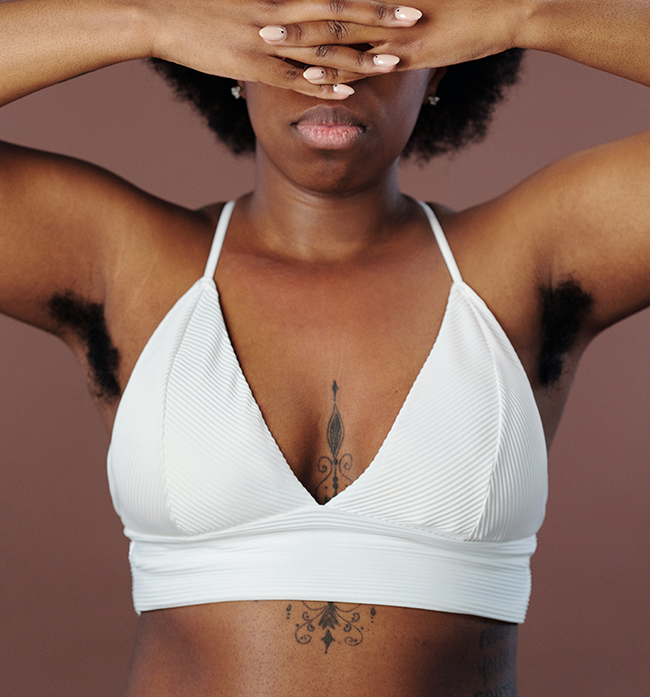
Image source: Pexels.com/cliff-booth
The 21st century
The early 2000s were the perfect moment for experimenting with styling and grooming pubic hair. Women began exploring new fashion trends that went 'hand in hand' with the presence or absence of body hair: the Brazilian thong, low-rise jeans. And all of it against a backdrop of increasingly unrealistic beauty ideals. At the same time, new movements emerged (the hipsters – or the new hippies), precisely in order to push back against those norms, just as in the seventies.
So is it a good idea to remove your pubic hair – or not? Should you let it grow? Does pubic hair go grey? And how much hair is normal for a woman?
The answers can vary enormously and are deeply personal – depending on your own preferences and grooming habits. One thing is certain, though: caring for your pubic hair is a form of self-love.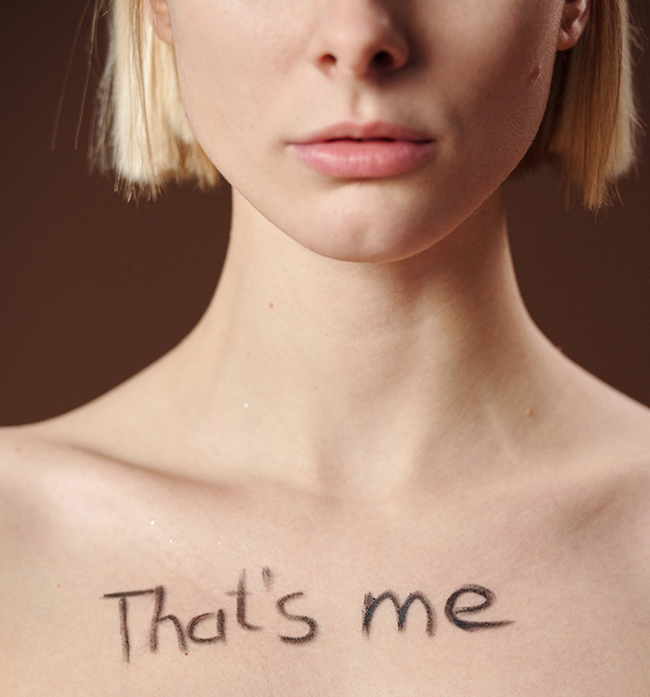
Image source: Pexels.com/cliff-booth

Medium, super or extra absorption

Low, medium or super absorption

Low or medium absorption


and happily breaking taboos!


