

Foul-smelling periods – causes, solutions and when you should see a doctor
“Maybe I'm not changing my pad often enough?” You've almost certainly asked yourself this at least once when you noticed that your period … has a smell. Perhaps you even felt embarrassed, or ashamed.
Dear reader, there is nothing shameful about your period – not even the smell! It's completely normal for menstrual blood to have its own characteristic scent, just as it's natural for every vulva to have its own particular smell. That said, it's true: if menstrual blood smells strong and unpleasant, this can point to an infection. But even then there's no reason to feel ashamed – just a reason to see your doctor and get the problem sorted out quickly. And if you're not sure what's normal and what isn't, stay with us to the end: we'll look at the different kinds of unpleasant menstrual odours and what each one means.
Why does menstruation have a smell?
The fact that your period has a slight smell, which women sometimes describe as “unpleasant”, is actually perfectly normal and comes down to the interplay between menstrual blood and the bacteria in the vagina.
It's entirely normal for bacteria to be present in the vagina. Their numbers fluctuate depending on numerous factors. When tissue residue and menstrual blood are added to these bacteria, the natural pH of the vagina can shift – and this gives rise to different smells.
Vaginal pH can also change if pads and tampons contain fragrances and other toxic chemicals, or if you use intimate care products such as soaps and gels containing parabens, sulphates and perfume. If products like these are part of your period routine, that could be precisely why your period seems to smell unpleasant. In reality, it's simply a reaction. That's why it's worth choosing organic products for your intimate area – made from purely natural ingredients, pH-neutral and fragrance-free, like the period products from Enroush.
Wearing the same pad or tampon for a long stretch of time can also lead to unpleasant smells in the intimate area, as bacteria and sweat build up. This happens particularly towards the end of your period, when bleeding becomes lighter and changing your period products no longer seems quite so necessary. As a general rule: always change period products when they're full, and at the very latest every 4 to 8 hours. The more often you change, the less you'll notice that characteristic smell.
And finally: if the menstrual odour really is strong, unusual and unpleasant, it can be a sign of an infection – especially if other symptoms appear, such as discomfort, burning, itching, pain or fever. If you're worried, you should see your gynaecologist promptly to establish the exact cause.
Menstruation – types of unpleasant odour
There are various types of smell associated with menstruation that are perceived as unpleasant. Here's an overview – and what each one can reveal about your body and your health:
A metallic-smelling period
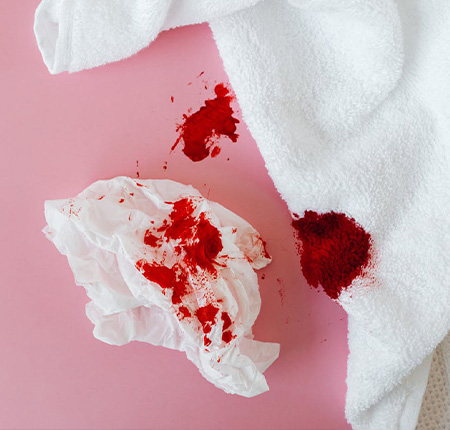
The slightly metallic smell of blood isn't just normal – it actually indicates a healthy period. The metallic note, reminiscent of a copper coin, comes from the iron in the blood and the bacteria in the vagina. What's more, this smell doesn't linger long once your period ends.
A period that smells of sweat
You may notice that your period smells of sweat. Contrary to popular belief, this isn't always linked to poor hygiene.
Yes, intimate hygiene is especially important during your period in order to prevent a build-up of bacteria and sweat: change your pad in good time and wash daily, at least once or even more often, or use unscented intimate wipes. But that doesn't mean a sweaty smell automatically points to neglected hygiene.
In fact, a sweat-like smell during your period can also come from the apocrine glands in the genital area. The sweat produced by these glands – particularly during periods of stress and tension – comes into contact with skin bacteria and creates a characteristic smell.
A period with a foul smell
A period with a foul smell falls firmly into the “not normal” category.
If you notice a heavy, foul, rotten smell, this can either point to an infection or indicate that there's a foreign body inside you – for example a tampon you forgot about and wore for too long. In this case you either need to find the retrieval string and remove the tampon immediately, or, if you can't find it, see your doctor to have it removed.

A sweet-smelling period
Another common situation is a slightly sweet menstrual smell. It arises from the acidic environment of the vagina and the bacteria present – so there's very little cause for concern.
A fishy-smelling period
Whether during your period or not, a strong, unpleasant smell often described as “fishy” is not normal in the intimate area. Whether you notice it during or outside your period, there's frequently an infection behind it.
Bacterial vaginosis, for example, is a vaginal infection caused by an overgrowth of bacteria in the vagina. The risk increases if you regularly douche or have unprotected sex with multiple partners. Vaginosis can cause a fishy smell that intensifies during your period, because blood makes the vaginal pH more alkaline.
Trichomoniasis is another infection, this time sexually transmitted, which can manifest as itching, burning, pain and an unpleasant fishy smell in the intimate area.
If you notice a smell like this in your intimate area, book an appointment with your gynaecologist as soon as possible for diagnosis and treatment.
A foul-smelling period – which conditions could be behind it?
A foul-smelling period can, if it persists, be a clear sign of an infection or another health problem. The most common causes of unpleasant menstrual odour include:
- Vaginal infections: such as bacterial vaginosis, triggered by an imbalance in the vaginal flora.
- Sexually transmitted infections: such as trichomoniasis, chlamydia or gonorrhoea.
- Uterine fibroids: these can cause menstrual bleeding with large blood clots, an unpleasant smell and severe cramping.
A foul-smelling period – when should you see a doctor?
The first and most obvious warning sign is the symptoms accompanying the unpleasant menstrual odour. Book an appointment at your gynaecology clinic as soon as possible if, alongside a foul-smelling period, you notice the following:
- Yellowish or greenish discharge, which can indicate an infection
- Signs of menorrhagia (heavier bleeding than usual)
- Abdominal or pelvic pain
- Severe period cramps or cramps that are more intense than usual
- Other unusual symptoms (itching, burning when passing urine, pain or discomfort in the intimate area)
- Fever
These are just some of the warning signs that tell you something isn't right in your body. But you know your body best – so you don't have to wait for these symptoms before seeking medical advice.
If you have any concerns about your menstrual or reproductive health, you can contact your gynaecologist at the very first unusual changes in your period – whether that's to do with smell, how heavy the bleeding is, or other symptoms.
Hygiene rules during your period
The good news: there are plenty of steps you can take to prevent unpleasant smells and give your intimate area the gentle care and hygiene it needs during your period. Here's what you can do to feel fresh and confident at all times:
- Change your period products frequently: whenever necessary, or every 2 to 8 hours, so that you always feel clean. Choose pads and tampons made from 100% organic cotton, which let the skin breathe and don't cause irritation – this helps prevent a build-up of bacteria, moisture and unpleasant smells.
- Wash your intimate area daily: During your period you can shower 2 to 3 times a day to feel fresh. Avoid douching, which can upset your intimate pH balance, and clean only the external area with an antibacterial intimate gel made from natural ingredients, without fragrances or harmful chemicals.
- Wear loose clothing and cotton underwear: unlike synthetic fibres, cotton lets the skin breathe and prevents sweat and unpleasant smells from building up.
- Change your underwear daily: even if you change your pad several times a day, it's important to change your underwear every day to avoid a build-up of bacteria.
- Avoid perfumes and scented soaps in the genital area: you don't need fragrances in period products, toilet paper or intimate gel – what you need are pure ingredients that protect your intimate health.
Treatment & home remedies for a foul-smelling period
The solutions for a foul-smelling period depend on the type of smell and the underlying cause.
With a metallic, sweet or sweaty smell, for instance, no medical treatment is needed. Equally, sprays or special “vaginal cleansing” products aren't recommended – they merely mask the smell and disrupt the delicate balance of the vaginal flora, leaving it more vulnerable to infection.
It's enough to pay attention to your intimate care routine: how and how often you wash, what ingredients your period products contain and which hygiene products you choose.
Where an unpleasant smell is the result of an infection – fishy or foul, for example – your gynaecologist will prescribe the appropriate treatment based on the diagnosis. Bacterial vaginosis, for instance, is treated with antibiotics. For trichomoniasis, too, your doctor will prescribe a particular type of oral antibiotic.
Frequently asked questions about a foul-smelling period
We know it's uncomfortable to notice a strong smell in your intimate area during your period. But with a little attention to the ingredients in your period products and your daily self-care routine, you can put your intimate health first and prevent odours from developing.
If you still have questions, this section answers the most common ones about foul-smelling periods.
In which direction should you clean the genital area?
The direction in which you wipe after using the toilet matters: always from front to back, so that bacteria from the anus don't reach the vagina.
As for washing the genital area, the rule is: avoid douching and clean only the external area – the vulva, the anus and the zone in between – with a natural intimate gel.
How often should you wash your intimate area during your period?
During your period your hygiene routine needs a little more attention, so you can wash your intimate area more frequently. Daily cleansing is recommended, at least once a day – but if needed, you can wash 2 to 3 times a day.
Are scented products recommended for intimate hygiene during your period?
No. Products containing fragrances and other harmful chemicals aren't recommended for the intimate area, either during or outside your period, as they can cause irritation and upset the balance of your intimate flora.
Use pads and tampons made from 100% organic cotton and choose a gel or intimate wipes without fragrances and without ingredients that could harm your intimate health.
Why does the intimate area smell unpleasant after your period?

Bacteria, the acidic vaginal environment and the fact that you change your pad less often towards the end of your period because the bleeding is lighter all contribute to unpleasant smells building up in the intimate area.
If the smell persists, however, doesn't go away even after washing, or is accompanied by other unusual symptoms, you should seek medical advice – an infection could be behind it.
Does diet affect menstrual odour?
There are plenty of widely held beliefs and trends claiming that what we eat affects the smell of the intimate area – including during your period. In reality, though, there's no solid evidence for these theories.
According to scientific findings, diet cannot directly affect the uterus, vagina or reproductive organs, because all food passes through the stomach and intestines. Food doesn't come into direct contact with the reproductive system and therefore cannot influence smells in the genital area.
How can you tell if you have a vaginal infection?
An unpleasant smell in the intimate area – foul or fishy – that persists despite all hygiene measures can be a clear sign of a vaginal infection, particularly if other symptoms are present (unusual discharge, discomfort or pain in the genital area, fever, and so on). A visit to the doctor, with the necessary tests, can confirm whether an infection is in fact present.
Photo source: Pexels.com

Medium, super or extra absorption

Low, medium or super absorption

Low or medium absorption


and happily breaking taboos!


