

Menstrual Disorders – Causes & Treatment for Irregular Periods
Thanks to its regularity and its sensitivity to internal and external influences, the menstrual cycle is a good indicator of your hormonal balance, your reproductive health and your general wellbeing. A regular cycle points to a well-functioning hormone system and a healthy body.
An irregular cycle with unusual features, on the other hand, gives you valuable clues about possible health problems that should be investigated by a doctor. If you've noticed that your period isn't arriving regularly, this article explains the different types of menstrual disorder, what causes them and how they can be treated.
Menstruation and the menstrual cycle
A normal menstrual cycle lasts an average of 28 days. Since every body is different and every woman experiences her period in her own way, a cycle is still considered healthy if it's somewhat longer or shorter.
In most women, the normal cycle length is between 21 and 35 days, with bleeding lasting 4 to 7 days. If there are no significant changes from month to month in terms of the duration of bleeding and the cycle, the heaviness of the flow or any accompanying symptoms, the cycle is considered regular.
The irregular menstrual cycle
If the interval between two consecutive periods is less than 21 days or more than 35 days, this is known as an irregular menstrual cycle. An irregular cycle may also show itself in the following ways:
- Your period is absent for 3 months or longer.
- Menstrual bleeding lasts longer than 7 days.
- The bleeding is noticeably lighter or heavier than usual.
- Your period is accompanied by worrying symptoms, such as very severe pain, migraine or vomiting.
- The intervals between periods keep changing, with a difference of more than 9 days (for example, one cycle lasts 29 days, the next 38 days and the one after that 27 days).
- Bleeding between periods or after sexual intercourse.
There are many possible causes of these irregularities, including hormonal changes, stress, changes in diet and lifestyle, certain medications or underlying health conditions.
What are menstrual disorders?
Menstrual disorders refer to any deviation from what is considered a normal menstrual cycle. These deviations may involve both physical and emotional changes in symptoms during or before your period.
Signs of a menstrual disorder include severe cramps, the absence of periods over longer stretches of time, mood swings that are difficult to manage, or very heavy bleeding that requires changing a pad every hour or even more frequently. If you experience such symptoms, use pads made from 100% organic cotton, which offer you protection and comfort with nothing but safe, natural ingredients.
Causes of menstrual disorders
The causes of menstrual disorders are extremely varied – ranging from lifestyle factors to more serious conditions.
A change in diet, intense physical activity, chronic stress, colds and flu, weight gain or loss, as well as taking contraceptives or other medications can all lead to a late period or altered menstrual symptoms. Puberty, perimenopause and pregnancy are also causes of menstrual irregularities.
In addition, there are conditions associated with menstrual disorders that can cause abnormal bleeding, severe pain, absent periods and other changes. Among the most common causes are endometriosis, pelvic inflammatory disease, polycystic ovary syndrome, primary ovarian insufficiency and thyroid disorders.
Types of menstrual disorder
Several types of menstrual disorder are distinguished according to how they present.
If periods are absent or occur less frequently, this falls into the category of deficiency-type menstrual disorders. This group includes hypomenorrhoea, amenorrhoea and oligomenorrhoea (also known as spaniomenorrhoea).
If the frequency of bleeding increases or the bleeding becomes very heavy, these are known as excess-type menstrual disorders. They include polymenorrhoea, hypermenorrhoea and menorrhagia.
There are also other menstrual disorders, such as metrorrhagia (bleeding outside of menstruation) and cycle-related syndromes (premenstrual syndrome, mittelschmerz syndrome and dysmenorrhoea).
Deficiency-type menstrual disorders
Deficiency-type menstrual disorders are those in which menstrual bleeding is absent or occurs less frequently.
Hypomenorrhoea
Hypomenorrhoea refers to bleeding that occurs regularly at roughly the same intervals, but is unusually short and accompanied by a considerably reduced flow.
Those affected have bleeding that lasts less than 2 days and is very light (no more than 1–2 sanitary products per day are needed).
Causes of reduced bleeding may include stress, weight loss or excessive exercise, as well as conditions affecting the reproductive organs, particularly the uterus. As a rule, hypomenorrhoea is merely a precursor to other deficiency-type menstrual disorders such as oligomenorrhoea and amenorrhoea.
Oligomenorrhoea
In oligomenorrhoea, irregular bleeding occurs at long intervals of more than 35 days. Because of these long delays, women with oligomenorrhoea have only 4 to 9 periods a year.
According to recent research, oligomenorrhoea is the most common menstrual disorder among all hormonally related disorders, and it can be improved with the support of an endocrinologist. Any change or condition that leads to a hormonal imbalance can be a cause of oligomenorrhoea.
Amenorrhoea
Amenorrhoea is the complete absence of menstruation for at least 90 consecutive days (3 months).
A distinction is made between primary amenorrhoea (where the first period has not occurred by the age of 15) and secondary amenorrhoea (where, after menstruation has already begun, periods suddenly stop for 3 months or longer).
The causes differ depending on the type of disorder. In primary amenorrhoea they may be hormonal, genetic or anatomical in nature (malformations of the uterus, vagina or hymen). Secondary amenorrhoea may be triggered by pregnancy, but also by other factors: stress, sudden weight loss, hormonal changes or conditions such as primary ovarian insufficiency and polycystic ovary syndrome.
Excess-type menstrual disorders
Excess-type menstrual disorders are changes to the menstrual cycle that lead to a marked increase in the heaviness or frequency of bleeding.
Polymenorrhoea
Polymenorrhoea is a form of abnormal, frequent menstrual bleeding occurring at very short intervals of under 21 days. In those affected, the bleeding may also be very heavy, requiring at least 5 sanitary products to be changed per day.
Some women naturally have a shorter cycle, but in most cases problems with the ovaries, along with hormonal changes or conditions that cause a hormonal imbalance, are the main cause of this disorder.
Hypermenorrhoea
In hypermenorrhoea, periods arrive regularly at roughly the same intervals, but are exceptionally heavy, with blood loss of more than 90 ml.
Causes of this increase in the volume of bleeding include fibroids, uterine polyps and other changes to the uterus, as well as certain conditions or medications that affect blood clotting.
Metrorrhagia
Metrorrhagia refers to any uterine bleeding outside of menstruation. The most common causes of this abnormal, irregular bleeding unrelated to the cycle include uterine fibroids, hormonal disorders, infections and the menopause.

Cycle-related syndromes
When the symptoms relate only to physical discomfort and emotional states, rather than to changes in the duration or heaviness of bleeding, we speak of cycle-related syndromes:
- Premenstrual syndrome: the combination of physical and emotional symptoms that occur between ovulation (mid-cycle) and the first day of your period; it affects over 85% of women and can include symptoms such as breast tenderness, bloating, abdominal cramps, anxiety and irritability, insomnia, low mood and so on.
- Mittelschmerz syndrome: also known as ovulation syndrome; this involves short-lived lower abdominal pain (usually 2–4 hours) around ovulation, which may be accompanied by light bleeding.
- Dysmenorrhoea: shows itself mainly through lower abdominal and lower back pain during your period, the intensity of which varies from woman to woman; it affects 30% to 50% of women.
Menstrual disorders in perimenopause
Perimenopause usually begins around the age of 40, or even earlier, from about 35. Changes to the menstrual cycle are normal during this phase.
As the ovaries become less sensitive to hormonal stimulation, cycles without ovulation become increasingly common, with irregular bleeding at intervals of less than 28 days or considerably longer. Mood swings, vaginal dryness and hot flushes are also common symptoms of perimenopause.
Symptoms of menstrual disorders
Symptoms differ according to the type of disorder and each woman's body. Broadly speaking, however, menstrual disorders show themselves through:
- Bleeding at intervals of less than 21 or more than 35 days
- Absence of periods for 3 or more consecutive months
- Unusually light or heavy bleeding
- Bleeding that lasts longer than 8 days
- Needing to change your tampon or pad every hour
- Severe cramps during or outside your period
- Heavy bleeding with large blood clots
- Bleeding between periods or after the menopause
- Nausea and vomiting during your period
Diagnosis and tests
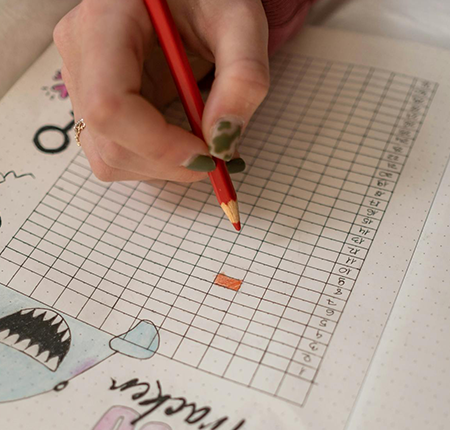
Collaboration between the gynaecologist and the patient is crucial for an accurate diagnosis. The first step, therefore, is to monitor your cycle. Note down the first day of each period, how heavy it is, how pronounced the cramps are, whether you experience bleeding between periods, and any other relevant symptoms.
All this information helps your doctor to compare it with the results of any tests and arrive at an accurate diagnosis. They may arrange the following:
- A gynaecological examination to identify any changes to the uterus
- A pelvic ultrasound scan to assess the uterus, ovaries and fallopian tubes
- An examination of vaginal discharge
- A smear test (cervical screening)
- An endometrial biopsy
- A hysteroscopy
Complications and risk factors in menstrual disorders
Some women have irregular periods their whole lives without any serious health problems arising as a result. In the long term, however, menstrual disorders can increase susceptibility to other conditions, such as:
- Iron-deficiency anaemia as a result of the high blood loss associated with very heavy and frequent bleeding, since blood contains iron.
- Infertility in cycles without ovulation, since pregnancy cannot occur without ovulation.
- Endometrial hyperplasia (thickening of the womb lining) in cases of long-term cycle irregularity.
- Osteoporosis due to less frequent ovulation, which brings with it lower oestrogen levels and an increased risk of osteoporosis.
Cardiovascular disease, likewise as a result of falling oestrogen levels.

Treatment of menstrual disorders
Treatment depends on the symptoms and their causes. Initially, your doctor will recommend drug therapy, which may include:
- Hormonal contraceptives (the pill), if the menstrual disorder is caused by endometriosis, polycystic ovary syndrome, uterine fibroids or certain hormonal imbalances
- Tranexamic acid to treat heavy bleeding
- Painkillers to relieve symptoms
- Antibiotics, if the menstrual disorder is a sign of infection
- Hormone therapy, if the hormonal changes are due to the perimenopause
If the body doesn't respond to drug treatment, the specialist may suggest a surgical procedure, such as endometrial ablation (to reduce bleeding), a myomectomy (to remove uterine fibroids) or a hysterectomy (in severe cases, where excess endometrial tissue in the abdominal and pelvic area needs to be removed).
Frequently asked questions about menstrual disorders
Even if you're familiar with the types and symptoms of menstrual disorders, questions often remain. When should you see a doctor? Is it normal for your cycle to be irregular after giving birth? Below you'll find the answers to the most common questions about menstrual disorders.
When should we see a doctor?
It's advisable to consult a specialist as soon as you notice unusual changes to your cycle. If your period suddenly becomes irregular or lasts longer than 7 days, if the bleeding is noticeably lighter or heavier, if you bleed between periods, or if you notice other worrying symptoms (fatigue, increased facial hair and so on), book a gynaecological appointment so that the cause can be identified and treated as early as possible.
If you have an irregular cycle and aren't getting pregnant, you should also discuss this with your doctor.
What complications can menstrual disorders cause?
As a rule, menstrual disorders don't cause health problems in the short term. In the long term, depending on the type of disorder, complications such as iron-deficiency anaemia, infertility, cardiovascular disease, osteoporosis or endometrial hyperplasia may occur.
What is a short menstrual cycle?
Normal cycle length is between 21 and 35 days, with 28 days considered the average. If the cycle (that is, the interval between two consecutive periods) lasts less than 21 days, this is known as a short menstrual cycle.
Are periods irregular after childbirth?
However regular your periods were before pregnancy, it's normal for them to become irregular after giving birth. Your body has undergone numerous hormonal changes to support your baby's growth and development. As a result, it can take up to a year for your periods to become regular again.
Sources
For this article we used information from the following sources:
1. Healthy Women, 'Menstrual Disorders': https://www.healthywomen.org/condition/menstrual-disorders
2. Baylor College of Medicine, 'Menstrual Disorders': https://www.bcm.edu/healthcare/specialties/obstetrics-and-gynecology/ob-gyn-conditions/menstrual-disorders
3. PACE Hospitals, 'Menstrual disorders: Types, Causes, Symptoms, Risk factors and Prevention': https://www.pacehospital.com/menstrual-disorders-types-causes-symptoms-risk-factors-and-prevention
4. National Institutes of Health, 'Knowledge of Menstrual Disorders and Health Seeking Behaviour Among Female Undergraduate Students of University of Ibadan, Nigeria': https://pmc.ncbi.nlm.nih.gov/articles/PMC8935669/
5. Healthline, 'Menstrual Problems': https://www.healthline.com/health/menstrual-problems
6. Cleveland Clinic, 'Irregular Periods': https://my.clevelandclinic.org/health/diseases/14633-abnormal-menstruation-periods
7. National Health Service, 'Irregular periods': https://www.nhs.uk/conditions/irregular-periods/
8. NHS Inform, 'Irregular Periods': https://www.nhsinform.scot/healthy-living/womens-health/girls-and-young-women-puberty-to-around-25/periods-and-menstrual-health/irregular-periods/
9. MSD Manuals, 'Introduction to Menstrual Abnormalities': https://www.msdmanuals.com/professional/gynecology-and-obstetrics/menstrual-abnormalities/introduction-to-menstrual-abnormalities
10. University of California, 'Menstrual Disorders': https://health.ucdavis.edu/conditions/obgyn/menstrual-disorders
Image source: Pexels.com

Medium, super or extra absorption

Low, medium or super absorption

Low or medium absorption


and happily breaking taboos!


