

Natural Birth – Everything You Need to Know & How to Prepare Yourself Optimally for a Natural Birth
Natural birth is one of the oldest and most primal experiences a woman can have. That doesn't mean, however, that it happens without emotion or without countless questions. As soon as you realise you're pregnant, being well informed and well prepared becomes a basic need.
How does labour begin? What are the stages? How intense is the pain and how can you cope with it? In this article you'll find answers to all these questions, learn step by step what happens during a natural birth, and discover how to prepare yourself physically and emotionally so you can go through these moments feeling as confident and calm as possible.
What does a natural birth mean and how does it unfold?
In a natural birth, the baby comes into the world through the birth canal, without major surgical intervention. It unfolds in several stages – from contractions through the pushing stage to the delivery of the placenta. We'll cover everything you need to know about this in just a moment.
Of course, "natural" is simply the common term used to describe this type of birth. It's the way a woman's body is designed to give birth, and for many women it can be a profoundly transformative experience.
You should know, though, that there is nothing unnatural about a birth in which medication is given, minor procedures are carried out, or which takes place by caesarean section. Ultimately, every birth is a real, intense and overwhelming experience – and what matters most is that both the mother and the baby she brings into the world are healthy.
The difference between natural birth and caesarean section
The essential difference between the two types of birth is that vaginal birth is a physiological process, whereas a caesarean section is a surgical procedure in which the doctor delivers the baby directly from the womb through an abdominal incision.
As a rule, recovery after a natural birth is quicker and the risk of complications is lower, although it can be more unpredictable and physically demanding.
A caesarean section, on the other hand, can be planned. It does, however, mean a longer recovery period and the usual risks associated with surgery.
You'll make the decision between the two options together with your doctor – depending on your state of health and the medical recommendations.
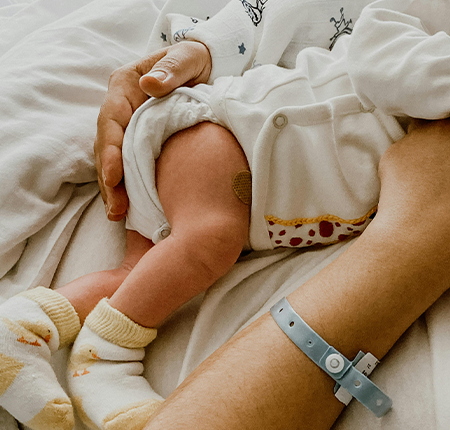
How painful is a natural birth?
The pain during a natural birth is intense, yet every woman experiences its severity differently. How painful the overall experience is depends on several factors – including individual pain tolerance, levels of anxiety, how labour is progressing and the baby's position.
Preparing for a natural birth
Preparing for birth doesn't begin in the final weeks of pregnancy, when you're packing your hospital bag. It begins in the very first months – with new physical habits and thorough mental preparation.
Once your pregnancy has been confirmed, it's important to talk to your obstetrician so you receive accurate, clear information and tailored advice. You have around nine months until your baby arrives – time to inform yourself as well as possible and understand exactly what lies ahead during this period.
It's a time when it's worth paying particular attention to your health and emotional balance, so that when the moment of birth comes you feel as relaxed and confident as possible.
Physical preparation during pregnancy
Your body goes through astonishing changes over the nine months of pregnancy. How you look after yourself, how you eat and how active you are up until the birth all directly influence how labour unfolds. That's why your first responsibility as a mum-to-be is to follow your doctor's advice on physical preparation:
Medical check-ups during pregnancy
Monitoring your pregnancy at every stage is crucial for your safety and your baby's. Your obstetrician will recommend a series of examinations and tests for each trimester, including:
- Regular antenatal check-ups, to monitor your baby's development and your own state of health.
- Blood tests such as a full blood count, blood group, blood sugar, and liver and kidney function tests.
- Infection screening for HIV, hepatitis B and C, syphilis and toxoplasmosis, as well as a smear test at the start of pregnancy if one hasn't been done recently.
- Ultrasound scans in each trimester, to assess your baby's growth and position.
Supplements and nutrition during pregnancy
After medical check-ups, the next factor with a major influence on how your pregnancy and birth unfold is how you nourish your body to support your baby's growth and all the changes you're going through.
A balanced diet and the right pregnancy supplements play a decisive role in your baby's healthy development and in building a strong, healthy body to bring them into the world.
As a rule, the following are recommended:
- Taking folic acid, ideally for at least three months before conception.
- Taking pregnancy vitamins containing iron, calcium, vitamin D and other important minerals.
- Eating a balanced diet, rich in protein, fibre, fruit, vegetables and healthy fats.
- Limiting sugar and highly processed foods, to maintain optimal energy levels and a healthy weight.
A healthy lifestyle during pregnancy
Small daily habits can make an enormous difference. Some habits can harm you and your baby – and others protect you both. Here's what you can do for the easiest possible pregnancy and birth:
- Give up smoking and alcohol completely.
- Limit caffeine to a maximum of 200 mg a day (roughly one cup of coffee).
- Drink plenty of fluids and stay as physically active as you can.
- Prioritise sleep and relaxation, aiming for at least 7–9 hours a night so your body can recover and shed stress.
Helpful exercises during pregnancy
Very intense physical exertion can indeed be risky for mums-to-be and their babies. That doesn't mean, though, that you have to avoid all forms of movement throughout your pregnancy.
For healthy pregnant women, moderate exercise adapted to pregnancy can ease back pain, improve posture and prepare the body for birth. That's why expectant mothers are actively encouraged to take up forms of exercise such as:
- Pelvic floor (Kegel) exercises to strengthen the pelvic floor muscles
- Walking for at least 20–30 minutes every day
- Swimming or gentle aqua aerobics, which are kind to the joints
- Antenatal stretching and yoga for mobility and relaxation
Lamaze classes and other breathing techniques
Antenatal classes such as Lamaze, or other methods that teach breathing techniques, can be a huge help in preparing for a natural birth. You'll learn how to use your breath and how to relax and focus in order to cope better with stress and pain during labour.
With guidance from professionals, you'll gain a better understanding of each stage of labour and be able to prepare for it – reducing anxiety and fear of the unknown. Classes like these are also valuable for your partner, who'll learn how to support you actively during the birth.
Emotional preparation for pregnancy
As we've already mentioned, birth isn't just a physical process. It's also a transformation full of emotion that brings with it many thoughts, feelings and new experiences.
Your mental state can influence how you experience labour and your recovery afterwards – which is why psychological preparation matters just as much.
Managing stress
Stress levels during pregnancy can affect the hormones involved in birth and make contractions harder to bear. Simple techniques such as meditation, deep breathing, journalling or walks in nature can help you reduce anxiety, calm your mind and maintain clarity.
It's equally important to identify the sources of your stress and discuss them with your partner or your doctor, so you can find solutions early on.
Emotional stability and your relationship
Open communication with your partner and emotional support are crucial to feeling safe. Their support, along with that of your family, can have a huge impact on your wellbeing.
Don't hesitate to speak openly about your fears, expectations or needs of any kind. All these conversations can ease tension and strengthen relationships.
What's more, involving your partner in medical appointments and antenatal classes can create a sense of teamwork, helping you feel secure and supported during this time.
Knowledge and information
The more you know about the birth process, the more confident you'll feel. Read trustworthy articles, attend antenatal classes and, above all, ask your doctor any questions on your mind – they can give you answers tailored precisely to your situation.
Preparing for change
After the birth, your life (or at least part of it) will inevitably change. It's completely normal to go through a period of adjustment. Your sleep patterns, your relationship as a couple and your daily priorities will all be different from how they were before motherhood.
It's important to recognise and accept this early on, to make the transition easier. Prepare yourself mentally for potential challenges so they don't overwhelm you.
Building a support network – family, friends, mothers' groups
Pregnancy, birth and your new role as a mother are significant changes in your life. That's why having reliable people around you whom you can count on is essential for your emotional health. Equally important is recognising that it's absolutely fine to ask for support and accept help.
Support from family, friends and especially your partner can make a world of difference – particularly in the final weeks of pregnancy and in the period after the birth, when the adjustment can be especially demanding.
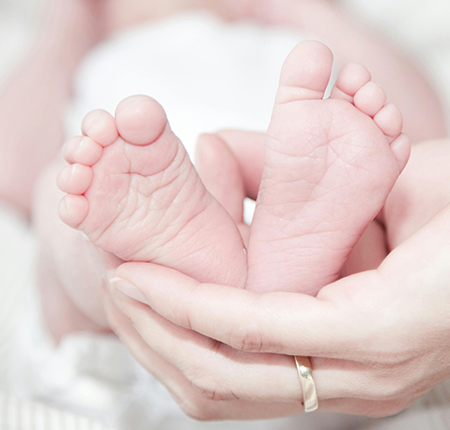
Natural birth – benefits for mother and baby
Natural birth is often recommended where there are no medical contraindications, as it offers a range of benefits for mother and baby. For many women it is a profound and unique emotional experience.
The physiological course of labour supports the body's natural adaptation to this experience and can have positive long-term effects.
Natural birth – benefits for the mother
A natural birth can bring many benefits for a mother's physical and emotional health. The natural release of hormones during labour can also contribute to a stronger emotional bond with the baby from the very first moments.
Compared with a caesarean section, a vaginal birth usually means:
- Faster recovery: Without an abdominal incision there is less pain after the birth and you're back on your feet more quickly.
- Lower risk of surgical complications: With no operation, there's no risk of post-operative infection or complications from a general anaesthetic.
- A shorter hospital stay: Mothers who give birth vaginally can often go home after 24–48 hours, provided there are no complications.
- The opportunity to breastfeed the newborn immediately after birth: This supports early milk flow and creates a strong bond between mother and baby.
Natural birth – benefits for the baby
Vaginal birth also brings important benefits for a baby's health. Passing through the birth canal helps clear fluid from their lungs and kick-starts their respiratory system more quickly, while immediate contact with their mother supports emotional adjustment and regulates body temperature.
- Skin-to-skin contact immediately after birth: A long-established practice whose benefits include stabilising the little one's heart rate and body temperature. At the same time, contact with their mother gives the baby a sense of security.
- Contact with the mother's beneficial bacteria: The vaginal flora helps establish a healthy gut microbiome in the baby and strengthens their immune system.
- Easier adaptation to the outside world: Labour prepares the baby for breathing and for their first hours of life.
- Can be breastfed from day one: Colostrum, the first breast milk, is extraordinarily rich in antibodies and essential nutrients.
Natural birth – the stages of labour
The moment that marks the start of the birth is the onset of labour. This is when the body prepares for the birth and helps the baby to come into the world.
The birth process itself is divided into several stages, each with its own characteristics. Understanding these stages can help you enormously – you'll feel more confident and be better able to work with the medical team.
Dilation of the cervix
The first and longest stage of labour involves the opening of the cervix. It has to thin out and gradually open to 10 cm so the baby can pass through the birth canal.
During this time, contractions become increasingly regular and powerful. On our blog you'll find a separate article explaining how to tell them apart from Braxton Hicks contractions.
Your body goes through two phases during this stage:
- Latent phase: The cervix opens to around 4–5 cm, contractions are mild, come every 10–15 minutes and gradually become more regular.
- Active phase: This is more intense, with dilation progressing quickly from 5 to 10 cm, and contractions becoming more frequent and more painful – every 3–5 minutes. This is when the body does the hardest work, and breathing techniques and support from your partner are particularly helpful.
Delivering the baby
After the active phase comes the stage in which the baby is actively pushed through the birth canal. This is known as the pushing (second) stage; it begins when the cervix is fully dilated and ends with the birth of the baby.
During this stage you'll feel strong pressure in the pelvic area and a natural urge to push. The medical team will guide you on how to push correctly, to avoid tearing and make the birth as easy as possible.
Delivering the placenta
Once your baby has arrived, they're often placed on your chest – for skin-to-skin contact and the first attempts at breastfeeding.
At the same time, there's one more short stage, in which the placenta and membranes are delivered. This usually takes 5 to 30 minutes and may be accompanied by milder contractions. The doctor will check that the placenta has come away completely in order to avoid complications.
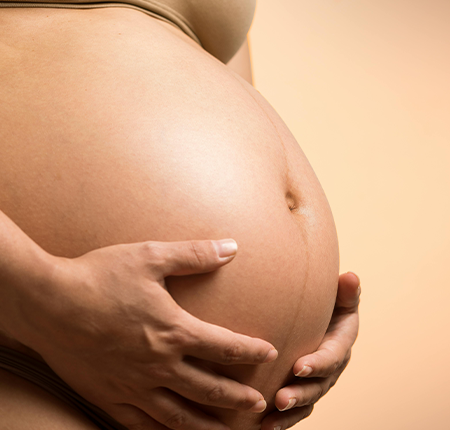
Birth with an epidural – what does it involve?
With an epidural, a local anaesthetic is administered via a very fine catheter into the epidural space in the lower back.
It usually takes effect 10–20 minutes after being given: pain in the abdomen and legs is numbed. You'll still feel the pressure of the contractions, but not the pain – so you can take an active part in the birth and push in rhythm with your contractions.
It's the best-known and most effective method of pain relief during labour, and studies show that using it as early as the first stage of labour can speed things up. Without pain, it's easier for the mother to relax and follow the doctor's instructions.
Risks and challenges of natural birth
Although natural birth is a physiological process, it can come with challenges. Most of these can be managed safely by your obstetrician, but being well informed will help you reduce your fear of the unknown.
It's important to be aware of them so you're emotionally prepared and understand why the medical team may make certain decisions during the birth:
- Prolonged labour: Labour can last several hours, sometimes more than 12–24 hours. In such cases, the doctor may recommend an oxytocin drip or other measures to stimulate contractions and encourage the cervix to dilate.
- Perineal tears: As the baby passes through the birth canal, the perineal tissue can sustain small tears. These are common and usually heal well, though in some cases they're more extensive and need stitches.
- Foetal distress: This can arise from contractions that are too intense, the position of the umbilical cord or other factors. The medical team can intervene by changing the mother's position, giving oxygen or – if necessary – performing an emergency caesarean section.
When is a natural birth not advisable?
For most women, natural birth is a safe option. There are, however, medical situations in which the doctor will recommend a caesarean section for the safety of mother and baby.
These possible scenarios should be discussed with your doctor early on – taking into account the mother's history, how the pregnancy has progressed and the baby's condition at the time of birth.
The most common situations in which a natural birth isn't advisable include:
- A multiple pregnancy, particularly with twins or triplets in a position unsuitable for vaginal birth
- Following a previous caesarean section
- If the mother is over 35
- If the mother has used alcohol or other substances during pregnancy
- If the mother has health problems such as diabetes or clotting disorders
- If there are complications with the development of the placenta
Recovery after a natural birth
After the birth, a mother's body begins a gradual process of recovery. This involves both physical and emotional healing. This period is crucial for stabilising your health and building a strong bond with your newborn. Here's what to expect:
Symptoms that can occur immediately after birth
Your body changes rapidly after the birth, and it's normal to experience the following:
- Postnatal bleeding: Light to moderate bleeding is normal in the first few weeks, as the body sheds remaining tissue from the womb.
- Shivering: Some women experience shivering or trembling immediately after the birth – a reaction to hormonal changes and the intense physical effort.
- Marked exhaustion: Birth places enormous demands on the body, and the first few days can be utterly draining.
Tips and advice for the first weeks at home
The first few weeks after the birth are a period of adjustment for mother and baby alike. Here's what you can do both to look after yourself physically and to maintain your emotional balance:
- Try to breastfeed as often as possible and watch for your baby's hunger cues. On our blog you'll find a dedicated article with useful information about breastfeeding.
- Nappy changes, cord care and temperature checks are crucial to your baby's health. Don't hesitate to ask medical staff or your family for help whenever you need it.
- Continue with the gentle exercises recommended by your doctor, avoid overexertion and drink plenty of fluids to stay well hydrated.
- With your new responsibilities as a mother, sleeping through the night can become a real challenge. Try to sleep when your baby sleeps, and accept help from your partner or family so you can recharge.
- Talk about your feelings and worries, accept that hormonal changes can bring mood swings, and ask for support if you experience prolonged periods of anxiety or sadness.
- Keep eating a balanced diet and include fruit, vegetables and protein-rich foods to support your recovery and milk production.
Myths about natural birth
There are many myths and preconceptions surrounding natural birth that only heighten fear and uncertainty. That's why it's important to be properly informed, to have realistic expectations and to make all the important decisions with your doctor – rather than on the basis of casual conversations with other mothers.
So let's get straight to it and look at some of the most widespread myths and the reality behind them:
- "A natural birth is always extremely painful and unbearable."
It's true that contractions can be painful, but the intensity varies greatly from woman to woman and depends on the baby's position, breathing techniques, the support received and preparation during pregnancy. Natural methods such as changing position, controlled breathing, massage or hydrotherapy can significantly reduce discomfort. - "Only very strong women can give birth naturally."
A woman's body is designed to give birth, and birth is a natural process that can be supported by antenatal exercise and relaxation techniques. Most women – regardless of their physical condition – can give birth naturally with appropriate guidance and support. - "If you've opted for a natural birth, you can't use any pain relief at all."
Choosing a natural birth doesn't rule out pain relief if you need it. An epidural or other methods of pain relief can be used during labour without affecting a vaginal birth. - "A natural birth is always safer than a caesarean section."
Natural birth can have many benefits, but safety always depends on the medical circumstances. There are situations in which a vaginal birth isn't advisable and a caesarean is the safest option for mother and baby. - "After a caesarean section you can no longer give birth naturally."
Many women can give birth vaginally even after a previous caesarean section. The decision is made together with your obstetrician – depending on the type of previous incision, the mother's history and the associated risks.
Frequently asked questions about natural birth
We hope this article has helped you feel a little better prepared – mentally, at least – for the events and changes involved in a vaginal birth. We know, though, that this experience raises many questions for mums-to-be. That's why we've put together quick answers to some of the most common queries in this section:
How long does labour usually last?
The duration varies considerably; on average it's between 6 and 18 hours for a first birth. For subsequent births it can be shorter, because the body already knows the process.
Is a natural birth painful?
Pain levels differ from woman to woman and depend on the intensity of the contractions, the baby's position and your own pain tolerance. Breathing techniques, preparation during pregnancy, support from your partner and medical methods can significantly reduce discomfort.
Is a natural birth possible after a caesarean section?
Yes, in many cases a natural birth is possible even if you've previously had a caesarean section. Your doctor will assess its safety based on your medical history and any existing risks.
What role does the partner play during a natural birth?
Your partner can offer you emotional support and encouragement during the birth, which helps you relax. They can also get actively involved in the breathing techniques and changes of position.
Which relaxation methods help during labour?
Controlled breathing, gentle movement and massage can all help you relax during contractions. Hydrotherapy or warm baths can also release physical and emotional tension.
Is a natural birth safe with a multiple pregnancy?
A natural birth is possible with more than one baby, but it depends on the position and number of babies. Your obstetrician will recommend the safest option for mother and babies according to the situation.
Can you breastfeed immediately after a natural birth?
Yes, as a rule the baby is placed on the mother's chest immediately after the birth. Skin-to-skin contact and early breastfeeding strengthen the emotional bond, and colostrum, the first breast milk, provides the baby with antibodies and essential nutrients.
What role does hydration play during the birth?
Adequate fluid intake keeps your energy levels up and prevents dehydration, allowing the uterus to contract efficiently. Staying well hydrated is also important to ensure oxygen and nutrients are reliably delivered to your baby.
Image source: Pexels.com

Medium, super or extra absorption

Low, medium or super absorption

Low or medium absorption


and happily breaking taboos!


