

Periods on a beach holiday
A scenario that's frustratingly familiar to women – that's one way to describe today's topic. We're talking about one of the most inconvenient moments for your period to decide to arrive: right in the middle of the summer holiday you've been waiting for all year.
You put together your light-coloured outfits well in advance, planned your route and the sights you wanted to see, and got yourself ready to make unforgettable memories – because who doesn't love summer, the sun, the beach and a good holiday? The only thing you didn't factor in … your period, possibly arriving with heavy bleeding, irritability and absolutely no desire to get out of bed at all.
So how are you supposed to cover miles on foot – without discomfort and without stress? Well, dear reader, that's exactly what this article is about. Find out what you can do so that your period interferes with your holiday plans as little as possible and you can enjoy every single day, just as you imagined from the start.
What happens when your period starts on holiday
Your period arrives in the middle of your summer holiday. And now … what? The truth is that what happens next largely depends on you.
You can panic and wonder whether you're still allowed in the sea or whether period pain is going to scupper your plans. Or you can be prepared and decide that your period won't stop your holiday and will restrict your activities as little as possible.
What do the statistics say? A study of more than 32,000 women confirmed a decline in performance and productivity as a result of menstruation, particularly among younger women. Does that mean you'll no longer feel like walking for miles, joining in activities and enjoying your holiday?
We certainly can't deliver a universal verdict – every woman's experience of her own period is so different. But there's undoubtedly a chance that this dip in productivity also translates into less enthusiasm, a lower mood and less energy to carry on with your plans.
How your period affects your plans
While on an ordinary summer's day you'd be perfectly relaxed on the beach, by the pool or on any other outing, the arrival of your period can knock your confidence a little.
Suddenly your swimsuit might not feel quite so comfortable, sunbathing is less bearable, longer walks become more tiring, and uncertainty and worry about possible leaks creep into your thoughts. Not to mention the discomfort that bloating, cramps or heavy bleeding can cause.
But how many of these symptoms are genuine limitations? Beyond your own worries, beyond your own perception – does the arrival of your period really affect you that much? Because in most cases, the fear of leaks and the discomfort can be managed perfectly well with a bit of organisation and the right period products.
Yes, you might not fancy lying in the sun for hours or hiking a mountain all the way to the summit when you have mild abdominal pain. But that doesn't mean you can't swim, that you have to stay in your hotel room, or that the holiday is a write-off.
Discomfort caused by the heat
What else could go wrong? Aside from the limitations discussed above – real or perceived – what else can make you uncomfortable when your period starts on holiday?
Well, heat and humidity can be two significant factors, because they can intensify discomfort. The combination of sweat and period products worn for many hours can encourage irritation – especially if your skin is already sensitive and the pads or tampons you're using contain synthetic components that don't let your skin breathe.
High temperatures can also heighten feelings of fatigue and low energy, adding to the discomfort.
Some women even notice stronger period pain on very hot days, particularly if they aren't drinking enough.
All of these effects are real, thousands of women experience them in summer, and they can't simply be ignored. They can, however, be eased considerably if you drink plenty of fluids, choose the right period products and change them promptly, and make sure you get enough rest.
Is your period different in summer?
There are several factors that can explain the impression that your period changes in summer. The influence of heat and sunlight is certainly one of them, but it isn't the only one. The journey to your destination itself, stress and the build-up of anticipation beforehand can affect your symptoms just as much.
The influence of temperature and lifestyle
Why does your period feel different on holiday? To answer simply, let's take a closer look at what's different about a summer holiday – with or without your period.
First of all, it's warmer and you spend more time in the sun. And heat and dehydration can intensify fatigue, discomfort and period cramps.
What else is different on holiday? Certainly some of your daily habits. You change your sleep pattern, your mealtimes and the kinds of meals you eat, your activity levels. All these changes can indirectly affect your hormone balance and, by extension, your menstrual cycle. Researchers confirm this.
In a study from 2010, scientists confirmed that sunlight can influence ovarian activity and certain characteristics of the menstrual cycle – particularly in women living in temperate continental climates, which includes women in
Central Europe. They observed a slight increase in FSH secretion, more pronounced follicular development, a higher frequency of ovulation and a shorter menstrual cycle during the warm season – changes that appear to be linked to sun exposure rather than temperature or other weather factors.
Changes to your menstrual cycle
Many women notice slight delays or an earlier start to their cycle during the summer holidays, heavier or lighter bleeding, or symptoms such as bloating, increased sensitivity or stronger cramps during their period. These changes are usually temporary and don't indicate any medical problem. And science went on to ask what might be causing them.
Another piece of research published in summer 2024 looked at the effects of weather factors on the severity of menstrual symptoms in girls and young women. The results show that bloating, irritability, fatigue, headaches and breast pain, as well as difficulty concentrating, are often influenced by weather conditions before and during menstruation. The volume of bleeding and the length of the period, however, still vary from person to person.
The role of stress and travel
Your menstrual cycle can also change on holiday as a result of travelling.
A long flight, for example, a multi-day drive with less sleep, or crossing time zones can all coincide with your period arriving a few days earlier or later, because your body is responding to fatigue, stress and changes to your circadian rhythm. And of course, stress – even positive stress such as the excitement of an upcoming holiday – can temporarily affect your hormone balance.
So if you notice slightly different menstrual symptoms after emotionally intense periods or tiring journeys, that's generally normal and temporary. It only becomes a concern if the changes are marked, the symptoms are unusually severe, and they persist outside of your holiday too.
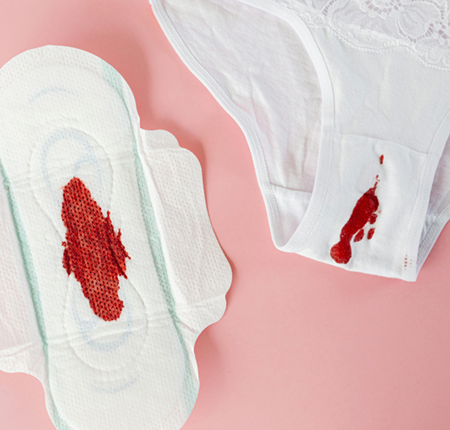
Can you delay or control your period on holiday
It's a real possibility. Your period can arrive exactly when you're on holiday and affect your plans. But what if … it were possible to put it off until you got home? What if there were something you could do before your holiday so it doesn't turn up at precisely that moment? Curious about the options?
Good news: delaying your period is possible. Below we explain how – and how safe and effective each method is.
Hormonal methods for delaying your period on holiday
Taking combined contraceptive pills continuously without a break is probably the best-known method of delaying your period. In practice, you carry on taking the active pills and start a new pack immediately, without the usual seven-day break – which postpones or suppresses the withdrawal bleed.
According to an article published in the National Library of Medicine, many women opt for this way of delaying their period, for instance for trips, holidays, sporting competitions or special occasions. Adolescents and athletes also frequently use these methods to have more control over their cycle during important periods such as training camps or trips.
Does that mean you can simply start taking the pill a few days before your holiday and delay your period, even if you haven't used hormonal contraception before? Absolutely not.
For it to work effectively, contraceptive pills generally need to be started or taken continuously for long enough before you travel, so that your body can adapt to the hormonal regimen. And the method must always be recommended and monitored by a doctor – depending on your state of health.
Not all women can take combined contraceptives, particularly if there are risk factors such as a history of thrombosis or pulmonary embolism, or certain cardiovascular or liver conditions.
Natural remedies and myths
As an alternative to hormonal methods, you've no doubt heard of various natural solutions. Have you read that high doses of vitamin C can help? And what about tamarind and gherkins – have you heard they might delay your period? Or perhaps you've come across apple cider vinegar and other surprising combinations on social media.
Wondering whether you can trust these methods? Science advises against it.
At present there is insufficient medical evidence that these methods can safely and effectively delay menstruation. And while some may be entirely harmless, others cause digestive upset or unpleasant reactions.
In other words: it's fine to try gentle natural methods, as long as you keep a healthy dose of scepticism and realistic expectations. What isn't fine is trying extreme methods just to avoid having your period on holiday. The chances are high that they won't work anyway.
When to see a doctor about your period and your holiday
Always speak to your doctor well in advance. Don't wait until there are only a few days left before you travel, because by then there may be nothing that can be done.
Let your doctor know that you're going on holiday and are considering delaying your period. They can explain which options are safe and suitable for you – depending on how regular your cycle is or any side effects you've experienced in the past.
Contact your doctor immediately, too, if unusual symptoms such as severe pain or very heavy bleeding occur after starting hormonal treatment.
Periods and swimming
When it comes to the relationship between periods and swimming, we're in fairly murky territory.
On the one hand, many women question the hygiene and safety of swimming at this time, or worry about leaks, about their period product not protecting them well enough and blood seeping through their swimsuit.
On the other hand, studies and the experience of many women confirm that swimming – especially in cold water such as the sea or a pool – can have a relaxing effect on the body, reduce anxiety and help ease period symptoms.
Is swimming safe?
Yes, swimming during your period is safe, and there's no medical reason why you should avoid it.
And as for the safety of not leaking: that shouldn't be a major worry either. Although water pressure doesn't stop your period entirely, it can temporarily reduce the flow while you're swimming, which lowers the risk of bleeding in the water. What's more, with the right period product you're protected afterwards too.
Which period products to use for swimming
For swimming, a tampon with an absorbency suited to your flow is one of the best options. Because it's worn internally, it's invisible under your swimsuit and doesn't absorb water from outside – so it protects you effectively throughout your swim.
Other period products such as pads may be comfortable, but they're not suitable for wearing in water. On contact with water they swell, come loose easily and can no longer protect you effectively.
Hygiene and risks when swimming during your period
As safe as swimming during your period is, the hygiene measures that underpin that safety are just as important.
As soon as you come out of the water, it's important to change your period product and your clothing as quickly as possible. Prolonged exposure to moisture, including sitting around in a wet swimsuit, can increase the risk of discomfort and create an environment that encourages irritation and infection.
Intimate hygiene in summer
Hygiene measures remain just as important outside of swimming.
In summer, your intimate area needs even more attention than during the rest of the year – because of the heat, sweating and more frequent exposure to moisture. You wouldn't want these factors to encourage imbalances or infections, would you?
The hygiene habits you practise daily in this respect are key to preventing complications.
Changing period products more often
In the summer heat, high temperatures encourage moisture and bacterial growth in the intimate area. That's why it's so important to change period products more frequently and to make sure your intimate area isn't exposed to risk factors for long stretches of time.
Try to change them roughly every three to four hours, or even more often if your bleeding is heavy, if you've been swimming or if you've been sweating a lot.
Sweat and the risk of infection in summer
Typical summer heat and sweat create – often unavoidably – a damp environment in the intimate area. In a damp environment, the likelihood of an imbalance in the intimate flora increases, which can make you more susceptible to infection.
Susceptibility doesn't automatically mean you'll develop a condition, but it certainly reflects increased sensitivity in the intimate area and a greater tendency towards irritation. All the more so if you wear tight clothing made from materials that don't let your skin breathe.
Recommended products for summer
Alongside breathable cotton underwear and fragrance-free organic pads or tampons that let your skin breathe and protect you without causing irritation, there are other products that can help you feel fresh during your period in summer.
Intimate wipes are a practical solution on the go, perfect for a quick freshen-up, especially on holiday or while travelling – until you reach your destination and have access to a bathroom, where you can continue your routine with an antibacterial intimate gel.
The important thing is to avoid products that may contain fragrances with allergens, sulphates and other harsh ingredients – because although they mask sweat and unpleasant odour in the short term, they're not doing your intimate health the same favour.
What to pack for your holiday
Need a quick checklist of what to pack for your holiday so you're prepared even for an unannounced period? Don't worry, we've written it all down below:
- Essential period products: Take exactly what you use – whether that's tampons, pads or both – in the right absorbencies, and make sure you have enough for all the days of your period.
- Extra products: Don't forget intimate wipes for a quick refresh at any time, as well as hand sanitiser and a change of underwear – because accidents happen and they're not a disaster.
- An emergency kit: Unexpected situations are far easier to handle when your luggage is well organised. Pack a small pouch where you discreetly keep one of each essential product, and keep it within reach so you can find everything straight away when you need it – without everything scattering through your handbag.
Tips for greater comfort during your period in summer (on holiday)
Dear reader, if you're off on holiday soon, we genuinely wish you the loveliest days possible. That you're able to relax and forget your worries – all the more so any worries about your period. Here are some tips that we hope will help you feel as comfortable as possible throughout your stay, even if your period comes along for the trip.
Hydration and diet in summer
Drinking enough plays an important role in summer, particularly during your period, when your body can react more sensitively to high temperatures and water retention can weigh on you more. Try to take in enough fluids to stay hydrated and reduce bloating.
We also know that both your period and the new dishes you try on holiday increase the likelihood of bloating. So we'll remind you that light foods such as Greek yoghurt, ginger, fruit and leafy green vegetables can help you keep this symptom under control and feel comfortable.
The right clothing in summer
Instead of tight clothing made from materials that make you sweat easily, try to wear the airiest possible clothing in natural fabrics such as cotton or linen, which let your skin breathe and reduce the discomfort caused by heat.
It can also be a good idea to choose suitable colours and loose cuts, as these can be more practical on active days when you want to guard against any potential mishaps.
Activity and relaxation in summer
If the first day of your period catches you on holiday, it can be tempting to stay in bed and avoid moving at all. But remember that gentle activity – even just a walk along the beach or a few minutes of stretching – can help ease cramps and lift your mood. And if everything feels like more of an effort, you can always slow the pace or take a break.
Myths about periods on holiday
Does everything we've told you so far – that you can swim during your period, that your period can feel different on holiday – contradict the beliefs you've been living with? And are you wondering why you believed something different until now? Part of the blame may lie with the myths still circulating about periods in summer. Below we explain the ones you'll hear most often.
You can't swim
False. As long as you use suitable period products such as 100% organic tampons, swimming is safe both medically and in terms of protection against leaks. There's no medical reason not to – quite the opposite: physical activity often encourages relaxation and eases symptoms.
Your period stops in water
This is only partly true. Yes, water pressure can temporarily reduce your flow while you're swimming, but it doesn't stop your period completely. Shortly after you come out of the water, your flow returns to normal.
Summer completely changes your cycle
The influence of heat, temperature and weather conditions on the menstrual cycle is still being studied. Based on the data currently available, there are certain links between the summer season and the severity of menstrual symptoms, but in reality it isn't the season itself that affects your period.
Stress, changes to your routine or time zone, lack of sleep and long exposure to the sun are the factors that can genuinely affect your hormone balance and how you feel during your period – and the changes are usually temporary.
Frequently asked questions about periods in summer (on holiday)
When you think about going on holiday soon and your period possibly arriving – is there anything else on your mind? Would you like to know how best to avoid leaks? Or which period products are best for swimming? We're here for you. Below we've gathered answers to the most common questions on the subject.
Can I go in the sea or the pool?
Yes, you can go in the sea or the pool during your period with complete peace of mind. As long as you use suitable period products such as 100% organic tampons, you're safe. The important thing is that you feel comfortable and change your product frequently, especially after swimming.
How do I avoid stains on my clothes?
First, choose a period product with an absorbency suited to your flow and don't forget to change it at least every three to four hours on hot days – or sooner if you feel the need – to avoid both leaks and the risk of irritation. Darker clothing or a spare pair of knickers in your bag can also help, for extra reassurance.
What do I do if my period doesn't come on holiday?
Because of stress (yes, including positive emotions such as holiday excitement), changes to your habits or fatigue, it's by no means unusual for your period to be late. That isn't necessarily a cause for concern. Do speak to your doctor, though, if the delays become more frequent or last longer.
Can I delay my period for my holiday?
Yes, you can delay your period using hormonal methods by taking combined contraceptive pills continuously without a break between packs. You do, however, need to discuss this option with your doctor beforehand, as it isn't safe for all women and needs to be started in good time to be effective.
Which products are best for swimming?
For swimming, 100% organic tampons are one of the most comfortable and practical options. Because they're worn internally, they stay invisible under your swimsuit and don't absorb water, so they offer you effective protection throughout. Pads aren't recommended, as they soak up water and can no longer protect you effectively.
Image sources: Pexels.com

Medium, super or extra absorption

Low, medium or super absorption

Low or medium absorption


and happily breaking taboos!


