

Swimming on your period – which sanitary products are suitable for the pool and the beach
What do you reckon — shall we talk about periods again? You know, that much-debated time of the month when you've been told you can hardly do anything at all? When you've been told you'd best not wear white jeans, not exercise, not have sex … and when swimming is just another entry on the list of don'ts. But what if we told you that these are all myths? That in reality, you can do almost everything during your period that you do on any other day?
Swimming on your period isn't just safe and hygienic — it can actually do you good. So no, you don't need to cancel your plans for the beach or the pool just because you're on your period. All you need is a bit of information and the right products to carry on doing everything you enjoy, worry-free. Let us show you how!
Is swimming during your period a good idea?
Yes, you can swim perfectly happily while you're on your period. You can head to the beach, stay at the pool, even win a swimming competition! Did you know that Fu Yuanhui was on her period at the 2016 Rio Olympics when she broke her personal and national record and took bronze in the 100m backstroke semi-final?
Your period isn't there to put obstacles in your path, scupper your plans and stop you doing what you love. It's simply your body's way of telling you, month after month, that your reproductive system and your hormones are all in good working order. And swimming — like any other light to moderate form of exercise — is recommended during this time, because it can have a positive effect on your health and your mood.
Myths about swimming during your period
If swimming really is recommended and has so many benefits, why were you told not to go to the pool? Why did you grow up believing you can't swim during your period?
Most likely for the same reason that thousands of women still believe it's normal to cancel their plans or endure unbearable cramps during their period: a lack of information.
Where reliable information is missing, all sorts of myths circulate with no scientific basis whatsoever — myths that lead us to put our lives on hold, and that fuel the shame and disgust surrounding menstruation. Some of these myths concern swimming on those "delicate days". So let's talk about them and settle once and for all what's true and what's misinformation.
It isn't safe
Largely false. Generally speaking, swimming during your period carries no increased risk of infection — neither for you nor for anyone else. On the contrary: for a healthy person, swimming is a safe form of exercise, and there's no reason to avoid it during your period.
There is a grain of truth in it, though these are exceptions. In certain situations, your doctor may advise you not to swim for a while (for instance, if you have a vaginal infection, since the chlorinated water in a pool could aggravate the inflammation). Bear in mind, though, that these are specific recommendations for exceptional cases, not general rules.
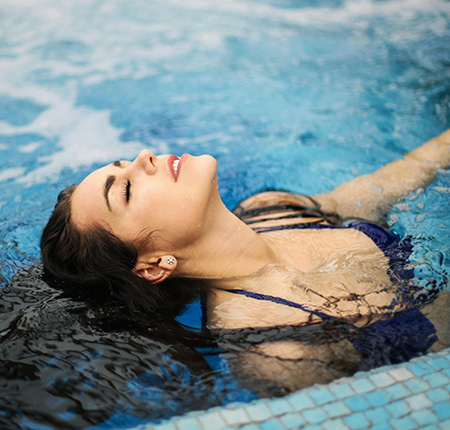
It's unhygienic
The claim that swimming during your period — or indeed menstrual blood itself — is unhygienic is one of the most common myths. But it's simply not true.
Firstly, because the likelihood of menstrual blood getting into the water is very low. Thanks to water pressure, which can temporarily slow your menstrual flow, and thanks to your tampon, the blood will most likely stay in the vagina and not end up in the water.
But even in the unlikely event that you haven't positioned your tampon correctly and a little leakage occurs, there's no need to worry about hygiene. Pool water is treated with various chemicals precisely in order to keep the water clean and prevent the transmission of infections or blood-borne diseases.
Period cramps get worse
Were you told that your cramps would get worse and that you'd bleed heavily if you went into the water or went for a swim? That's just another myth — the truth is quite the opposite.
In fact, swimming can actually help ease cramps and reduce symptoms of premenstrual syndrome. Because it promotes muscle relaxation and blood circulation, it's an ideal physical activity for releasing tension and reducing period pain.
Swimming during your period — the benefits
Rather than paying attention to all the unfounded rumours telling you not to swim during your period, discover what the science says and which benefits you could enjoy from swimming at this time:
- It can ease period cramps
- It can reduce bloating and water retention
- It can help you relax and reduce stress
Products you can use when swimming during your period
Although there are plenty of myths, some of what's said about swimming on your period is genuinely true. One such thing: pads aren't effective in water.
Fortunately, there are other period products that do work underwater and that you can use when swimming on your period, without having to worry about leaks or stains:
Tampons
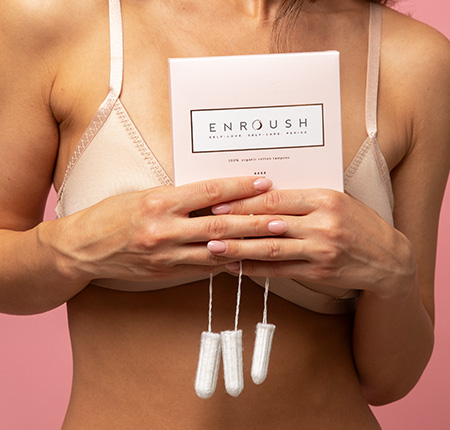
Tampons are the most practical and reliable solution, as they're invisible under your swimwear and absorb menstrual blood immediately, right there in the vagina. Opt for 100% organic tampons — hypoallergenic, free from fragrances and other chemicals — for safe, gentle protection. Nobody but you will know you're on your period.
That said, there are a few things worth bearing in mind before you go swimming with a tampon. They're not drawbacks as such, more important details for your comfort and safety:
- On lighter days, choose a mini tampon. The absorbency should be high enough to protect you from leaks, but not so high that removing the tampon becomes uncomfortable.
Make sure you change your tampon at least every 4–6 hours — and straight away once you come out of the water — to prevent bacteria from building up and creating an environment where infection can thrive.
Period pants/period swimwear
If for various reasons you can't or don't want to use tampons, you can go into the water wearing period swimwear. For some, putting on a swimming costume feels more comfortable than inserting a tampon, and on lighter days this can be a suitable solution.
However, period swimwear can have several disadvantages compared with tampons. On heavier days, the absorbency may not be sufficient, which can lead to leaks. What's more, some designs don't absorb menstrual blood efficiently under water pressure. The higher price and longer drying time compared with ordinary swimwear are two further points worth considering.
Swimming during your period — why aren't pads recommended?
Pads can be a comfortable option when you're out walking, exercising or sleeping. But it's true that they're not recommended for swimming. Not because they'll harm you, but because the moment you get into the water they become useless.
Because they're so highly absorbent, they soak through the instant you step into the water, as they take on the water itself. And that means they can no longer absorb menstrual blood efficiently afterwards.
Pads also aren't invisible, unlike tampons. If you're not wearing shorts or covering up, the wings will be visible on the outside of your bikini bottoms — so they may not be the best option for a day at the beach.
When should you avoid swimming during your period?
For healthy people, swimming during your period poses no problem at all. On the contrary, it can bring plenty of benefits.
There are, however, certain situations in which you should give swimming a miss during your period and see a doctor for a professional examination as soon as possible:
- If you have a very heavy menstrual flow and don't feel comfortable swimming.
- If you have severe pain or very intense cramps that prevent you from enjoying your swim.
If you have a vaginal infection or a urinary tract infection.

Frequently asked questions about swimming during your period
Still got questions our article hasn't answered? You might find the answer below! Because we want you to be well informed and to stop worrying about going to the beach or on holiday just because you're on your period, we've answered the most common questions about swimming during menstruation in this section.
Can blood get into the water during your period?
Yes, it's possible for menstrual blood to get into the water, particularly if you're not using a tampon in the right size or another effective period product. Bear in mind, though, that water pressure can temporarily slow your menstrual flow while you're swimming, so the likelihood is low.
Once you come out of the water, however, or make vigorous movements, the pressure effect can wear off and bleeding may occur. That's nothing to be embarrassed or dramatic about, but you'll definitely feel more comfortable and better protected with a tampon.
Does swimming temporarily stop your period?
No, your period doesn't stop just because you get into the water and swim. What actually happens is that water pressure can significantly reduce your menstrual flow while you're underwater, without stopping it completely. Your period continues inside your body, and the flow returns to normal as soon as you come out of the water.
Is it hygienic to go into the water during your period?
Yes, you can get into the water with complete peace of mind during your period, as it's safe both for you and for others. Even in the unlikely event that some blood escapes despite your period product, the chemicals used in swimming pools serve exactly this purpose: maintaining water hygiene and thereby preventing the transmission of infections.
Does swimming reduce period pain?
Numerous studies have shown that light physical activities such as swimming can help ease period pain. These forms of exercise promote blood circulation and the release of endorphins, thereby helping to reduce cramps and menstrual discomfort.
When should you change your tampon after swimming?
It's advisable to change your tampon as soon as you come out of the water. While swimming, it can also absorb some of the water, making it less effective against leaks and potentially increasing the risk of irritation. And if you're planning a whole day at the pool, make sure you change your tampon at least every 4–6 hours to avoid irritation and infection.
How long can you stay in the water during your period?
You can stay in the water for as long as you feel comfortable. Just make sure you change your tampon immediately after leaving the water and at least every 4–6 hours, so that it protects you effectively against leaks and infections.
Image source: Pexels.com

Medium, super or extra absorption

Low, medium or super absorption

Low or medium absorption


and happily breaking taboos!


